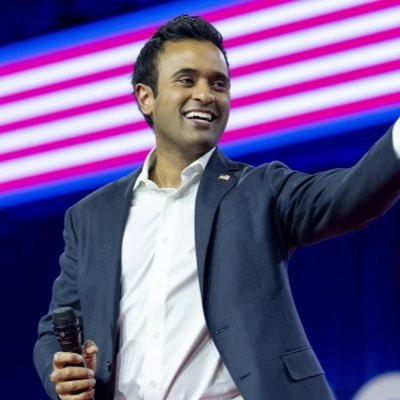
Seven days of conversation about Amy Acton and Vivek Ramaswamy, split between posts that can be placed in Ohio and posts from the rest of the country. Both run negative in both places, and the week is two campaigns accusing each other of lying about pharmaceuticals.
TOTAL VOLUMEPosts, articles and comments across all geographies. Only 8% of the U.S. portion is original writing; the rest is reposts and replies.
-4.3
RAMASWAMY, NATIONALNet sentiment outside Ohio. -11.1 on posts naming them alone.
-29.8
ACTON, NATIONALNet sentiment outside Ohio. -40.4 on posts naming them alone.
18K
BIGGEST DAYVolume in the bucket covering Saturday night's presidential rally in Vandalia and the Sunday that followed it.
What The Polls Say
Published polling, shown to set context. A poll asks a sample of voters which
candidate they intend to support. Everything else on this page measures something different: the
balance of positive and negative labeled posts about each candidate in the captured conversation.
A candidate can lead the vote and still take the worse of the argument online, and where the two
diverge this page explains the conversation, not the electorate.
Siena College · field date Oct 4, 2026 · 616 LV · margin of error 4.5 points
The two measures point the same way. Acton leads the polling average by about 6 points and takes the less negative side of the conversation. Both candidates run negative in their own state, which is the more durable finding here: the race is being argued against rather than for.
The Week In One Line
Net sentiment runs on the left axis from −100 to +100. Gold bars carry total daily
volume for both candidates combined; hover any bar for the narratives driving that day. Acton runs well above Ramaswamy for four days and then falls off a cliff on Wednesday, when a recording ban at her events and a trans-rights backlash landed on the same day.
Ramaswamy net sentimentActon net sentimentTotal posts, articles and comments
Inside Ohio
Posts whose geography resolves to Ohio. Acton draws more in-state conversation than Ramaswamy and reads less badly, which is the reverse of the national picture.
OHIO
Ramaswamy
Ohio
2,859posts
215 positive
350 negative
Hover a segment
1,373 unique authors · 251 original posts
(9% of volume; the rest are reposts and replies).
Sentiment from 565 labeled posts, 19.8% of this slice;
stored sample behind the labels 60 documents.
Top 3 narratives driving sentiment
1
A Hundred-Dollar Cart That Costs A Hundred And Fifty
POSITIVE DRIVER
His Ohio message is the cost of living, and it is the most concrete thing either campaign said all week: a shopping list with two prices, and a gas tax holiday measured at the pump.
Milk, eggs, bread, meat. The cart that cost $100 now costs $150, and Ohio moms are putting food back at the register.
The Ohio Democratic Party spent the week on his pharmaceutical record, and the phrase they chose travelled further than anything else said about him in the state.
Vivek Ramaswamy made his millions scamming Alzheimer’s patients in a pump and dump scheme that left Ohioans broke and desperate.
A presidential rally in Vandalia gave him the week’s biggest stage, and a campaign stunt the same weekend gave his opponents the week’s most-shared clip.
Vivek Ramaswamy Joins President Trump On Stage to Share How He Plans to Help Ohio Thrive.
1,955 unique authors · 245 original posts
(6% of volume; the rest are reposts and replies).
Sentiment from 1,282 labeled posts, 33.3% of this slice;
stored sample behind the labels 148 documents.
Top 3 narratives driving sentiment
1
Already Voted
POSITIVE DRIVER
Early voting opened during this window and her best Ohio material is people saying they have already used it. It is the plainest kind of support in the corpus and there is a reasonable amount of it.
Happily voted for Amy Acton and Sherrod Brown this morning.
The most repeated Ohio criticism of her is not ideological. It is that the affordability promise has no mechanism attached, and it is made by people asking rather than asserting.
In almost every post from Amy Acton, she claims she will bring costs down. Has anyone ever seen or heard how she will do that?
A video of her campaign barring audio and video recording became the sharpest Ohio story of her week, and even sympathetic commenters called it a losing fight.
Amy Acton’s campaign was caught on video banning audio and video recording at her events. She won’t debate, and she doesn’t want you recording either.
Audio can be clipped and used disingenuously, especially by the Vivek campaign. That said, a campaign trying to police this is fighting a losing battle.
The same week reads differently depending on where you stand. Net sentiment is plotted
from Ohio on the left to the rest of the country on the right; the solid line counts every post
naming a candidate, the dashed line counts only posts that name that candidate and not the other.
All posts naming the candidate
Posts naming that candidate only
-19.5Vivek RamaswamyOhio minus national · -14.7 on single-subject posts
Ramaswamy reads 20 points worse in Ohio than nationally, the widest adverse home gap on this page. His national audience is far larger than this race and is friendlier to him than the state he wants to govern.
+17.3Amy ActonOhio minus national · +22.7 on single-subject posts
Acton reads 17 points better at home than nationally, and the direction holds under the single-subject test. Ohio knows her from a job she held before politics; the country mostly meets her through her own advertising.
What each audience actually argues about
Geography, not party. Both columns cover the same week and the same two candidates; what separates them is which arguments actually travel.
IN OHIO
Groceries, Early Voting And A Recording Ban
Ohio argues about the register and the ballot box: what a cart costs, who already voted, and whether a campaign can stop you filming it.
A hundred-dollar cartAn affordability argument made in four grocery items rather than an index.
Milk, eggs, bread, meat. The cart that cost $100 now costs $150, and Ohio moms are putting food back at the register.
Both candidates are underwater in both places, and the week is a single argument conducted through television: two pharmaceutical attack ads, two patients, and two campaigns each accusing the other of lying. Only one post in six names both of them, which is the lowest overlap in this series.
The Rest Of The Country
Posts placed elsewhere in the United States. Ramaswamy's national profile is far larger than this race, and his figure here benefits from it.
NATIONAL
Ramaswamy
Rest of United States
27,531posts
2,285 positive
2,493 negative
Hover a segment
16,351 unique authors · 2,920 original posts
(11% of volume; the rest are reposts and replies).
Sentiment from 4,778 labeled posts, 17.4% of this slice;
stored sample behind the labels 1,105 documents.
Top 3 narratives driving sentiment
1
Bigger Than The Race He Is In
POSITIVE DRIVER
His national cell is six times his Ohio one and much of it has nothing to do with governing Ohio. He arrives with an audience, and that audience carries his national figure.
Vivek Ramaswamy Joins President Trump On Stage to Share How He Plans to Help Ohio Thrive.
Ohio’s largest newsroom ran a piece saying he would not answer questions on voting law that his two opponents did answer, and it is the sharpest press criticism of his week.
Ohio gubernatorial candidate Vivek Ramaswamy continues to dodge policy questions on voting laws, while rivals Amy Acton and Libertarian Don Kissick provide substantive answers.
His response to the pharmaceutical attack was an ad featuring a patient vouching for him, which turned a record dispute into a fight about who is lying.
Vivek Ramaswamy’s ad features a prostate-cancer patient who cites his own experiences to assert Amy Acton is lying about her opponent’s pharmaceutical record.
17,029 unique authors · 1,689 original posts
(6% of volume; the rest are reposts and replies).
Sentiment from 10,307 labeled posts, 36.0% of this slice;
stored sample behind the labels 1,652 documents.
Top 3 narratives driving sentiment
1
A Democrat Leading In Ohio
POSITIVE DRIVER
Her positive national cell is one poll story, amplified by the largest Democratic pages on Facebook, about her party leading governor races in states it normally loses.
A stunning new poll shows Democrats leading governor’s races in Republican strongholds.
The sharpest national criticism of her came from the left: LGBTQ advocates objecting to campaign messaging they said came at the expense of transgender people.
Ohio Democratic gubernatorial candidate Amy Acton and U.S. Rep. Marcy Kaptur are facing backlash from LGBTQ+ advocates who say their campaign messaging comes at trans people’s expense.
Her own advertising is a large part of her national cell, which is how a candidate’s attack on an opponent ends up scored against the candidate making it.
Amy Acton funded an ad that features an Ohioan accusing Vivek Ramaswamy of knowingly pushing a failed Alzheimer’s drug and making hundreds of millions.
This page is the product of two different kinds of work. One half is data that no public API makes available; the other half is judgment about what the data does and does not support.
What Quid made possible
None of the following could be assembled from public endpoints inside a week.
One corpus, seven channels77K posts, articles and comments from X, Facebook, Instagram, Bluesky, Reddit, YouTube and news sites, answered as a single query.
Geography at the post levelSeparating 2,859 Ohio posts about Ramaswamy and 3,851 about Acton from the 56,126 placed elsewhere is what shows his national audience dwarfs the race he is running in.
Sentiment aimed at a personScoring sentiment toward a named figure rather than toward the post as a whole, across roughly 16,400 labeled posts.
A sensitivity test in one passRe-running every figure on posts naming one candidate only moved Acton’s national number 11 points and confirmed the two figures are unusually independent.
Amplification, countedUnique-author and original-post metrics showed only 8% of this conversation is original writing.
The receiptsEvery cited post came back with its URL, author, channel and engagement count, which is why this page can link its evidence.
What Claude was responsible for
The data does not interpret itself, and it arrives with traps in it.
Disambiguating a place nameBare "Acton" returns 46,584 posts and includes a Massachusetts town, a London district and an institute. A light Ohio gate was written and its 4,157 additions sampled and confirmed on-subject before use.
Finding an account that does not existThe obvious handle for this candidate resolves to nothing. The real one was found by counting @-mentions in the corpus itself and verified before the hero card used it.
Reading the postsDocuments across eight cells read to derive 12 narratives and 7 daily storylines, and to place every quote against the sentiment it actually supports.
Attributing an attack to its buyerA large share of Acton’s national cell is advertising she paid for. The page says that rather than reading her own attack ad as opinion about her.
Handling a contested record carefullyThe pharmaceutical claims run in both directions and are disputed by both campaigns. They are reported as competing claims with both ads cited.
Checking and shippingEvery citation audited for liveness, then layout, charts, gauges, tooltips and publication.
Neither half can establish cause. This page measures what was said, how much of it there was, and who said it. It is not a poll, it does not model turnout, and it does not predict the November result.
How to read this
Source. Quid, run against the full-resolution recent index. Each person is defined
by an ad-hoc boolean query with primary: sentiment targeting, so the sentiment is scored
toward that named figure rather than toward the post as a whole.
Window. Oct 2 - Oct 8, 2026, seven complete day buckets. Quid closes its day at 23:00 UTC and
ignores the timezone parameter, so each bucket covers roughly 23 hours of the labeled calendar day.
Net sentiment is (positive − negative) / (positive + negative) × 100, computed on
labeled posts only. Neutral posts are excluded from the meter but counted in the volume figures.
Sentiment coverage. Sentiment labels cover 20 to 17% of Ramaswamy's posts and 33 to 36% of Acton's.
Ramaswamy's Ohio cell is the thinner of the two: 60 stored documents against 148 for Acton's. Treat his in-state meter as directional. The national cells rest on 1,105 and 1,652.
Classifier attribution is imperfect. In a two-candidate race most posts name both people, and
the classifier sometimes assigns a post's sentiment to the wrong subject, and several posts attacking one
candidate are labeled positive for them. Every soundbite shown here was read and placed against the narrative
it actually supports, but the donut and meter totals are the classifier's unedited output.
Twitter/X counts are projected ×10 from a 10% sample, so volume figures exceed the number of
individually stored documents. Counts and samples are never mixed inside one ratio.
Sensitivity test. 18% of Ramaswamy's posts and 17% of Acton's name both candidates, where the classifier can credit sentiment to the wrong one. Re-running every figure on posts that name one
candidate only moves both men down and Acton further. Ramaswamy goes from -23.9 to -25.8 in Ohio and from -4.3 to -11.1 nationally; Acton goes from -12.5 to -17.7 at home and from -29.8 to -40.4 nationally. Only about one post in six names both candidates here, the lowest overlap in this series, so these figures are unusually independent of each other.
Volume is amplification, not voices. Only 8% of posts are original; the rest are reposts and replies. Unique-author counts
are shown on every panel and are the better measure of how many people are actually talking.
Link integrity. Every source link on this page was checked for liveness at publication.
Exploratory. Figures may not match Quid's own dashboards exactly. Sentiment is a
measure of how people are talking, not a poll, and nothing here projects a November result.