

.png?width=1252&height=362&name=QUID_Logo_WHITE%20(2).png)
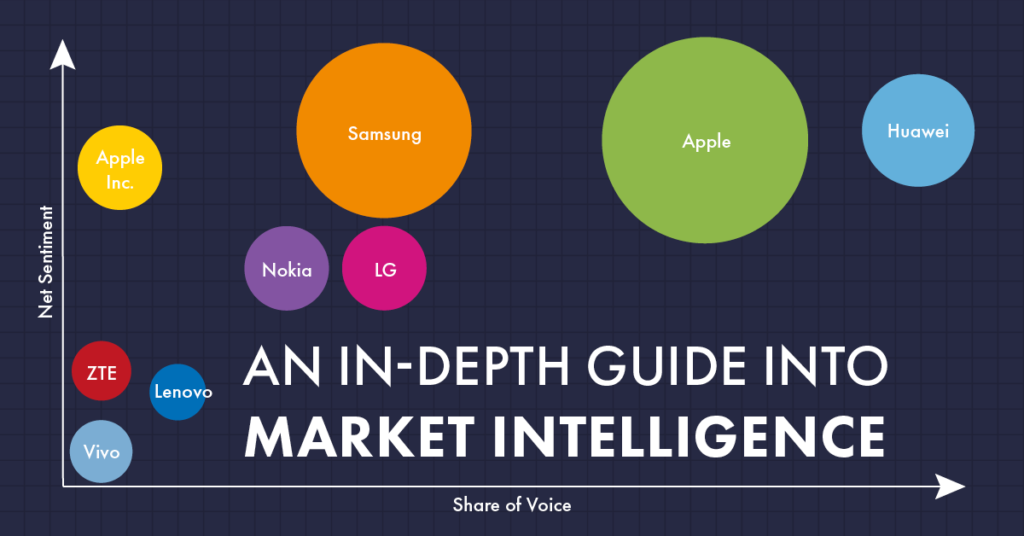
Market intelligence is often described in broad terms: understanding your market, tracking competitors, monitoring consumer sentiment. Those definitions are directionally correct, but they are incomplete.
At an enterprise level, market intelligence is not a single activity. It is an ongoing capability that connects external market signals to internal business decisions. When it works well, it reduces uncertainty around resource allocation, product direction, brand positioning, and risk exposure. When it is fragmented or underdeveloped, organizations rely heavily on lagging indicators and internal assumptions.
This article defines market intelligence in practical terms, outlines its core components, explains how it has evolved with AI and large-scale unstructured data, and describes how advanced platforms structure it today.
Market intelligence is the systematic collection, structuring, and interpretation of external data about consumers, competitors, categories, and market dynamics, with the purpose of informing strategic and commercial decisions.
There are three important elements embedded in that definition:
First, market intelligence is systematic. It is not occasional research or reactive monitoring. It requires a repeatable process for gathering and analyzing signals over time.
Second, it involves structuring and interpretation. Raw information does not become intelligence until it has been organized into meaningful patterns and contextualized.
Third, it is decision-oriented. The purpose of market intelligence is not awareness alone. It exists to influence what an organization builds, launches, prices, prioritizes, or mitigates.
At its core, market intelligence answers a fundamental question:
How is our market changing, and what does that change require from us?

The term is frequently used interchangeably with several related concepts, which can create confusion inside organizations.
Data may include social posts, search queries, product reviews, financial filings, sales metrics, or survey responses. Data is descriptive.
Research may involve commissioned surveys, qualitative interviews, focus groups, or controlled studies. Research provides depth but is often time-bound.
Monitoring is useful for awareness and alerting but does not inherently provide interpretation.
Market intelligence incorporates elements of all three, but it adds a critical layer: integration and context. It connects disparate signals, identifies patterns over time, and translates those patterns into implications for the business.
For example, a spike in social conversation about a new product feature is data. A post-launch survey evaluating customer satisfaction is research. An alert system flagging increased negative mentions is monitoring. Market intelligence asks how those signals intersect, whether they indicate a structural shift or temporary reaction, and what operational response is warranted.
Historically, market intelligence functions were narrower.
Over the past decade, three structural shifts have expanded the scope:
Digital traceability means consumer behavior leaves observable signals across search, reviews, forums, and social platforms. This has increased both the volume and immediacy of available information.
Faster competitive cycles mean product development, pricing experimentation, and messaging adjustments happen more rapidly. Signals of strategic direction often appear in hiring patterns, feature releases, and subtle repositioning before formal announcements.
Increased category convergence means consumer needs and cultural trends move fluidly across categories. Signals that originate in one domain may impact adjacent markets quickly.
As a result, market intelligence today must operate across more data sources, at higher velocity, and with greater contextual awareness than in the past.
While implementations vary, mature market intelligence functions typically integrate four core domains:
These are not isolated silos; they inform one another.
Competitive intelligence examines how other market participants are allocating resources and shaping perception. This includes traditional signals such as product launches, pricing adjustments, partnerships, and financial performance. Increasingly, it also includes structural indicators: hiring patterns, changes in product taxonomy, messaging evolution, and channel expansion.
The value lies not only in observing moves but in interpreting trajectory. A single product release may be tactical. A series of coordinated investments often signals strategic repositioning.
Effective competitive intelligence situates individual actions within a broader pattern, allowing leadership to assess whether the competitive landscape is fragmenting, consolidating, or redefining itself.
Consumer intelligence focuses on how individuals articulate needs, evaluate products, and express preferences in real-world contexts.
It commonly draws from:
While structured research remains important, unprompted digital conversations now provide additional depth.
Search behavior often reveals emerging demand before transactions occur. Product reviews expose friction points and recurring dissatisfaction themes. Community discussions illuminate identity markers and lifestyle shifts that may not yet be reflected in survey instruments.
However, scale introduces complexity. Large volumes of unstructured text require clustering and thematic modeling to reveal meaningful patterns. Without structure, consumer intelligence risks becoming anecdotal.
Trend analysis situates consumer and competitive signals within broader category and cultural movement.
It seeks to determine:
This requires longitudinal modeling. A trend’s significance is not determined by volume alone, but by velocity, persistence, and adjacency. Signals that expand across demographics and categories often indicate structural momentum. Signals confined to narrow communities may represent micro-trends or subcultural dynamics.
Market intelligence functions that incorporate trajectory modeling are better equipped to prioritize investment decisions.
Brand perception and category risk evolve gradually. Early indicators often appear as:
Risk intelligence involves continuous monitoring and contextual interpretation. It allows organizations to identify potential friction before it escalates into mainstream visibility.
In regulated industries, this also includes tracking policy discourse and stakeholder reactions that may influence operating conditions.
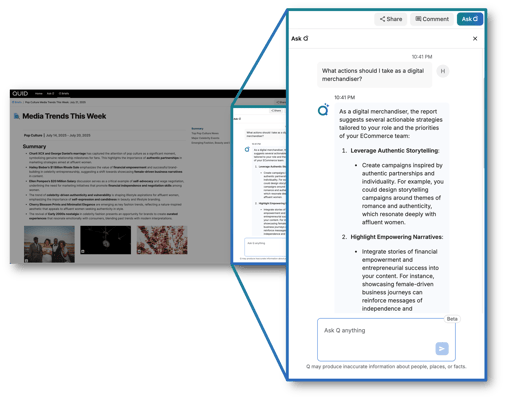
In operational terms, market intelligence typically follows a continuous cycle rather than a linear project structure.
The cycle generally includes:
External data may include social media, forums, reviews, search data, media coverage, financial reporting, and other domain-specific inputs. Internal data may also be incorporated to validate external signals.
Unstructured information is organized into thematic models using natural language processing and clustering techniques. These models group related concepts and track their evolution over time.
Analysts interpret these models in context. They assess which themes are strengthening, which are fragmenting, and which are converging. They examine intersections between consumer language and competitive activity.
Insights are then mapped to business decisions. This may involve prioritizing specific product features, adjusting assortment strategies, refining messaging, or escalating potential risk.
The cycle repeats as new data enters the system.
The critical inflection point is interpretation. Automation can surface patterns, but strategic relevance requires domain understanding.
Market intelligence does not begin with tools. It begins with signal coverage.
The first question is not “What platform should we use?” but “What parts of the market are we currently blind to?”
In most enterprise environments, internal data provides a detailed view of performance: revenue, margin, conversion, churn, inventory turns, campaign lift. What it does not provide is a complete view of why those numbers are moving.
External signal gathering typically spans several categories:
The challenge is not access. It is integration.
Signals gathered in isolation create partial narratives. A rise in search volume without corresponding review language may suggest curiosity rather than demand. A spike in negative sentiment without a product change may point to cultural context rather than operational failure.
Effective market intelligence requires aggregating signals across sources and structuring them into thematic models. Without that structure, the organization defaults to anecdote.
Not all movement is meaningful. One of the most common mistakes in market intelligence is confusing volume with momentum.
Experienced teams evaluate signals along several dimensions:
Trajectory. Is the theme strengthening over time, or did it spike briefly and fade?
Breadth. Is it confined to a niche audience, or spreading across demographics and channels?
Adjacency. Is it connecting to other emerging themes, suggesting structural relevance?
Commercial relevance. Does it intersect with your category economics, price tier, or distribution model?
The goal is not to identify every emerging topic. It is to identify the shifts that meaningfully alter demand, positioning, or risk exposure.
This is where modeling matters. Pattern recognition over time is more reliable than isolated observation.
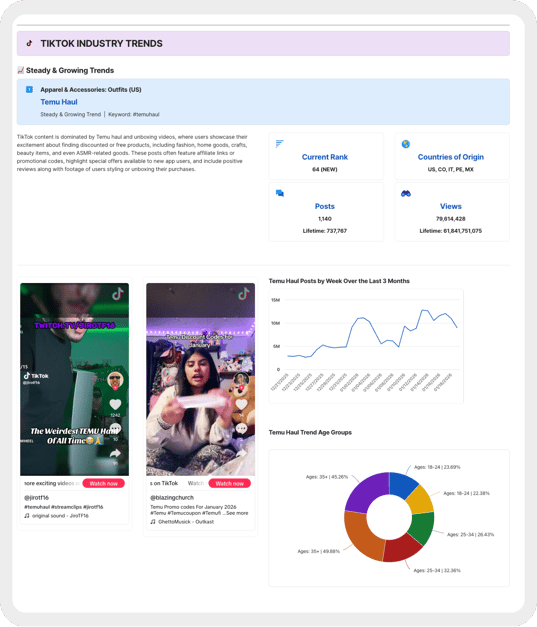
Advances in AI have significantly altered the mechanics of market intelligence, though not its purpose.
Key shifts include:
Large language models have improved the ability to summarize and synthesize text. AI agents can monitor predefined themes and surface anomalies in real time. Workflow automation has reduced manual effort in data cleaning and categorization.
However, generic summarization does not replace structured modeling. Market intelligence at scale increasingly relies on custom models trained on category-specific language and business objectives.
These models differentiate between adjacent but distinct themes, track longitudinal movement, and integrate internal datasets with external signals. They provide continuity and context rather than one-off outputs.
Interoperability has also become more important. Organizations often operate multiple AI systems. Structured context frameworks allow insights to remain traceable and auditable across workflows. Decision-makers require clarity on how conclusions were derived.
The direction is toward integrated modeling environments rather than isolated dashboards.
The tooling landscape has expanded significantly in recent years.
Traditional market intelligence relied on a combination of:
Today, the ecosystem includes AI agents, custom modeling systems, and large-scale unstructured data analysis platforms.
AI agents, like Quid's, can monitor predefined themes and surface anomalies in real time. They reduce manual effort and improve responsiveness. However, agents alone provide detection, not interpretation.
Generic large language models are useful for summarizing content but are not designed to build longitudinal market models. They do not inherently track trajectory, cluster adjacent themes, or integrate proprietary internal datasets without structured configuration.
More advanced platforms operate differently. They ingest high-volume external signals and organize them into conceptual clusters. They track theme strength over time. They allow analysts to interrogate adjacency, overlap, and velocity. They integrate internal performance data where necessary. They not only detect trends, but indicate trend strength and growth projections.
The difference is not simply speed. It is structural depth.
Organizations increasingly combine automation with human interpretation. The role of the analyst has shifted from manual data gathering to model refinement and strategic framing.

One of the more persistent challenges in leveraging the market intelligence data to actually prove value.
The impact is often indirect. It influences decisions rather than producing standalone output.
However, ROI can be measured when intelligence is tied explicitly to allocation.
Common impact areas include:
The key is traceability. When market intelligence informs a specific decision, that decision should be tracked against outcome metrics.
For example, if trend modeling informs a merchandising shift, the lift in sell-through and margin can be measured. If competitive trajectory analysis informs pricing adjustment, performance deltas can be evaluated.
Market intelligence does not generate revenue on its own. It improves the quality and timing of revenue-driving decisions.
Selecting a platform requires clarity about operating model, not just features.
Key considerations typically include:
Organizations often underestimate the importance of model flexibility. Predefined dashboards can provide quick answers, but they rarely adapt to evolving business questions.
The right system should allow teams to build models aligned to specific categories, markets, and decision frameworks. It should support interpretation, not replace it.
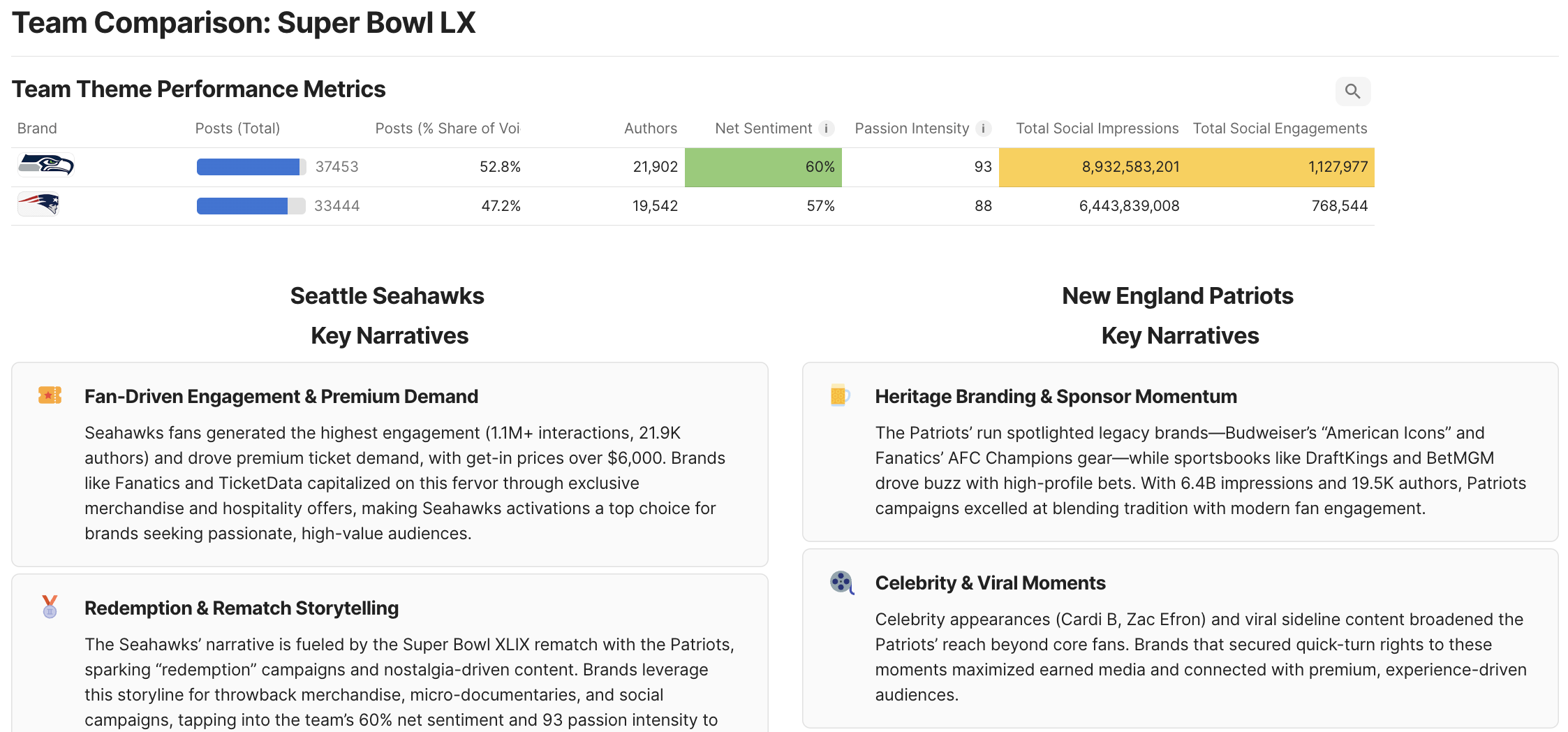
Quid shift from tools to insight-focused agentic AI reflects a broader shift: from providing brands with data, to providing brands with real business outcomes.
Rather than operating as a standalone listening or monitoring platform, Quid functions as a consumer and market intelligence engine built on custom models and AI-supported workflows.
At a structural level, Quid:
This model-based approach allows teams to move beyond descriptive reporting.

For commerce teams, this may translate into SKU-level prioritization based on accelerating demand signals. For innovation teams, it may mean identifying whitespace clusters where consumer language reveals unmet needs. For brand and communications teams, it may involve detecting narrative shifts within defined audience segments before those shifts affect performance metrics.
Quid’s AI capabilities support automation and scale, but the emphasis remains on structured modeling and interpretability. Insights are traceable to source data. Themes can be refined and customized. Cross-functional teams can align around a shared market model rather than fragmented dashboards. Want to see how it works? Schedule a meeting with us!
The positioning reflects a broader industry shift. Access to data is no longer the differentiator. Structured interpretation and decision alignment are.