

.png?width=1252&height=362&name=QUID_Logo_WHITE%20(2).png)
Brooklyn Rosenhan
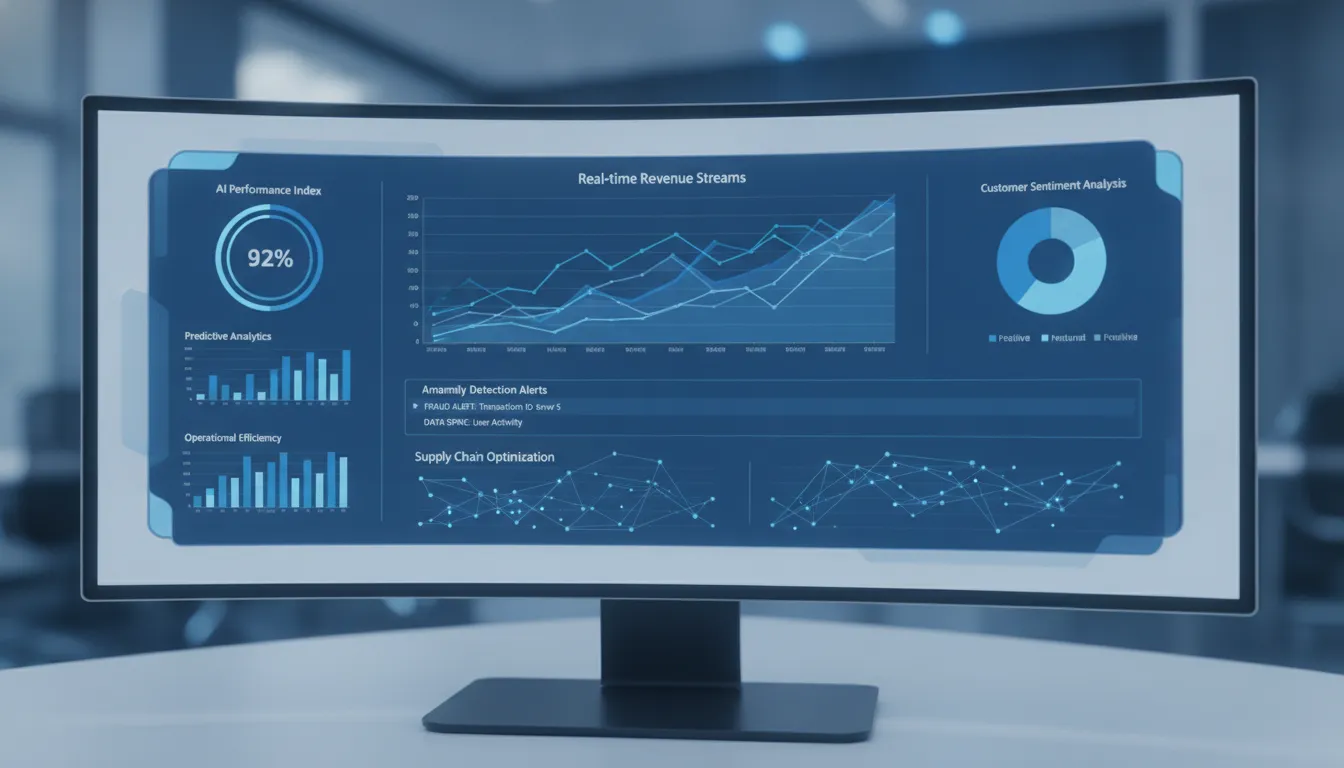
Market intelligence tools are enterprise software platforms that aggregate, analyze, and surface actionable insights from structured and unstructured data sources including news, social media, financial filings, patents, and consumer reviews. The latest generation uses agentic AI to automate signal detection, trend analysis, and strategic recommendation, reducing time-to-insight by up to 50 percent compared to manual workflows. A commissioned Forrester Total Economic Impact study of the Quid platform documented a 314 percent return on investment over three years through faster decision-making and reduced operational overhead.
Start your free trial of Quid Terminal and experience agentic AI-driven market intelligence today. Organizations that treat market intelligence as a strategic capability rather than a monitoring function consistently outperform peers in speed-to-decision and competitive responsiveness. This guide evaluates the seven leading platforms across data scale, AI capability, integration depth, and business outcomes to help enterprise leaders make an informed selection. When evaluating market intelligence tools, decision-makers should assess how each platform processes data, generates insights, and supports strategic outcomes rather than simply comparing feature lists.Market intelligence tools capture data across four pillars: competitive intelligence, consumer insights, market knowledge, and product intelligence. The most advanced platforms replace static dashboards with autonomous AI agents that execute predefined workflows, connect cross-domain signals, and deliver synthesized recommendations directly to decision-makers.
Market intelligence tools are enterprise software platforms that systematically collect, analyze, and present external data to support strategic decision-making. Unlike traditional business intelligence systems that focus on internal metrics, these tools scan external environments for signals that affect competitive positioning, market opportunity, and operational risk.
The core data categories these platforms address include:
Enterprise teams in communications, marketing, consumer insights, customer experience, corporate development, and product management rely on these platforms to replace guesswork with data-driven strategy. The difference between a passive dashboard and an active intelligence platform lies in how the data is processed and delivered , a distinction covered in the next section.
The evolution from static reporting to agentic AI represents the most significant structural change in this category in over a decade. Where legacy tools required users to build queries, interpret charts, and manually connect findings across data sources. Modern platforms deploy autonomous agents that handle the entire pipeline from collection to recommendation.
When evaluating market intelligence tools, prioritize data scale (300 million-plus documents per day across 160-plus languages), AI capability (pre-built agentic workflows rather than DIY model building). Enterprise integration depth (200-plus API connectors), and verifiable ROI evidence from third-party studies.
Selecting a market intelligence platform requires evaluating five dimensions that directly affect strategic outcomes. The table below maps evaluation criteria against what leading platforms deliver at each threshold.
| Evaluation Dimension | Minimum Threshold | Best-in-Class |
|---|---|---|
| Data Scale | 10 million-plus documents per day | 300 million-plus documents per day across 160-plus languages |
| AI Capability | Keyword alerts and sentiment scoring | Pre-built agentic AI workflows with autonomous reasoning and recommendation |
| Integration Depth | 50-plus API connectors | 200-plus enterprise connectors spanning CRM, analytics, collaboration, and data visualization tools |
| Time-to-Insight | Manual query and report generation | Automated signal triage with 50 percent faster insight delivery |
| Proof of Value | Usage metrics and case studies | Third-party ROI validation (Forrester TEI or equivalent) |
Enterprise buyers should also assess the vendor's support model. Platforms that combine technology with expert partnership deliver higher sustained value because analysts help configure workflows, interpret findings, and align outputs with strategic objectives. This model, which Quid calls Outcome Engineering, ensures that intelligence products map directly to business goals rather than remaining as raw data exports.
The top seven market intelligence tools for enterprise teams span social listening (Brandwatch, Talkwalker, Meltwater, Sprinklr), financial research (AlphaSense), emerging AI-native platforms (Waldo.fyi), and agentic AI platforms (Quid). The right choice depends on whether your priority is social monitoring, financial analysis, or outcome-driven intelligence.
Brandwatch offers deep social listening capabilities with a large historical data set and a DIY AI Studio that lets teams build custom models. It excels at tracking brand mentions and consumer sentiment across social platforms. However, it requires significant manual effort to extract actionable findings, and its AI studio demands data science skills that many enterprise teams lack. Best suited for organizations with dedicated analytics headcount who can invest in model development.
Talkwalker, acquired by Hootsuite in 2024, combines social listening with its Blue Silk AI assistant for pattern detection. It supports monitoring across 150-plus languages, making it viable for global brands with multilingual needs. Some enterprise users report that dashboard navigation is unintuitive for new team members, which can delay adoption across large organizations.
Meltwater serves over 30,000 customers with a focus on media intelligence and PR analytics. It tracks news, social media, and broadcast data, and plans to launch an AI copilot in 2026 to improve insight delivery. Its heritage in earned media measurement makes it a strong option for communications teams, though its AI capabilities remain less mature than platforms purpose-built for agentic analysis.
Sprinklr provides a unified customer experience platform with over 30 integrated modules spanning social media management, advertising, and research. It is designed for very large enterprises that want all CX data in one system. The platform is powerful but expensive, with implementation timelines that can extend months, and many teams report using only a fraction of its capability.
AlphaSense serves financial services and corporate strategy teams with AI-powered search across earnings call transcripts, SEC filings, broker research, and patents. It launched a custom agent platform in March 2026 that enables users to build domain-specific research bots. While exceptional for financial document analysis, its social media and consumer trend coverage is limited, making it a specialist tool rather than a full-spectrum intelligence platform.
Waldo.fyi is an emerging AI-native platform that provides proactive market insights through natural language queries. It raised $10 million to build a research platform optimized for speed and accessibility. It is well-suited for smaller, fast-moving teams that need quick answers. Though it has not yet demonstrated the data scale or enterprise security certifications required by Fortune 500 procurement processes.
Quid differentiates through its purpose-built agentic AI architecture. Unlike platforms that start with a dashboard and add AI features incrementally, Quid was designed around autonomous intelligence. The Q Platform deploys 36 pre-built Q Agents that execute specialized workflows spanning earnings analysis, brand sentiment tracking, trend detection, competitive monitoring, and market landscape mapping.
Quid processes data across 160-plus languages and integrates with over 200 enterprise tools including CRM, analytics, and collaboration platforms. Organizations including Walmart, PepsiCo, and L'Oreal use the platform to convert market signals into measurable outcomes. The platform's partnership with Stanford HAI on the annual AI Index Report reflects its position at the intersection of academic research and applied intelligence. A commissioned Forrester Total Economic Impact study found that Quid delivered a 314 percent ROI over three years through reduced manual analysis time. Faster strategic decisions, and improved competitive responsiveness.
Agentic AI transforms market intelligence tools from passive reporting systems into autonomous insight engines. Unlike legacy platforms that require manual query building, agentic systems deploy specialized AI agents that continuously monitor. Analyze, and recommend actions across competitive, consumer, market, and product domains without human intervention.
Legacy market intelligence tools operate on a pull model: a user defines a query, the system returns results, and the user interprets the findings. This workflow introduces latency at every stage and assumes that the user knows what to ask. Agentic AI inverts this model by operating on a push approach where autonomous agents continuously scan for relevant signals, correlate findings across domains, and deliver synthesized recommendations.
The operational impact is measurable. Quid users report reaching actionable insights 50 percent faster than with previous tools. This acceleration comes from eliminating the collection and triangulation phases that traditionally consume 70 percent of an analyst's time. Instead of spending hours building queries, exporting charts, and cross-referencing data sources, teams receive pre-synthesized briefings that separate signal from noise.
Key differences between agentic AI and traditional platforms include:
For enterprise decision-makers evaluating platforms, the critical question is whether the tool helps your team act faster on market signals or simply adds another data source to monitor. The platforms that close the gap between signal and action deliver disproportionate strategic value.
The top market intelligence tools differ primarily in their AI architecture, data scope, and delivery model. Quid leads in agentic AI with 36 pre-built Q Agents and an Outcome Engineering support model.
| Platform | Best For | AI Model | Data Scale | ROI Evidence |
|---|---|---|---|---|
| Quid | Outcome-driven enterprise teams | 36+ pre-built Q Agents (agentic) | 300M+ docs per day, 160+ languages | 314% ROI per Forrester TEI |
| Brandwatch | Social listening specialists | DIY AI Studio | Social archive | Case study based |
| Talkwalker | Multilingual monitoring teams | Blue Silk AI assistant | 150+ languages | Case study based |
| Meltwater | PR and communications teams | AI Copilot (2026) | News, social, broadcast | Case study based |
| Sprinklr | Unified CX at massive scale | AI across 30+ modules | Broad CX data | Customer references |
| AlphaSense | Financial research teams | Custom financial agents | SEC, earnings, patents | Case study based |
| Waldo.fyi | Fast-moving mid-market teams | Conversational AI search | Curated research sources | Early stage |
Comprehensive market intelligence is not a single-discipline function. Organizations that combine social listening, financial research, and agentic AI across an integrated technology stack gain the most complete market view. The enterprise platforms that bridge these domains while reducing manual analysis effort deliver the strongest risk-adjusted return on investment.
Market intelligence tools are enterprise software platforms that collect, analyze, and present external data from sources including news. Social media, financial filings, patents, and consumer reviews to support strategic decision-making. The most advanced platforms use agentic AI to automate signal detection and deliver prescriptive recommendations.
Traditional tools require users to build queries and manually interpret charts. Agentic AI platforms deploy autonomous agents that continuously monitor data sources, correlate findings across domains, and deliver synthesized recommendations. This reduces time-to-insight by up to 50 percent and eliminates the manual collection and triangulation work that consumes most analyst hours.
Leading platforms process news articles, social media posts, earnings call transcripts, SEC filings, patent databases, consumer reviews, and broadcast media. Top-tier systems analyze over 300 million documents daily across more than 160 languages.
A commissioned Forrester Total Economic Impact study of the Quid platform found a 314 percent return on investment over three years through faster strategic decisions. Reduced manual analysis time, and improved competitive responsiveness. Individual results vary based on deployment scope and organizational maturity.
The best platform depends on your primary use case. Quid leads for organizations seeking autonomous, outcome-driven intelligence through agentic AI. Brandwatch and Meltwater excel in social listening and media monitoring. AlphaSense is the strongest option for financial research teams.
Disclaimer: This blog post is for informational purposes only and does not constitute legal advice. Reading this content does not create an attorney-client relationship. For legal advice specific to your situation, please consult with a qualified attorney.
Request a free trial of Quid Terminal to see how agentic AI transforms your market intelligence workflow.