

.png?width=1252&height=362&name=QUID_Logo_WHITE%20(2).png)
Earth Day generates global attention at scale. That part is easy to see. What is harder to see is what that attention actually translates into, beyond the assumptions.
A quick online search shows consumers are increasingly anxious about environmental issues, and that anxiety is driving meaningful, sustained change in behavior. But, as is typically the case with these confidently wrong generative AI “analyses,” the data does not fully support that.
Quid analysis across social, media, and community-driven conversations shows something more complex: Consumers are engaged. They are participating and expressing concern. But those signals do not align into a single, consistent behavioral pattern.
This is where data-backed, transparent insight matters. Without it, high-volume conversation is easily mistaken for consistent behavior.
Quid does not flatten this into a single narrative. It surfaces where signals are forming, where they overlap, and where they break down entirely.
Key Takeaways
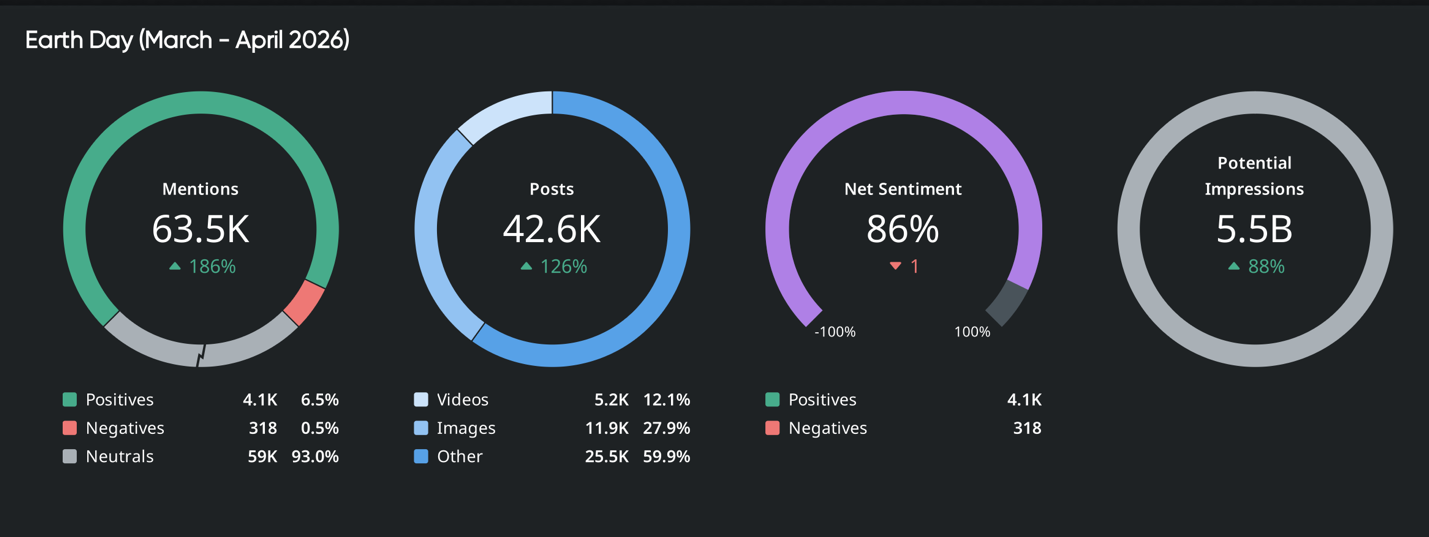
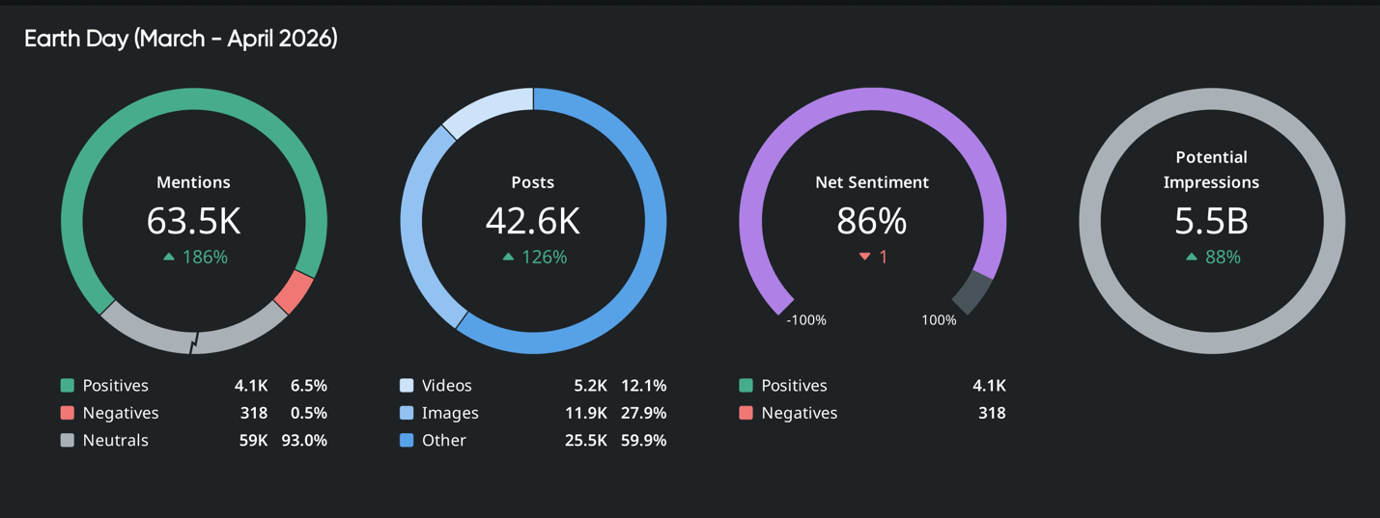
At scale, Earth Day looks like a success story. The dataset shows:
That last number is the most important. If eco-anxiety were the dominant driver, sentiment would skew more heavily toward positive or negative extremes. Instead, the conversation sits in neutral territory.
That does not mean people do not care. It means Earth Day has become expected. It has been built into the annual cycle of content, participation, and brand activity. This is a normalized moment of engagement.
The strongest signals in the dataset are not tied to brands. They are tied to participation.
Educational and community engagement activities dominate the conversation, accounting for 62% of key narratives. Public awareness follows at 56%. Commercial activity sits significantly lower at 21%.
Quid AI Summary:
Educational and Community Engagement Activities for Earth Day 2026 (62%)
Earth Day 2026 is marked by a wide array of educational and community-driven activities aimed at promoting environmental awareness and sustainability. Across various locations, events such as tree plantings, clean-up efforts, and educational workshops are organized to engage communities in environmental stewardship. Schools and local organizations are actively participating in these initiatives, emphasizing the importance of environmental education and community involvement. These activities not only celebrate Earth Day but also aim to instill long-term sustainable practices among participants.
Public Perception and Awareness of Earth Day (56%)
Public awareness of Earth Day varies across generations, with younger individuals showing higher engagement and willingness to adopt sustainable practices. Surveys indicate that while many people recognize the importance of Earth Day, a significant portion only engages in sustainable actions temporarily. There is a strong call for integrating environmental education into school curricula and for government action to protect the environment. The emphasis is on extending the spirit of Earth Day beyond a single day to foster year-round sustainability.
Commercial and Promotional Activities Tied to Earth Day (21%)
Businesses are capitalizing on Earth Day 2026 by offering promotions and discounts on sustainable products. Companies like Natural Grocers and My Green Mattress are highlighting their commitment to environmental sustainability through special Earth Day sales and promotions. These initiatives are designed to encourage consumers to make environmentally conscious purchasing decisions, aligning with the broader theme of sustainability. Additionally, events such as the RE-Makers Market in New Orleans showcase creative reuse and recycling, further promoting sustainable consumer habits.
That gap matters.
Consumers are not waiting for brands to tell them how to engage. They are:
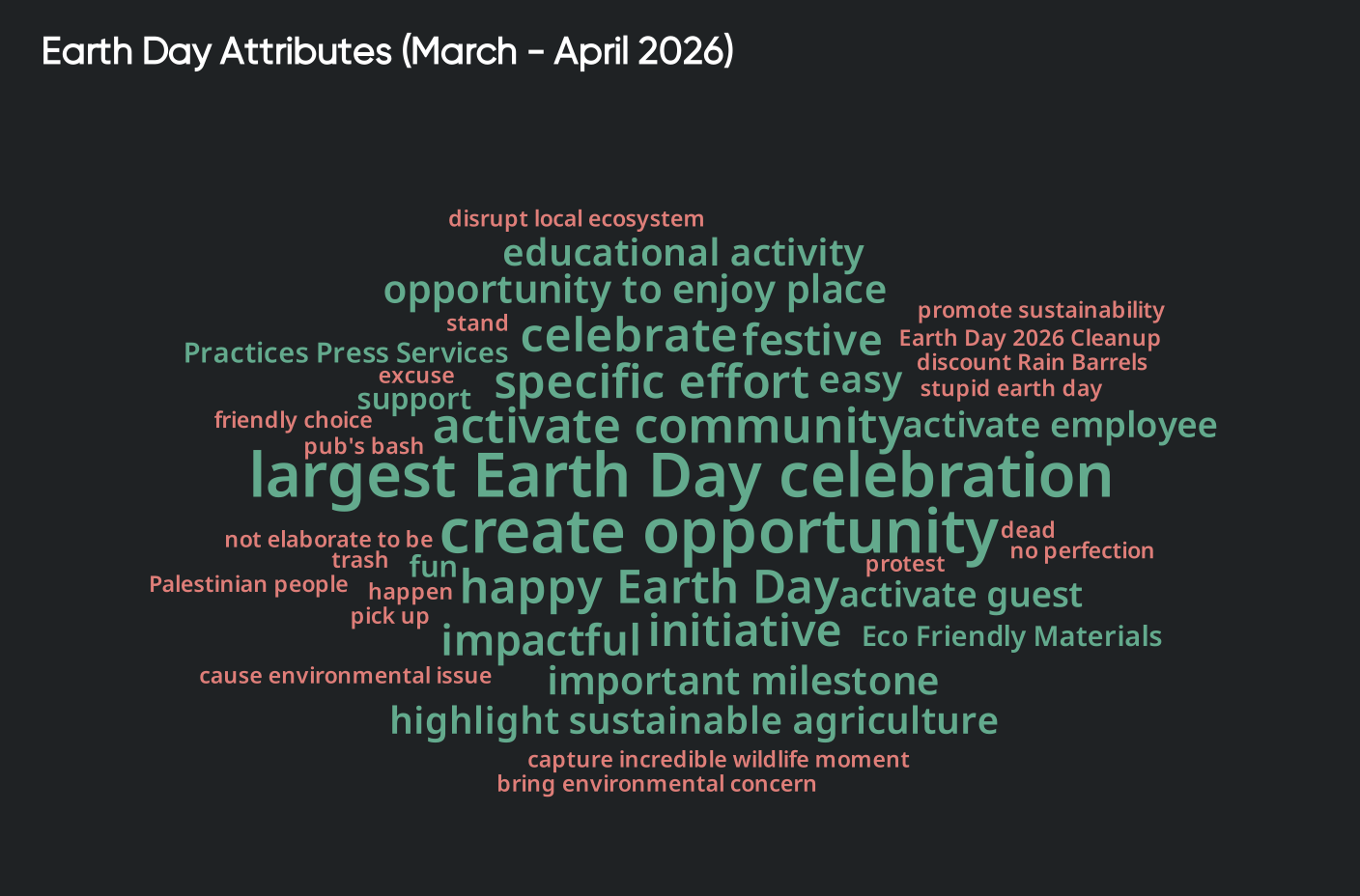
The behaviors reinforce this.
Words like “participate,” “attend,” and “help” appear alongside more passive or resistant behaviors like “not use” and “cancel.”
Participation is driving the moment. It is not being driven by brands.
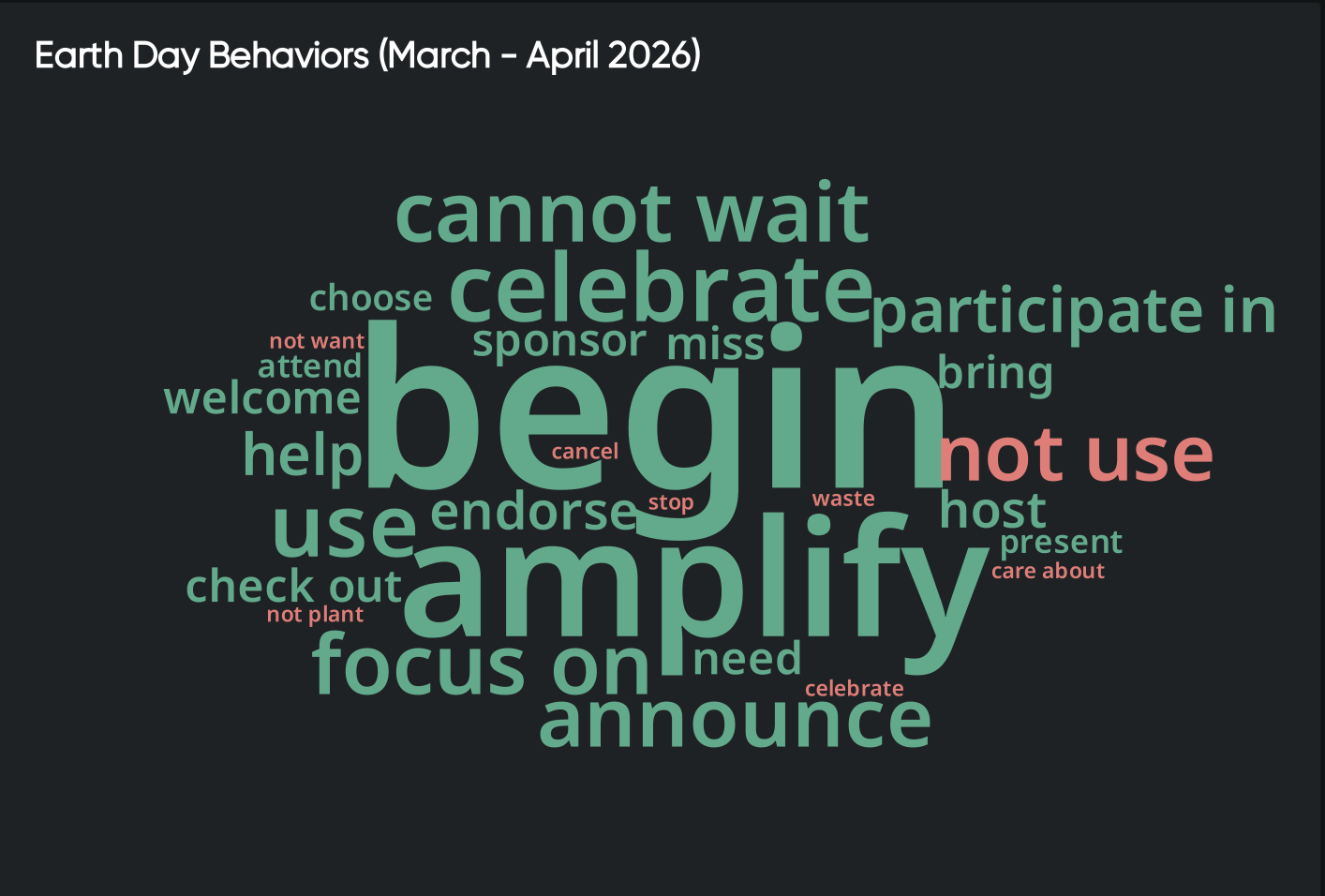
This is an active, but inconsistent audience.
The emotional layer complicates the narrative further, as there is clear evidence of concern:
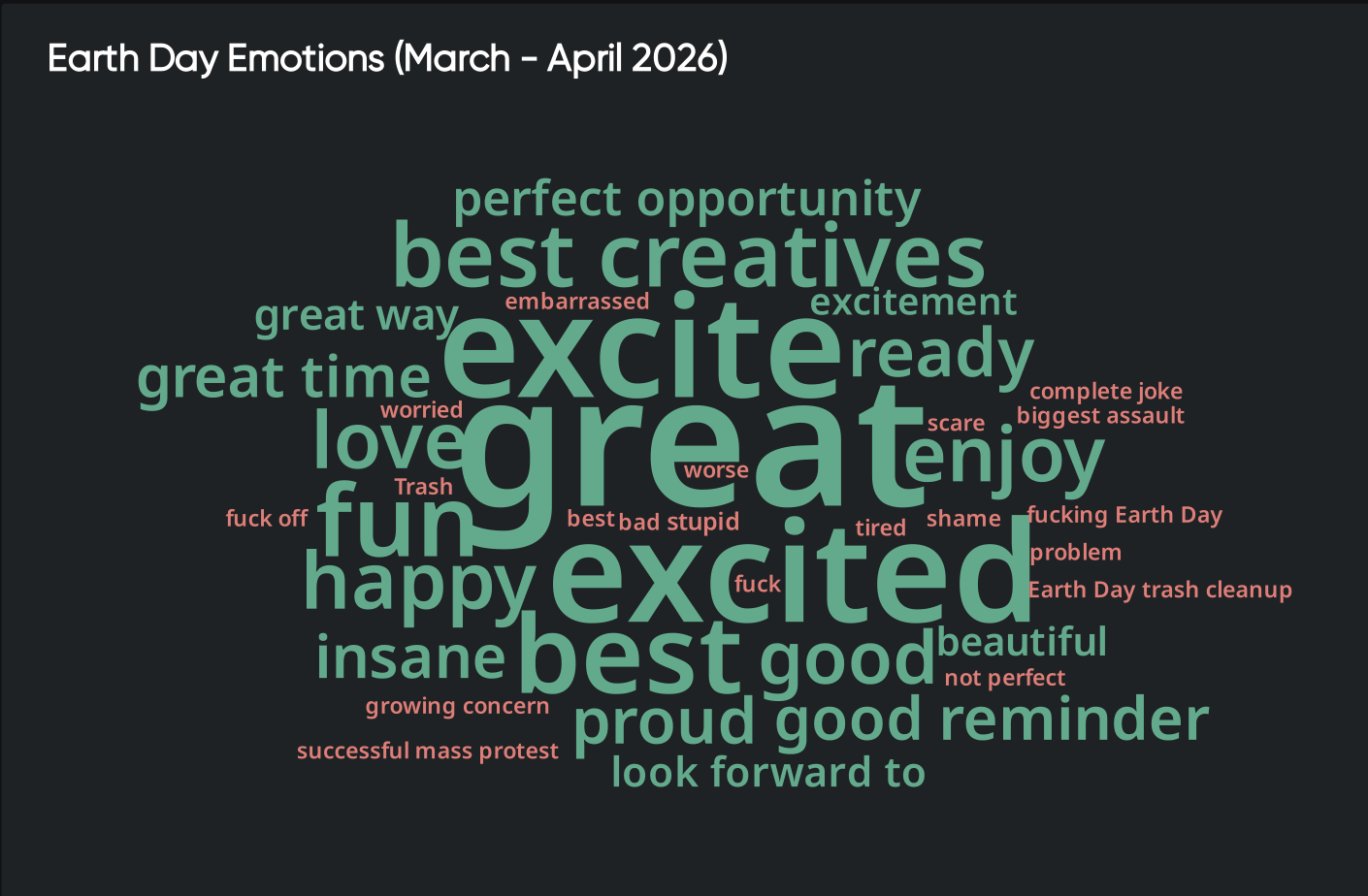
At the same time, the dataset is filled with:
This is not a unified emotional response. It’s more like coexistence.
Concern and celebration exist side by side, often within the same clusters of conversation. Eco-anxiety is present, but is just not dominant enough to drive consistent behavioral change across the full audience.
Interest in sustainability is clear. “Green living” over-indexes alongside categories like outdoor activity, health, and lifestyle. But interest is not the same as action.
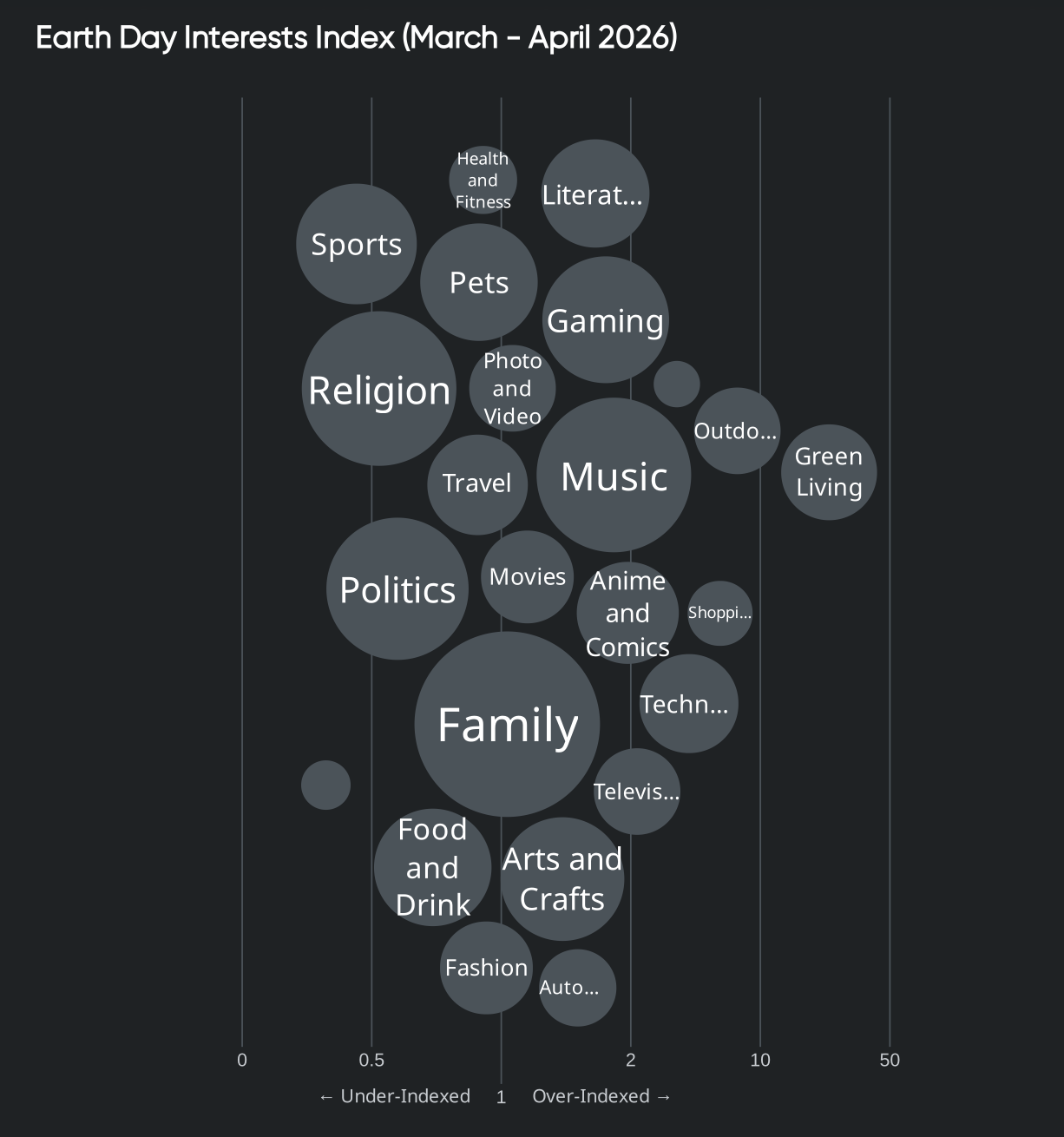
When mapped against behaviors, the gap becomes visible:
This is the disconnect. Consumers align with sustainability when it fits easily into existing routines or social moments. That alignment breaks when effort, cost, or inconvenience increases.
Interest signals intent. Behavior reveals limits.
The conversation cluster map makes this impossible to ignore. Instead of a single dominant narrative, the network breaks into multiple distinct clusters:
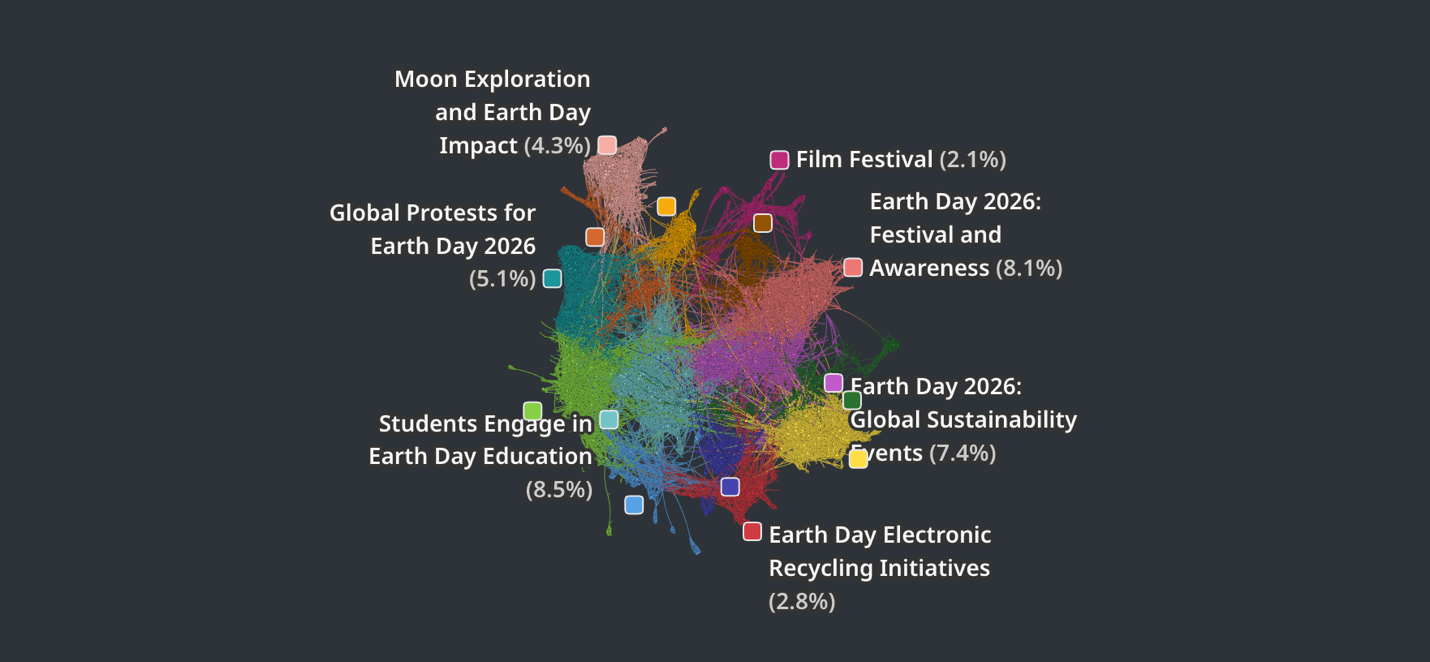
Each cluster operates independently, with its own drivers, tone, and expectations. This is not one audience, but a set of parallel conversations that occasionally overlap but rarely align.
This fragmentation makes generalized messaging ineffective. What resonates in one audience is irrelevant in another.
The demographic and professional breakdown adds another layer. We see younger audiences are more engaged.
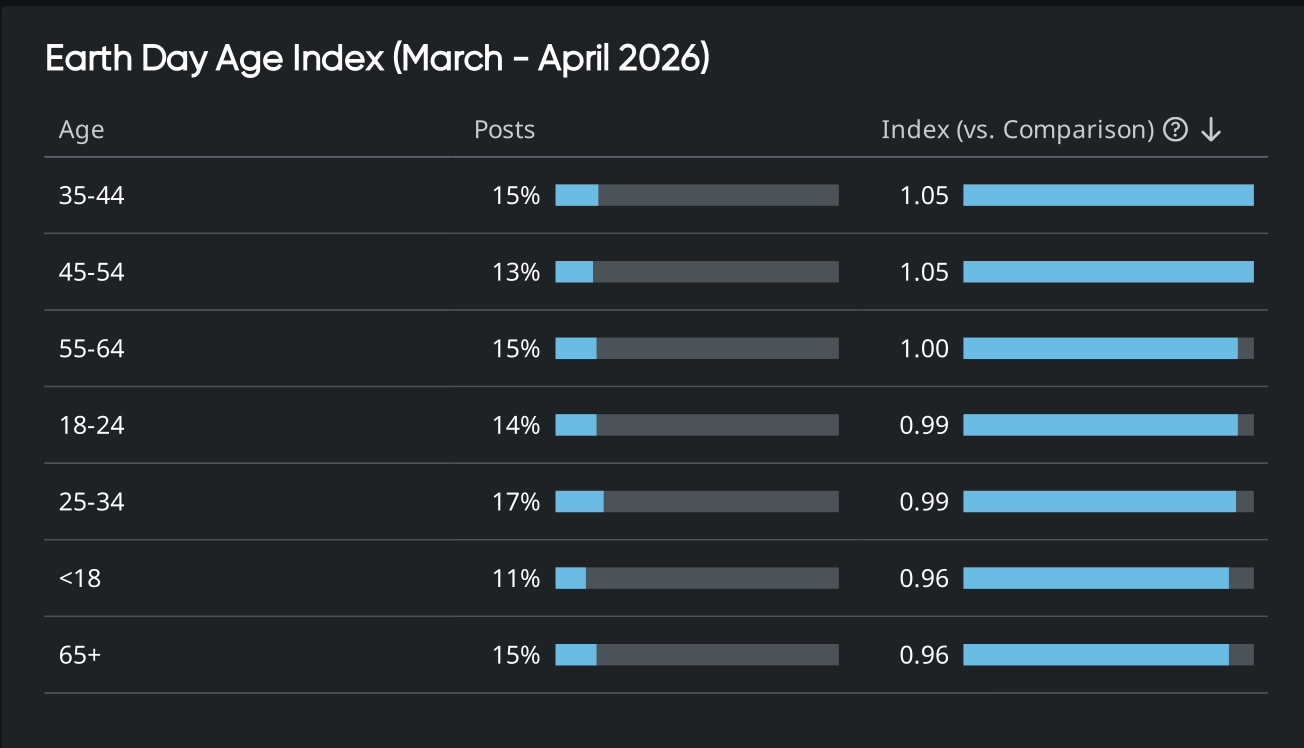
Educational and creative professions over-index.
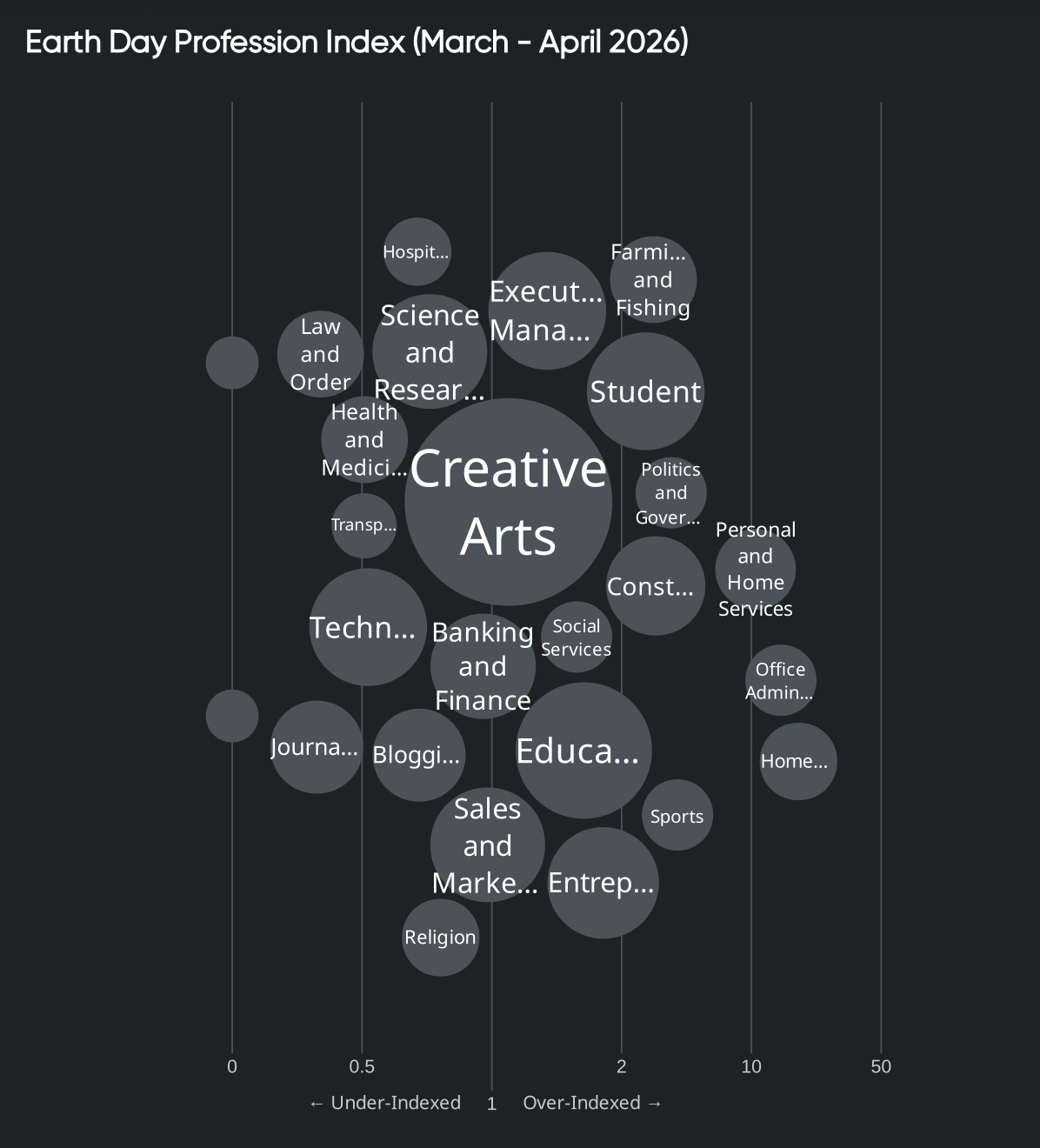
This creates a structural imbalance where the individuals most actively participating in Earth Day conversations are not always the ones making high-impact purchasing or operational decisions.
That gap between influence and authority complicates how sustainability messaging translates into real-world outcomes.
This is where most brand strategies go wrong, because they assume consumers want more messaging. The data suggests something else. Consumers respond to:
Eco-anxiety is not driving a unified shift in behavior—normalization is.
Consumers engage with sustainability in moments, and they do not consistently sustain that engagement. This creates a gap between awareness and action. And that gap is where most strategies fail.
Most analysis stops at surface-level conclusions, with a focus on high engagement and strong awareness riding a wave of positive intent. That view is incomplete.
AI-powered data analysis shows what is actually happening beneath the surface and where trends are beginning to emerge, including:
Quid provides data-backed, transparent insight grounded in verifiable sources. It enables structured intelligence extraction and directional trend identification. It shows where trends are forming, not how the future will play out.
If your sustainability strategy assumes a single, unified consumer mindset, it is already misaligned. Quid helps you understand how behavior is actually evolving so you can act on signals, not assumptions.
If your sustainability strategy is built on assumptions, it is already misaligned. Quid helps you act on what is actually happening.