
.png?width=1252&height=362&name=QUID_Logo_WHITE%20(2).png)
The 2026 FIFA World Cup is already generating massive global attention.
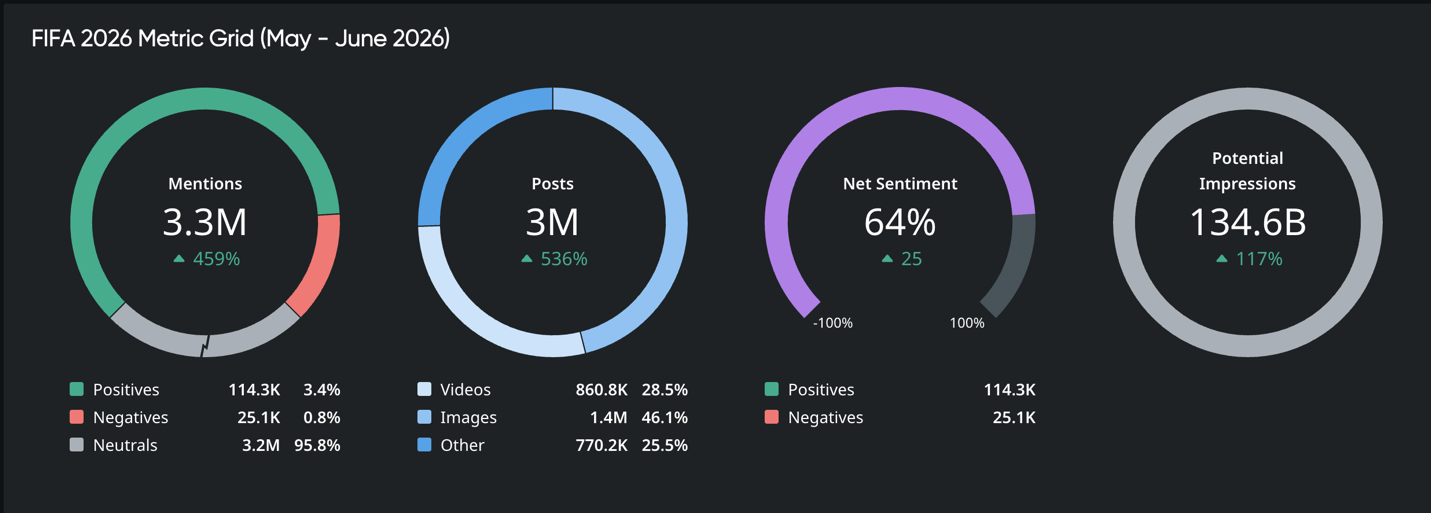
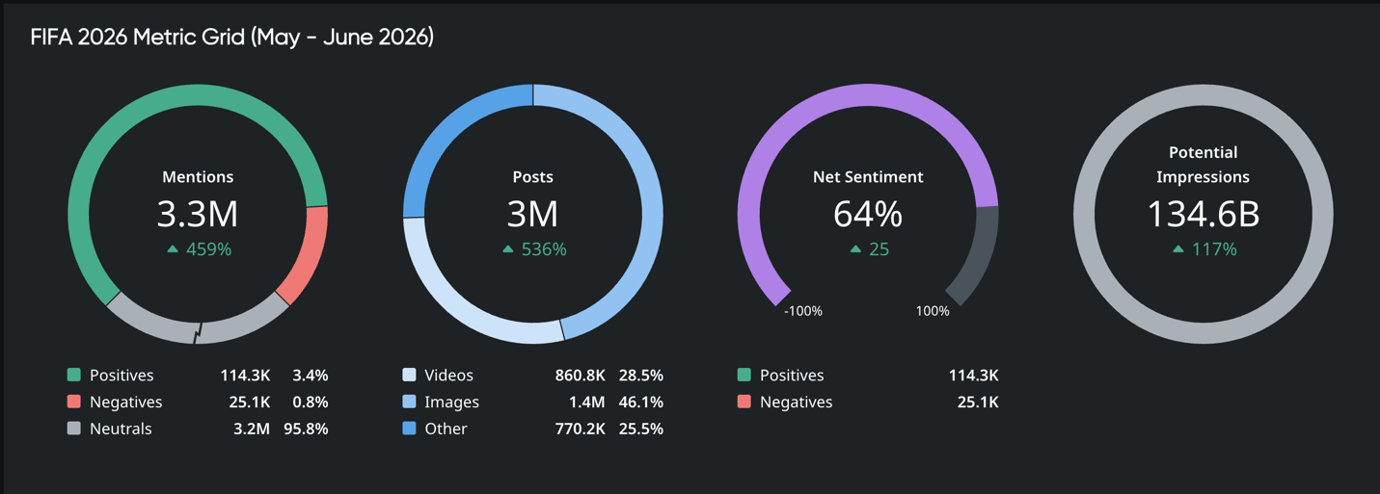
The scale of the conversation is already remarkable. As shown in the dashboard below, FIFA 2026 generated 3.3 million mentions, 3 million posts, and 134.6 billion potential impressions across May and June 2026 alone, with discussion volume increasing more than 450% compared to prior periods. Neutral sentiment dominates at nearly 96%, suggesting that most consumers are still gathering information and forming opinions as the tournament approaches.
For brands, that creates a rare opportunity.
The biggest conversations are not centered solely on matches or players. They are increasingly focused on access, affordability, logistics, entertainment, and the overall experience surrounding the event. The World Cup is functioning as a consumer ecosystem long before the first match begins.
Key Takeaways
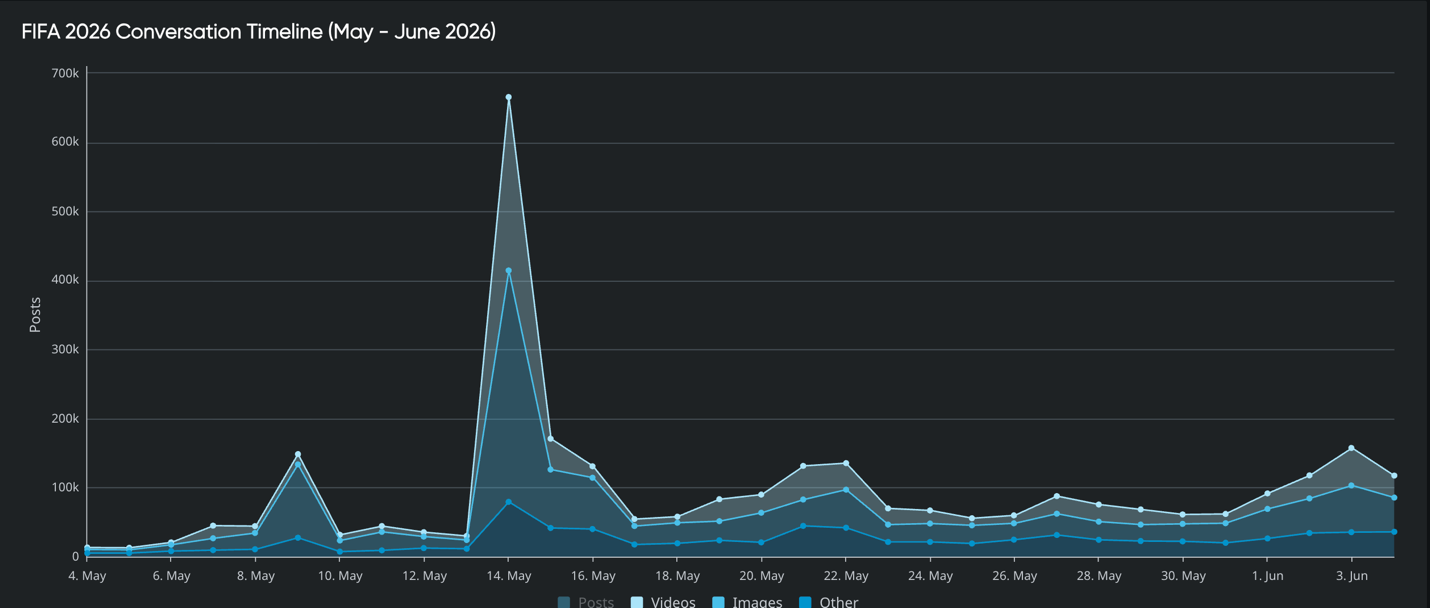
The dashboard shows a massive surge in discussion volume, with several major spikes occurring throughout May and early June. The conversation is highly visual, with images accounting for 46.1% of content and videos representing another 28.5%.
That matters because it changes how brands participate.
Fans are not simply reading updates. They are engaging with highlight clips, merchandise reveals, venue previews, fan-generated content, and social storytelling. The World Cup conversation is increasingly driven through visual media rather than traditional reporting.
For marketers, that means attention is already being distributed across multiple channels and formats well before kickoff.
One of the strongest recurring narratives across media coverage involves ticket affordability and access.
Coverage highlights investigations into dynamic pricing, consumer complaints about seat reassignments, and concerns that average fans may be priced out of attendance. Local governments have responded with ticket lotteries and discounted access programs designed to preserve community participation.
The issue extends beyond ticket sales. When consumers perceive access as unfair, frustration often spills over onto sponsors, host cities, broadcasters, and partner brands. That creates a brand-safety challenge that many organizations traditionally associate with political or social issues rather than sporting events.
The World Cup may be generating excitement, but affordability concerns are emerging as one of the most influential drivers of negative conversation.
Supporter engagement is one of the largest themes identified in our Q Agent analysis, accounting for 6.48% of all major conversation clusters.
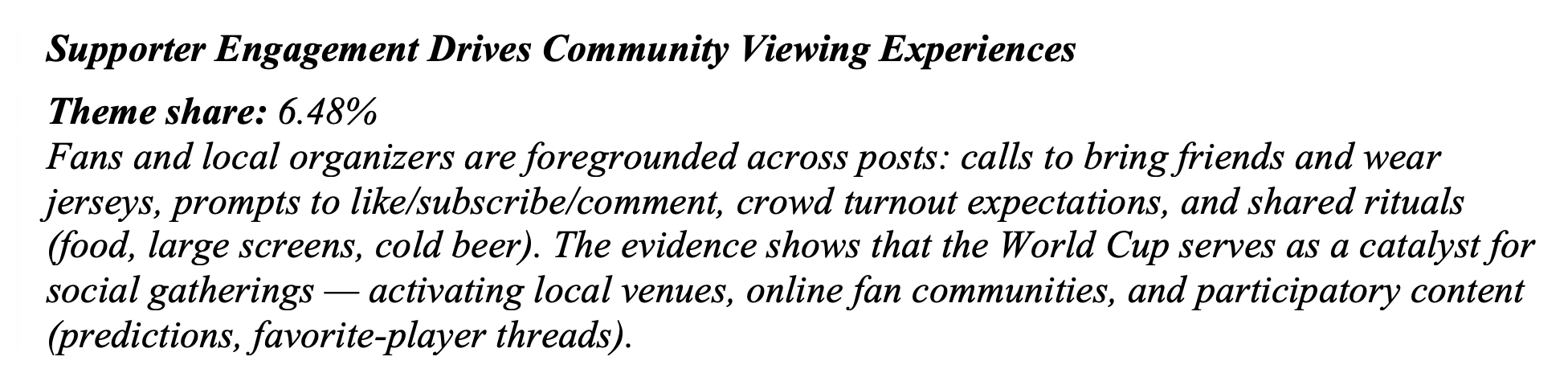
Fans are organizing watch parties, community viewing events, prediction contests, and local celebrations months before the tournament begins.
The result is an important shift.
The World Cup experience is no longer limited to ticket holders. Millions of consumers will participate through local venues, social communities, streaming platforms, and brand-sponsored activations.
For brands, that expands the potential audience dramatically. Organizations that focus exclusively on in-stadium sponsorships risk missing where much of the engagement is actually occurring.
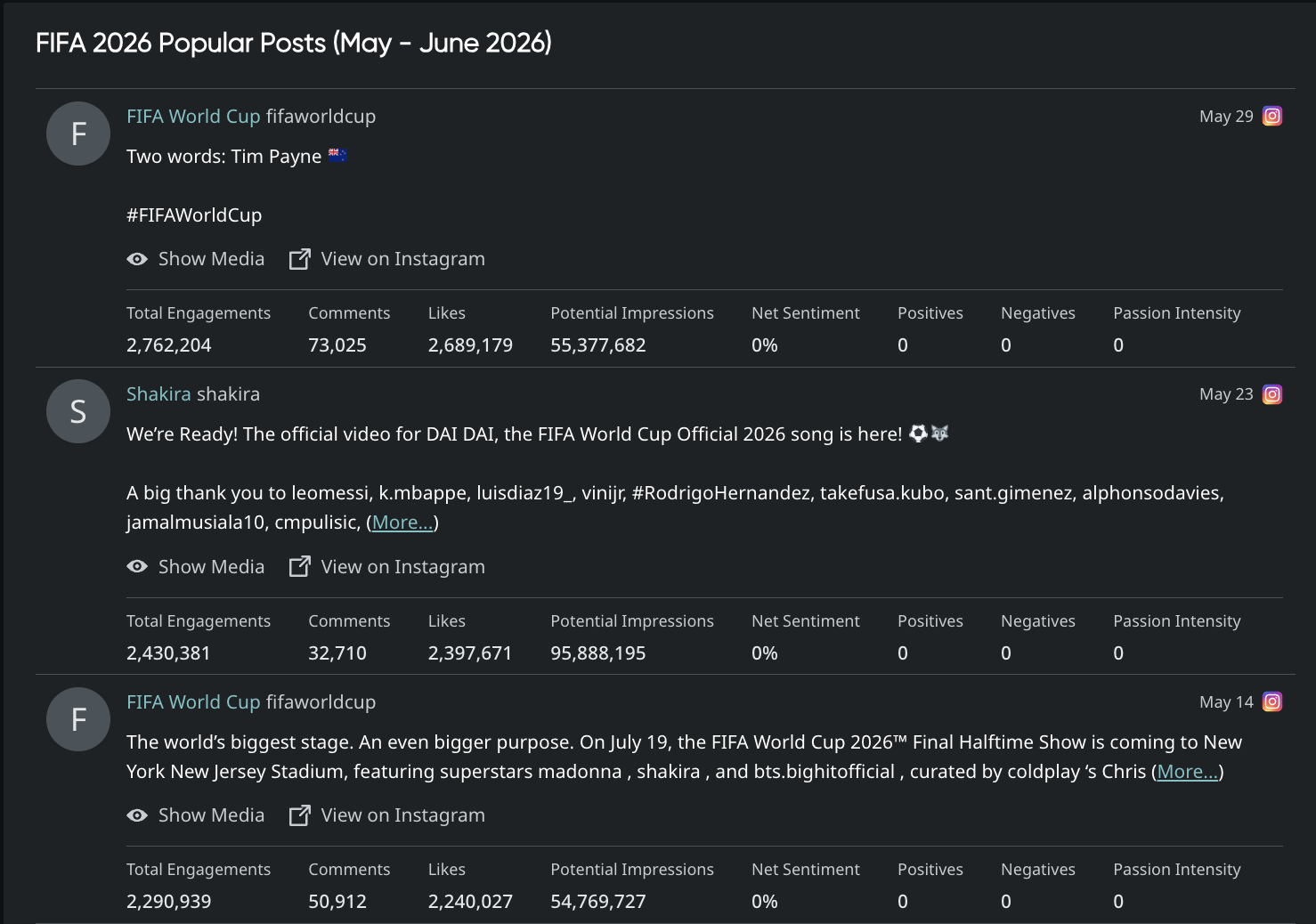
Some of the most-engaged content is not tied to match results.
The official FIFA song, major artist collaborations, and halftime-show announcements are generating millions of engagements on their own. Discussions surrounding Shakira, BTS, Madonna, Burna Boy, LISA, Anitta, and Rema demonstrate how music and entertainment have become central components of the World Cup experience.
This creates new partnership opportunities that extend beyond traditional sports sponsorship.
Consumers are engaging with the World Cup through culture, not just competition.
The FIFA 2026 conversation is not confined to sports audiences. The Interests Index reveals that while sports remains the dominant conversation driver, engagement extends across music, gaming, travel, fashion, politics, television, food and drink, and even family-oriented discussions.
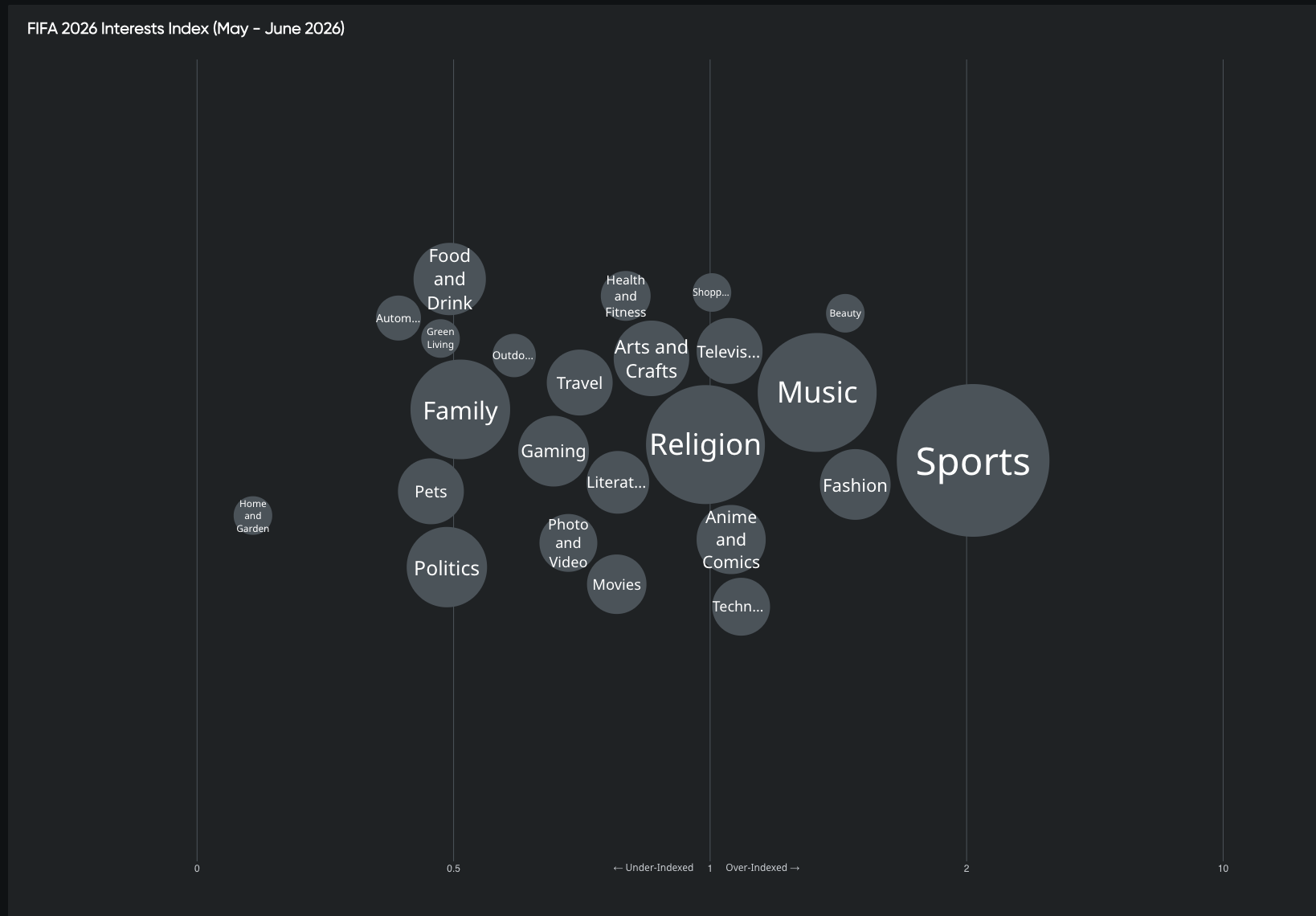
That breadth helps explain why the World Cup consistently generates attention far beyond traditional sports media.
For brands, this matters because consumers are entering the World Cup ecosystem through very different pathways.
Some arrive through sports. Others arrive through music, gaming, travel, culture, or commerce.
The result is a highly interconnected audience where sponsorship opportunities extend far beyond match-day activations. Brands that understand these overlapping interests can identify partnership opportunities that may be invisible when viewing the tournament strictly through a sports lens.
Another major theme emerging from TikTok and social conversations is the growth of collectibles and licensed merchandise.
Panini albums, trading cards, limited-edition products, rumored LEGO collaborations, and unboxing content are generating significant engagement. Fans are demonstrating both nostalgia and purchase intent, creating opportunities for brands to participate in the tournament through products rather than media alone.
Gaming conversations show a similar pattern.
Discussions around FIFA titles, esports, Football Manager content, and creator-driven experiences are helping extend tournament engagement to audiences who may never attend a match but still actively participate in the broader ecosystem.
The emotional landscape surrounding FIFA 2026 is unusually balanced.
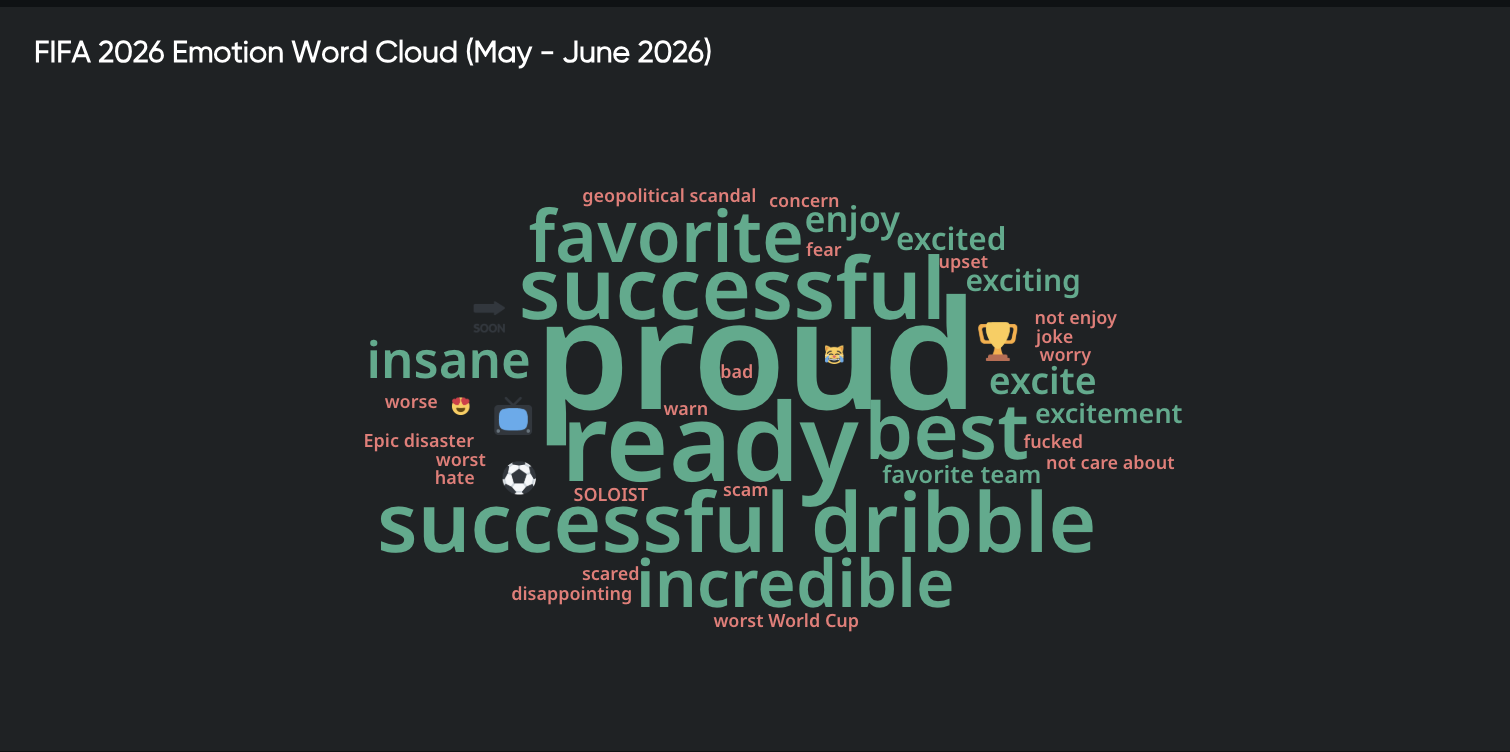
Positive terms such as proud, ready, excited, successful, and favorite team appear prominently throughout the conversation. At the same time, words such as scam, worry, fear, concern, worst World Cup, and geopolitical scandal remain visible.
That combination tells an important story.
Fans remain enthusiastic about the tournament itself, but concerns about pricing, logistics, geopolitics, security, and organizational decisions continue to shape expectations.
The result is a conversation that is neither overwhelmingly positive nor overwhelmingly negative. It is a conversation defined by anticipation mixed with scrutiny.
What This Means for Brands
A Google search can tell you who qualified, and an AI summary can explain where matches will be played. Neither shows how ticketing concerns connect to fan sentiment, how entertainment partnerships intersect with merchandise demand, or how local transit discussions influence the overall fan experience.
Quid surfaces those relationships.
The data shows that FIFA 2026 is already functioning as a connected ecosystem of sports, entertainment, commerce, travel, community engagement, and consumer experience. Brands that monitor only one piece of that ecosystem risk missing the larger story.
The organizations most likely to succeed during the World Cup will be the ones tracking how these conversations interact, evolve, and influence one another in real time.
Want to understand how major cultural moments are shaping consumer behavior before they become headlines? Quid helps brands move beyond isolated trends to uncover the connected narratives driving sentiment, engagement, and decision-making at scale.
FAQ
How large is the FIFA 2026 conversation currently?
The conversation generated approximately 3.3 million mentions, 3 million posts, and 134.6 billion potential impressions during May and June 2026.
What is driving negative sentiment?
Ticket pricing, accessibility concerns, seating controversies, security discussions, and geopolitical issues are among the most common sources of criticism.
What opportunities exist for brands?
Community viewing experiences, collectibles, merchandise, gaming activations, entertainment partnerships, and localized fan engagement programs are emerging as major opportunity areas.
Why does Quid provide more value than a traditional search?
Search tools surface information. Quid reveals how conversations connect across audiences, channels, themes, and behaviors, helping brands identify emerging opportunities and risks before they become obvious.