


Key Takeaways
When it comes to forecasting sales, most decisions are made on last quarter's scan data and retailer sell-through. Retailers are looking at seasonality and past consumer behaviours but therein lies the problem.
Those numbers show where a category was, not where it's heading, and shoppers change what goes in their baskets long before the shift shows up in syndicated sales reports.
The world has shifted and continues to shift at a rapid space, and even if some retailers are using social media signals, or market reports, by the time market reports are analysed it might be too late. And social media data only represents one segment of the market.
For real sustained success, the brands that grow are the ones that spot the change early and get the right product, pack, and claims onto the shelf first, using a multi-data approach.
This is what Quid Does.
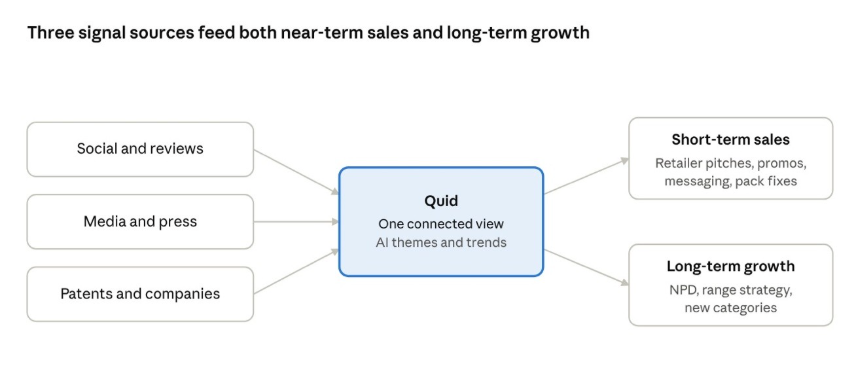
It brings the signals behind that change into one place: what shoppers say in social posts, forums, and product reviews; what the trade and consumer press report; and what manufacturers and challenger brands patent, fund, and launch. For FMCG teams, that means sharper promotions and faster range fixes this quarter, and a clearer view of which products, formats, and claims will earn shelf space over the next three to five years.
Let’s break it down.
Social listening and product reviews are the closest thing a brand has to standing in the aisle with its shoppers. People compare flavors, complain about packaging, trade tips on cheaper dupes and own-label alternatives, and explain why they switched, all in their own words and without a survey question steering them. Quid's AI groups that conversation into themes, so brand and category teams can see which needs are growing, which complaints keep coming back, and which words shoppers use when they talk about a category.
By the time a key account manager sits down with a retail buyer, the trade press, consumer media, and industry analysts have already shaped that buyer's view of the category. Tracking that coverage shows which stories are gaining ground, which competitors own the narrative, and where a brand is missing from conversations it should be part of.
For FMCG sales, this has direct uses. New rules on HFSS products, sugar content, or packaging waste can force a range change, and brands that see the coverage building have time to reformulate before the deadline. A competitor's recall, price rise, or shrinkflation backlash can open a window to win distribution. A category story the brand isn't part of yet is a gap the next retailer pitch or PR push can fill.
Shopper and media signals describe demand. Patent filings and company data describe supply: what the big manufacturers are formulating, which challenger brands are getting funded, and which ingredients, packaging materials, and processes are moving from the lab toward the shelf. A cluster of filings around a sugar replacer, a plant-based protein, or a recyclable mono-material pack often shows up years before the product does.
The real value comes from putting the two side by side. When shoppers are asking for something that few companies are patenting, that's white space a brand can claim with its next launch. When patent activity is climbing but shoppers aren't talking about it yet, it's an early warning that a competitor may soon reset what the category looks like.
In the near term, this type of consumer and market intelligence makes every sell-in, promotion, and activation decision less of a guess. FMCG teams using Quid put these signals to work in a few common ways:
None of these calls for a long research project. They come from reading the signal early and getting it to the people closest to the shelf.
2. Long-Term Growth Depends on Betting Early on the Right Trends
The bigger prize is strategic. FMCG innovation cycles are long: a new product can take a year or more to formulate, test, secure a listing, and reach shelves. Waiting until a trend is obvious means launching alongside every competitor and the retailer's own label.
Quid helps teams separate lasting shifts from passing fads by tracking how a trend moves across sources over time. A theme that starts in niche communities, gets picked up by the press, and then attracts patent filings and investment is building momentum. One that spikes on TikTok and fades just as fast is probably noise. That view feeds decisions with a long payback:
Getting these calls right is what turns a strong promotional quarter into a lasting share gain.
3. And ultimately - The Brands That Read the Signals First Will Own the Shelf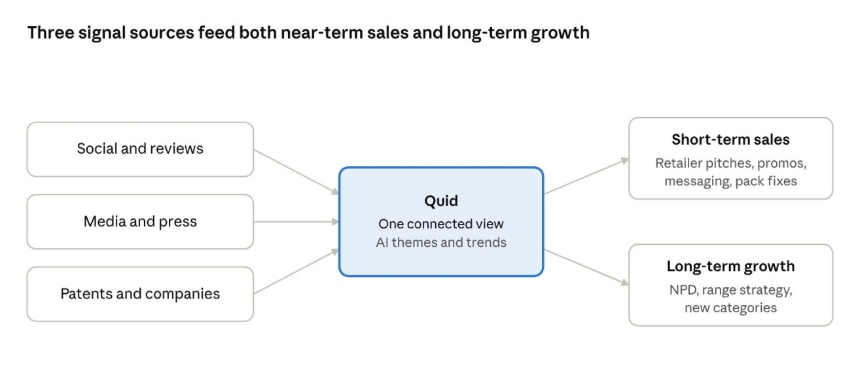
FMCG has never had more data, and it has never been easier to read it too late. Scan data and sell-through will always matter, but they confirm what has already happened. The advantage now sits in the gap between the first sign of a shift, whether that's a forum thread, a trade headline, or a cluster of patent filings, and the moment it lands in the sales figures. Brands that close that gap get to shape their categories; the rest spend their time reacting to them.
Closing it takes more than one lens. When shopper conversation, media coverage, and patent and company activity are read together, sales, category, and innovation teams can make this quarter's calls and their longer-term bets from the same evidence, and that is what Quid is built to do. To see what those signals could do for you, get in touch!
Why Isn't Scan Data Enough to Forecast FMCG Sales?
Scan data, sell-through, and seasonal patterns are reliable records of what shoppers bought. They're less useful for what shoppers will buy next, because a change in behavior tends to show up in conversation, coverage, and innovation activity long before it reaches syndicated sales reports.
Isn't Social Listening Enough on Its Own?
Social listening is one of the best early reads on shopper needs, but it reflects only one segment of the market. It also says nothing about supply: what competitors are formulating, funding, or about to launch. Pairing it with press coverage and patent and company data fills both gaps.
What Data Does Quid Bring Together?
Quid combines what shoppers say in social posts, forums, and product reviews; what the trade and consumer press report; and what manufacturers and challenger brands patent, fund, and launch. Its AI groups that material into themes so teams can see what's growing and what's fading.
How Does This Help Sales in the Short Term?
The quickest gains usually come from stronger retailer pitches backed by shopper evidence, sharper on-pack and retail media messaging, better-timed promotions, faster responses to a competitor's misstep, and small product fixes that address recurring complaints.
And Over the Longer Term?
Tracking a trend across sources over time helps separate lasting shifts from passing fads. That shapes decisions with a long payback, from which NPD concepts to fund and which SKUs to cut to which adjacent categories or challenger brands are worth a closer look.
Who in an FMCG Business Uses These Insights?
Brand, category, sales, and innovation teams all draw on them. Working from the same evidence means a quick win at one retailer doesn't pull against the long-term plan for the brand.