

.png?width=1252&height=362&name=QUID_Logo_WHITE%20(2).png)
.png?width=1380&name=template%20even%20text%20(4).png "<span id=\"hs_cos_wrapper_name\" class=\"hs_cos_wrapper hs_cos_wrapper_meta_field hs_cos_wrapper_type_text\" style=\"\" data-hs-cos-general-type=\"meta_field\" data-hs-cos-type=\"text\" >Goodbye Fall Fashion & Hello Fall Function!</span>")
Consumers are excited about Fall. They’re watching for new outfits, colors and seasonal collections. But beneath that enthusiasm, consumers are prioritizing function. They want their fall purchases to work harder.
What are the biggest fall fashion trends in 2026?
Fall fashion conversations include seasonal colors and new collections alongside practical priorities such as layering, comfort, versatile footwear and durable wardrobe staples.
What are consumers looking for in fall clothing?
Quid analysis shows language around outfits, wear, warm clothing, cozy styles and wardrobe-building within the broader fall fashion conversation.
What are transitional clothes?
Transitional clothing includes pieces that can be layered or styled across changing temperatures and seasons, such as lightweight cardigans, denim, jackets and versatile footwear.
Are consumers still interested in seasonal fashion?
Yes. Seasonal colors, collections and trend-driven styles remain part of the conversation, but functional attributes and value are also prominent purchase considerations.
Why does versatility matter in fashion?
Versatile pieces can work across multiple outfits, temperatures or seasons, giving consumers more ways to use a purchase.
Comfort, versatility, layering, durability and value are showing up alongside traditional conversations about style. The seasonal wardrobe is becoming less about buying an entirely new look for fall and more about finding pieces that can transition between temperatures, outfits, occasions and even seasons.
For retailers and CPG brands, that changes what makes a seasonal product compelling.
Quid analyzed the fall fashion conversation from May through August 2026 and identified 64.9K mentions across 55.9K posts.
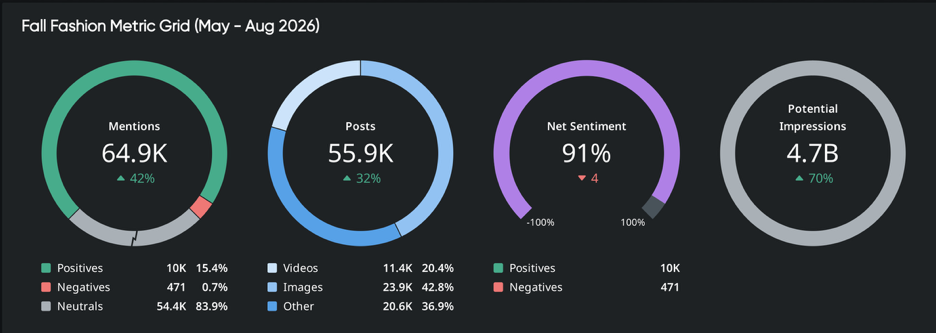
Interest is overwhelmingly favorable. Net sentiment reached 91%, with 10K positive mentions compared with just 471 negative mentions. The conversation also generated 4.7 billion potential impressions. Those numbers make it clear that consumers have not lost interest in fall fashion.
In fact, conversation accelerated substantially as fall approached. Quid's timeline shows activity beginning to climb in July before increasing sharply in late July and early August.
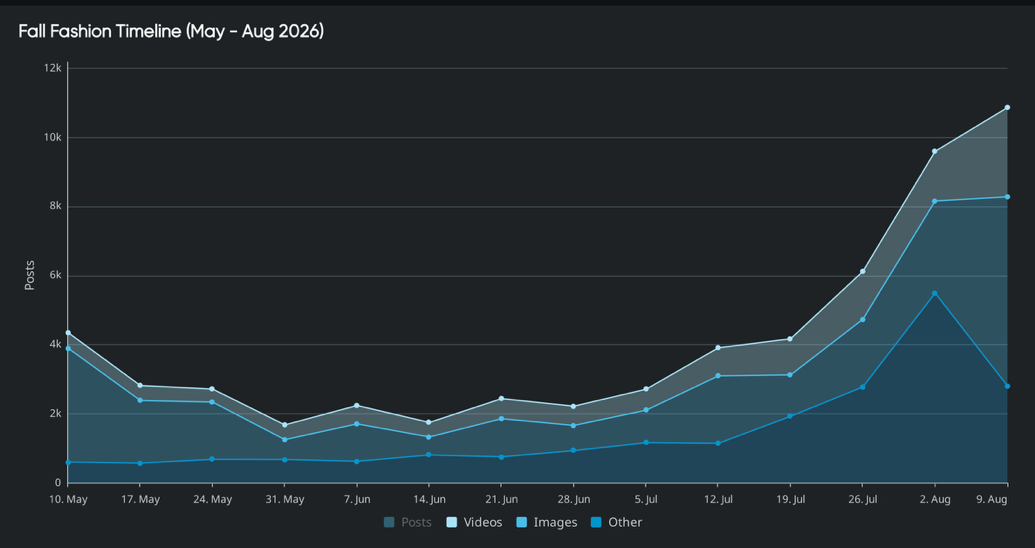
Seasonality still creates attention. What consumers expect from the products receiving that attention, however, appears to be changing.
The language surrounding fall fashion provides an early clue.
Quid's attribute analysis surfaces familiar fashion terms including "outfit," "fashion," "style," "dress" and "sweater." But practical language appears throughout the same landscape. "Cozy," "warm," "wear," "wardrobe" and "prepare warm clothes" all emerge in the conversation.
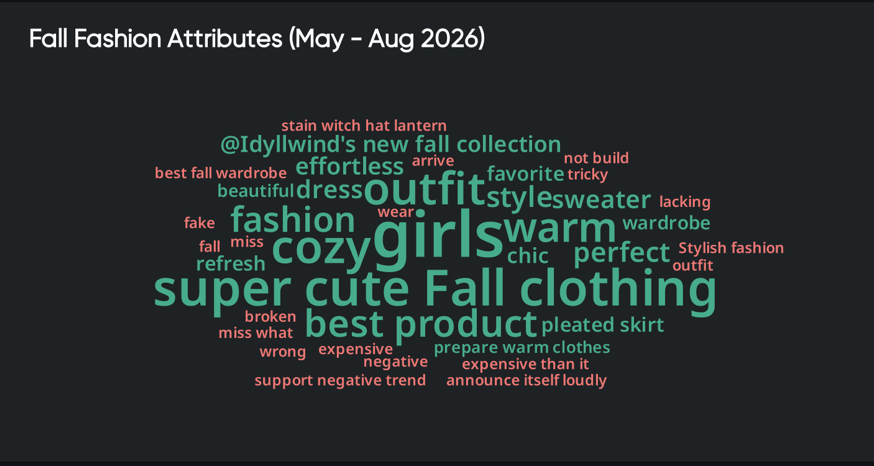
That combination shows that consumers are not necessarily choosing between looking good and dressing practically. Increasingly, products have to satisfy both priorities.
The Quid Agent analysis reinforces that pattern across individual categories.
The common denominator is utility.
A sweater can still be stylish, and a boot can still reflect a seasonal trend. But the purchase becomes easier to justify when that product can also handle changing temperatures, work with multiple outfits or remain useful beyond a narrow seasonal window.
Traditional seasonal retail has long encouraged consumers to think in collections: summer ends, fall arrives and wardrobes change with it. Transitional dressing complicates that cycle.
The Quid Agent analysis found fashion coverage explicitly positioning some cashmere pieces for year-round use and lightweight cardigans as tools for moving between seasons. Denim receives similar treatment, with classic styles remaining wardrobe staples even as new seasonal trends arrive. That creates a different value proposition.
Instead of asking consumers to buy something because fall has arrived, brands can show how an item solves the practical problem created by fall: unpredictable temperatures, changing weather and the need to move between different environments without rebuilding an outfit every few hours.
Seasonal products suddenly have a much longer job description.
Practicality does not appear to be dampening consumers' enthusiasm.
Quid's emotion analysis is dominated by highly positive language including "love," "favorite," "amazing," "super cute," "excited," "beautiful," "gorgeous" and "stunning."
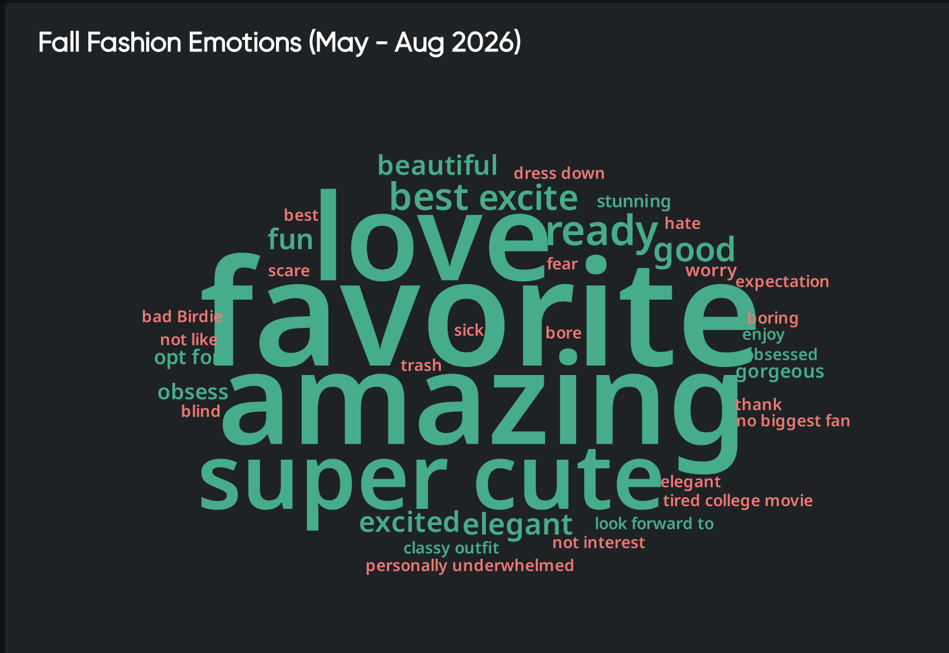
This shows that functional fashion does not have to look utilitarian and the strongest opportunity may lie in products that combine emotional appeal with practical usefulness.
Consumers can love the look of something while also appreciating that it is comfortable enough for daily wear, warm enough for changing weather, or versatile enough to justify the purchase.
Footwear offers a particularly clear example. The Agent analysis identified comfort-first booties, Chelsea boots, loafers and weather-resistant options within fall coverage. Practical attributes appear alongside classic silhouettes and seasonal styling.
Function becomes another reason to want the product.
Quid's behavior analysis adds another dimension. Alongside "wear" and "look for," the fall fashion landscape includes purchase-oriented behaviors such as "buy," "want," "build," "need," "shop," "stock up," "pick out," "add" and "upgrade."
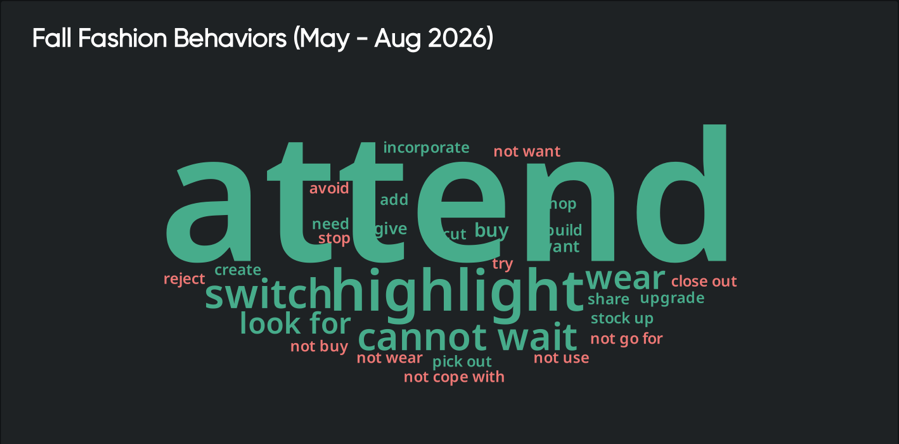
That vocabulary suggests consumers are actively assembling and evaluating their fall wardrobes rather than merely admiring seasonal inspiration.
The Agent analysis also found a substantial volume of conversation around discounts and value, with coverage spanning sales, lower-priced products, past-season merchandise and premium products positioned around durability or repeated use.
Price alone does not tell the whole story, though. A higher-priced pair of jeans, cashmere sweater or pair of boots can make sense when consumers expect to wear it frequently and across multiple seasons. Meanwhile, discounts can make seasonal purchases easier to justify for shoppers focused on immediate value.
For retailers, both behaviors point toward the same challenge. Retailers need to give consumers a reason the product deserves space in the wardrobe.
There is an important counterpoint in the data, too, as consumers still care about aesthetics.
Quid's broader analysis continues to surface "fashion," "style," "outfit," "dress" and seasonal collections prominently. Its terms analysis includes "outfits," "wear," "shopping," "buy," "everyday" and "sale," showing commerce and style occupying the same conversation.
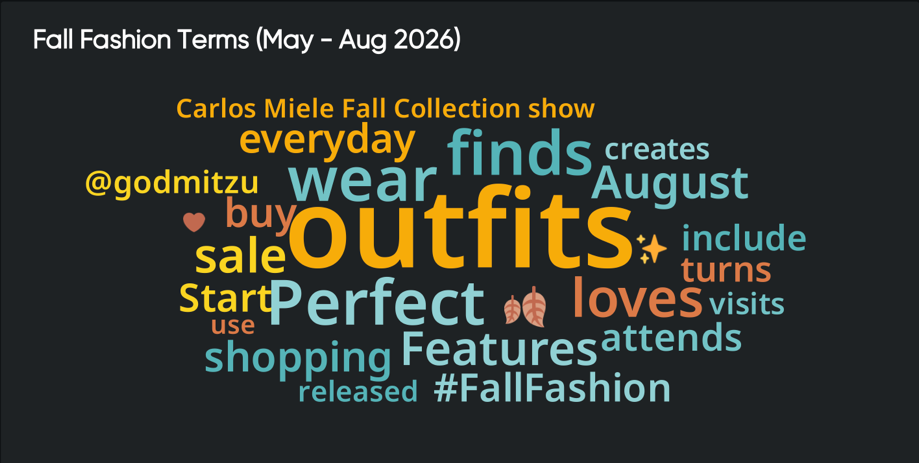
The Agent analysis found the same pattern. Seasonal colors, including dusty blue, chocolate brown, olive, and bold reds, remain part of fall coverage. Trend-led silhouettes and styling recommendations have hardly vanished.
That is why the shift should not be interpreted as the death of seasonal fashion, but the bar for seasonal relevance does appear to be getting higher.
A beautiful fall color can create desire, and a trend can capture attention. But versatility, comfort, durability or value can provide another reason to complete the purchase. Brands that combine those motivations may be considerably more powerful than those that choose between them this season.
Traditional seasonal campaigns often lead with novelty: the new color, the new silhouette, the new collection. The 2026 conversation suggests brands have more to work with.
A cardigan can be marketed around its color and its ability to move from late summer into fall. A boot can deliver a seasonal silhouette while emphasizing comfort or weather resistance. Denim can participate in a trend while remaining a durable wardrobe staple.
This gives brands a richer set of messages throughout the customer journey.
Retailers can emphasize layering and multiple styling options. Product pages can make comfort, materials, durability and weather resistance easier to find. Campaign creative can demonstrate how products transition across temperatures and occasions. Merchandising can pair seasonal statement pieces with versatile staples that extend their usefulness.
Fall remains a powerful cultural and commercial moment. Quid's 91% net sentiment and 4.7 billion potential impressions show just how much enthusiasm surrounds the category.
But enthusiasm does not explain what consumers will buy. The larger opportunity comes from understanding how style, emotion, behavior, product attributes and value connect within that conversation.
That distinction is everything when the seasonal playbook itself is changing.
The brands that understand why consumers want something, how they expect to use it and what makes it worth buying can build seasonal strategies around the signals actually shaping demand.
In 2026, fall function may be what helps make the sale.
Consumer trends do not move in a straight line. Fashion, function, value and emotion can evolve simultaneously, making it difficult to understand which signals will actually influence demand.
Quid helps brands connect those signals across millions of conversations so they can see what consumers care about, how behaviors are changing and where new opportunities are emerging.
Discover what is shaping your market with Quid.

Is fall fashion becoming more functional in 2026?
Quid's analysis shows functional attributes such as comfort, layering, durability, versatility and weather readiness appearing alongside traditional fall fashion signals. Seasonal style remains important, but practical considerations are increasingly part of how products are positioned and discussed.
Are seasonal fashion trends becoming less important?
The available data does not show seasonal trends disappearing. Colors, collections and trend-led styles remain visible. Instead, functional and value-oriented considerations are appearing alongside those traditional fashion signals.
What types of fall clothing support transitional dressing?
The analysis highlights lightweight cardigans, cashmere layers, denim, jackets and versatile footwear as products that can move across changing temperatures or seasons.
How can retailers market fall clothing differently?
Retailers can pair seasonal aesthetics with clear functional benefits, including comfort, layering potential, durability, weather resistance and versatility across outfits or seasons.
How can consumer intelligence help retailers understand seasonal trends?
Consumer intelligence can reveal relationships among trends, product attributes, emotions, behaviors and purchase considerations, helping retailers understand the forces shaping demand beyond individual keywords or search trends.