There is a shift afoot that is reshaping the discovery journey, and it influences what people see before they even reach a traditional search results page.
What's Happening in the AI Search Space?
AI search recommendations are changing how people discover information. Users rely less on keyword searches and more on conversational prompts, AI overviews, and recommendations inside social platforms.
This trend is broad. It is no longer limited to SEO professionals. Consumers across demographics discuss how AI influences daily decisions. Their posts show curiosity, concern and growing reliance on AI-generated suggestions.
What the Data Shows
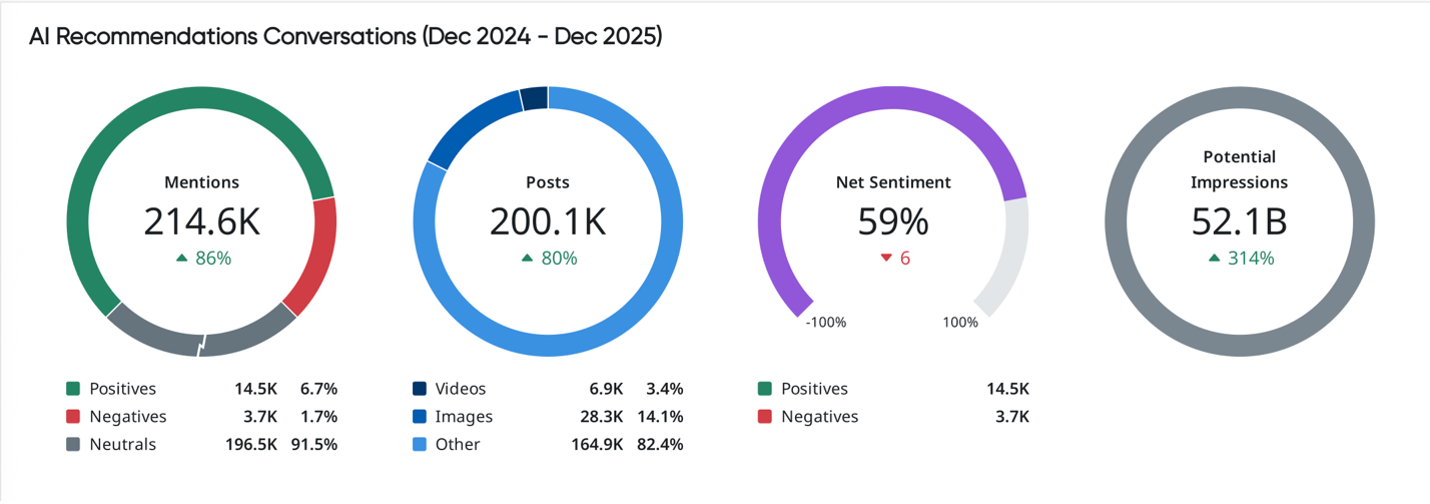
The dataset includes 214.6K mentions of AI recommendations (Dec 2024–Dec 2025), generating 52.1B potential impressions. Most conversation is neutral (91.5%), but the emotional signals lean positive (59% net sentiment).
The timeline shows consistent activity through the year with spikes tied to news cycles or new AI integrations.
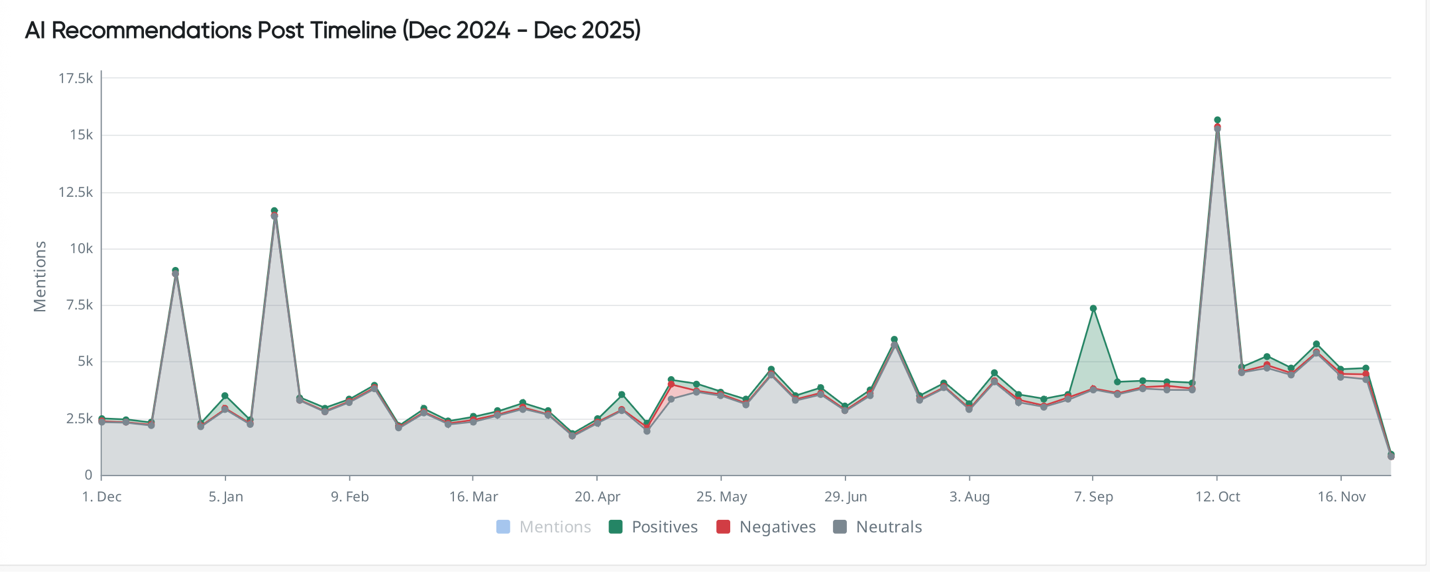
Major conversation spikes come around the same time as:
-
Google AI rollout expansions (March–April)
-
High-profile AI hallucination reporting, including Google search errors
-
Snap and Perplexity integration announcements (mid-year)
-
Reddit Pro and AI content distribution features (late-summer)
-
Holiday shopping, with users commenting on AI gift recommendations (Nov–Dec)
These moments sparked waves of posts where users shared screenshots, tested features, or debated accuracy.
How Conversations Organize
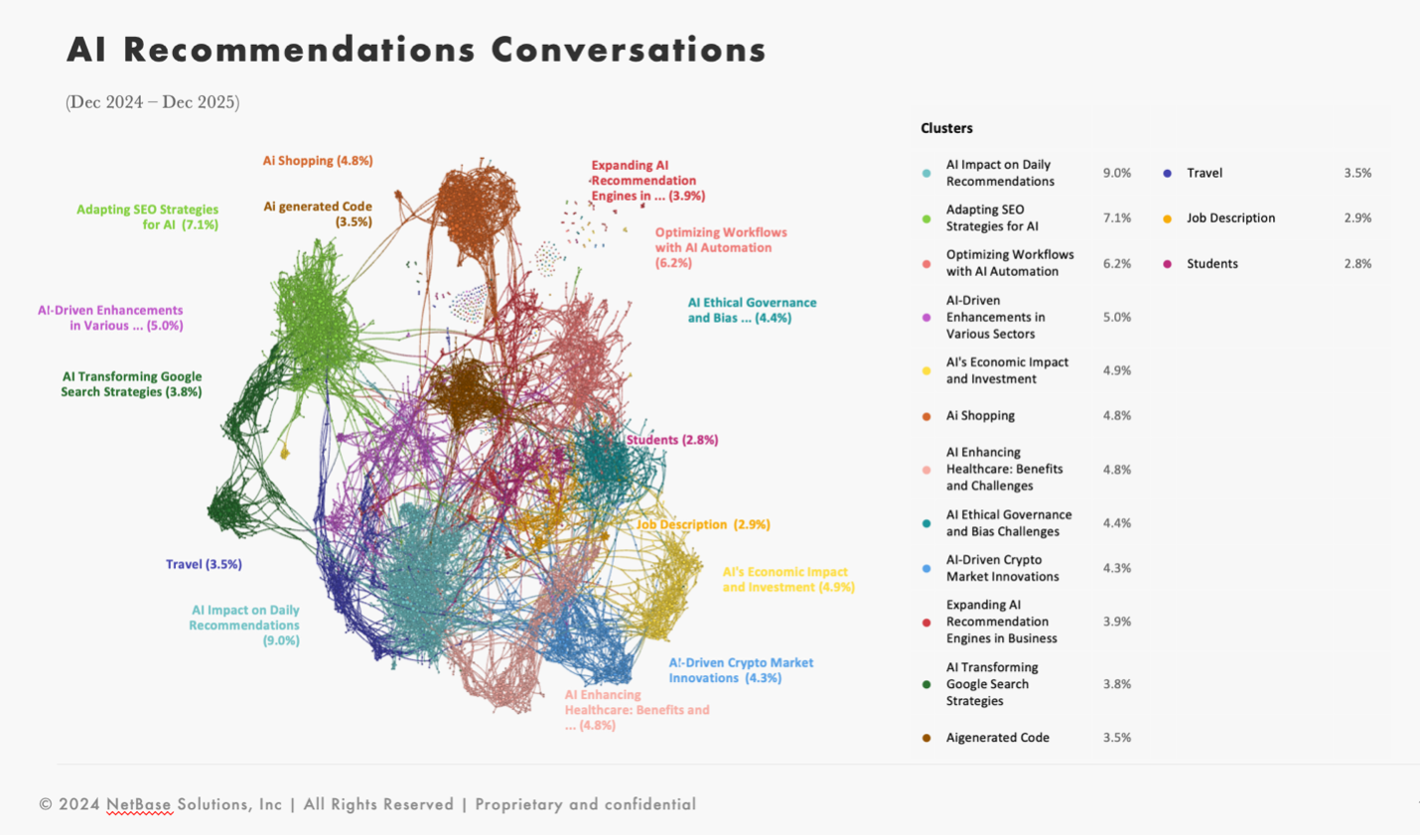
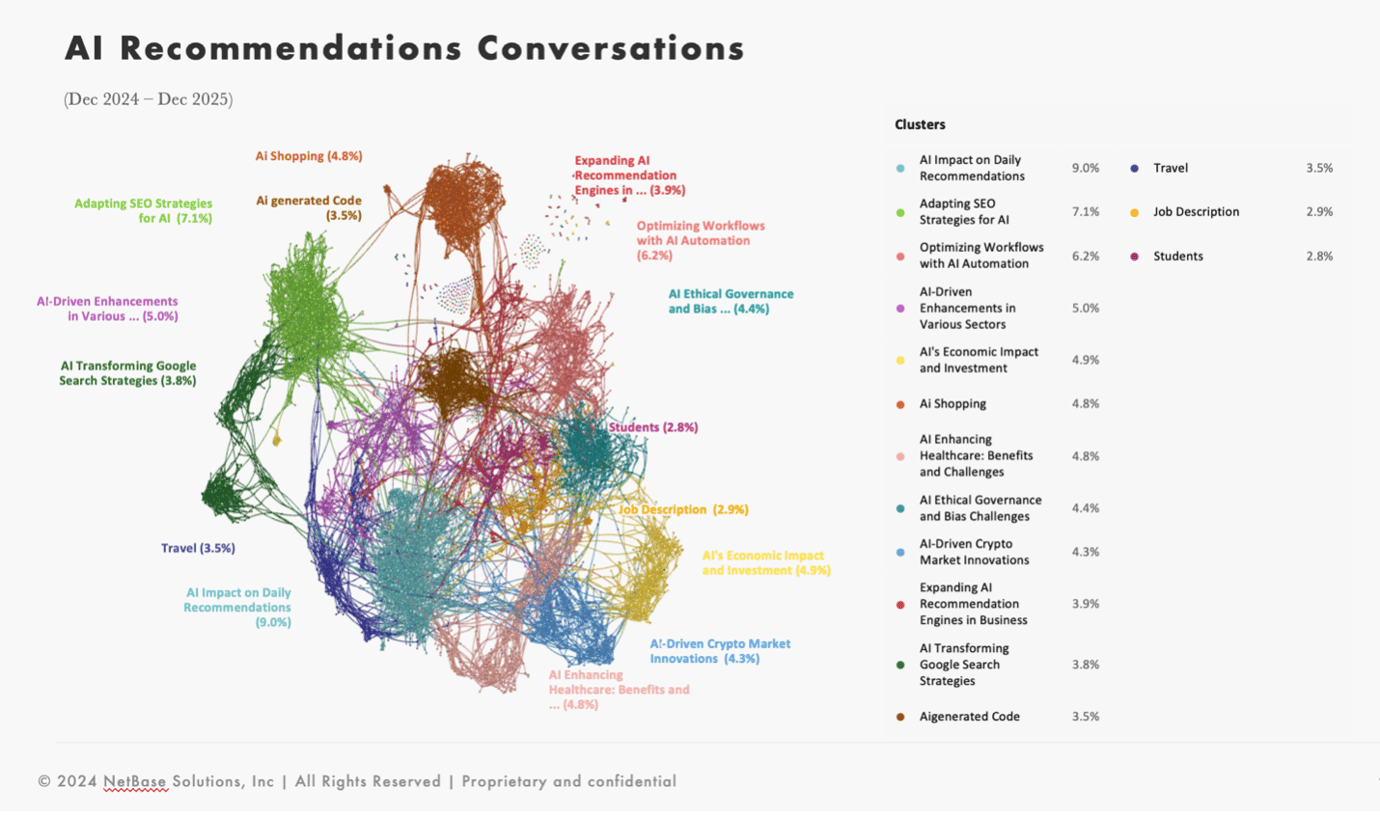
The network view shows how broad the conversation has become. Posts cluster around five major topics:
-
Daily AI usage, including people reacting to specific recommendations
-
AI shopping, where users test or critique AI-driven purchase suggestions
-
SEO adaptation, as professionals respond to shifting search patterns
-
Google search changes that are driven by AI Overviews and result formatting
-
Workflow automation, where recommendations support productivity tasks
These clusters show that AI recommendations touch on practical routines as well as bigger questions about search quality and information access.
AI Summary: The AI-driven shift in search behavior and what it means for discovery
LLMs and generative AI are changing how people ask questions and how answers are surfaced: fewer keyword queries and more conversational prompts delivered by agentic interfaces and AI overviews. The result is (a) meaningful drops in click-throughs for some traditional search results and (b) higher-value, lower-volume traffic when users do click. This undermines pure rank-chasing SEO and rewards content that is structured, machine-readable and framed around concise, answerable intents for AI agents.
In short, people are not talking about AI in abstract terms. They are reacting to what AI recommends, what it gets wrong, and how it reshapes their experience with Google and social platforms.
Key Themes in the Conversation
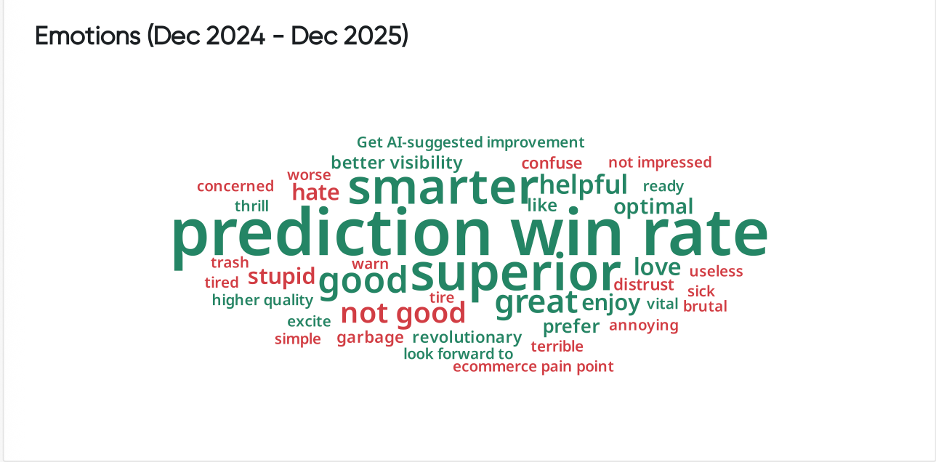
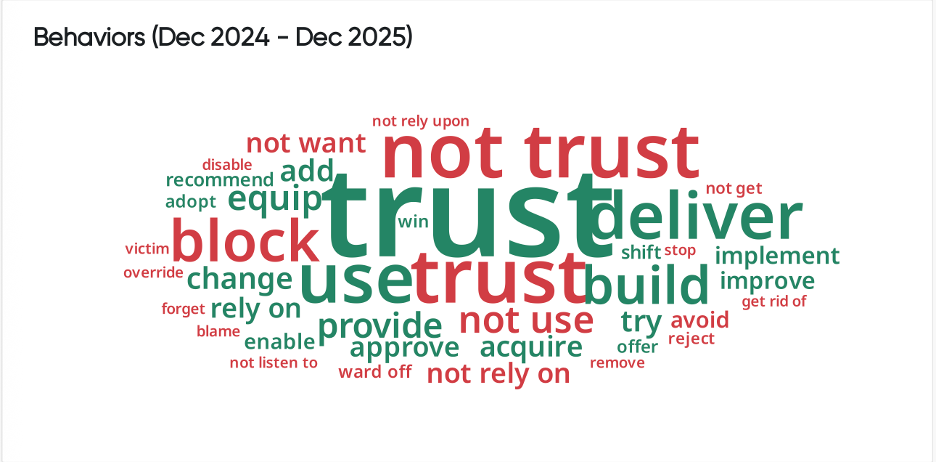
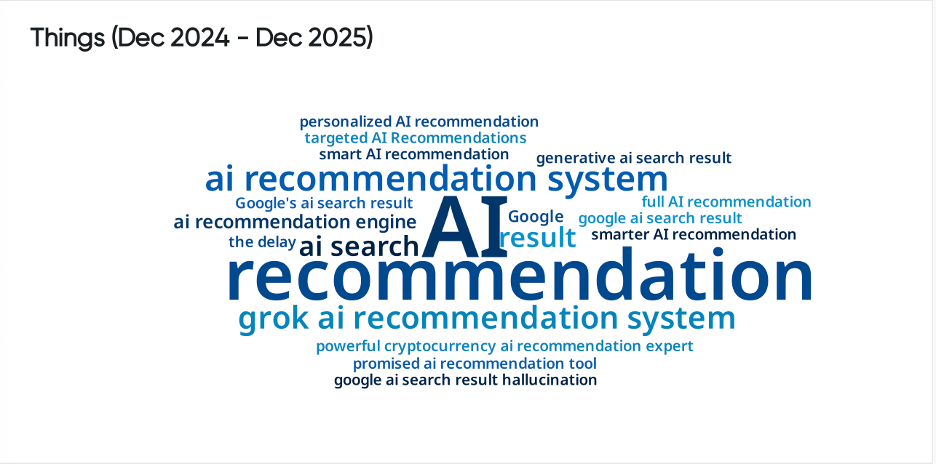
The Emotions / Behaviors / Things panels show that users engage directly with the outputs AI provides. In the “Things” category, the most frequent objects mentioned are:
-
AI recommendation
-
result AI search
-
generative AI search result
-
Google’s AI search result
-
personalized AI recommendation
These themes appear because users often describe the exact result generated by the system.
They post screenshots, repeat the answer's phrasing and question whether or not the recommendation makes sense. The emphasis is on the output itself, not the underlying technical process.
Emotion and behavior signals reinforce this observation.
People describe results as helpful, confusing, optimal, garbage, smarter or misleading. Behavior language shows conflicting actions. Do people trust, not trust, rely on, avoid or override the output?
Together, these signals point to users evaluating AI recommendations moment-to-moment.
Why It Matters
-
Search is shifting away from native searches and toward more conversational prompting.
Users rely on AI to interpret natural-language questions and deliver single-answer responses. This reduces traditional keyword journeys and increases dependence on AI-generated summaries.
-
Authority and structure shape what AI recommends. Posts reference AI results sourced from news, ecommerce data, press releases and product specs. This aligns with evidence that LLMs depend on schema, metadata, and authoritative reporting to produce accurate answers.
-
Social platforms now function as discovery engines.
Integrations like Snap + Perplexity and Reddit Pro’s AI-driven distribution place AI recommendations inside social feeds. Users encounter answers without performing a traditional search.
Who Is Participating in the Conversation?
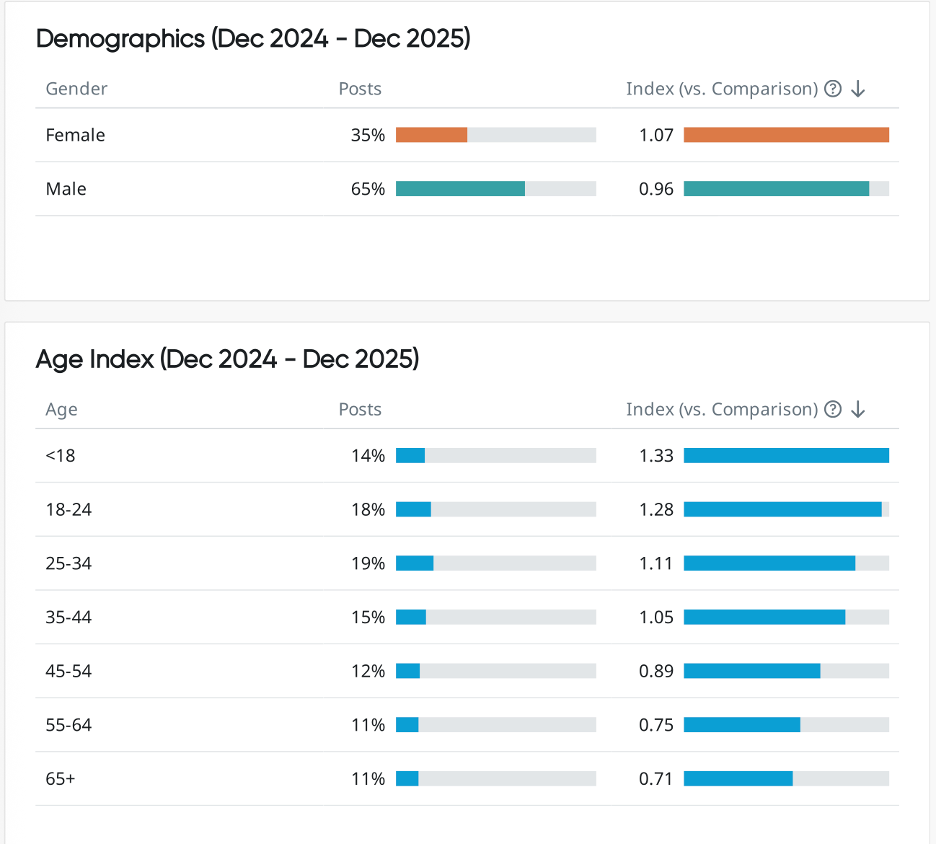
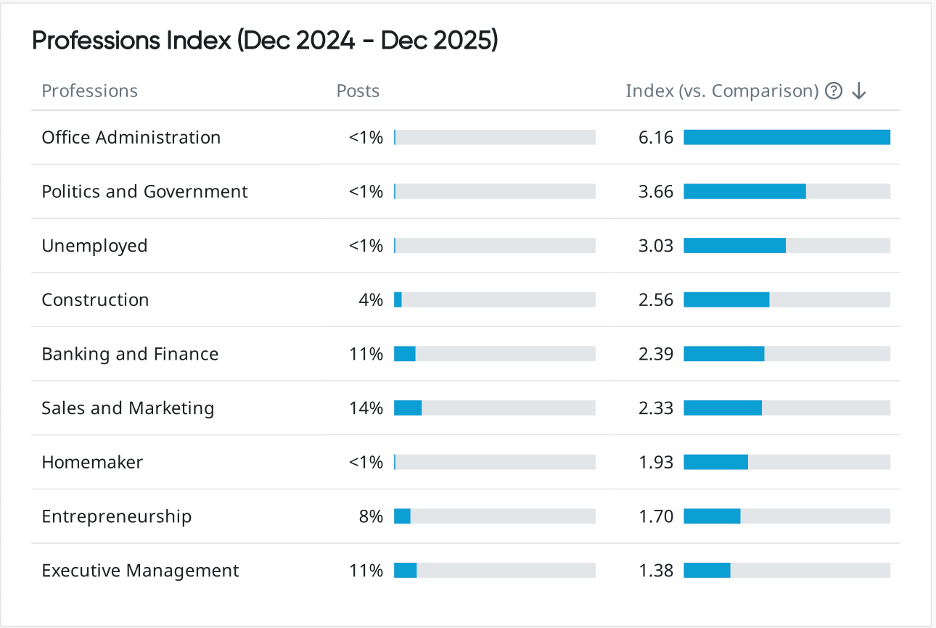
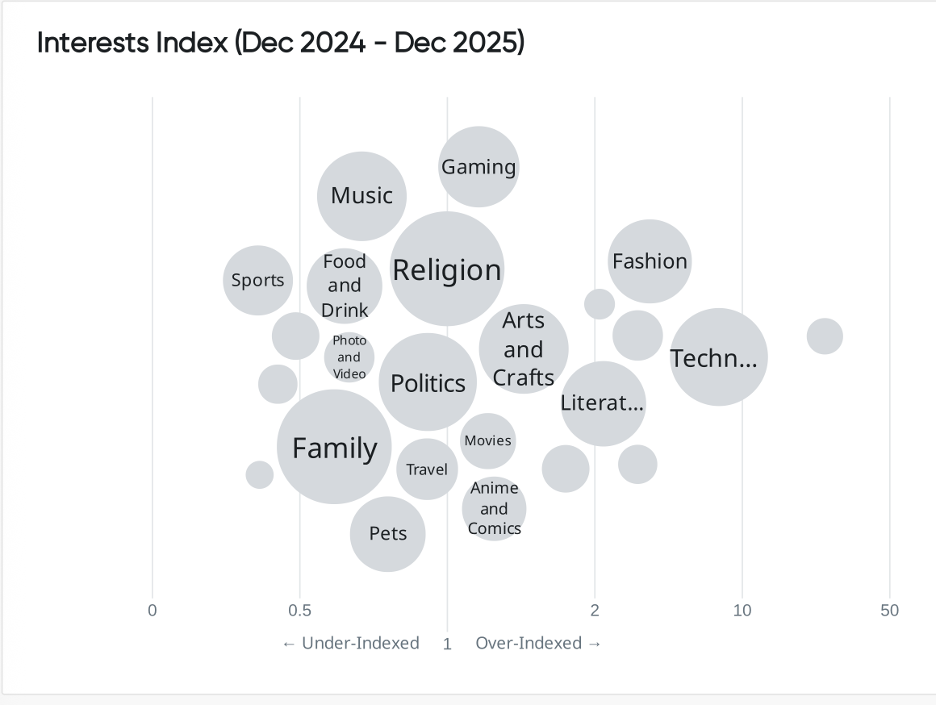
The demographic profile points to a tech-forward audience:
-
65% male, 35% female
-
Highest engagement among ages 18–34
-
Over-indexed professions include executive management, entrepreneurship, sales and marketing, politics/government, and office administration
Interest categories cluster around technology, gaming, movies, travel, photography, and music—communities that react quickly to interface changes and new features.
Where Conversations Cluster
The strongest conversation areas fall into two broad groups:
Practical Use Cases
Broader Concerns
These domains show that AI recommendations thread through both everyday tasks and debates about the future of search.
Social Meaning & Strategic Takeaways
Three insights stand out:
-
AI recommendations are now a primary discovery surface. Users will now AI-generated suggestions even when they do not ask for them. High impression volume combined with neutral sentiment demonstrate mainstream exposure.
-
Trust is variable and depends on context. Behavior language shows people switching between trust and skepticism depending on relevance and accuracy.
-
Structured content improves visibility and accuracy. User complaints often relate to missing details, confusing summaries, or incomplete product data. These issues point back to schema gaps and insufficient structured information for AI systems.
Key takeaway:
Discovery now begins where AI systems choose to look. Brands that do not structure content for AI-driven discovery risk being left out of recommendation pathways.
Actions for Brands
-
Prioritize AI Search Optimization (AISO).
Use schema, structured product data, clear FAQs, and comparison tables to capture exploding GenAI-driven traffic, which is up an astounding 4,700%.
-
Invest in earned media as a trust signal.
Press coverage and authoritative reporting increase visibility within AI-generated results.
-
Strengthen commerce data for AI-driven shopping.
Detailed attributes—materials, fit, specs, availability, pricing—support accurate recommendations.
-
Adopt emerging social + AI integrations.
Tools like Snap + Perplexity and Reddit Pro create new channels for AI-surfaced content.
-
Measure AI visibility alongside SEO metrics.
Track citations, AI-overview inclusions, and recommendation frequency.
-
Monitor regulatory changes.
Antitrust rulings and policy shifts will influence which sources LLMs can index and how they present information.
If you want deeper insight into how consumer conversations evolve across search, social, and AI interfaces, connect with us. Our team can support you with the research and analysis needed to stay ahead.


.png?width=1252&height=362&name=QUID_Logo_WHITE%20(2).png)