


Fall marketing has traditionally relied on familiar seasonal cues, from pumpkin spice and autumn colors to limited-edition products. But brands are finding new ways to participate in the season without introducing something new.
Across retail, beauty, wellness and home goods, everyday products are being positioned around fall experiences such as cozy living, self-care rituals and seasonal resets. This approach creates opportunities to give existing products renewed relevance, but does the messaging resonate with consumers?
Quid's analysis of fall-related conversations from July through October 2026 explores how brands and creators are using seasonal language, which themes are attracting attention and what consumer engagement reveals about their effectiveness.
What is seasonal marketing? Seasonal marketing uses holidays, weather changes, cultural traditions and consumer behaviors to make products and promotions relevant at specific times of the year.
What is fall aesthetic marketing? Fall aesthetic marketing uses autumn-inspired colors, imagery, language and experiences to promote products and connect with seasonal consumer interests.
What is product repositioning in marketing? Product repositioning changes how a product is presented to consumers, often by emphasizing different benefits, uses or associations without changing the product itself.
How can brands market existing products for a new season? Brands can refresh product messaging, imagery, packaging and promotions to connect existing products with seasonal activities, preferences and shopping occasions.
Brands have made seasonal marketing a priority. Fall marketing increasingly extends beyond products designed specifically for autumn, creating opportunities for brands to position existing products around seasonal interests and activities.
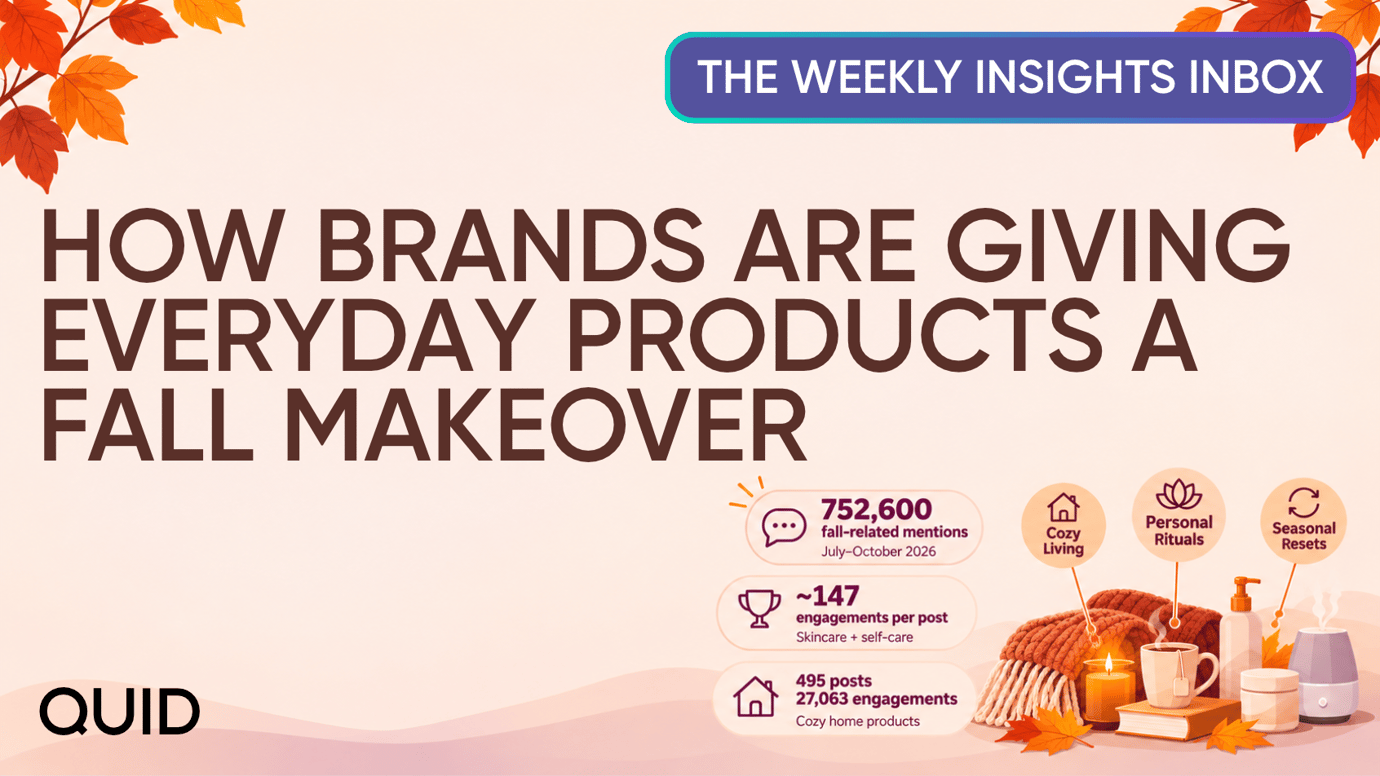
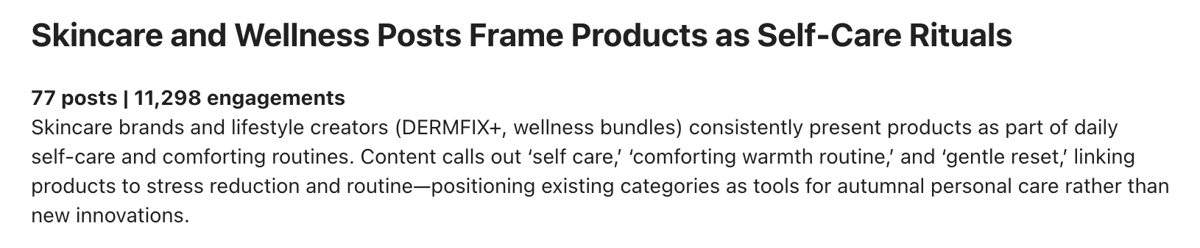
Our Quid Agent’s thematic analysis identified 495 posts and 27,063 engagements connecting home products with cozy fall living. Air purifiers, humidifiers, blankets and heated warmers appeared in content emphasizing comfort and warmth. Skincare and wellness products followed a similar pattern, appearing in conversations about self-care rituals, evening routines and seasonal resets.
These products serve familiar purposes year-round, and seasonal messaging offers another context to present their benefits. The broader conversation generated approximately 752,600 mentions between July and October 2026, demonstrating the scale of seasonal discussion across social platforms.
For brands, the opportunity is to identify where existing products naturally fit into activities consumers associate with fall.
Our Quid Agent's thematic analysis identified three recurring approaches to positioning everyday products for fall: cozy living, personal rituals and seasonal resets.
Each theme connects familiar products with activities and experiences that extend beyond traditional fall merchandise.
Cozy connects home goods, blankets, apparel and decor with warmth, comfort and relaxing environments.
Ritual connects skincare, tea and wellness products with familiar morning and evening routines.
Reset connects self-care products and wellness activities with seasonal renewal and personal routines.
These connections create opportunities for brands to introduce existing products within seasonal conversations. A skincare product and a cup of tea, for example, can both appear in content about evening relaxation, even though they serve different purposes.
The Agent also identified mindfulness and slow living as prominent themes. In this conversation, creators connect tea, quiet mornings and personal routines with the idea of slowing down during autumn.
For marketers, the distinction between these themes is important to understand. Cozy language emphasizes the environment, while ritual and reset language focuses on activities and routines. Knowing which conversations matter to a product category helps brands develop more specific seasonal messaging.
Our Quid Agent's thematic analysis identified differences in conversation volume and engagement across five fall-related themes.
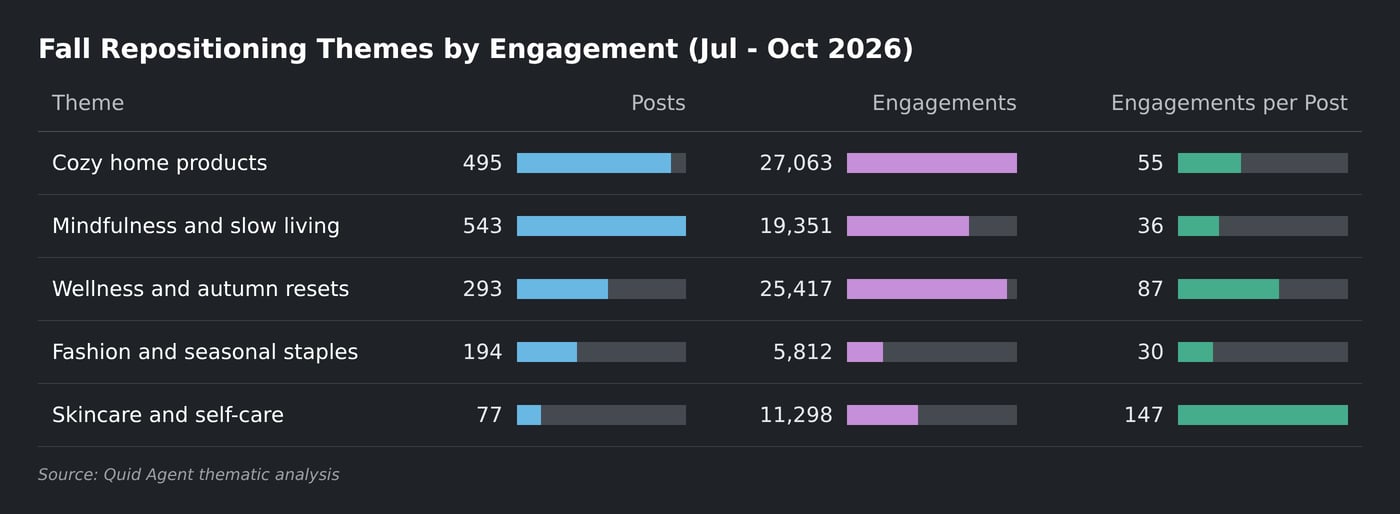
Mindfulness generated the most posts among these groups, followed by cozy home products. However, the engagement figures tell a somewhat different story.
Skincare and self-care generated approximately 147 engagements per post, compared with approximately 87 for wellness resets, 55 for cozy home products and 30 for fashion. Although skincare represented the smallest conversation group, it recorded the highest average engagement per post.
These differences suggest that smaller seasonal conversations can attract substantial interaction relative to their size. However, the averages do not account for differences in platform distribution or the influence of individual high-performing posts.
For retail and CPG marketers, the findings reinforce the value of examining engagement alongside conversation volume. A smaller theme closely connected to a product's use may warrant attention even when broader seasonal topics generate more posts.
The broader fall conversation extends beyond seasonal shopping into familiar activities and routines. Quid's behavioral analysis identifies terms including "eat," "watch," "relax," "try," "buy," "search for" and "recommend."
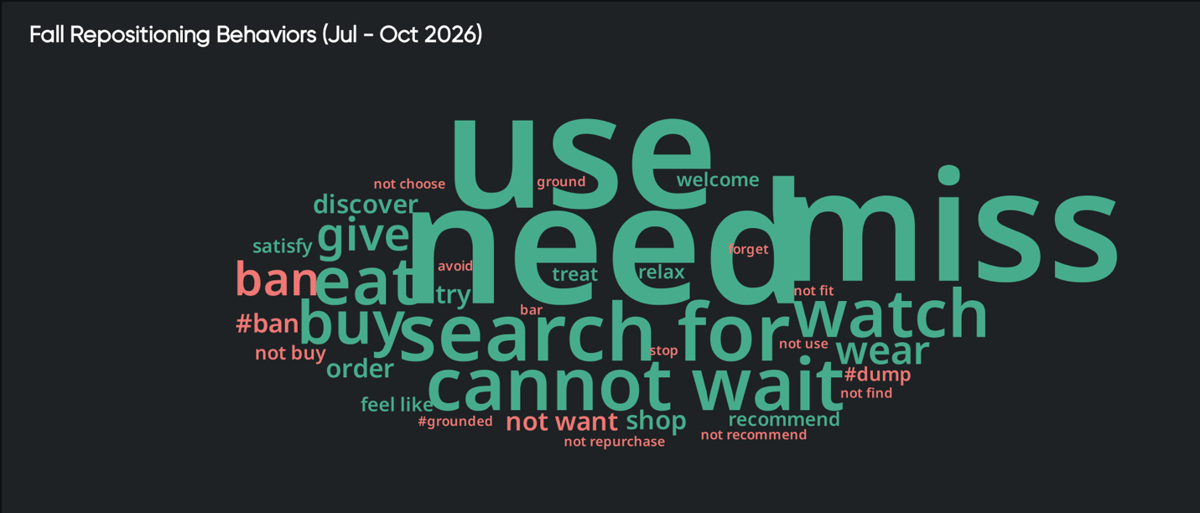
These terms show that the conversation includes activities related to product discovery, use and evaluation. The visualization also includes negative expressions such as "not buy," "not recommend" and "not repurchase."
Their presence illustrates why marketers need to examine the context behind behavioral signals. A mention of buying or recommending a product does not necessarily establish a positive experience, just as negative language requires examination of the underlying conversation.
The behaviors also provide useful starting points for exploring seasonal relevance.
Food brands can investigate conversations about preparing and enjoying meals. Home retailers can examine discussions about relaxing and creating comfortable spaces. Beauty and wellness brands can explore how products appear within personal routines.
Popular posts offer another perspective on the activities attracting attention.
An August cooking video from Emily Rangel generated approximately 2.63 million engagements. A September post from Roamory describing a peaceful, moody atmosphere generated approximately 2.60 million. A cozy fall nighttime routine from creator olaaxdiary attracted approximately 1.79 million engagements.
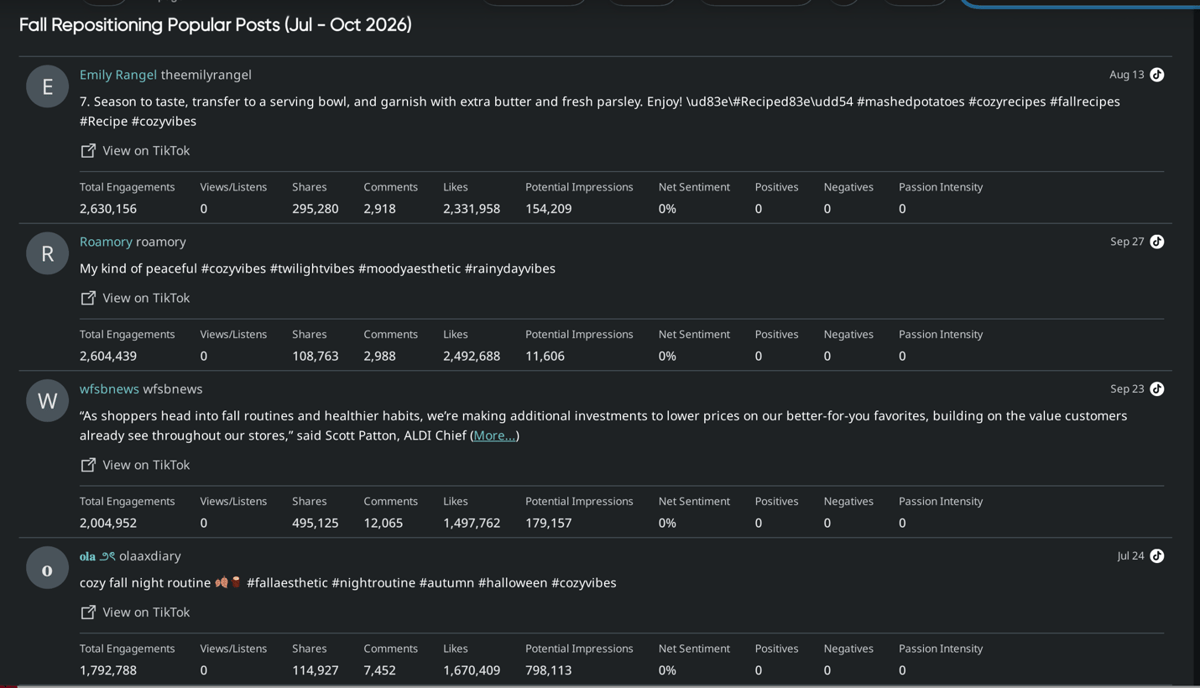
These examples demonstrate how familiar activities can become part of highly engaging seasonal content. Cooking, quiet evenings and comfortable environments all appear within the fall aesthetic, creating potential opportunities for brands whose products support those experiences.
However, the engagement figures describe individual posts. They do not establish that specific product placements or seasonal messages caused the interaction. For marketers, the value lies in understanding which activities attract attention and investigating how relevant products appear within those conversations.
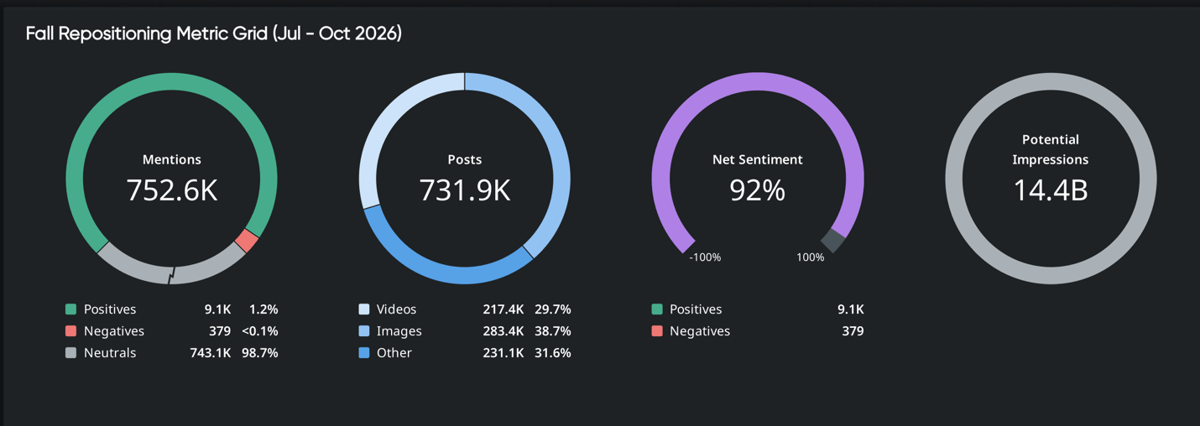
The scale of fall-related conversation demonstrates substantial seasonal visibility, but consumer response requires closer examination. Quid's dashboard classified 98.7% of fall-related mentions as neutral, with 1.2% positive and fewer than 0.1% negative. While the dashboard reports a 92% net sentiment score, the overwhelming prevalence of neutral mentions makes it important to examine individual conversations before drawing conclusions about consumer enthusiasm.
These figures describe the broader fall conversation, including promotional posts, creator content and everyday seasonal discussions. Neutral sentiment does not establish acceptance or rejection. Many posts may describe activities, products or aesthetics without expressing an opinion.
Our Quid Agent's thematic analysis identified brands and creators using cozy, ritual and reset language, but the available findings do not establish how frequently independent consumers adopt those messages.
This distinction is important for brands evaluating seasonal positioning. A retailer may generate visibility by placing an existing product within a popular fall conversation. Determining whether that positioning resonates requires examining what consumers say about the product, how they describe their experiences and whether they independently associate it with the seasonal theme.
Quid's trending terms analysis provides another way to understand where attention is developing.
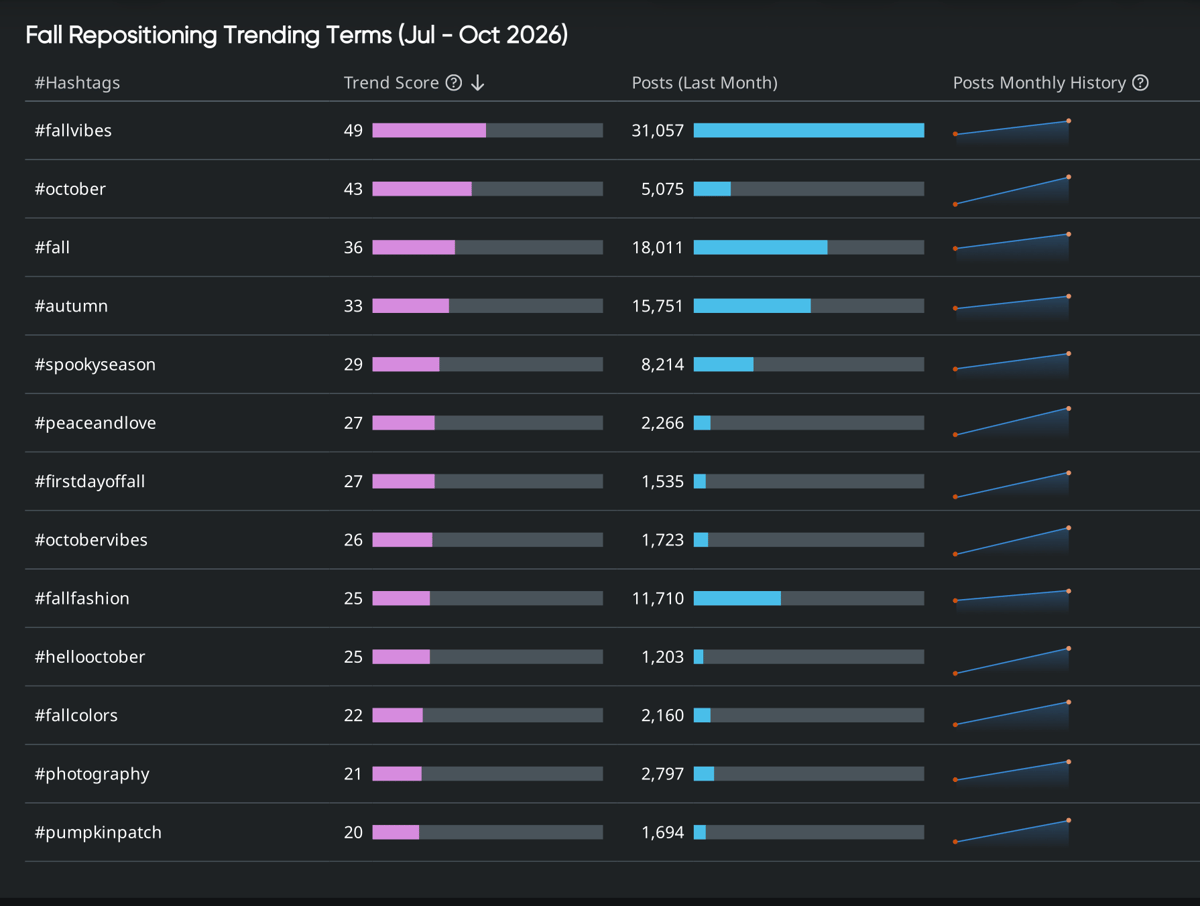
Among the leading hashtags, #fallvibes appeared in 31,057 posts during the last month, followed by #fall with 18,011 and #autumn with 15,751. More specific themes included #fallfashion with 11,710 posts and #spookyseason with 8,214.
These terms demonstrate the range of conversations occurring within the broader fall aesthetic. General seasonal hashtags capture a wide variety of content, while category-specific terms can help analysts investigate more focused interests.
For brands, identifying the most relevant conversations requires more than simply participating in the largest ones. A fashion retailer, for example, can examine the products and styles appearing in #fallfashion discussions. A home goods brand may find greater value in conversations about cozy living and comfortable environments.
The next step is connecting those themes with consumer experiences and product discussions to determine whether the seasonal association has meaningful relevance.
The findings highlight how seasonal marketing can extend the relevance of established products without requiring an entirely new product launch. Our Quid Agent's analysis identified home goods, skincare, wellness products and apparel appearing within cozy living, personal ritual and seasonal reset conversations.
The dashboard analysis adds a broader perspective, showing how seasonal language connects with everyday activities, popular content and emerging hashtags. Together, these findings suggest three areas for retail and CPG marketers to explore.
Seasonal opportunities may emerge from familiar behaviors such as cooking, decorating, relaxing or following personal care routines. Understanding these activities can help brands identify where their existing products have a natural role.
An air purifier still serves a functional purpose, just as skincare products must deliver on their established benefits. Seasonal positioning can introduce another context for those benefits, but the connection should remain relevant to how consumers use the product.
Conversation volume, hashtags and engagement provide useful measures of visibility. To see whether seasonal messaging resonates, examine independent consumer discussions and product experiences. This distinction is critical to understand when brands consider investing in seasonal campaigns or extending a successful theme across additional products.
The broader opportunity is to understand how familiar products become relevant to changing consumer interests throughout the year. By analyzing seasonal conversations alongside consumer behaviors, sentiment and engagement, brands can identify promising opportunities and evaluate whether their messaging reflects genuine consumer interest.
Quid helps brands uncover these connections, track emerging conversations and distinguish promotional visibility from meaningful consumer response.
Contact Quid to discover how consumer intelligence can inform your next seasonal marketing strategy.
Yes. Brands can connect familiar products with seasonal activities and experiences when those connections align with their benefits.
Quid Agent's thematic analysis identified cozy living, personal rituals and seasonal resets across home goods, beauty, wellness and fashion conversations.
Engagement measures interaction with content. Additional analysis is needed to determine whether consumers respond positively to specific products or seasonal messages.
Consumer intelligence can reveal emerging language, behaviors and product conversations that help brands evaluate seasonal opportunities.