


Fall colors are everywhere, from burgundy sweaters and textured home décor to pumpkin-flavored foods and seasonal packaging. These familiar autumn aesthetics are setting the mood and influencing how brands design products, build collections and position merchandise for seasonal shoppers.
For retailers and consumer packaged goods (CPG) brands, the opportunity extends beyond introducing another pumpkin-themed product. Color consistency, material choices and seasonal timing can help create recognizable collections that connect with consumer preferences. But does fall aesthetic appeal translate into purchasing decisions?
Quid's analysis of fall aesthetic conversations reveals how consumers and brands are approaching seasonal design, where product opportunities are emerging and what businesses should consider before investing in another autumn collection.
How do fall aesthetics influence product design? Fall aesthetics influence product design through recurring color palettes, rich textures, layered materials, and seasonal themes that create recognizable visual identities.
Which fall colors are influencing consumer products? Quid's analysis identifies burgundy, earthy tones and saturated autumn colors as recurring themes in conversations about seasonal design.
How are brands incorporating fall aesthetics into their products? Brands are introducing seasonal collections, emphasizing texture and comfort and developing occasion-specific products such as pumpkin-flavored foods and Halloween merchandise.
Does fall aesthetic marketing increase sales? Seasonal aesthetics create opportunities to influence product discovery and purchasing interest. However, social conversation alone cannot establish whether these design choices increase sales conversion.
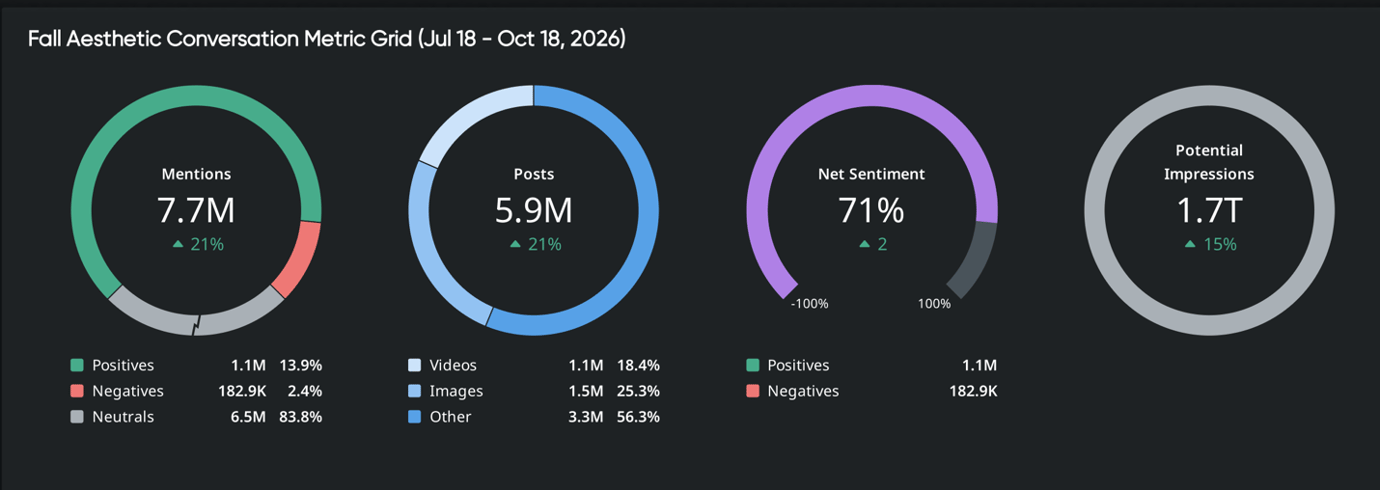
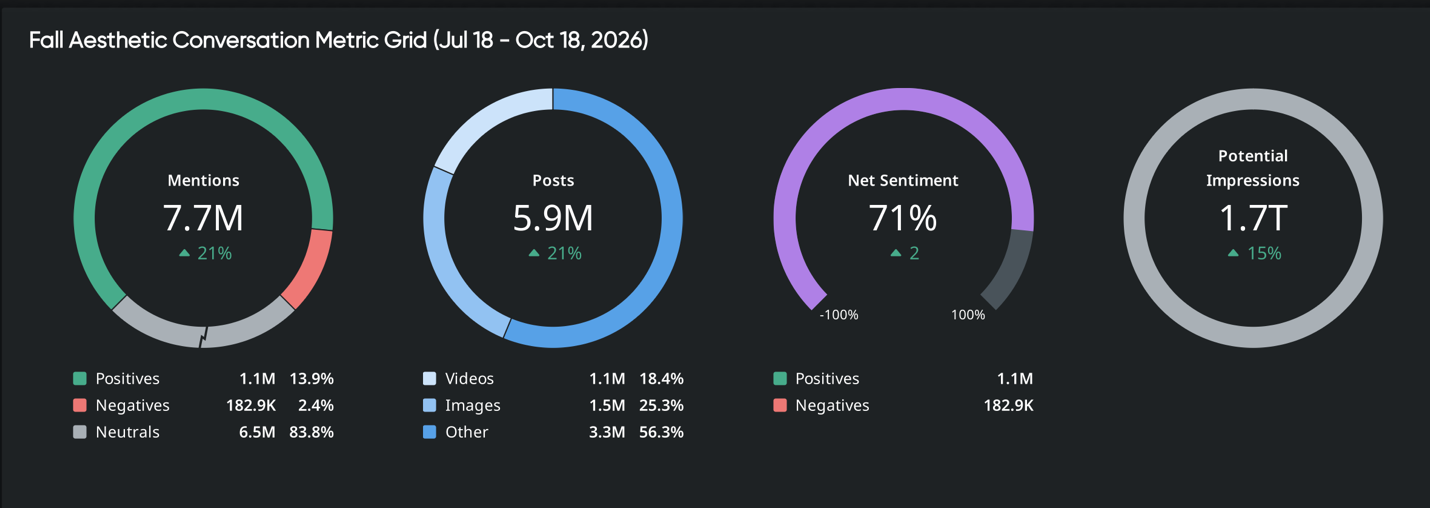
Fall aesthetics generate substantial consumer conversation across social platforms, with recurring references to color, texture, comfort and seasonal products. Between July 18 and October 18, 2026, Quid identified:
The analysis also found that 83.8% of mentions were classified as neutral, compared with 13.9% positive and 2.4% negative. These findings establish the scale of the conversation, although the neutral majority should not be interpreted as evidence of consumer satisfaction or purchasing intent.
The conversation timeline provides another perspective. Fall-related discussion remained visible throughout the analysis period, extending from midsummer into October.
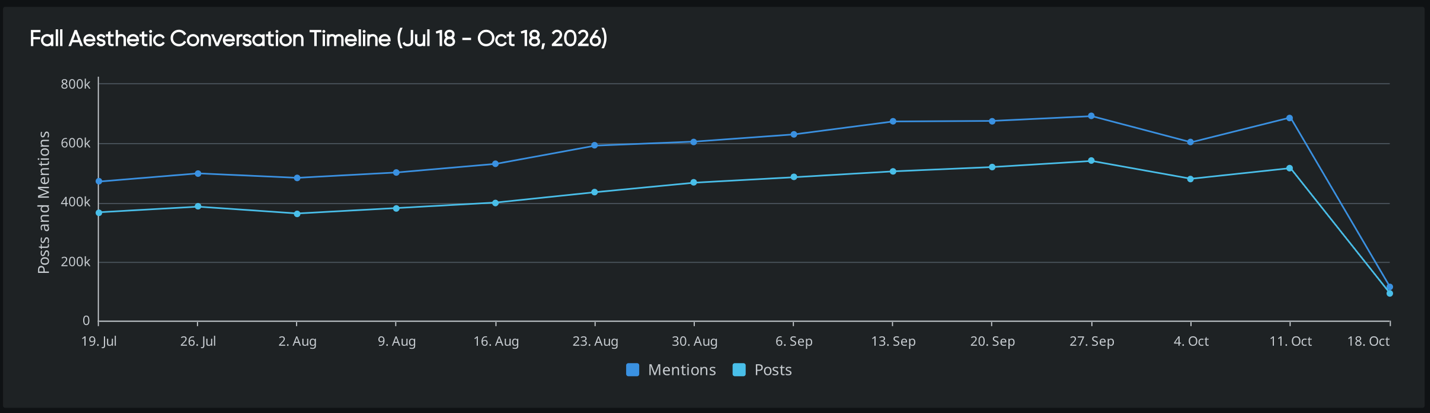
For brands, that extended means seasonal merchandising decisions can begin well before consumers encounter traditional fall promotions. The challenge is determining which elements of the aesthetic deserve a place in product strategy. Quid's analysis points to several recurring themes, beginning with color.
Fall colors provide a recognizable visual language that brands can apply across products, collections and merchandising displays. Quid's analysis identifies repeated references to burgundy, earthy tones and saturated autumn hues.
Across social posts and community discussions, consumers emphasize the value of coordinating a small number of colors. This consistency has practical implications for product development:
The advantage is visual continuity. Products that share a color system can appear connected even when they serve different purposes.
Quid's trending topics reinforce the importance of color in the broader conversation. Among the identified trending things, "color" recorded a trend score of 35, while "autumn" scored 32. References to beautiful fall and autumn colors also appeared.
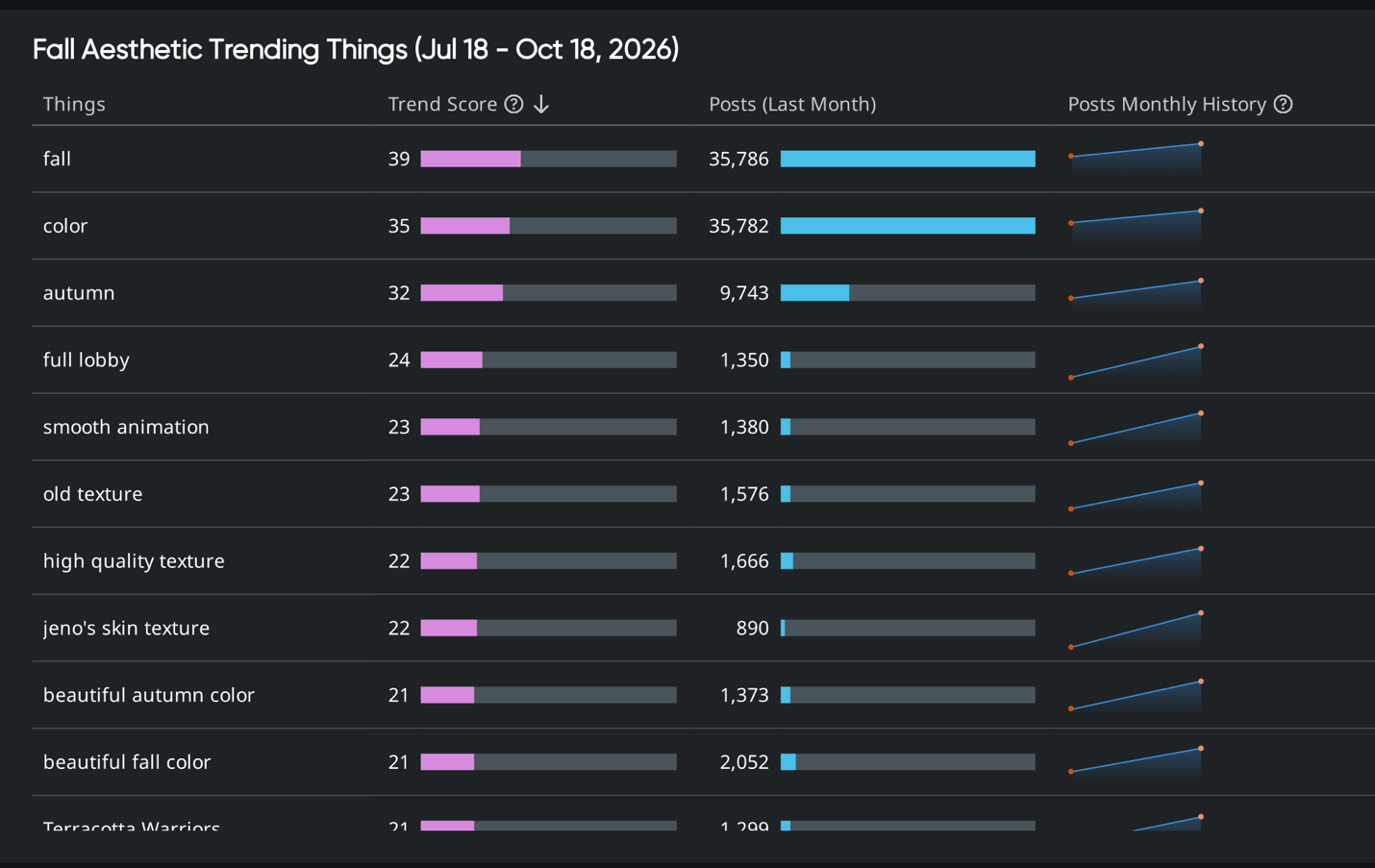
These results suggest that brands should consider color relationships across assortments rather than evaluating each seasonal product independently.
However, color recognition and commercial performance remain separate considerations. A coordinated palette may create a stronger visual presentation without necessarily generating additional purchases.
Texture plays an important role in how consumers recognize and describe fall aesthetics.
Quid's qualitative analysis identifies recurring references to cozy knits, layered textiles, natural materials and rich finishes. One consumer “love[s] all the rich textures.” Another emphasizes the relationship between material and appearance: “For every decision, think about (a) texture as well as color.”
These observations suggest that fall product development involves more than selecting seasonal colors. In fashion, knitwear and layered materials contribute to the familiar autumn look. Home furnishings incorporate textiles, warm lighting and natural accents to create a similar effect.
Packaging offers another potential application. Material finishes and tactile design elements can reinforce a seasonal presentation, although the supplied analysis does not establish how consumers respond to specific packaging textures.
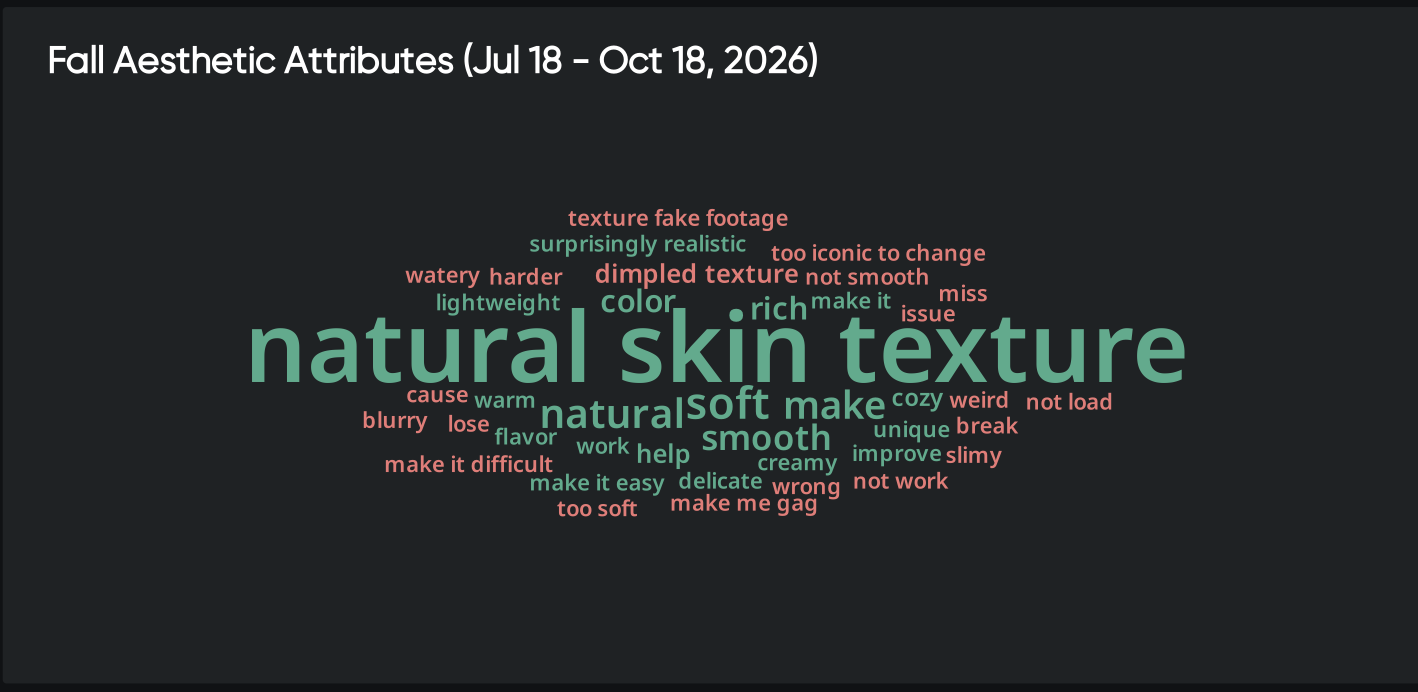
The Quid attributes visualization highlights terms including texture, natural, soft, warm, rich and creamy.
However, the broader dashboard also contains substantial discussion of skin texture and related beauty attributes. Those references require context before they can be treated as evidence of seasonal product preferences.
The qualitative findings provide the stronger basis for understanding how texture contributes to fall design. For product teams, the implication is that color and material choices should work together to create a cohesive seasonal presentation.
Brands are translating fall aesthetics into seasonal collections, curated assortments and occasion-specific merchandise. Quid's analysis identifies repeated collection announcements and product launches across Instagram, Facebook, X and independent blogs.
Fashion retailers can use fall collections to introduce coordinated apparel and accessories. Home brands can organize products around seasonal colors and materials. CPG companies can develop limited-time flavors, packaging and promotional themes.
The common thread is seasonal relevance.
A product collection gives shoppers a recognizable reason to explore merchandise within a particular timeframe. It also provides brands with a way to group products around shared visual characteristics or occasions.
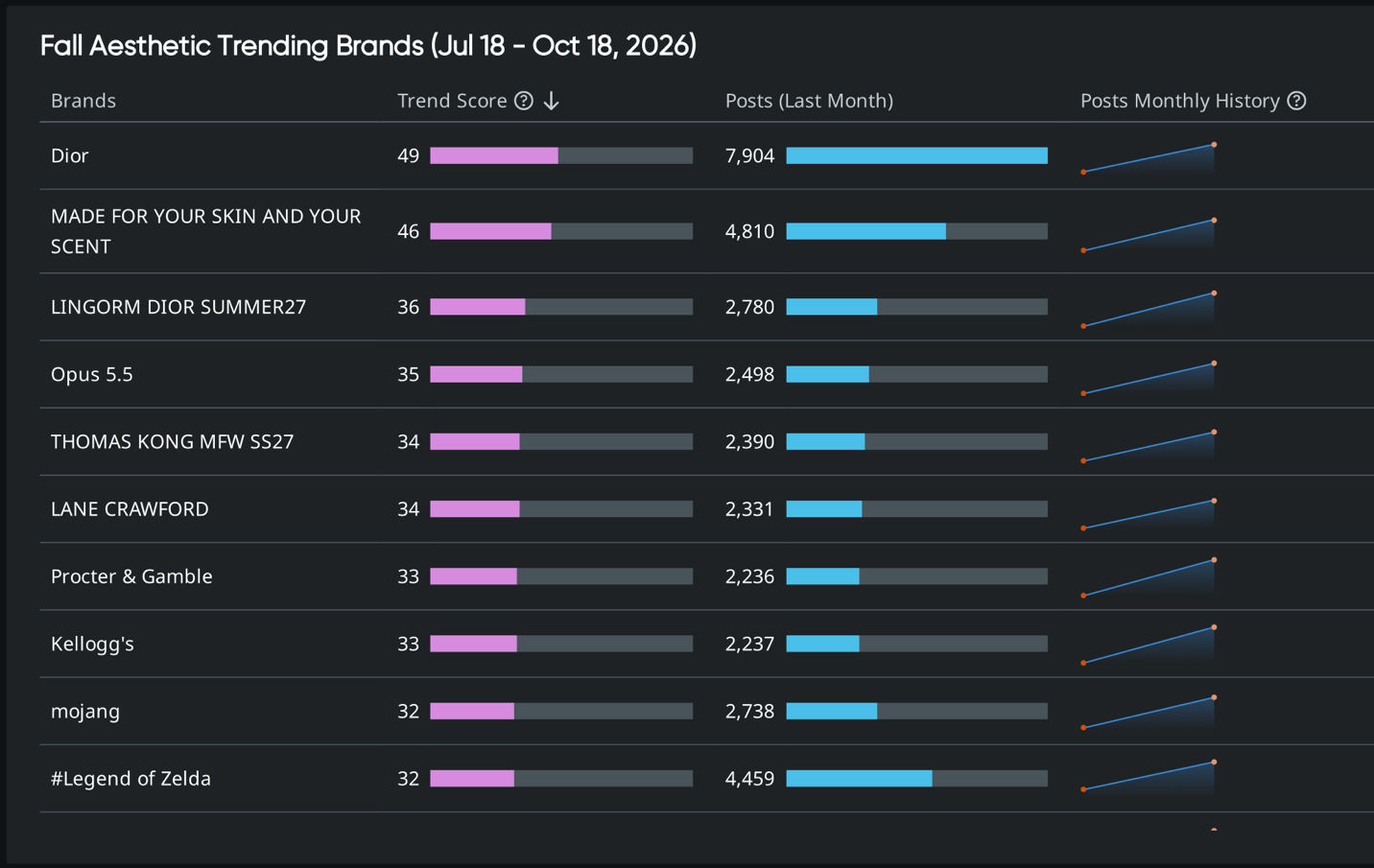
Quid's trending brands visualization includes Dior, Procter & Gamble and Kellogg's, among other entities. Their appearance illustrates the range of brands represented in the broader dataset, although the ranking alone does not establish that these companies launched successful fall-themed products.
The qualitative findings offer more direct evidence of how seasonal design influences assortment planning.
For brands, the opportunity is to connect product development, merchandising and campaign timing around a recognizable seasonal theme.
Pumpkin spice remains a recognizable fall cue, but seasonal product strategies extend into food, beverages, décor and themed merchandise. Quid's analysis identifies pumpkin-flavored foods, Halloween-themed drinks and seasonal home products appearing in retailer and consumer conversations.
Pumpkin flavors communicate fall through taste and familiarity. Halloween designs introduce a specific occasion. Seasonal packaging can reinforce those associations visually. For CPG brands, these approaches offer opportunities to extend existing product categories into seasonal assortments.
A limited-time flavor or themed package can give consumers another reason to notice a familiar product. Retailers can also group seasonal merchandise around shared occasions, connecting food, beverages and home products through coordinated displays.
However, these strategies introduce important product planning questions. Brands must consider whether seasonal variations offer enough differentiation to justify additional inventory, packaging and promotional investment.
The presence of seasonal products in consumer conversations demonstrates visibility. It does not establish incremental demand or profitability.
Fall aesthetic conversations contain purchasing-related language, but the available data does not establish whether seasonal design increases conversion. This distinction helps brands evaluating seasonal investments.
Quid's behavioral visualization includes terms such as buy, want, wear, use and recommend.
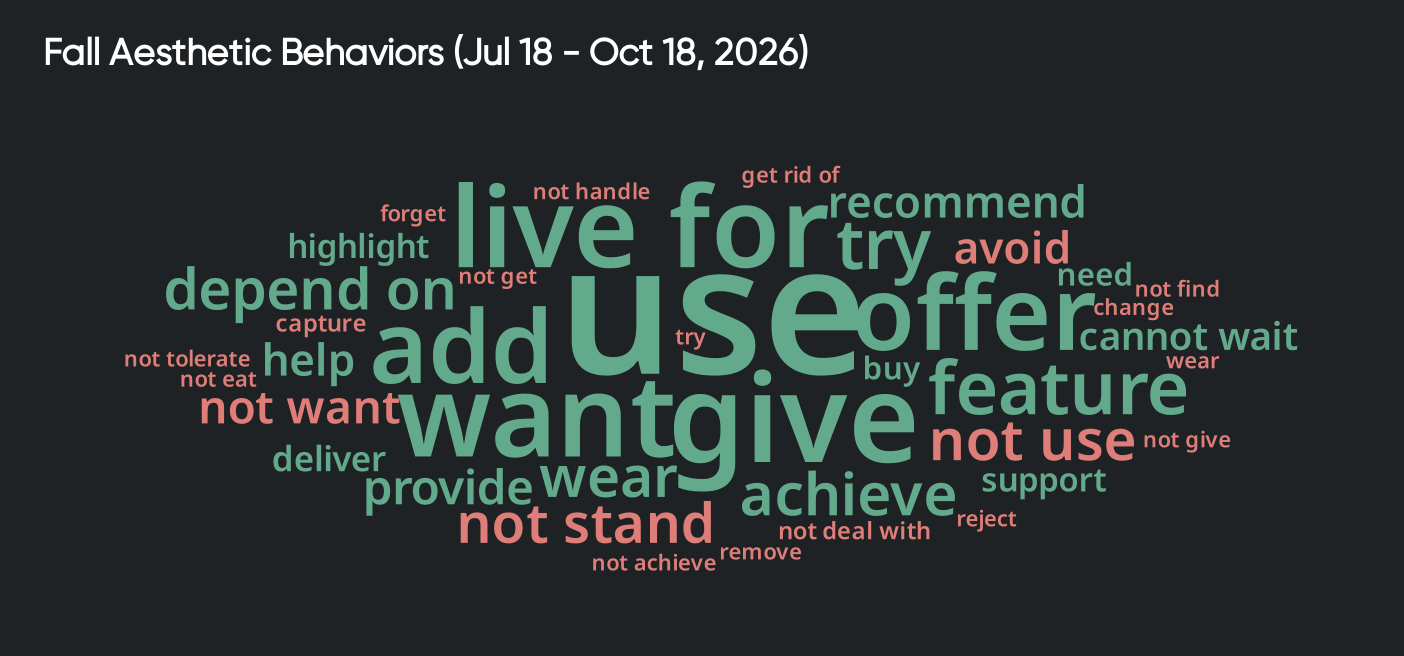
These behaviors provide potential starting points for examining how consumers discuss products.
However, the visualization does not show how frequently consumers purchased fall-themed merchandise or whether aesthetics influenced those purchases. The qualitative analysis offers stronger evidence that brands are actively promoting seasonal collections and that consumers are discussing their visual appeal.
Comments such as "I love the colors" demonstrate positive reactions to aesthetic choices. They do not establish completed purchases. Similarly, seasonal collection announcements reveal merchandising activity without demonstrating the commercial results of those launches.
For retail and CPG brands, this creates an important distinction between three stages of consumer response:
The current Quid analysis provides evidence of the first stage and examples relevant to the second. It does not provide verified sales data for the third.
Brands evaluating seasonal performance should examine purchasing behavior alongside social conversation. Product-level sales, conversion rates and comparisons with nonseasonal assortments would help establish whether aesthetic appeal produces measurable commercial value.
The findings suggest several practical considerations for brands planning seasonal products and merchandising.
Build coordinated color systems. Repeated fall colors appear throughout the qualitative analysis. Brands can apply complementary palettes across product families to create a recognizable seasonal presentation.
Consider texture alongside appearance. Consumers discuss rich textures and layered materials as important elements of fall aesthetics. Product teams can evaluate how fabrics, finishes and materials contribute to seasonal appeal.
Coordinate product launches with seasonal occasions. Fall collection announcements and themed merchandise demonstrate how brands connect products to the shopping calendar. Launch timing should reflect product relevance, inventory requirements and promotional objectives.
Use seasonal extensions selectively. Pumpkin-flavored products, Halloween merchandise and themed packaging provide examples of occasion-driven assortment planning. Brands should evaluate whether these additions serve identifiable consumer needs.
Merchandise complementary products together. Layering and coordinated styling appear in the qualitative findings. Retailers can use these relationships to present seasonal collections across related categories.
Measure purchasing outcomes separately from engagement. Positive reactions to colors, materials and seasonal themes provide useful consumer intelligence. Sales and conversion data are necessary to determine whether those reactions translate into commercial results.
These approaches offer ways to apply consumer conversation insights to product planning without assuming that every popular aesthetic deserves a new product launch. Consumer enthusiasm for a seasonal aesthetic offers evidence of interest.
Brands still need purchasing data to determine which design decisions generate measurable returns. By combining social and consumer intelligence with commercial performance data, businesses can make more informed decisions about which seasonal trends deserve investment.
Contact Quid to explore how consumer conversations can inform product strategy, merchandising and market intelligence.
How can brands use fall aesthetic trends in product development?
Brands can examine recurring consumer preferences for colors, textures and seasonal themes, then evaluate how those elements fit existing product categories and development plans.
Why do coordinated fall color palettes matter?
Coordinated palettes help create visual consistency across products and collections. Quid's qualitative analysis identifies repeated recommendations to use a small number of complementary fall colors.
What role does texture play in seasonal merchandising?
Texture contributes to the appearance and feel of fall products. Consumer conversations reference rich textiles, layered materials and natural finishes as recognizable seasonal characteristics.
How do seasonal product launches support retail strategy?
Seasonal launches give retailers opportunities to introduce curated collections and connect merchandise with specific shopping occasions. Their commercial value depends on consumer demand and actual purchasing performance.
Can social listening determine whether fall aesthetics increase sales?
Social listening can identify consumer interests, reactions and purchasing-related conversations. Establishing whether seasonal aesthetics increase sales requires additional commercial data, including transactions and conversion performance.
How can CPG brands apply fall aesthetic insights?
CPG brands can evaluate seasonal flavors, packaging designs and occasion-specific product extensions against consumer conversation trends. These insights can inform product planning, but brands should validate commercial opportunities using sales and performance data.