

.png?width=1252&height=362&name=QUID_Logo_WHITE%20(2).png)
Every few years, someone declares the death of spring cleaning. Usually, this is proclaimed while standing in a messy kitchen. But reality disagrees.
Key Takeaways
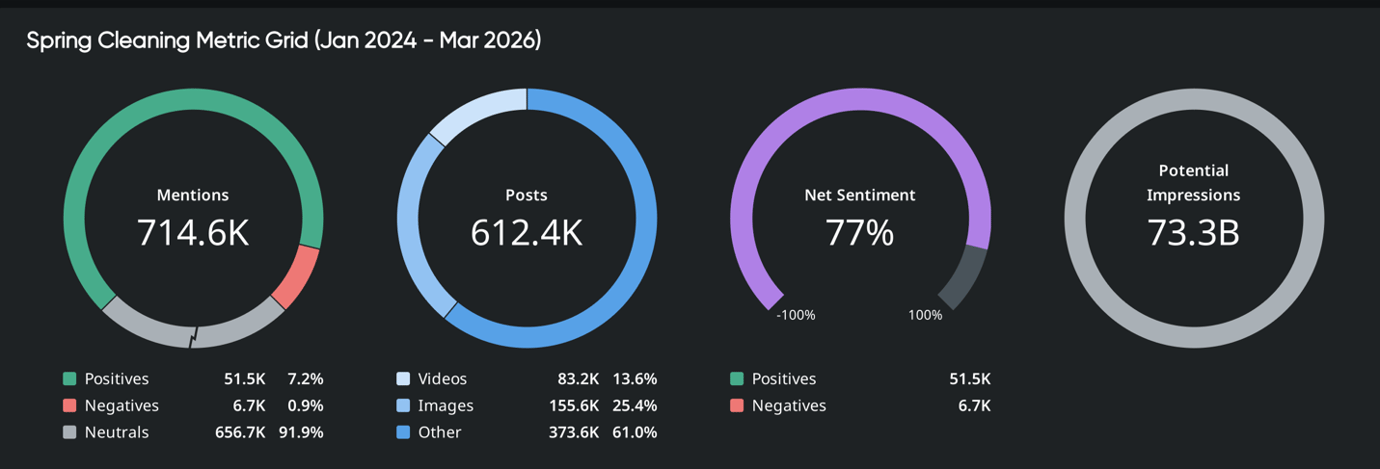
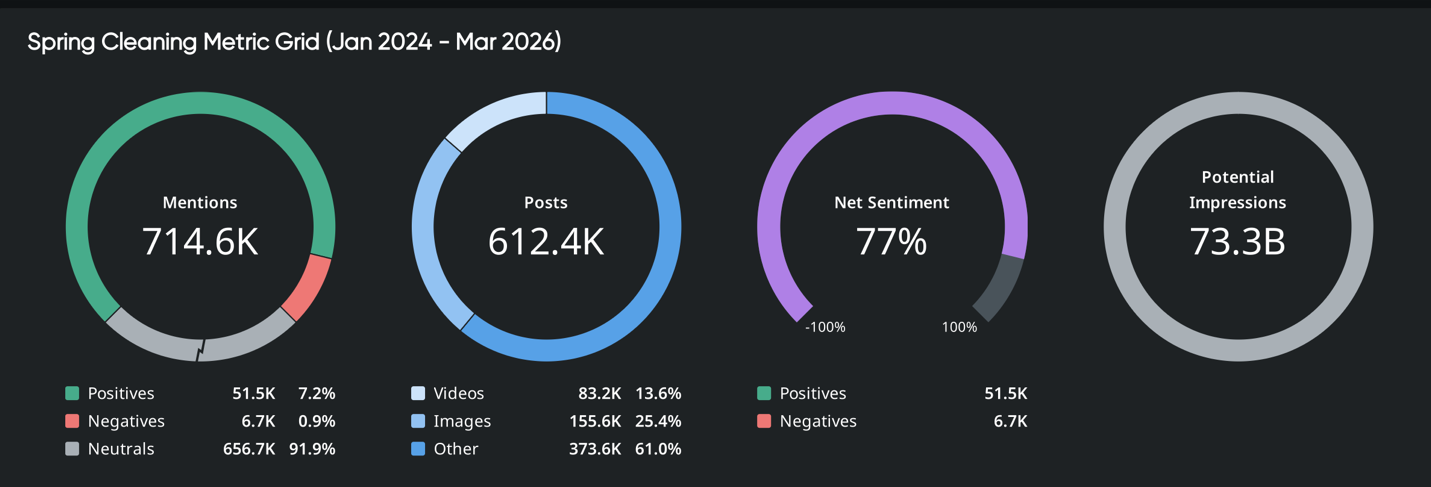
Across social and media channels, the conversation around spring cleaning now spans more than 700,000 mentions and over 73 billion potential impressions since 2025, making it one of the largest recurring lifestyle discussions each year.
Yet the way people approach cleaning has quietly changed.
Instead of a single seasonal deep clean, consumers increasingly treat cleaning as a series of small routines, creator-driven challenges, and ongoing organizational resets that extend throughout the year.
For brands, that shift matters. It changes when consumers buy cleaning tools, how they discover products, and how cleaning behaviors spread across social platforms.
Perhaps the most telling signal is sentiment. More than 91% of discussion is neutral, with positive sentiment significantly outweighing negative reactions. That pattern appears when a behavior becomes normalized. People are not debating whether cleaning is good or bad. They are simply talking about doing it.
For businesses, that kind of large, stable conversation often indicates a reliable cultural habit rather than a short-lived trend.
Spring Cleaning Still Peaks in the Spring. But It No Longer Stays There.
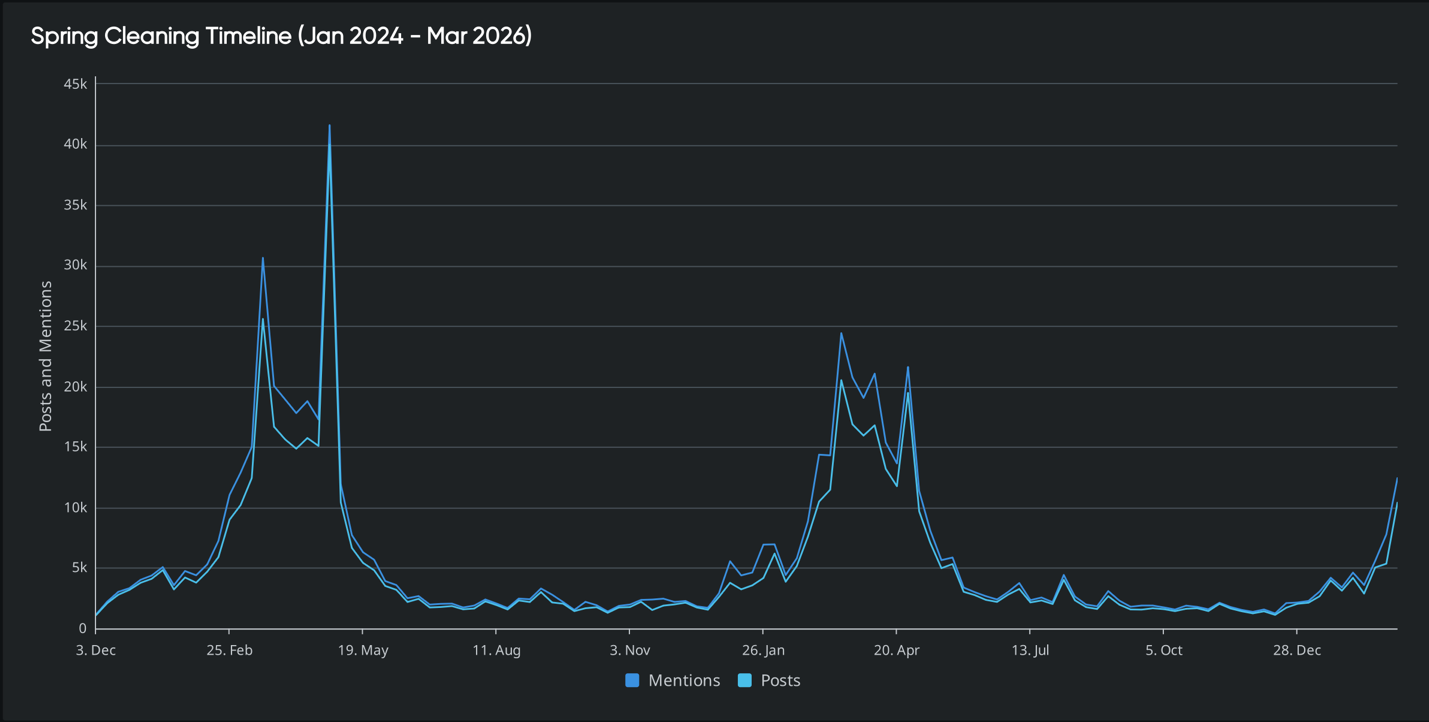
The timeline shows predictable spikes each year as the spring season approaches. That seasonal rhythm has not disappeared.
But the conversation no longer vanishes after spring passes. Instead, smaller waves appear throughout the year as people revisit decluttering projects, move homes, reorganize spaces, or reset routines before major life events.
Spring still triggers the behavior. The difference is that cleaning has expanded into a year-round lifestyle pattern rather than a single seasonal project.
For brands, that means the commercial opportunity is no longer limited to March and April promotions.
Who Is Talking About Spring Cleaning Is Changing
The gender breakdown reveals an interesting shift.
Historically, spring cleaning conversations skew female. That pattern still exists overall. Across the full dataset:
However, the 2026 slice of the data shows male conversation slightly edging ahead of female conversation.
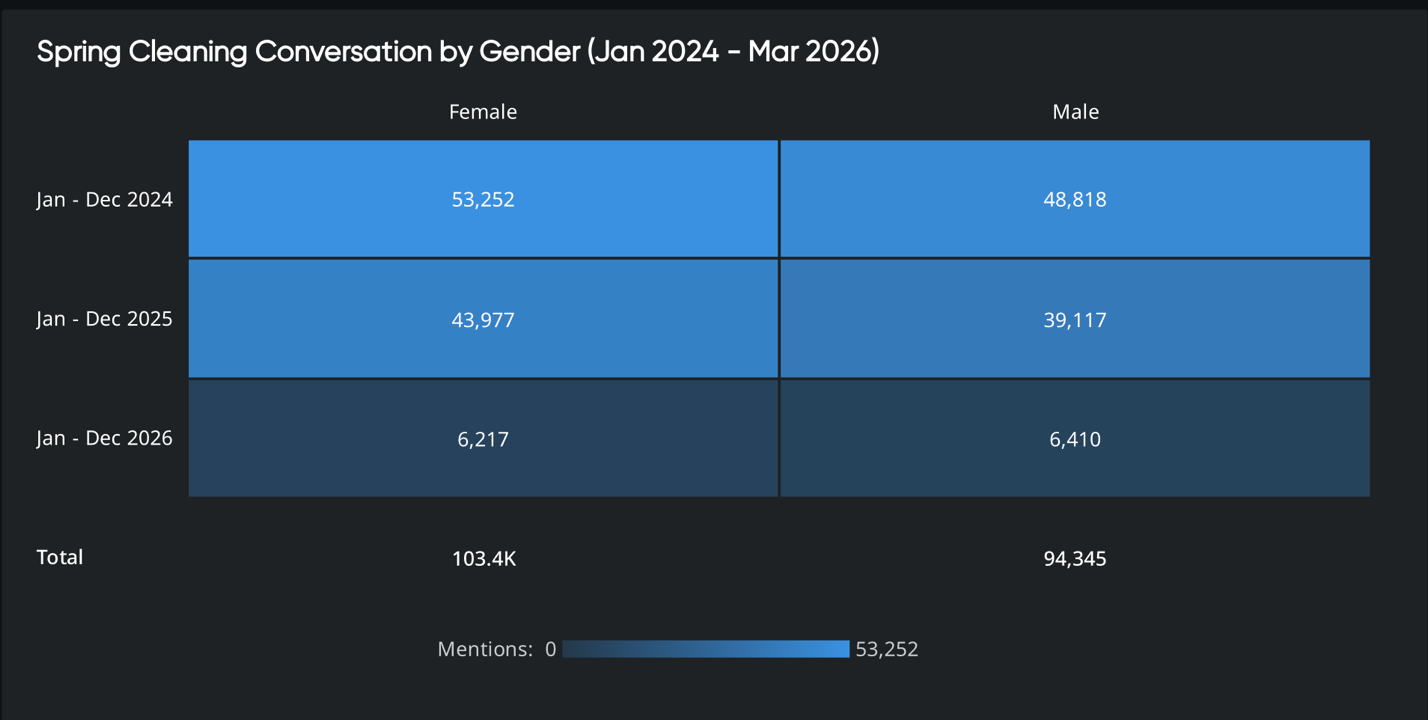
This does not mean men suddenly became the primary cleaners of the household. What it signals is a shift in how the topic is discussed online.
Three forces are driving this change.
1. Cleaning Content Is Becoming Tool-Driven
Many cleaning conversations now revolve around tools and gadgets:
These categories overlap with DIY, technology, and home improvement communities, naturally broadening participation.
2. The Definition of “Cleaning” Is Expanding
The phrase “spring cleaning” is increasingly used metaphorically. It now describes activities such as:
As the concept expands beyond household chores, the audience widens.
3. Creator Content Brings in Viewers, Not Just Participants
Social platforms have turned cleaning into entertainment. Popular formats include:
Many viewers watch for motivation, curiosity, or product discovery rather than because they are personally cleaning.
The Emotional Tone Around Cleaning Is Surprisingly Positive
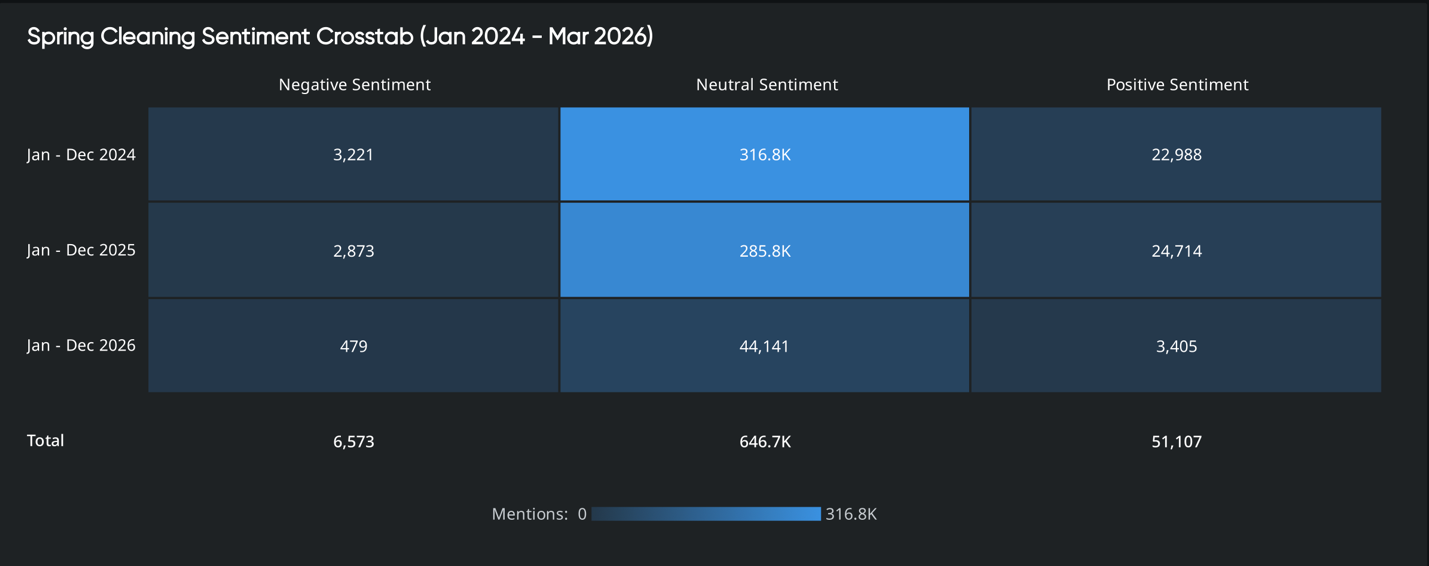
Cleaning may feel exhausting in practice, but the conversation surrounding it is overwhelmingly positive. Across the dataset:
Positive sentiment significantly outweighs negative reactions. That reflects the cultural framing of spring cleaning. It is tied to ideas of renewal, fresh starts, productivity, and improved living environments.
Cleaning content frequently appears alongside motivational themes such as personal growth, habit building, and lifestyle improvement.
Cleaning Is Becoming a Habit Rather Than an Event
The language dominating the conversation reveals how the behavior itself is evolving. But looking at keywords alone only tells part of the story.
When mapped as a network, the spring cleaning conversation spreads across multiple connected themes that extend far beyond scrubbing floors or organizing closets.
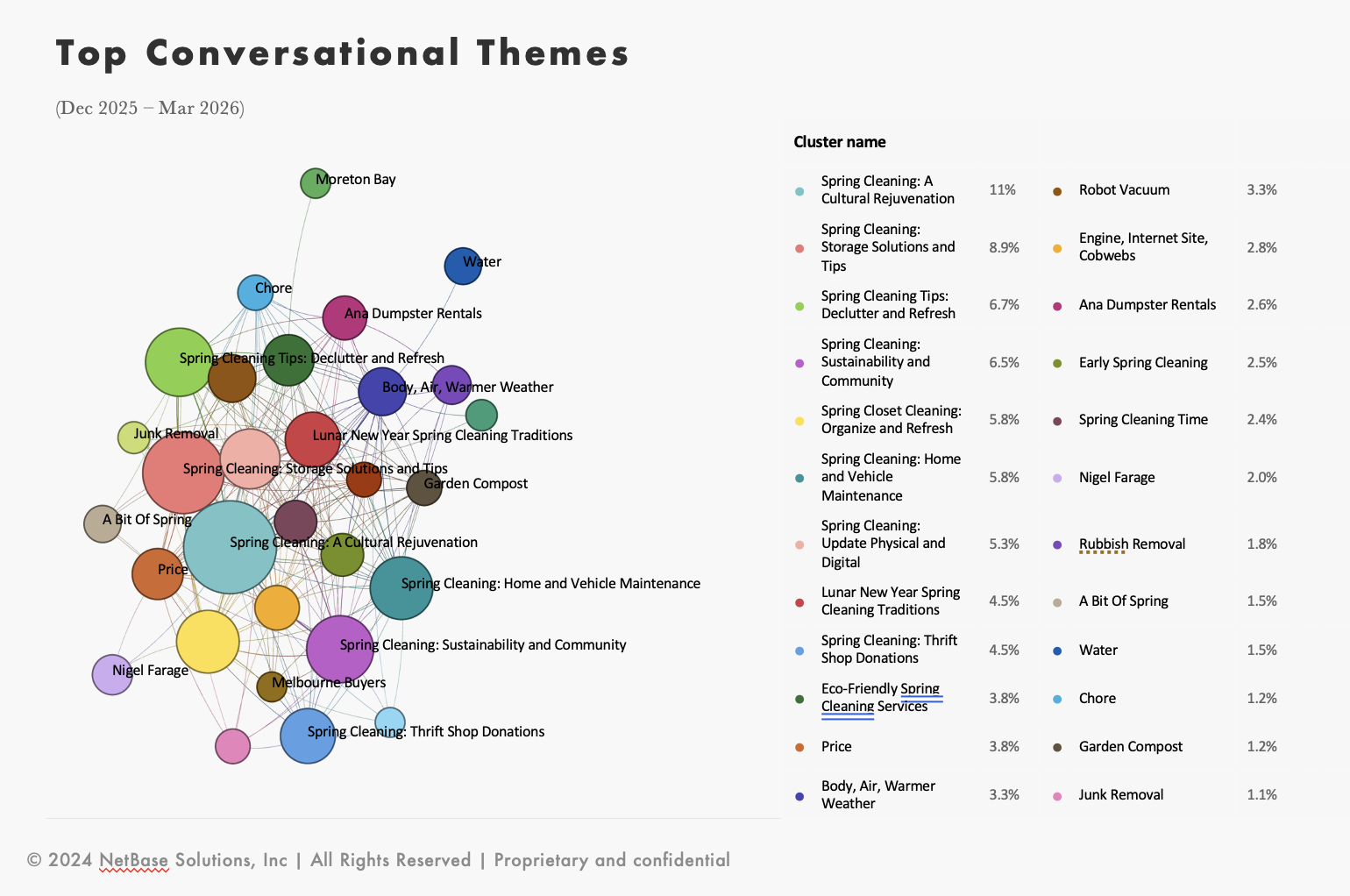
This network visualization shows how the spring cleaning discussion clusters into several distinct but connected areas of conversation.
The largest themes include:
Smaller clusters reveal adjacent conversations around:
Together, these clusters show that spring cleaning is no longer a single activity. It has expanded into a connected ecosystem of behaviors that include home improvement, sustainability, resale, organization, and digital life management.
The language within these clusters reinforces the shift toward routine behavior rather than one large annual project. Key phrases appearing across the conversation include:
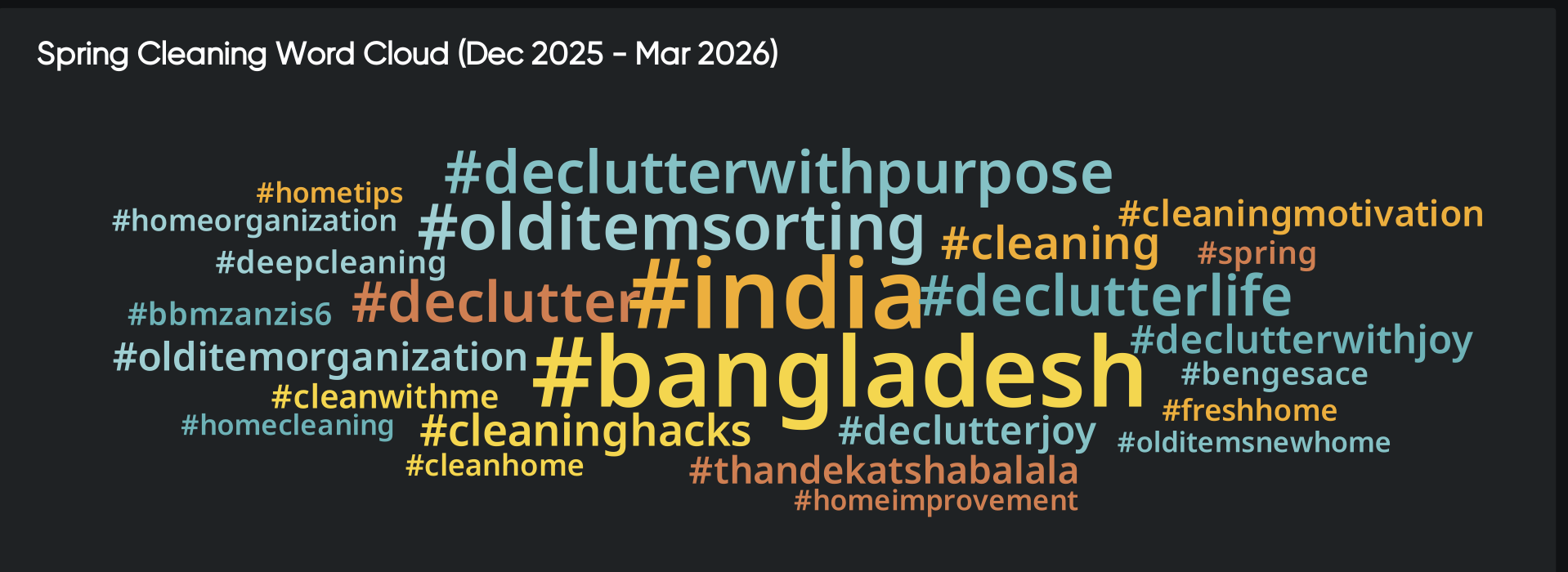
These signals reflect a major shift. Instead of framing cleaning as a single annual project, consumers increasingly treat it as a series of manageable routines.
Examples appearing across social platforms include:
This approach reduces the psychological friction of tackling a large task all at once.
For brands, the implication is clear. Cleaning tools and organizational products are now tied to ongoing habits, not occasional deep-clean events.
Younger Audiences Are Driving the Conversation
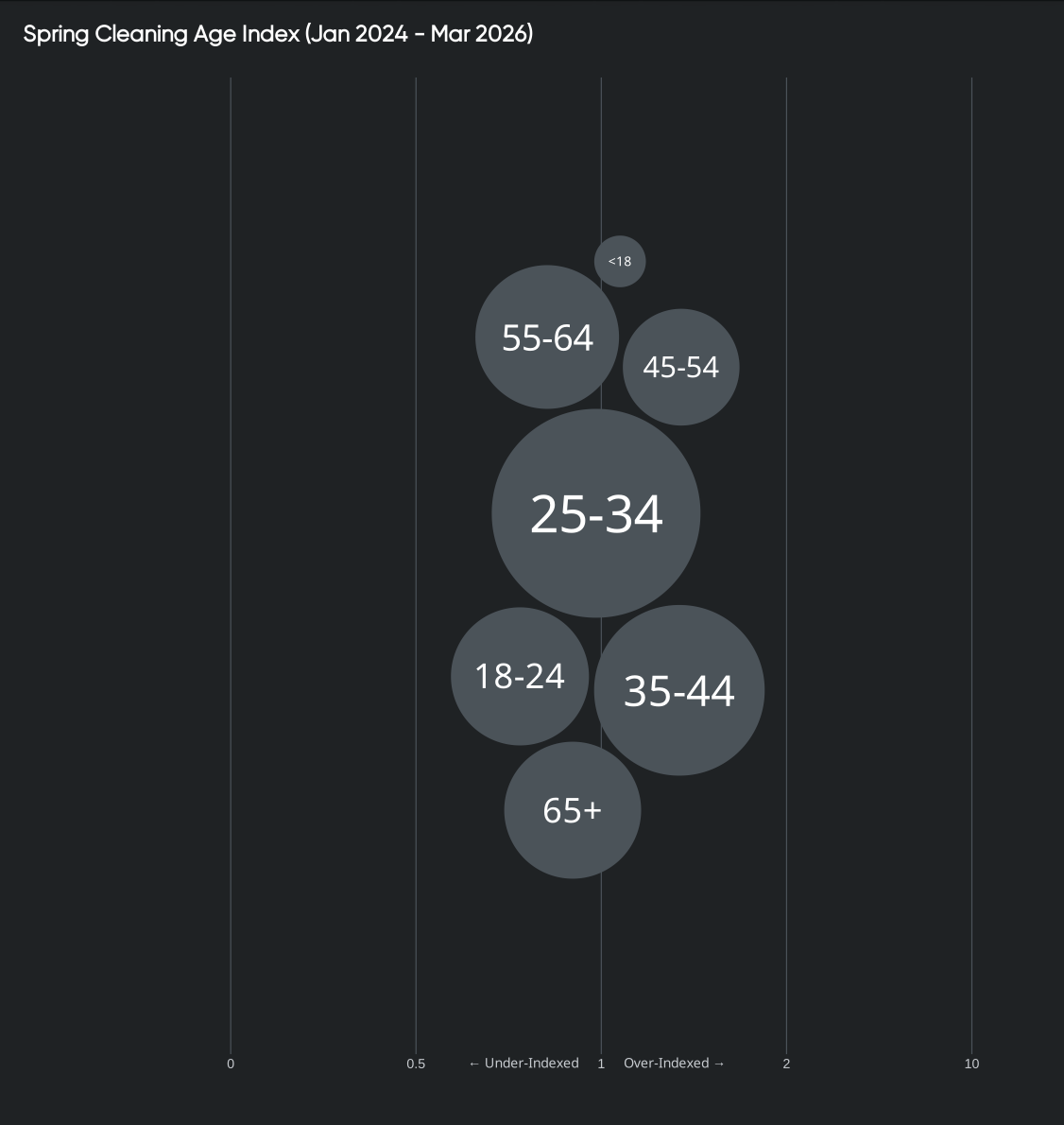
Age indexing shows that the strongest engagement comes from younger adult groups, particularly:
These audiences dominate content creation on social platforms. As a result, cleaning discussions increasingly appear within broader lifestyle and productivity narratives rather than traditional household advice.
Cleaning has become content.
Spring Cleaning Is a Global Behavior
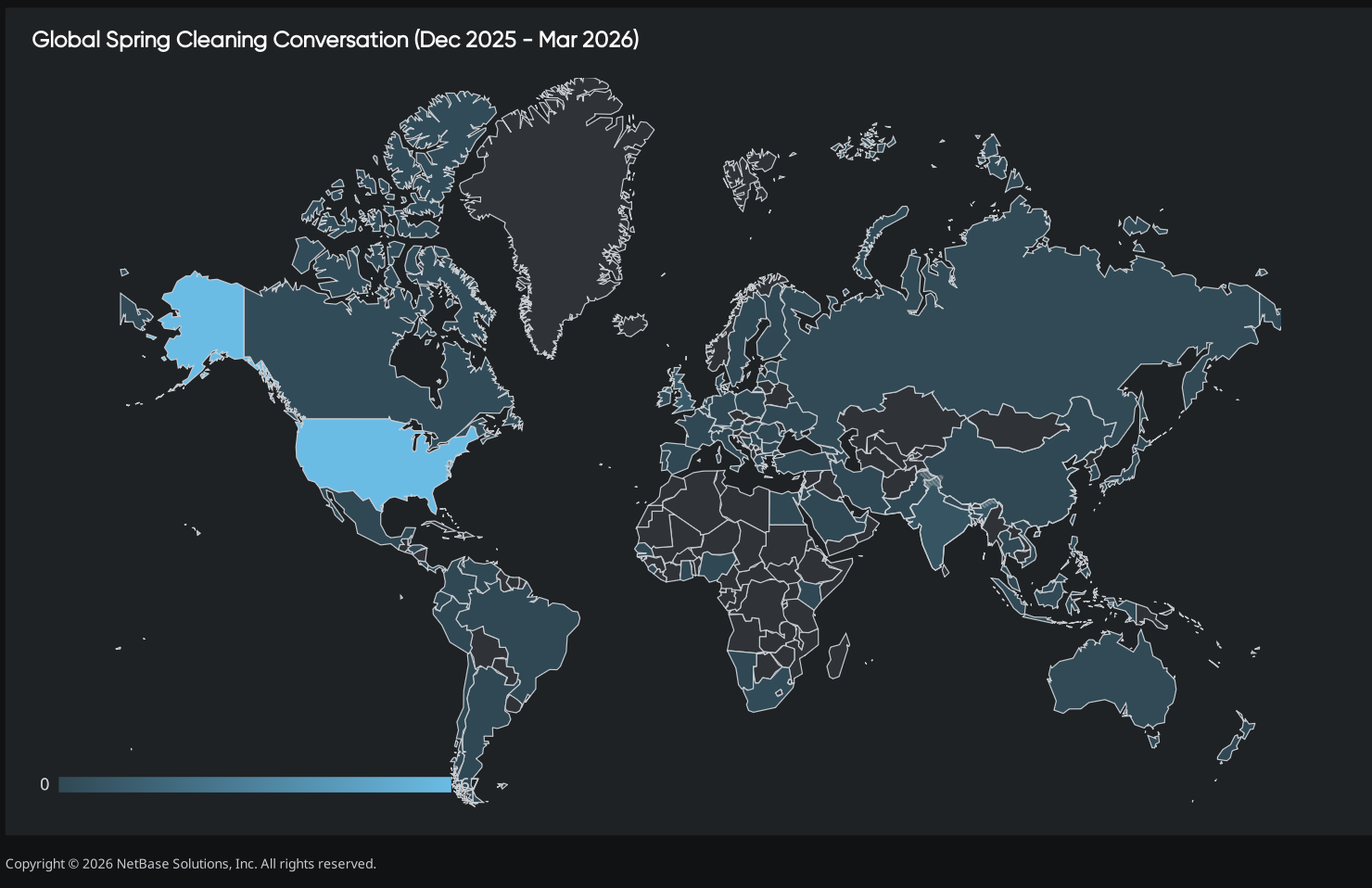
The geographic distribution of the conversation reveals participation across multiple regions, including:
In many regions, the idea of spring cleaning blends with broader themes around sustainability, home organization, and community clean-up efforts.
This global participation reinforces the idea that the behavior has evolved into a widely shared lifestyle pattern rather than a narrowly seasonal tradition.
Decluttering Fuels the Circular Economy
Another important pattern appears once people begin cleaning. Items leave the home. Consumers deciding what to remove typically choose one of three options:
This creates a circular consumption cycle. Old items exit the household and new items enter. Retailers, resale platforms, and donation organizations all benefit from the reset that spring cleaning encourages.
What This Means for Brands
Understanding how consumers talk about spring cleaning reveals several strategic opportunities.
Expand campaign timing: Cleaning behavior now appears throughout the year. Marketing strategies should reflect ongoing routines rather than a single seasonal push.
Partner with creators: Decluttering challenges and cleaning routines perform strongly as episodic content that sustains engagement.
Position products for daily maintenance: Consumers increasingly favor tools that simplify small, frequent cleaning tasks.
Combine services with products: Hybrid offerings that combine DIY tools with professional cleaning services reduce friction for consumers.
The Bottom Line
Spring cleaning remains culturally powerful, but it has evolved. What was once a single seasonal event has become a behavioral ecosystem shaped by creator culture, digital habits, service providers, and consumer product discovery.
For brands paying attention, the opportunity is not limited to spring. It lies in the routines that now define how people keep their homes, and their lives, organized.
Spring cleaning may look like a household ritual, but the data shows it is also a powerful consumer signal. From product discovery to creator-driven routines, the behavior surrounding cleaning continues to evolve across platforms, regions, and demographics.
Quid helps brands identify these shifts early by analyzing large-scale consumer conversations and turning them into actionable insights. Understanding how everyday behaviors change allows companies to refine messaging, anticipate demand, and connect with consumers at the right moment.
Reach out today to learn more about how Quid helps teams turn cultural signals into smarter strategy.