

.png?width=1252&height=362&name=QUID_Logo_WHITE%20(2).png)
The language changed, but the behavior did not. What used to be “get a summer body” now shows up as wellness, optimization, and maintenance. It sounds healthier. It looks more responsible, and it converts just as well.
Quid data, combining our analytics and Q Agent-derived insights, shows this is not a surface-level rebrand. It is a full shift in how appearance goals are packaged, distributed, and monetized across channels.
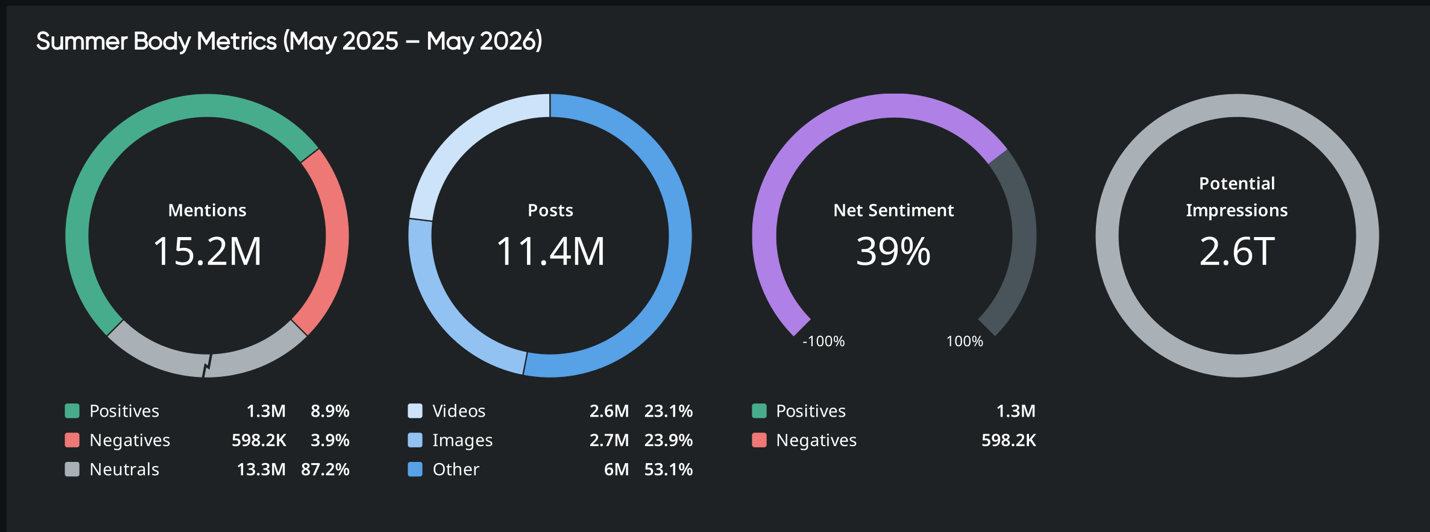
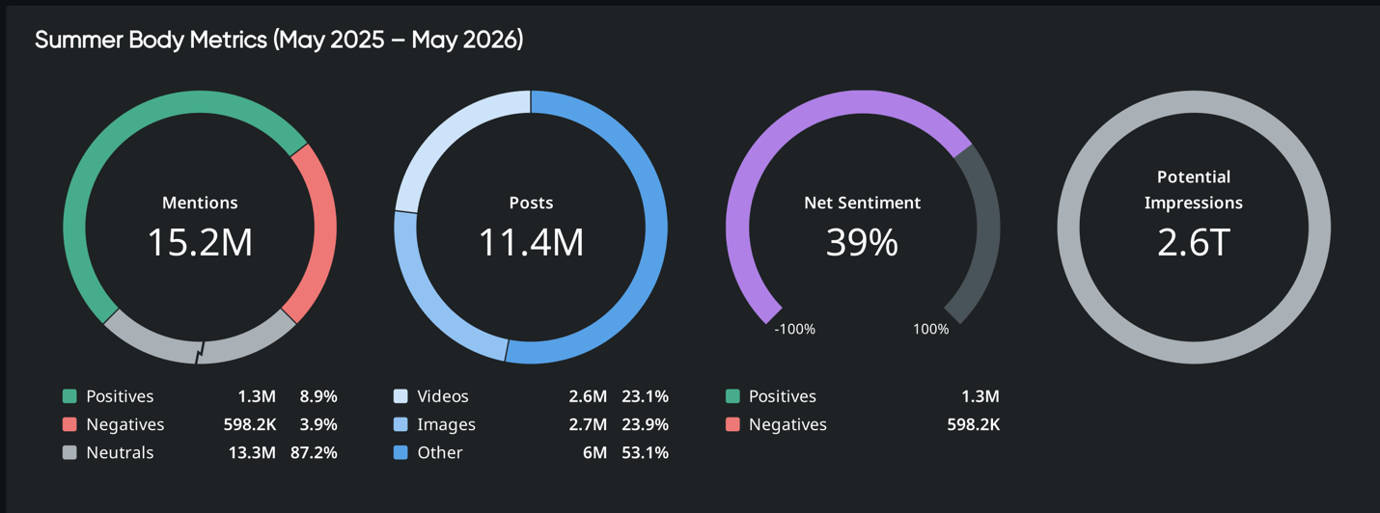
The numbers tell a very specific story.
That combination is as revealing as last year’s swimsuits. High neutral sentiment means people are not debating the concept. They are accepting it as normal behavior. That is what scale looks like.
A GenAI search might tell you “summer body is trending less.” Quid shows that it never left. It just changed vocabulary.
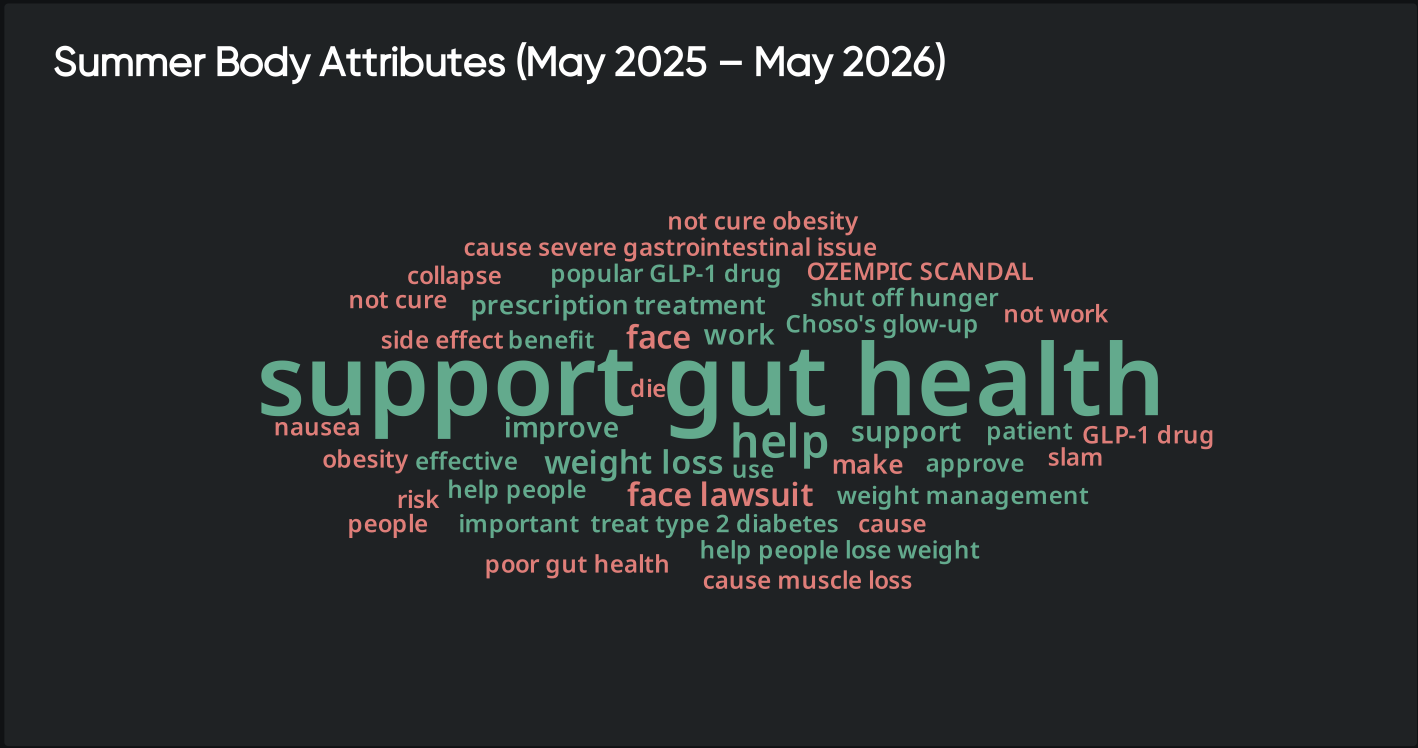
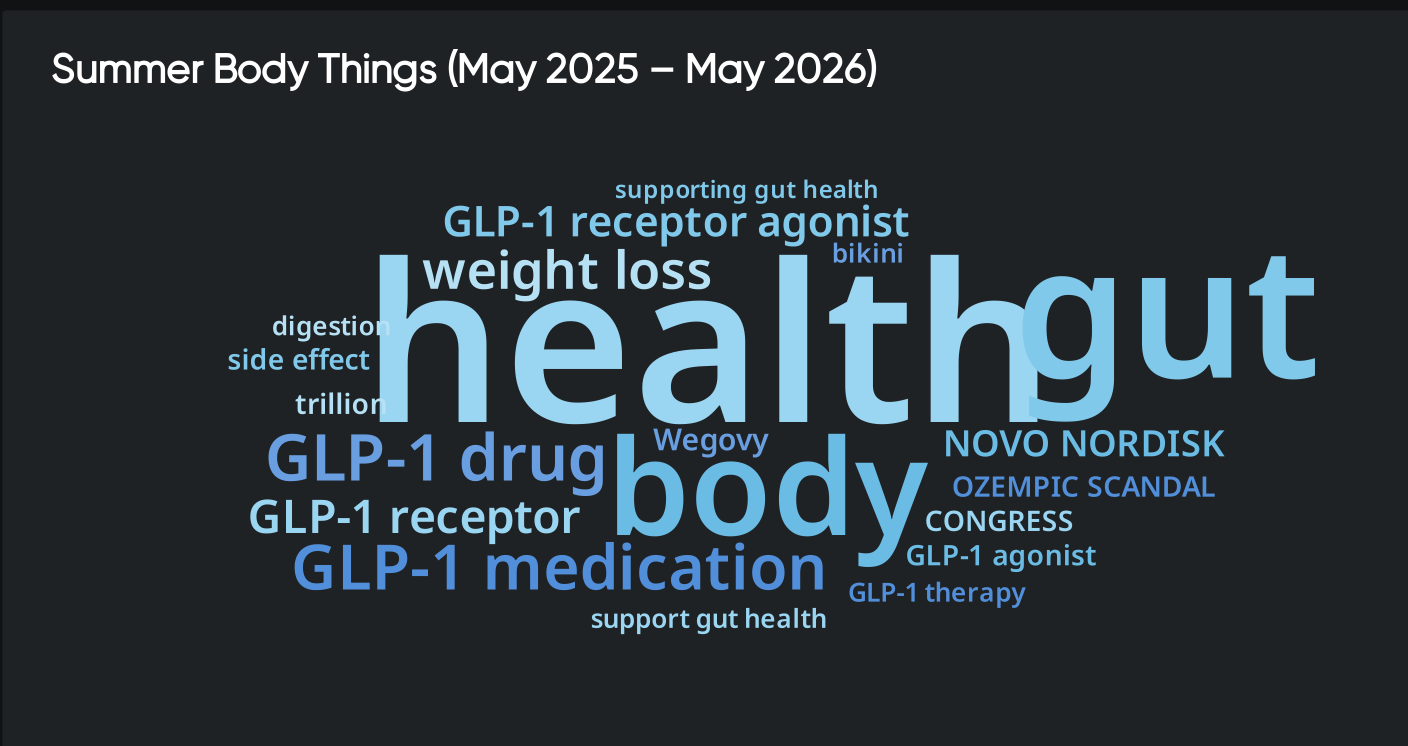
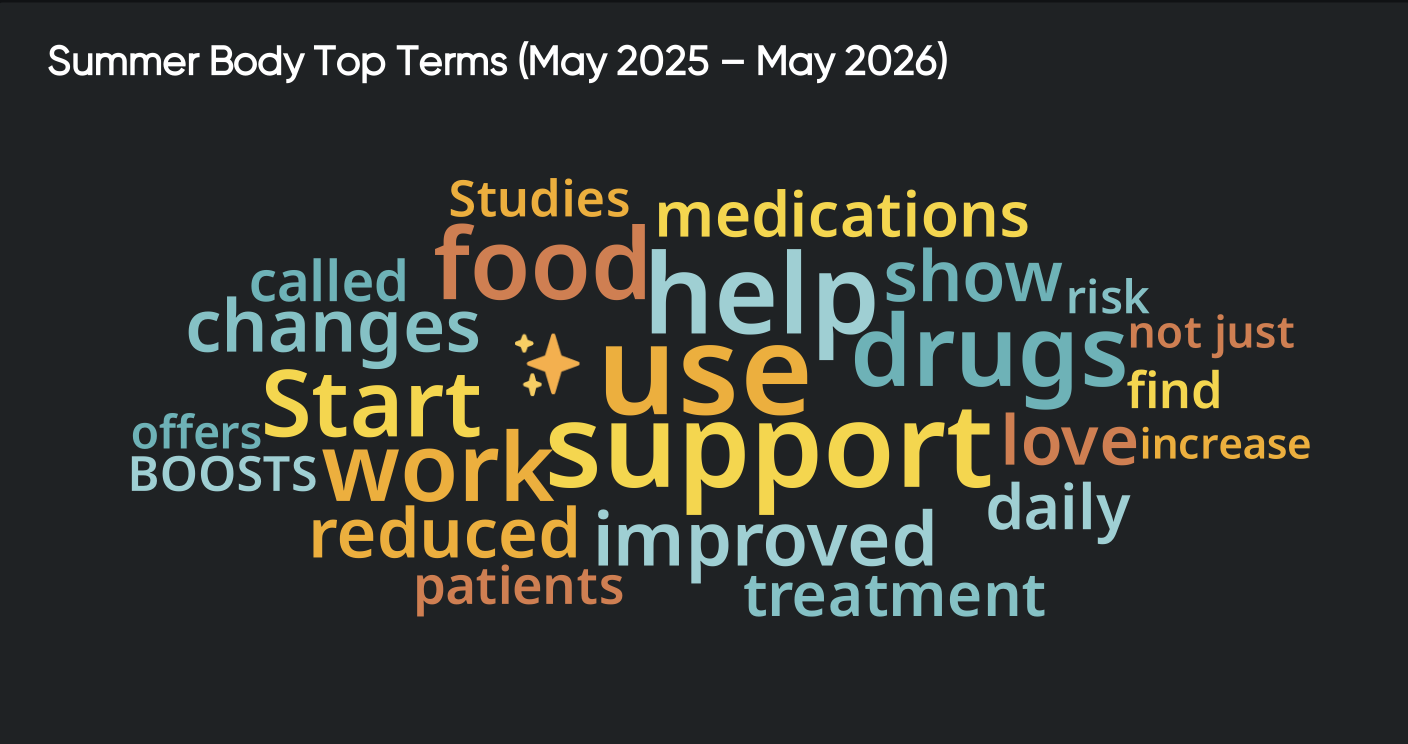
The dominant terms are functional, not visual.
This matters because it changes how the goal is communicated. The conversation no longer leads with appearance, it leads with process. Instead of saying look better, get thinner, or be ready for summer, it now says:
That shift moves the conversation from something subjective to something that sounds measurable and medically grounded. “Looking better” can be debated. “Improving gut health” cannot, at least not as easily in a social feed or product ad.
It also changes how products are positioned.
That framing does two things at the same time.
First, it lowers resistance. Clinical language feels responsible, not indulgent. People are more willing to engage with something that sounds like care instead of vanity.
Second, it increases perceived effectiveness. When outcomes are tied to biological processes, they feel predictable and controllable, even when they are not.
So the goal has not changed, but the language has shifted from aesthetic outcomes to biological inputs, and that is why it works.
Celebrity “summer body” content follows a repeatable pattern that turns attention into purchase intent.
This works because the product is not introduced in isolation. It is introduced at the exact moment attention is highest.
The quotes reinforce how this is done:
Across media, this shows up in a consistent way:
The connection is rarely stated outright. It does not need to be. The image creates the aspiration, the product is placed next to it, and the audience fills in the cause.
That loop is measurable in Quid through timing, co-occurrence, and engagement patterns. A standard search will surface the posts, but it will not show how consistently this structure repeats.
This is where things stop pretending, as the “summer body” is now a product category where powders, teas, patches, GLP-1 blends, and “cutting mixes” are sold.
And the messaging is engineered for conversion:
Example language includes:
The structure is consistent and acts as a sales funnel, taking the viewer from the problem (body) to the mechanism (science terms) and then the short, aka the product.
It’s science – the science of consumer understanding!
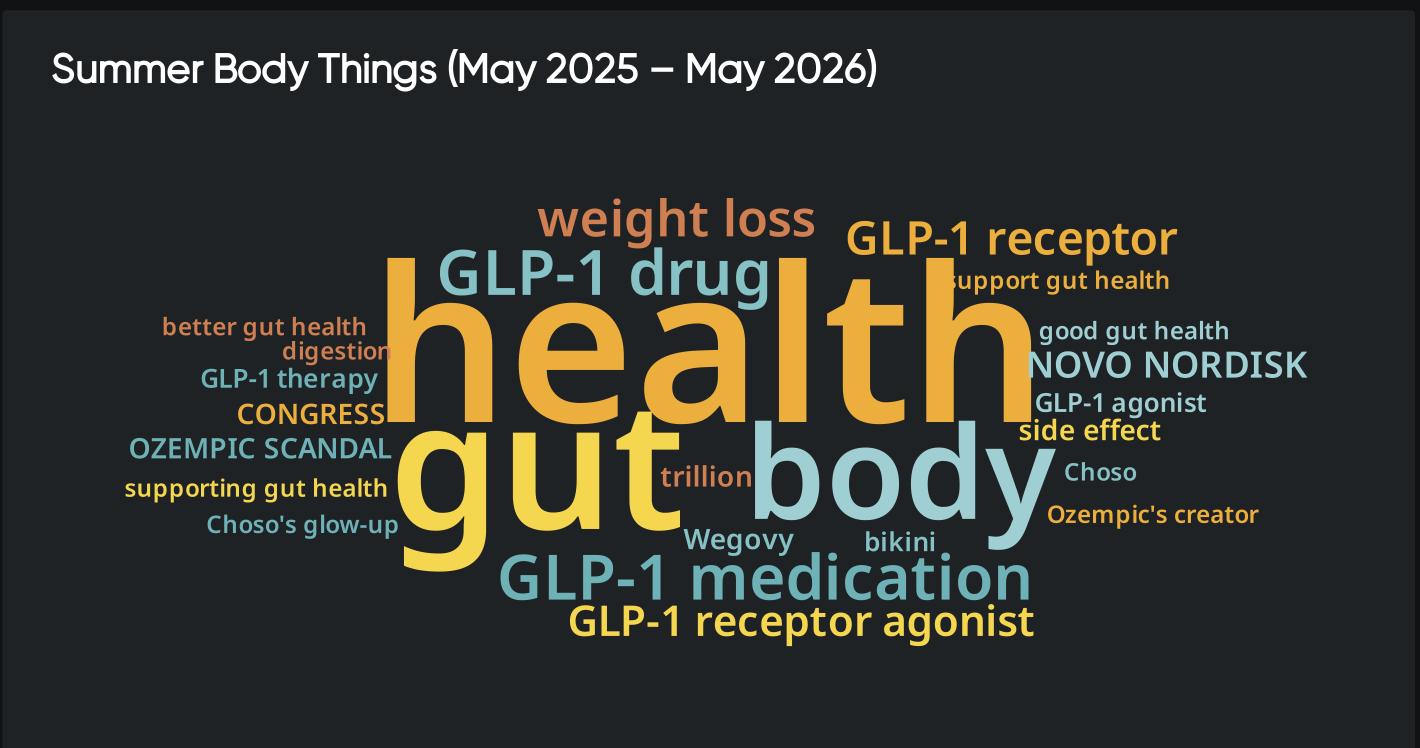
Words like GLP-1, metabolism, probiotics, serotonin, and activation are everywhere They do two things:
That is why they convert, and this also why they carry risk.
“The peptide world is the wild, wild west right now.”
But brands are not guessing here. They are responding to repeat behavior. Products now align with specific seasonal rituals:
Example:
These are launches built to plug into an existing loop: content → aspiration → product → repeat
There is real pushback in the conversation. Messages like “you do not need to be ready by summer” and “we do not care about summer bodies” reject urgency and seasonal pressure. They shift the focus toward long-term habits, consistency, and body acceptance.
But they do not set the direction of the conversation. They respond to it.
The broader dataset still clusters around change-oriented language. Terms tied to wellness, glow ups, weight loss, and routines dominate, even when the tone is softer or more supportive.
That creates a clear imbalance in how the system operates.
Even more interesting, the counter-narrative does not fully break away. It often uses the same structure.
So while it challenges the pressure, it still operates inside the same broader idea of self-improvement.
Quid makes this difference visible.
A GenAI search gives you a summary. Quid gives you structure.
Most importantly, it shows where decisions are forming and not just what people are talking about.
For brands, the key takeaway is this: Do not abandon “summer body” messaging, but understand how it evolved. Three realities:
That creates both opportunity and risk. The brands that win here will align with wellness framing, avoid overreaching medical claims and build products that fit real routines
The ones that lose will copy language without understanding behavior, chase trends without tracking structure, and rely on surface-level insights.
Reach out today, and we’ll help you make sure you’re in that first group!
Is “summer body” messaging actually declining?
No. It is being reframed. The intent remains, but the language has shifted toward wellness and optimization.
Why is neutral sentiment so high?
Because the behavior is normalized. People are not debating it. They are participating in it.
What role do GLP-1 drugs play in this trend?
They anchor the clinical framing. They make weight outcomes feel medical and achievable through intervention rather than effort.
Is TikTok driving this shift?
Yes. It compresses discovery, validation, and purchase into one loop, turning the concept into a marketplace.
Where is the biggest risk for brands?
Medicalized claims. Scientific language drives conversion but increases regulatory and reputational exposure.
Why not just use GenAI for this analysis?
Because GenAI summarizes existing content. It does not map behavior, clustering, or decision patterns at scale.