

.png?width=1252&height=362&name=QUID_Logo_WHITE%20(2).png)
Every summer brings a packed sports calendar. From the outside, every event looks like an opportunity, but the data tells a more selective story.
Which summer sport dominates media attention?
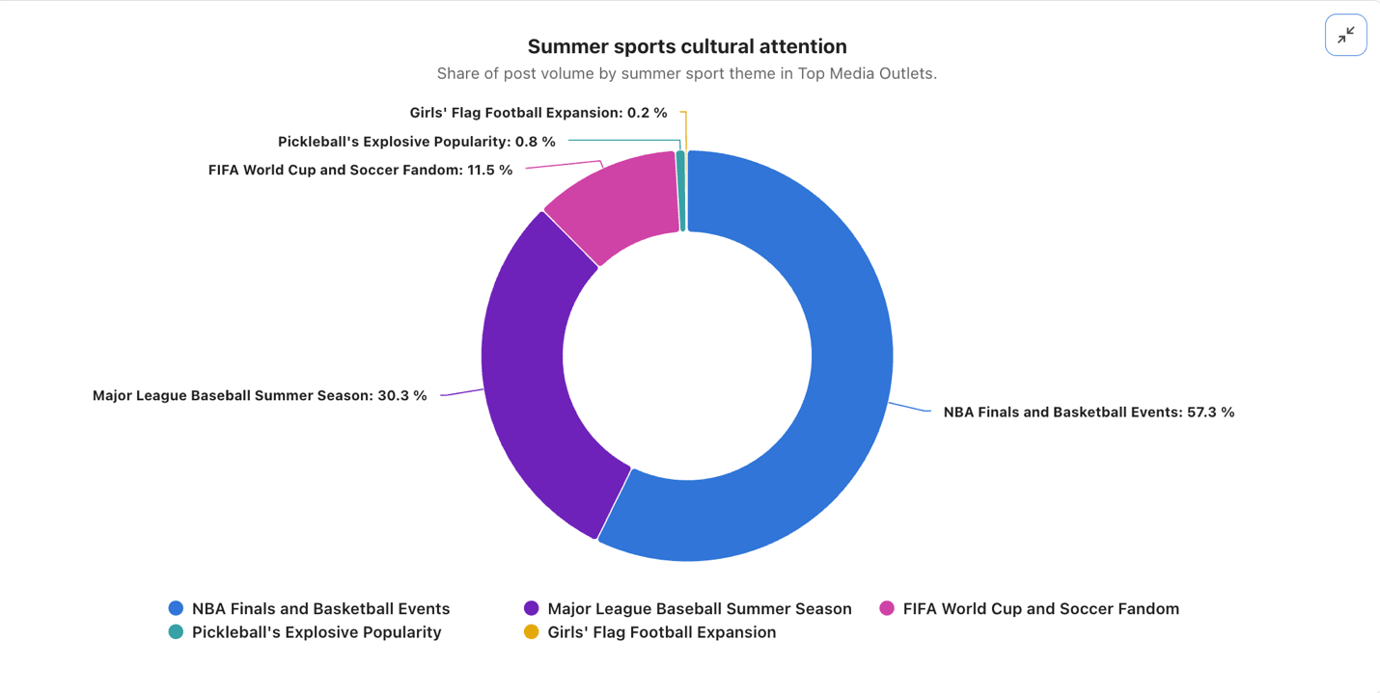
The NBA Finals account for more than half of media discussion across the analyzed summer sports topics.
Why does baseball still matter for brands?
Its nearly daily schedule creates consistent consumer touchpoints throughout the season.
Why is FIFA different from other sports?
The World Cup extends well beyond the matches themselves, creating city-wide experiences, travel, tourism, sponsorships and community events.
What emerging sports should brands watch?
Pickleball and girls' flag football continue building grassroots participation and long-term community engagement.
Our Quid analysis shows that cultural attention is concentrating around just a handful of moments, while several fast-growing sports are building long-term momentum beneath the headlines. Understanding the difference helps brands decide where to invest today and where to build for tomorrow.
Before looking at which sports dominate attention, it helps to understand the scale of the conversation itself.
Between January and July 2026, Quid identified more than 1.1 million mentions, 934,000 posts, and an estimated 331 billion potential impressions across the summer sports landscape.
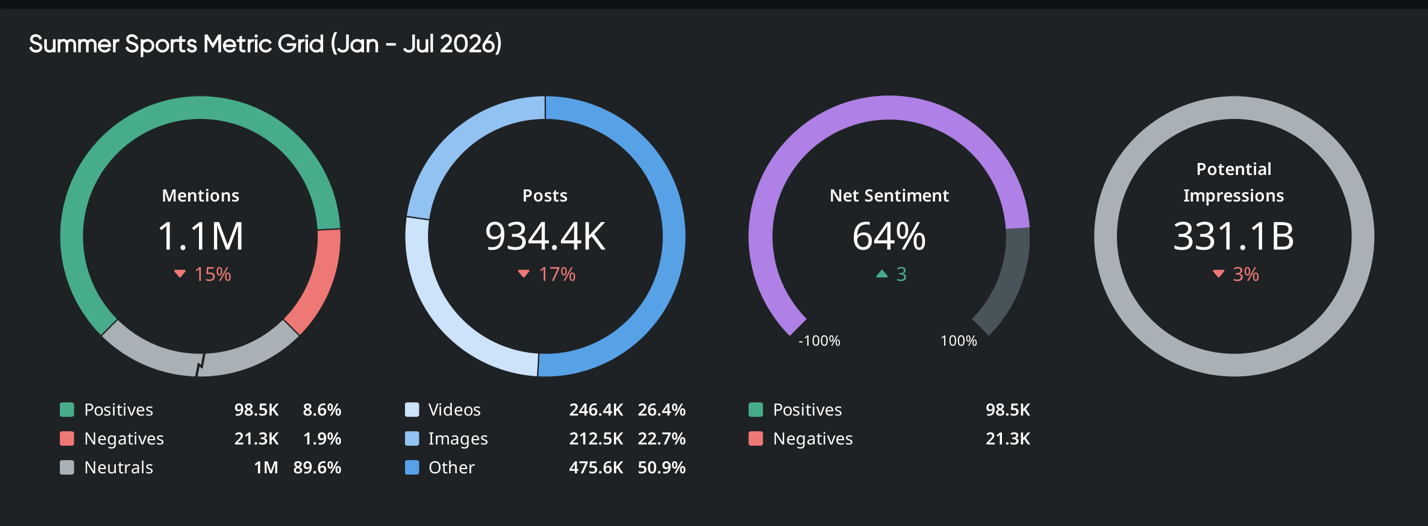
Most conversations remained neutral, reflecting news coverage and event reporting, while positive discussion significantly outweighed negative sentiment. Video also represented more than one-quarter of all content, underscoring how visual platforms continue shaping sports engagement.
This matters because brands are not competing for attention within a single sporting event. They are competing inside one of the largest seasonal conversations of the year.
Many marketers assume consumers divide their attention across dozens of sporting events throughout the summer. Quid shows something different.
More than half of analyzed media attention centers on the NBA Finals and related basketball events (57.3%), while Major League Baseball accounts for another 30.3%. FIFA World Cup coverage represents 11.5% of the conversation, with pickleball and girls' flag football representing much smaller shares today.
That does not make the smaller sports unimportant. It shows they occupy different positions in the consumer attention cycle:
Those are very different opportunities, which we’ll explore below.
Volume alone never explains why consumers engage. Quid's behavioral analysis reveals people are planning experiences rather than simply consuming sports content.
The dominant behaviors include:
Rather than passive viewing, consumers are actively preparing trips, purchasing merchandise, attending events and participating themselves.
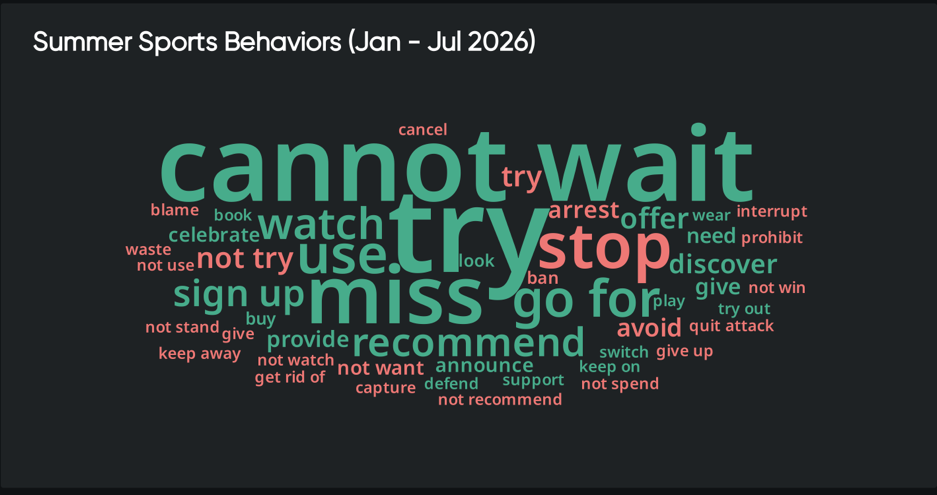
This supports the discussion around participation and purchase behavior rather than simple media consumption.
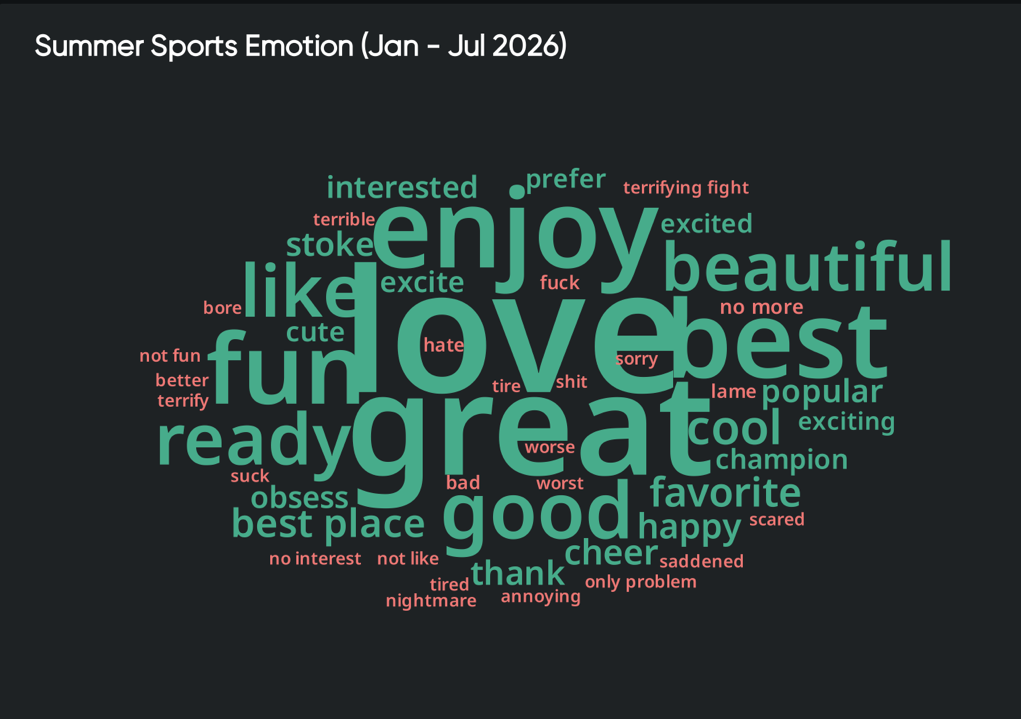
Sports conversations remain overwhelmingly neutral from a sentiment perspective, reflecting news coverage and event reporting. The emotional language tells another story.
Consumers frequently associate summer sports with words like:
Negative emotion exists, but it is comparatively small and generally tied to competitive outcomes or event frustrations rather than rejection of the sports themselves.
For brands, that creates an environment where positive emotional associations already exist before advertising even begins.
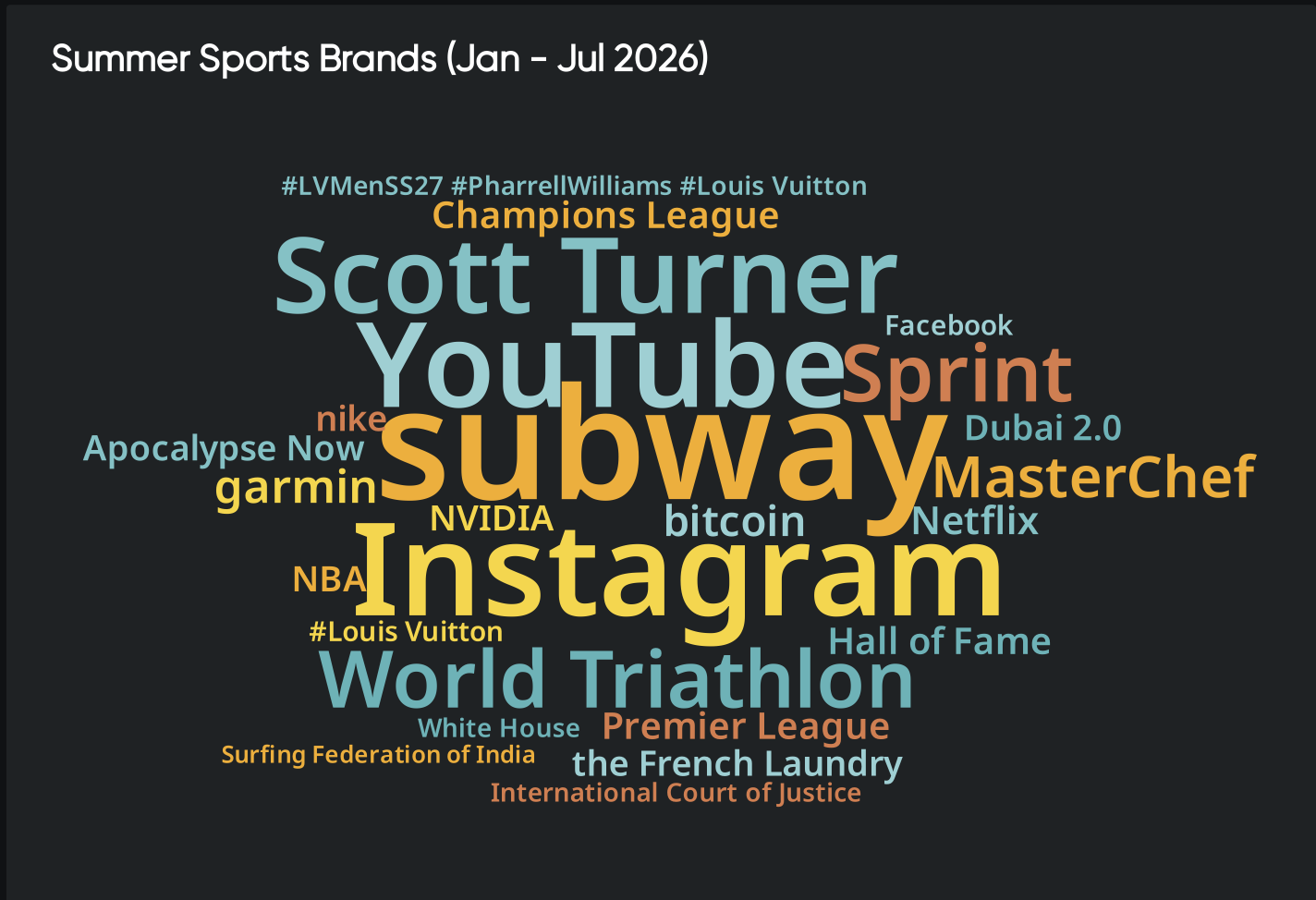
One of the more interesting findings is that consumers rarely separate sports from the broader brands surrounding them. The conversation naturally connects organizations such as NBA, Premier League, Champions League, Nike, YouTube, Instagram, Netflix, Garmin, and even luxury brands like Louis Vuitton.
That illustrates that summer sports conversations are rarely limited to the competition itself. They intersect with fashion, entertainment, technology, streaming media, travel and social platforms, creating opportunities for brands well outside traditional sports marketing.
Consumers are engaging with an entire ecosystem rather than a single event.
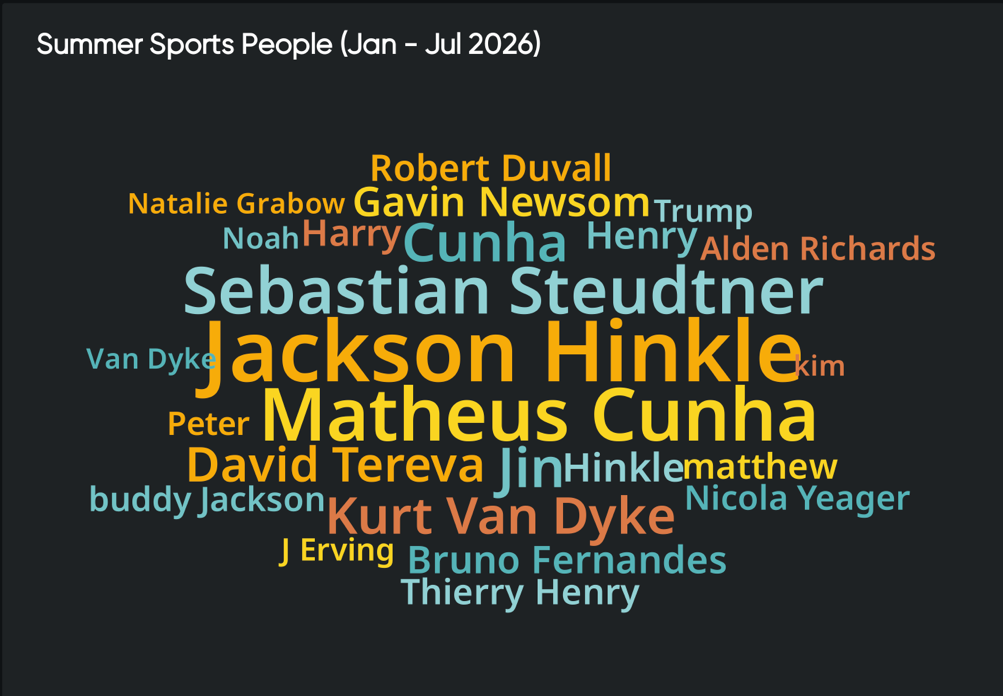
Not every influential voice in summer sports is an athlete.
Quid shows conversations connecting professional players, celebrities, coaches, political figures and online personalities into one interconnected discussion. Names ranging from Thierry Henry and Matheus Cunha to public figures and creators appear alongside sporting events because audiences increasingly consume sports through personalities as much as competitions.
For marketers, this reinforces an important shift where sports marketing needs to follow influential people rather than simply sponsoring games.
One of the strongest patterns in the Quid data is that each sport generates a different kind of cultural experience.
The NBA Finals produce concentrated spikes in attention. Viewership, local celebrations, media coverage and sponsorship activity all converge into a relatively short window where brands can achieve enormous visibility.
Baseball rarely dominates a single week. Instead, its nearly daily schedule produces an ongoing stream of highlights, local events, destination games and community rituals that keep consumers engaged throughout the summer.
The World Cup extends well beyond ninety minutes on the field. Host cities become entertainment destinations through fan festivals, neighborhood watch parties, stadium transformations, tourism and international media coverage. Entire communities participate, including many people who never attend a match.
Their current media share remains relatively small. Their significance comes from something different.
These are often early indicators that a sport is moving toward broader mainstream adoption.
Perhaps the biggest surprise in the dashboard is how quickly the conversation expands beyond organized competition.
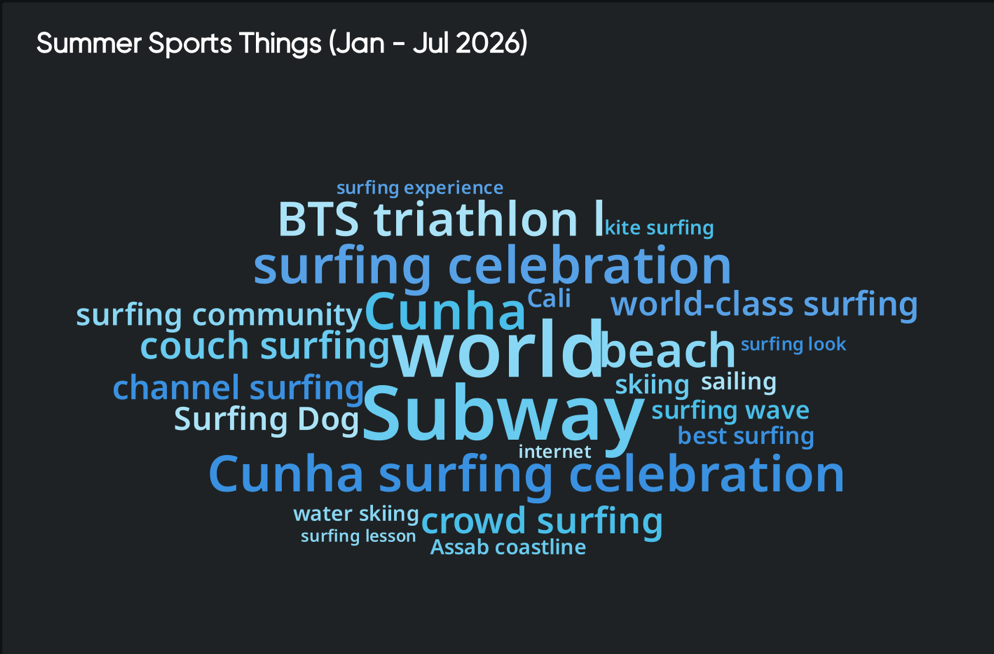
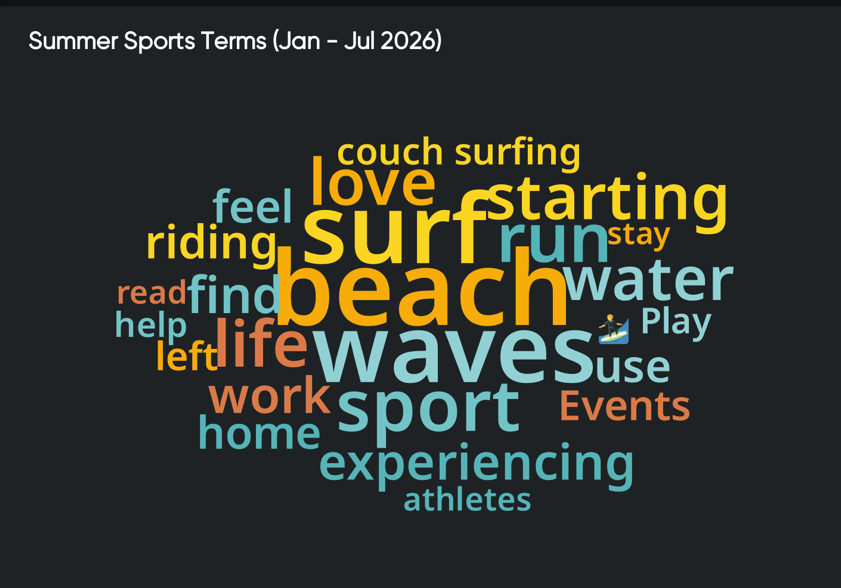
Consumers associate summer sports with beaches, surfing, sailing, water skiing, outdoor recreation and travel experiences alongside traditional leagues and tournaments. Common terms reinforce that broader lifestyle perspective, with discussions centering on beaches, waves, athletes, riding, outdoor activities and simply enjoying the season.
This reinforces that summer sports function as a cultural season rather than simply a sports calendar.
Brands selling travel, apparel, outdoor gear, consumer products, food, beverages and entertainment all participate in this conversation, even if they have no formal relationship with a league or team.
A traditional search can tell you:
Generative AI can summarize those stories. But, Quid reveals how attention shifts between sports, how consumers behave, which emotions emerge, which brands become part of the conversation, who influences audiences and how seemingly unrelated topics connect into broader cultural moments.
That connected view is difficult to discover through keyword searches or AI summaries alone. It is what allows organizations to understand not just what people are talking about, but how the entire conversation evolves.
That is the difference between tracking sports and understanding the culture surrounding them.
Summer sports are only one example of how consumer attention shifts across media, social conversation and emerging behaviors. Quid helps brands identify those changes early, revealing where conversations are growing, how audiences are engaging and what opportunities are beginning to form before they become obvious. If your team wants to understand what is shaping consumer decisions next, now is the time to see what connected consumer intelligence can uncover.
Why does the NBA dominate summer sports attention?
The NBA Finals generate concentrated national media coverage, large television audiences and significant brand activity within a short period.
Why is MLB still valuable even with lower attention share?
Its nearly daily schedule creates continuous engagement opportunities throughout the summer instead of one large spike.
Why should brands care about pickleball and girls' flag football?
Both sports are showing signs of long-term growth through community participation, facilities, youth programs and institutional investment.
What makes FIFA different from other sporting events?
The World Cup becomes a cultural event that extends across travel, tourism, community celebrations and host-city experiences.
Why does Quid provide more insight than search alone?
Search identifies topics. Generative AI summarizes information. Quid connects conversations, behaviors, emotions and audience patterns to reveal why trends are emerging and how they relate to one another.