

.png?width=1252&height=362&name=QUID_Logo_WHITE%20(2).png)
Identity-driven marketing has become one of the most debated topics in modern branding. Some argue consumers have grown tired of personalized messaging and purpose-driven campaigns. Others believe identity has become more important than ever.
The data tells a more nuanced story.
What is identity-driven marketing?
Identity-driven marketing tailors messaging, products, or customer experiences around consumers' values, interests, lifestyles, communities, or personal identities.
Why do brands use identity-driven marketing?
Brands use identity-driven marketing to create more relevant customer experiences, strengthen emotional connections, increase customer loyalty, and improve marketing performance.
How has AI changed identity-driven marketing?
AI enables brands to personalize content, recommendations, and customer experiences using first-party data, behavioral insights, and predictive analytics.
Why is authenticity important in marketing?
Consumers are more likely to trust brands whose messaging consistently aligns with their products, customer experiences, and business practices over time.
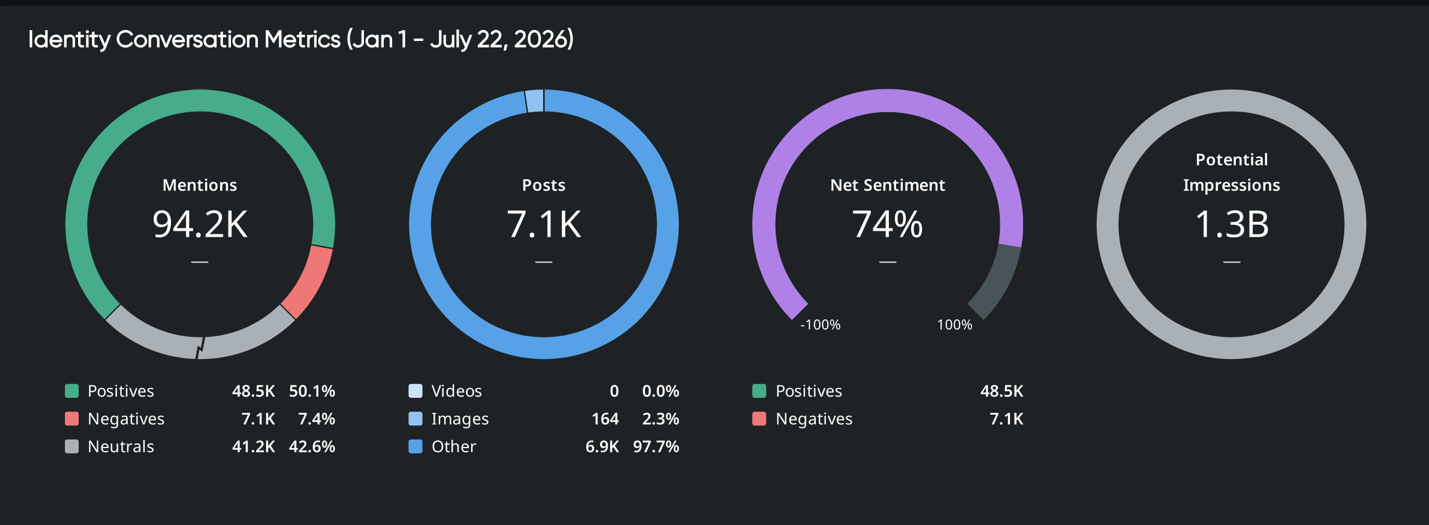
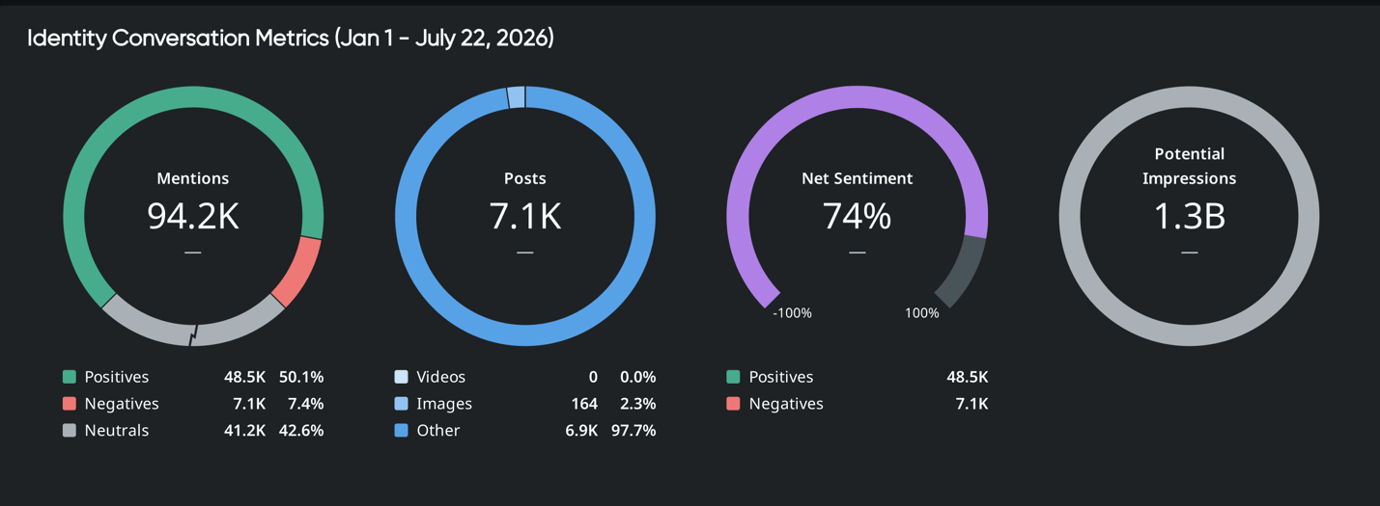
Quid's analysis of more than 94,000 mentions between January and July 2026 reveals that identity-driven marketing has not disappeared. Instead, consumers are responding very differently depending on how brands express identity.
Across those conversations, identity-driven marketing generated 74% net sentiment and more than 1.3 billion potential impressions, with positive discussion outnumbering negative conversation by nearly seven to one. Rather than signaling widespread consumer fatigue, these findings suggest consumers remain highly engaged with identity-driven marketing, even as their expectations continue to evolve.
That evolution becomes clear when the conversation is examined more closely. Rather than forming one unified discussion, Quid identified five major themes shaping identity-driven marketing throughout 2026.
Conversations centered on authenticity, community, and cultural relevance continue generating strong engagement and positive sentiment, while discussions around performative identity signaling generate far more skepticism.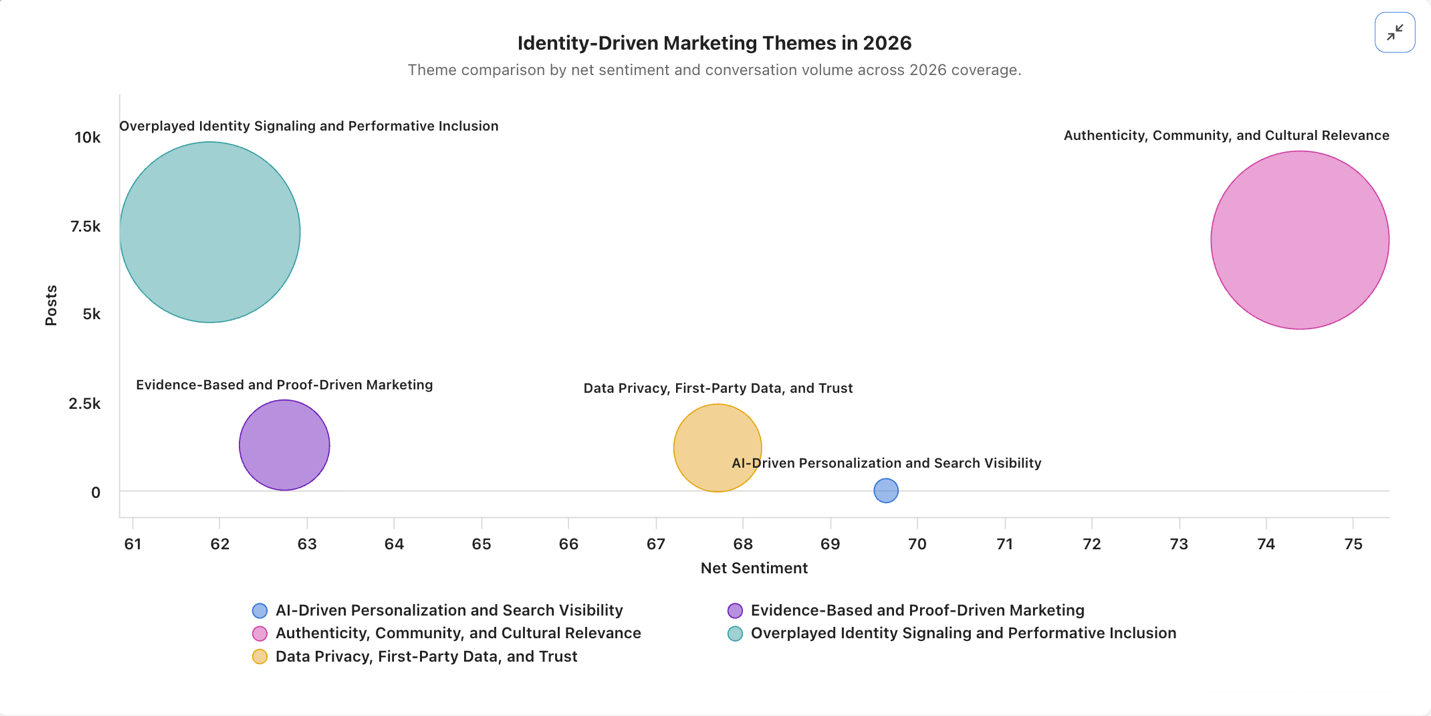
The visualization reveals a striking pattern.
Authenticity and community generate both the highest conversation volume and the strongest sentiment. At the opposite end, performative identity signaling generates nearly the same level of discussion but substantially lower sentiment. Evidence-based marketing, privacy, and AI personalization occupy smaller but meaningful spaces between those extremes.
This illustrates an important shift. Consumers are not rejecting identity-driven marketing. They are evaluating different approaches very differently.
Among all themes analyzed, conversations centered on authenticity, community, and cultural relevance generated the strongest overall sentiment.
Across industries, brands attracted positive attention when identity aligned with observable actions. Community partnerships, creator collaborations, local engagement, founder-led storytelling, and culturally relevant experiences all contributed to stronger consumer response.
Rather than rewarding broad statements about brand values, audiences responded when those values appeared consistently throughout the customer experience.
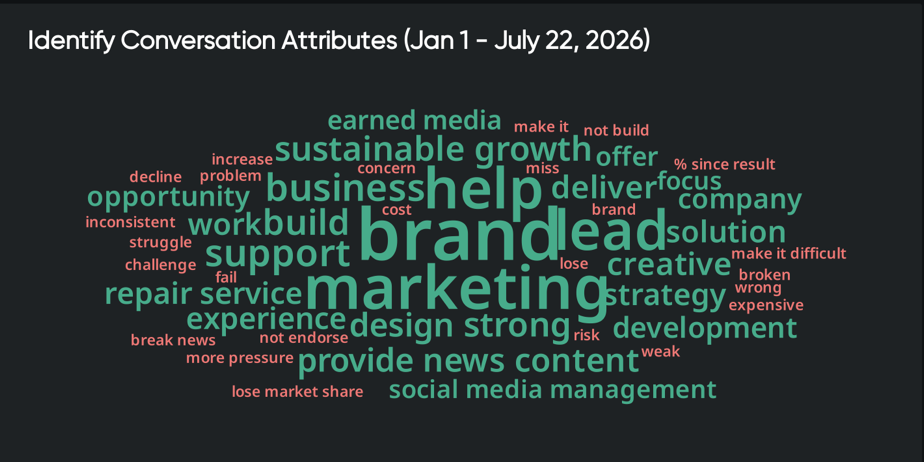
The attribute analysis reinforces that finding. Consumers consistently associate successful identity-driven marketing with concepts such as build, strong, support, creative, experience, opportunity, and sustainable growth. The conversation reflects an expectation that brands demonstrate their values through consistent actions rather than messaging alone.
One of the most interesting findings is not the existence of skepticism, but its scale.
‘Performative identity signaling’ generated one of the largest conversations in the dataset while producing the lowest net sentiment among the major themes.
The underlying conversations point to growing fatigue with campaigns that rely on symbolic messaging without corresponding evidence. Consumers increasingly notice when identity narratives fail to align with products, policies, employee experiences, or customer outcomes.
Consumers are applying far greater scrutiny to identity-driven marketing than in previous years.
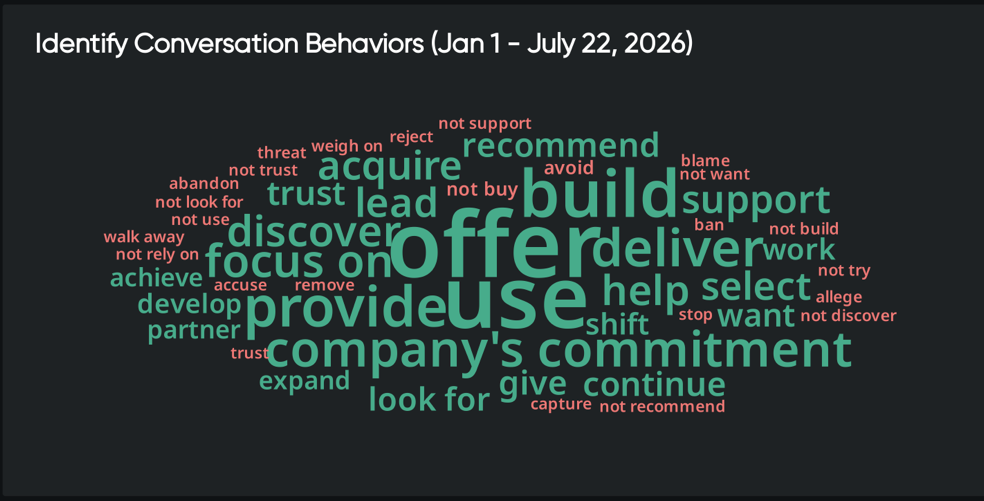
Behavior analysis supports that shift. While trust remains one of the strongest signals across the conversation, consumers also discuss when they avoid, reject, or stop supporting brands whose actions fail to match their messaging. Identity continues to matter, but credibility increasingly determines whether consumers engage.
A second conversation emerged around evidence-based marketing.
Although smaller in volume than authenticity, this discussion consistently emphasized measurable proof over promotional claims. Original research, customer stories, business outcomes, earned media, and third-party validation all appeared as signals that strengthen credibility.
This trend carries additional importance as AI-powered search becomes more influential.
Large language models increasingly rely on publicly available evidence when generating responses. Brands that create research, case studies, and verifiable expertise are building assets that influence both traditional audiences and AI discovery.
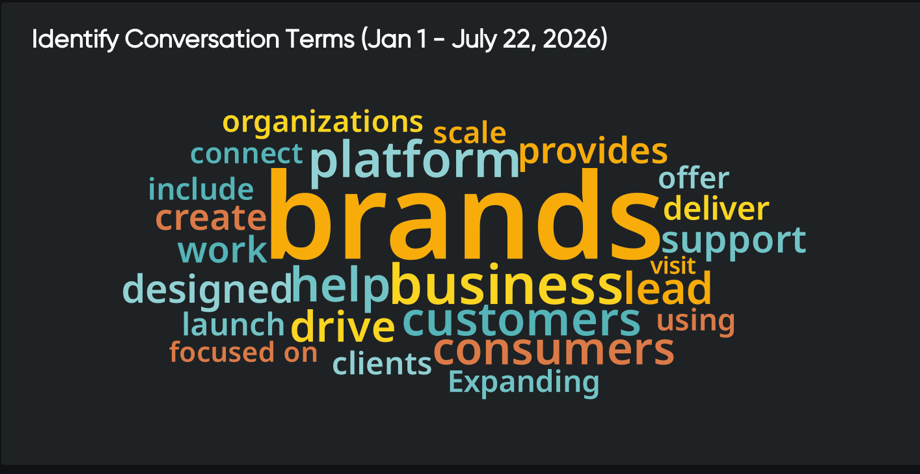
The language used throughout these conversations reflects that evolution. Frequently appearing terms such as brands, customers, business, deliver, provide, connect, launch, and scale suggest that identity is increasingly discussed alongside execution rather than messaging alone.
Another consistent theme centers on AI-driven personalization supported by first-party data and transparent consumer relationships.
Consumers continue responding positively to personalization that improves experiences or simplifies decisions. The strongest reactions occur when brands clearly communicate why information is collected and how it benefits customers.
Conversely, opaque personalization and unclear data practices weaken trust, even when the underlying technology performs well.
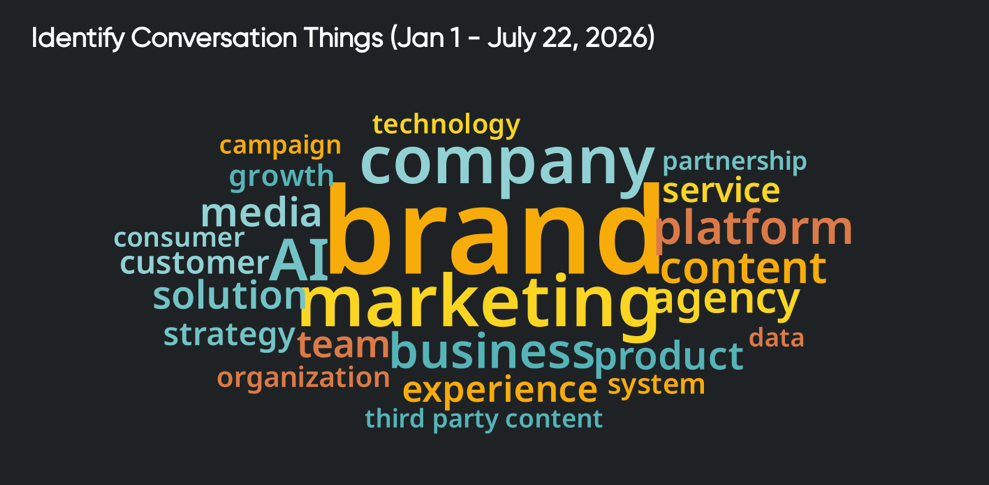
The broader conversation also shows that identity is increasingly connected to AI, customer experience, technology, platforms, partnerships, campaigns, and data. Rather than existing solely within advertising, identity has become part of the broader customer experience brands create.
The broader behavioral signals reinforce these findings.
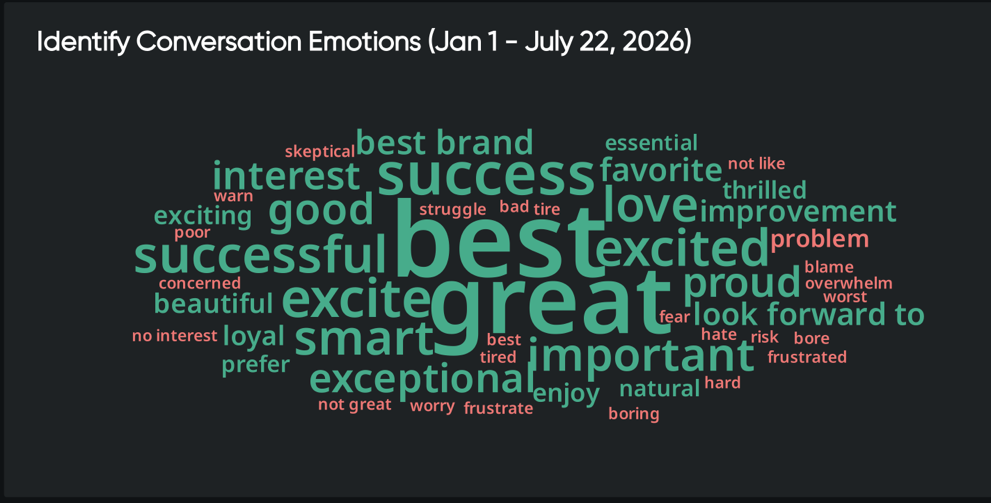
Words such as trust, build, support, deliver, and recommend dominate conversation behaviors, while emotion analysis highlights terms including success, love, smart, loyal, improvement, and excitement. Although skepticism and frustration appear, they represent a much smaller portion of the overall discussion.
Taken together, these patterns suggest consumers have not become cynical about identity-driven marketing. They remain optimistic, but they expect brands to earn credibility through actions rather than messaging alone.
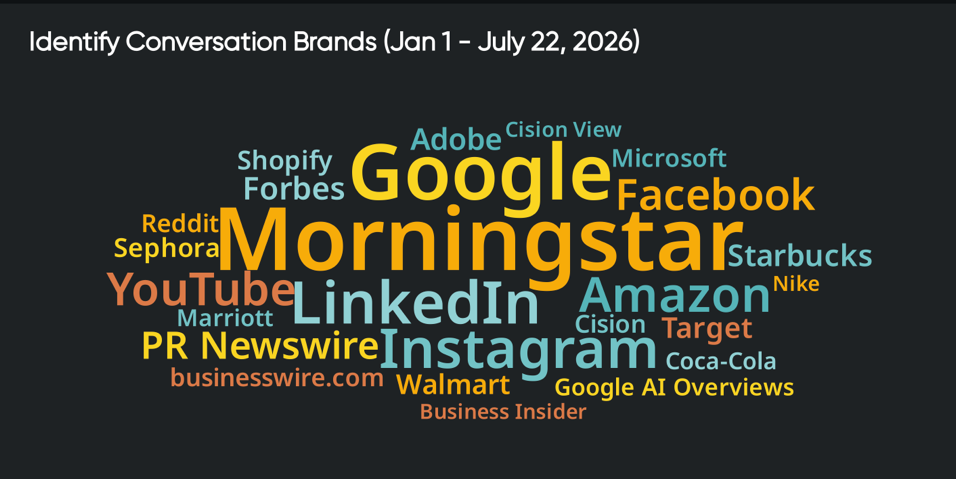
Identity-driven marketing is no longer concentrated within a handful of industries. Brands appearing throughout the conversation span technology, retail, hospitality, consumer goods, and media, including Google, LinkedIn, Starbucks, Walmart, Adobe, Shopify, Coca-Cola, Marriott, Sephora, and Nike.
The diversity of organizations represented demonstrates that identity has become a strategic business consideration across nearly every sector.
The findings suggest that identity itself is no longer the differentiator.
Consumers increasingly evaluate whether a brand can demonstrate consistency between what it says and what it does. Community engagement, measurable outcomes, transparent data practices, and evidence-backed storytelling all contribute to stronger trust.
For organizations, that changes the strategic question.
Instead of asking whether to build identity-driven campaigns, brands should ask whether every identity claim can be supported through observable behavior.
That distinction increasingly determines which conversations generate trust and which generate skepticism. Most importantly, this analysis demonstrates the difference between seeing conversations and understanding them.
That is where actionable market intelligence begins. Identity conversations are becoming more complex, and understanding the signals beneath them matters more than ever.
Quid helps organizations move beyond trending topics to understand how consumer expectations, sentiment, and behaviors connect across the broader market, enabling brands to make more informed strategic decisions before conversations shift.

Why are consumers holding brands to higher standards?
Consumers increasingly expect identity-related messaging to align with products, customer experiences, business practices, and measurable actions. Consistency has become a stronger driver of trust than messaging alone.
What is performative identity signaling?
Performative identity signaling describes campaigns that communicate values without sufficient evidence through products, policies, customer experiences, or business actions. In Quid's analysis, this theme generated one of the largest conversations but the lowest overall sentiment.
Why is evidence becoming part of brand identity?
Consumers increasingly rely on measurable proof when evaluating brands. Original research, customer stories, business outcomes, and third-party validation help strengthen credibility while also supporting visibility in AI-powered search.
Does personalization still build trust?
Yes, when consumers understand how their information is being used and receive a clear benefit in return. Transparent personalization generated substantially more positive discussion than opaque data practices.
What industries are most involved in identity-driven marketing?
The conversation spans technology, retail, hospitality, consumer goods, media, and other sectors, demonstrating that identity-driven marketing has become a mainstream business strategy rather than an industry-specific trend.
What is the biggest takeaway from Quid's analysis?
Consumers are not rejecting identity-driven marketing. They are becoming more selective about how brands express it. Organizations that combine authenticity, transparency, measurable outcomes, and evidence-backed storytelling are more likely to build long-term trust.