

.png?width=1252&height=362&name=QUID_Logo_WHITE%20(2).png)
.png?width=1380&name=template%20even%20text%20(13).png "<span id=\"hs_cos_wrapper_name\" class=\"hs_cos_wrapper hs_cos_wrapper_meta_field hs_cos_wrapper_type_text\" style=\"\" data-hs-cos-general-type=\"meta_field\" data-hs-cos-type=\"text\" >Is Horror Comfort Now? What the Rise of “Cozy Scary” Says About Consumer Mood</span>")
Horror still scares people, but across TikTok and media coverage, another version of the genre is becoming visible. Ghosts are cute, monsters are emotionally complicated, and Halloween décor is designed to feel as comfortable as it is spooky.
What is cozy horror?
Cozy horror combines frightening or supernatural themes with comforting elements such as humor, nostalgia, familiar settings, emotional storytelling and softer horror imagery.
What does “spooky cozy” mean?
“Spooky cozy” describes an aesthetic that blends Halloween or horror imagery with warmth and comfort. In this post, examples include friendly ghosts, soft blankets, plush collectibles, warm autumn tones, and playful seasonal décor.
Why are horror and comedy often combined?
Our analysis describes humor as making frightening material more approachable, while TikTok conversations show creators using jokes and playful reactions to soften spooky situations.
What role does nostalgia play in horror?
Nostalgia connects horror with familiar characters, franchises, childhood memories, classic Halloween imagery and seasonal traditions. Across our TikTok and media analysis, these familiar references repeatedly appear alongside softer forms of horror.
Can horror be comforting?
We found horror appearing alongside affection, humor, nostalgia, domestic comfort and familiar rituals. These themes allow frightening imagery and stories to carry comforting elements while retaining their connection to horror.
Quid’s analysis shows horror being mixed with nostalgia, humor, softness and familiar rituals across entertainment and consumer culture. On TikTok, conversations move from fear toward affection and excitement. In media coverage, some of the largest conversation clusters center on character vulnerability, nostalgia and comedy.
For CPG and retail brands, that combination creates a broader opportunity around horror and Halloween. Consumers can participate in spooky season through décor, collectibles, humor, nostalgia and shared experiences without seeking intense scares.
On TikTok, the largest cluster in the displayed analysis centers on viewers reporting horror shifting from fear toward affection, representing 17% of the conversation. Creators describe moving through fear into excitement, acceptance, control or even obsession.
The shift does not remove fear from the experience. Other emotions sit alongside it, with nostalgia and childhood memory representing 15% of the conversation, cozy Halloween décor 14%, humor 10% and friendly ghost motifs 9.9%.
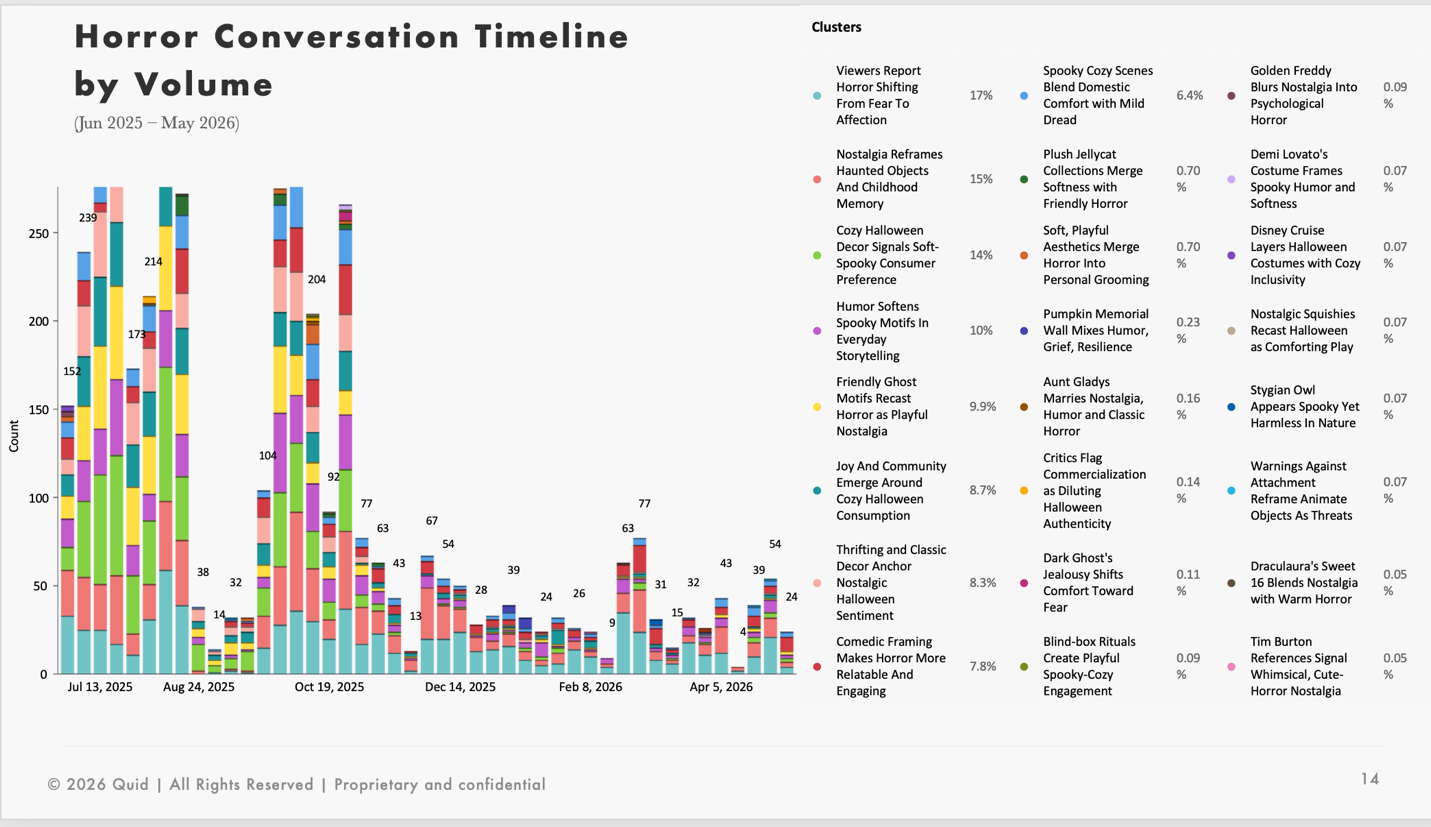
The timeline shows these themes recurring across the analyzed period, with fear-to-affection, nostalgia, cozy décor, humor and classic Halloween imagery all contributing to the broader conversation.
For brands, that opens more creative territory. Halloween products can tap into affection, familiarity, humor and comfort alongside traditional fright.
TikTok creators repeatedly connect haunted experiences with memory. They reference childhood viewing, familiar franchises and objects that trigger nostalgia. Ghosts also appear within domestic and family stories, bringing supernatural imagery into familiar settings.
Thrifting reinforces that pattern. Another TikTok cluster centers on classic jack-o’-lanterns, black cats, horror media and memories of Halloween decorations from childhood. Thrifting and classic décor account for another 8.3% of the displayed conversation.
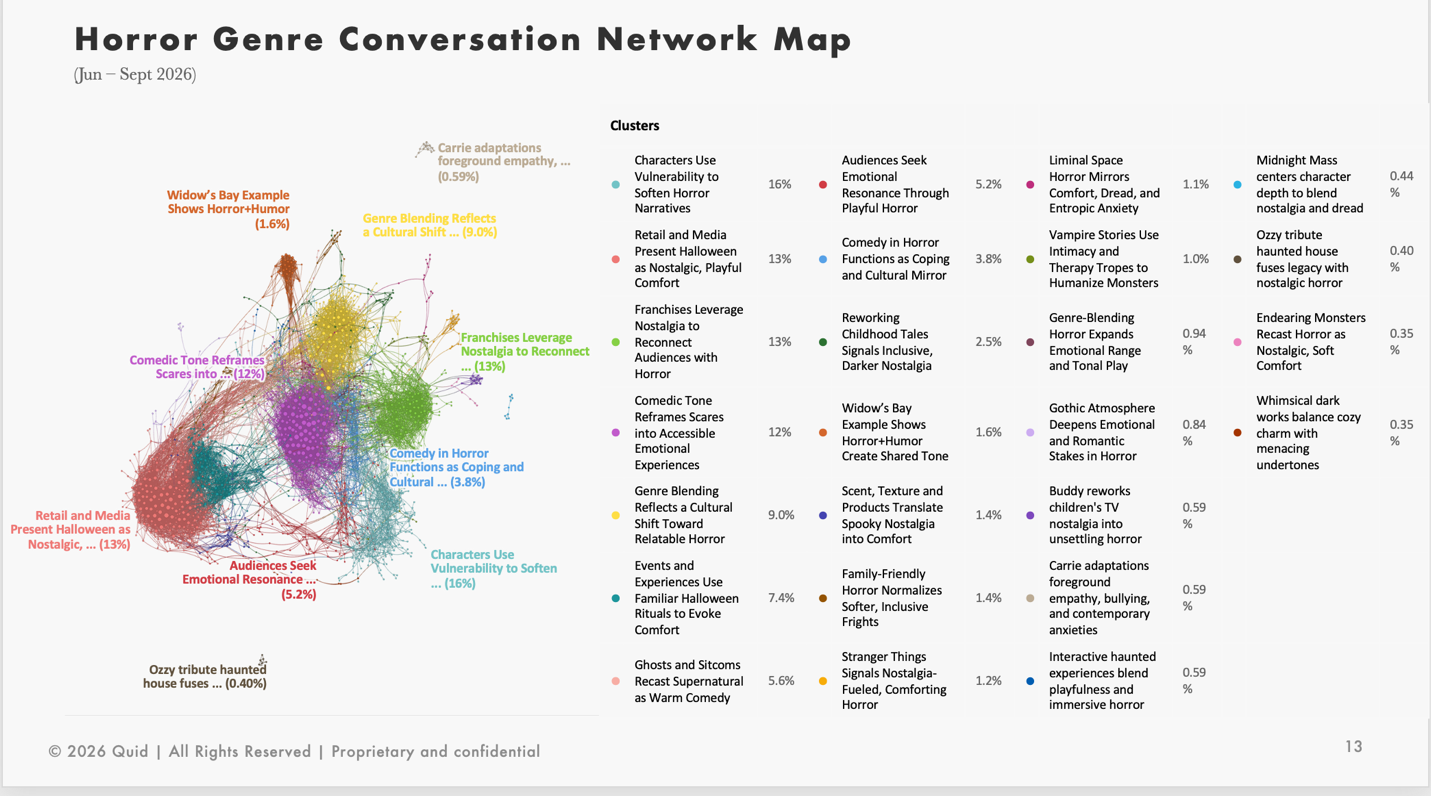
Media conversations point in the same direction. Franchises leveraging nostalgia to reconnect audiences represent 13% of the media network. Coverage within the cluster includes returning characters, familiar settings and genre references that give audiences recognizable connections to earlier horror experiences.
For retailers and CPG brands, familiarity can become part of the seasonal proposition. Classic motifs, recognizable Halloween aesthetics and collectible products provide multiple ways to build around nostalgia and seasonal traditions.
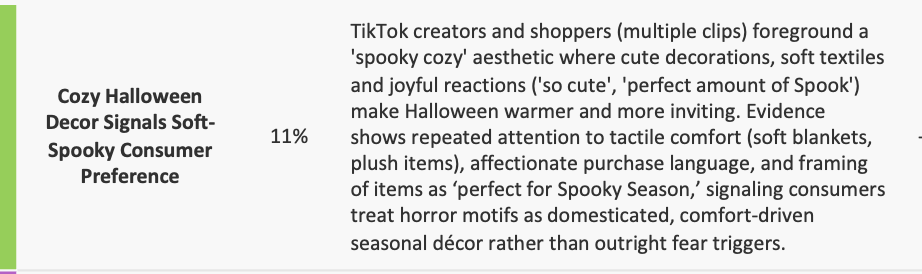
TikTok offers one of the clearest commercial expressions of the trend. Cozy Halloween décor represents 14% of the displayed TikTok conversation. Creators focus on cute decorations, blankets, plush items and other products framed through softness and affection. One creator describes a blanket as “ridiculously soft,” while another says a decoration will look “so cute” on a porch.
Friendly ghosts push the aesthetic further. The theme represents 9.9% of the displayed TikTok conversation, with posts featuring ghost doormats, wooden ghosts and supernatural characters doing ordinary things such as walking a dog. Traditional Halloween imagery becomes playful, familiar and easy to bring into the home.
Other clusters extend the same pattern into plush collectibles, nail art, squishies and blind-box rituals. The spooky-cozy aesthetic can move from home décor into collectibles, personal style and everyday seasonal purchases.
For retailers, the findings make texture and presentation worth considering alongside Halloween imagery itself. The source material repeatedly connects spooky motifs with softness, warmth, playful design and domestic comfort.
Horror and comedy repeatedly overlap in both datasets. On TikTok, humor softening spooky motifs represents 10% of the displayed conversation. Creators joke about ghosts, laugh after being startled and turn frightening situations into entertaining stories. A related theme centers specifically on comedic framing that makes horror more relatable and engaging.
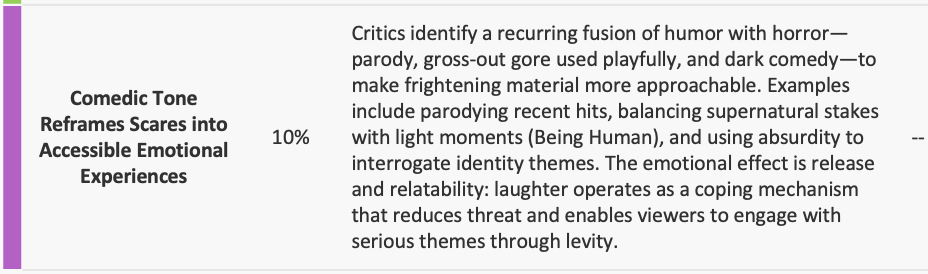
Media analysis finds a similar pattern. Comedic tone reframing scares into accessible emotional experiences represents 12% of the displayed media network. Coverage includes parody, dark comedy and stories that balance supernatural stakes with lighter moments.
For brands, humor provides another creative route into the category. The supplied analysis recommends humor-led creative, influencer skits and user-generated content prompts as ways to engage audiences around horror through playful content.
The network map makes the broader pattern visible. Characters using vulnerability represent 16% of the displayed network, while retail and media presenting Halloween as nostalgic, playful comfort and franchises leveraging nostalgia each represent 13%. Comedic tone accounts for another 12%, followed by genre blending at 9%.
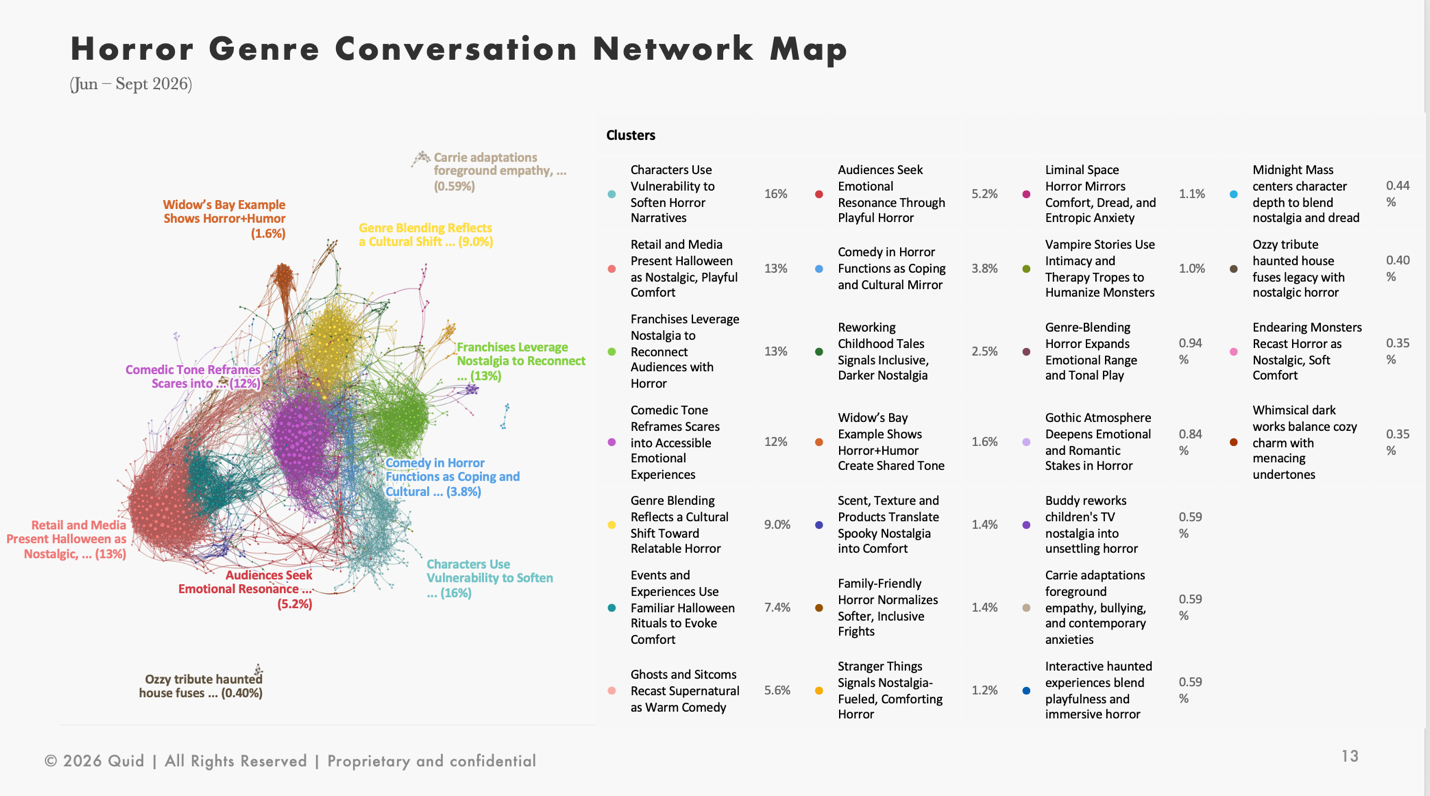
The scale of those clusters shows how much of the analyzed media conversation extends beyond straightforward scares. Supernatural characters also take on softer roles, with another media cluster examining sitcoms and similar projects that recast ghosts and zombies through domestic situations and lighthearted comedy.
Emotional storytelling, nostalgia, comedy, genre blending and playful Halloween imagery all occupy significant portions of the network.
The opportunity goes beyond putting a smiling ghost on a product. Quid’s analysis identifies distinct but overlapping audience groups, including nostalgic collectors, cozy-home shoppers and comedy-minded viewers. Family-friendly horror and lower-intensity experiences provide additional ways for consumers to participate.
For CPG and retail brands, the findings point to several practical opportunities:
There is also a warning in the TikTok data. A smaller cluster criticizes commercialization that feels trend-driven, including products perceived as overpriced and examples of companies simply putting a ghost on a product.
The larger conversation shows enthusiasm around nostalgic, playful and comforting Halloween products, but the presence of commercialization criticism shows that adding seasonal imagery to a product does not automatically generate the same response.
Across both TikTok and media, horror is showing up through a wider range of emotional and cultural cues.
Fear remains part of the category, while affection, nostalgia, humor, comfort, vulnerability and communal enjoyment also appear throughout the analyzed conversations. TikTok shows those themes through consumer products, décor and everyday storytelling. Media coverage shows parallel patterns across entertainment, characters, franchises and experiences.
For retailers and CPG brands, that creates more ways to participate in Halloween and horror culture. The opportunity lies in identifying which part of the conversation fits an audience, whether that is nostalgia, cozy décor, humor, collecting, family-friendly experiences or something darker, then building products and creative around that specific signal.
Quid helps brands see how those conversations connect, which themes are gaining attention and where different consumer interests intersect across the broader landscape.
Ready to see what consumers are really saying? Contact Quid to uncover the trends, connections and opportunities shaping your market.
Does cozy horror mean consumers no longer want scary content?
No. The source material continues to include dread, psychological horror, jump scares and darker supernatural themes. The analysis shows softer emotions and aesthetics appearing alongside traditional fear, expanding the ways audiences engage with horror.
Which cozy-horror themes appear across both TikTok and media coverage?
Nostalgia and humor appear prominently in both datasets. TikTok also emphasizes cozy décor, friendly ghosts and consumer rituals, while media coverage gives greater prominence to character vulnerability, franchises and genre blending.
How can retailers use the trend without making every product Halloween-themed?
The supplied analysis points to underlying cues such as tactile softness, nostalgia, playful imagery, collectibles and familiar rituals. Those elements can inform merchandising and creative decisions without requiring every execution to rely on overt horror imagery.
What should brands avoid when using cozy-scary aesthetics?
The TikTok analysis includes criticism of commercialization perceived as trend-driven or overpriced. The notes also recommend monitoring when imagery moves from playful spookiness toward stronger menace when a brand intends to maintain a cozy or affectionate position.
How does Quid identify connections within conversations like cozy horror?
Quid Discover reads text to identify key words, phrases, people, companies and institutions, then compares documents based on similar language. The resulting networks show related clusters and connections across the analyzed conversation.