

.png?width=1252&height=362&name=QUID_Logo_WHITE%20(2).png)
Few events dominate global conversation quite like the World Cup. Every four years, billions of fans tune in and generate a flurry of online and offline activity that brands can't afford to ignore.
But showing up to a cultural moment this big isn't just about slapping a logo on a jersey. The brands that actually make a memorable impact during major global events are the ones using market intelligence to understand what fans are talking about, how they're feeling, and where they can add value.
With the FIFA World Cup 2026™ kicking off in North America soon, now is the perfect time to dig into what the data is telling us. We analyzed social media content with Rival IQ, a social analytics platform, and Quid Terminal, a market intelligence platform, to uncover the dominant sentiments and frustrations among fans and the ways brands are responding. Here's what we found and what you can do with it.
Before crafting any World Cup campaign, it helps to take a step back and listen, and right now, the World Cup conversation is giving brands a lot to work with.
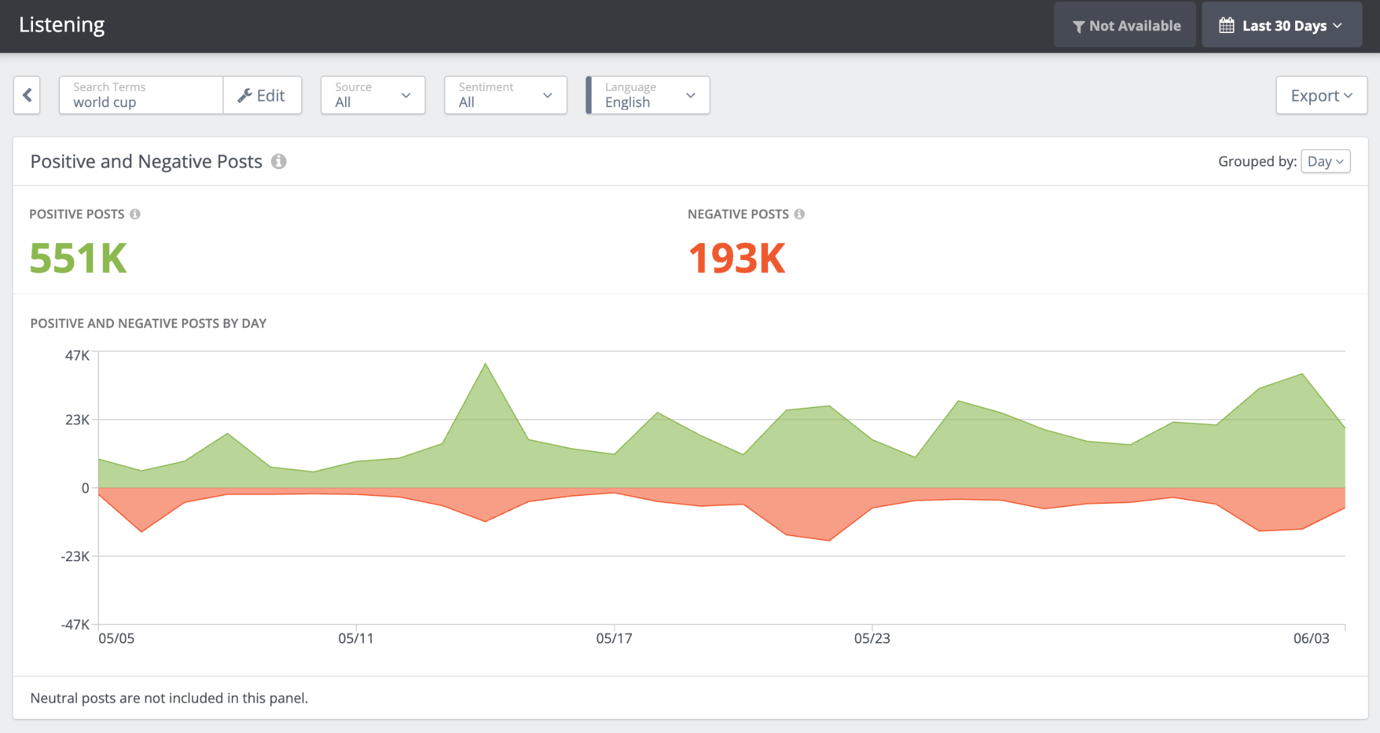
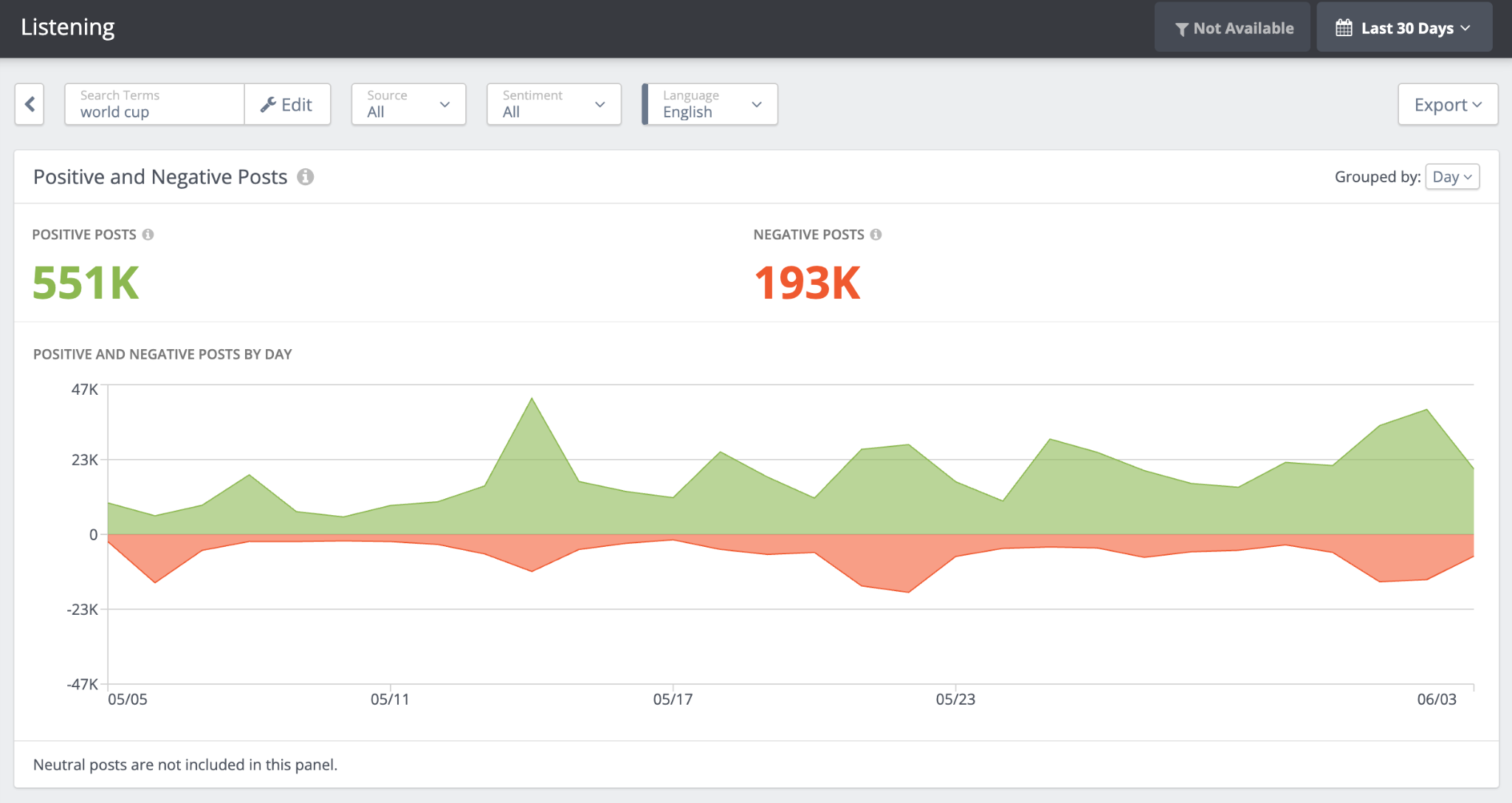
Overall, social media sentiment around the World Cup skews positive. Social listening analysis by Rival IQ of the past 30 days shows that there are nearly 3x as many positive posts about the World Cup as negative posts.
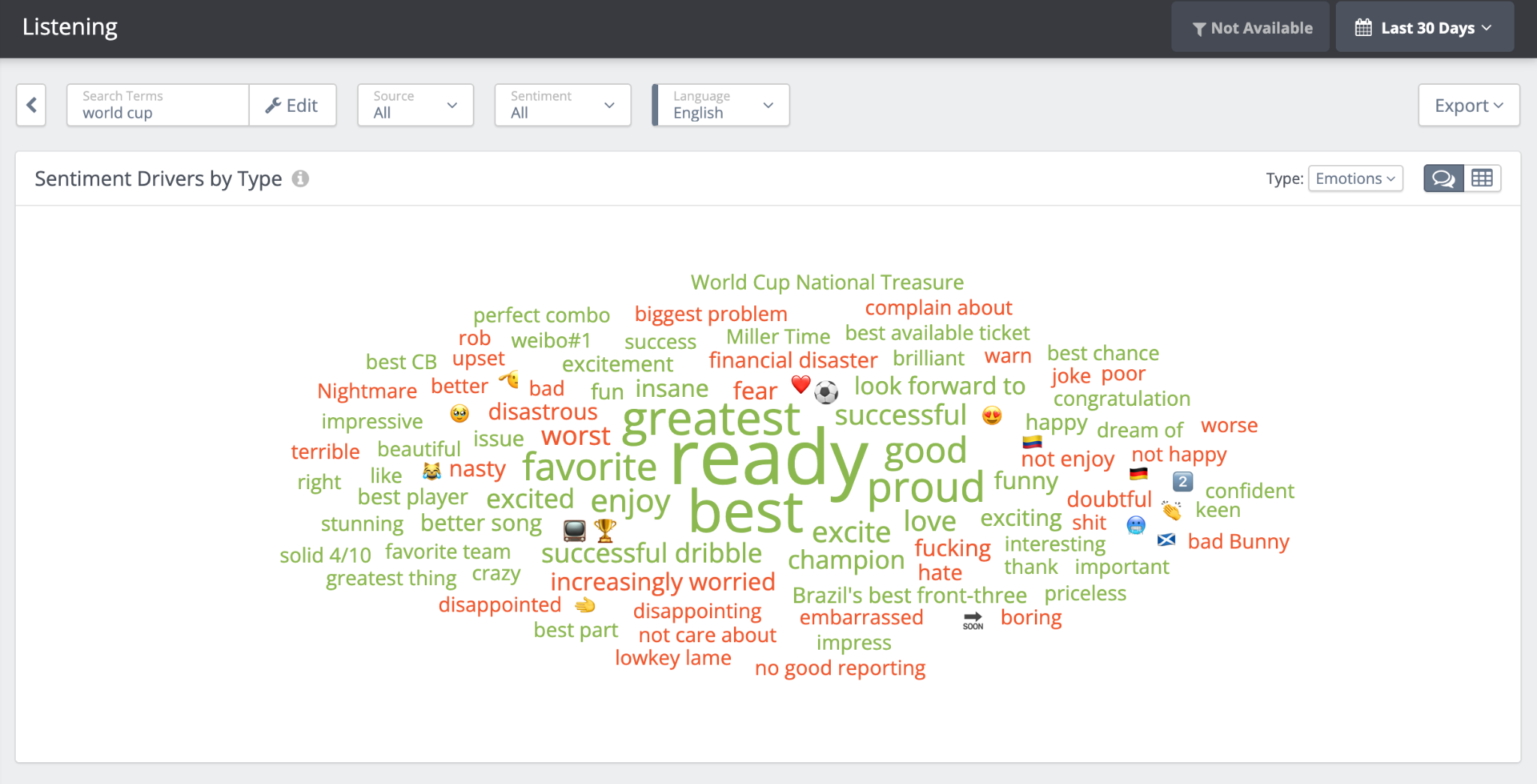
This makes sense. The World Cup is one of those rare, truly global events that fans look forward to for years. When you look at the most common emotional language showing up in posts right now, words like "ready" and "excited" dominate.
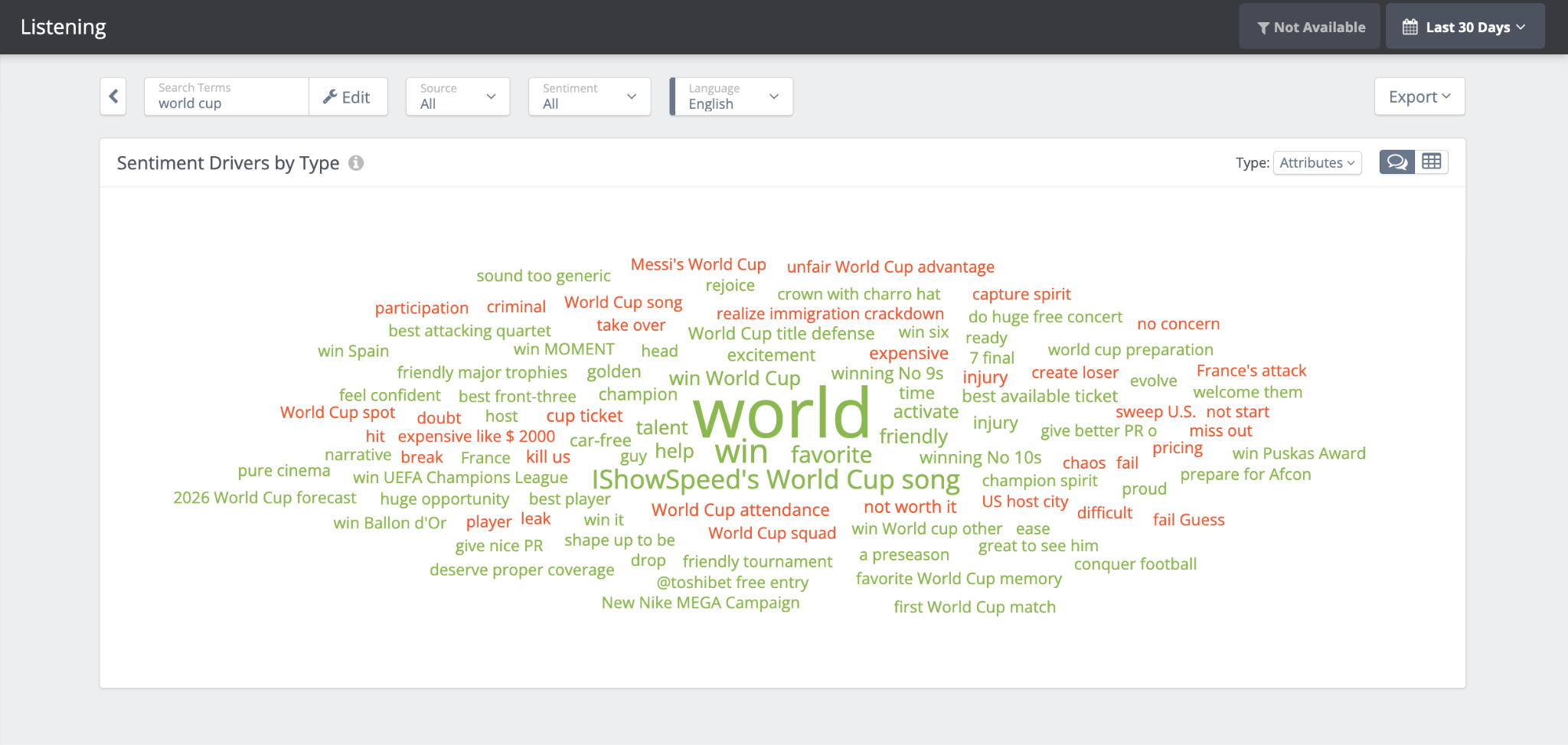
Digging deeper with Quid Terminal, several themes show up regularly in online conversations: the sense of global unity the tournament brings, the sheer scale and spectacle of this year's expanded format, excitement around player storylines, and the rituals fans love, like watch parties, pub outings, and fan zones.

That said, it's not all positive.
Alongside the excitement, there's a strong undercurrent of frustration. Ticket prices are a major pain point, with “not worth it” and different variations of "expensive" showing up repeatedly in social posts.
Fans feel priced out, and many are calling it out directly, accusing FIFA of prioritizing sponsors and hospitality packages over ordinary supporters. On top of that, the multi-country format is generating anxiety and frustration around travel logistics, accommodation costs, and the general complexity of attending.
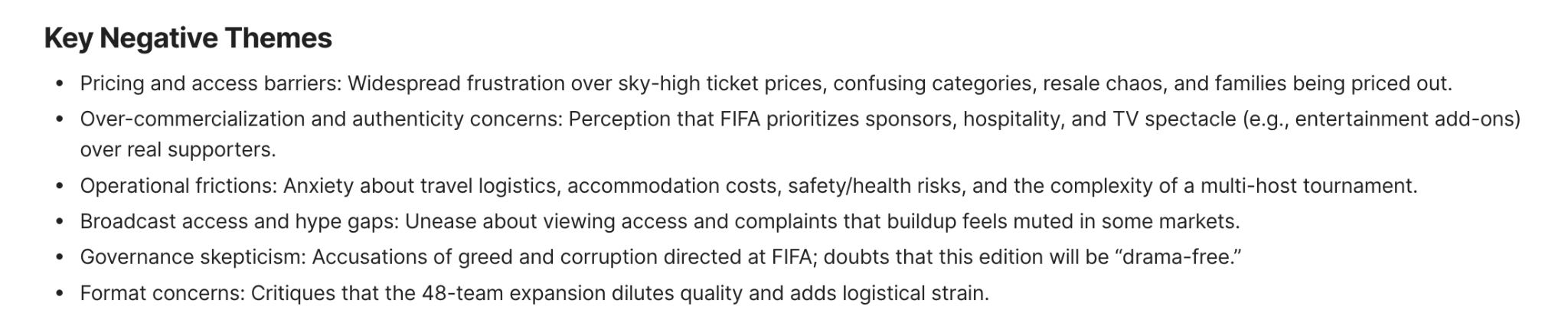
Across platforms, whether the overall tone skews positive or negative varies. But, interestingly, the core themes themselves are quite consistent. Fans are largely unified in both what they love and what's bothering them.
The conversation around the World Cup is loud, but it's not scattered. Fans are united in their excitement and frustrations, and that consistent, coherent picture is exactly the kind of market intelligence brands can act on. Here's how some already are.
The positive energy around watch parties, fan rituals, and communal viewing is a real opportunity to engage with fans, especially those who aren't making it to a stadium (which is the majority). Brands are jumping on this by creating experiences that bring the World Cup to the people, wherever they are.
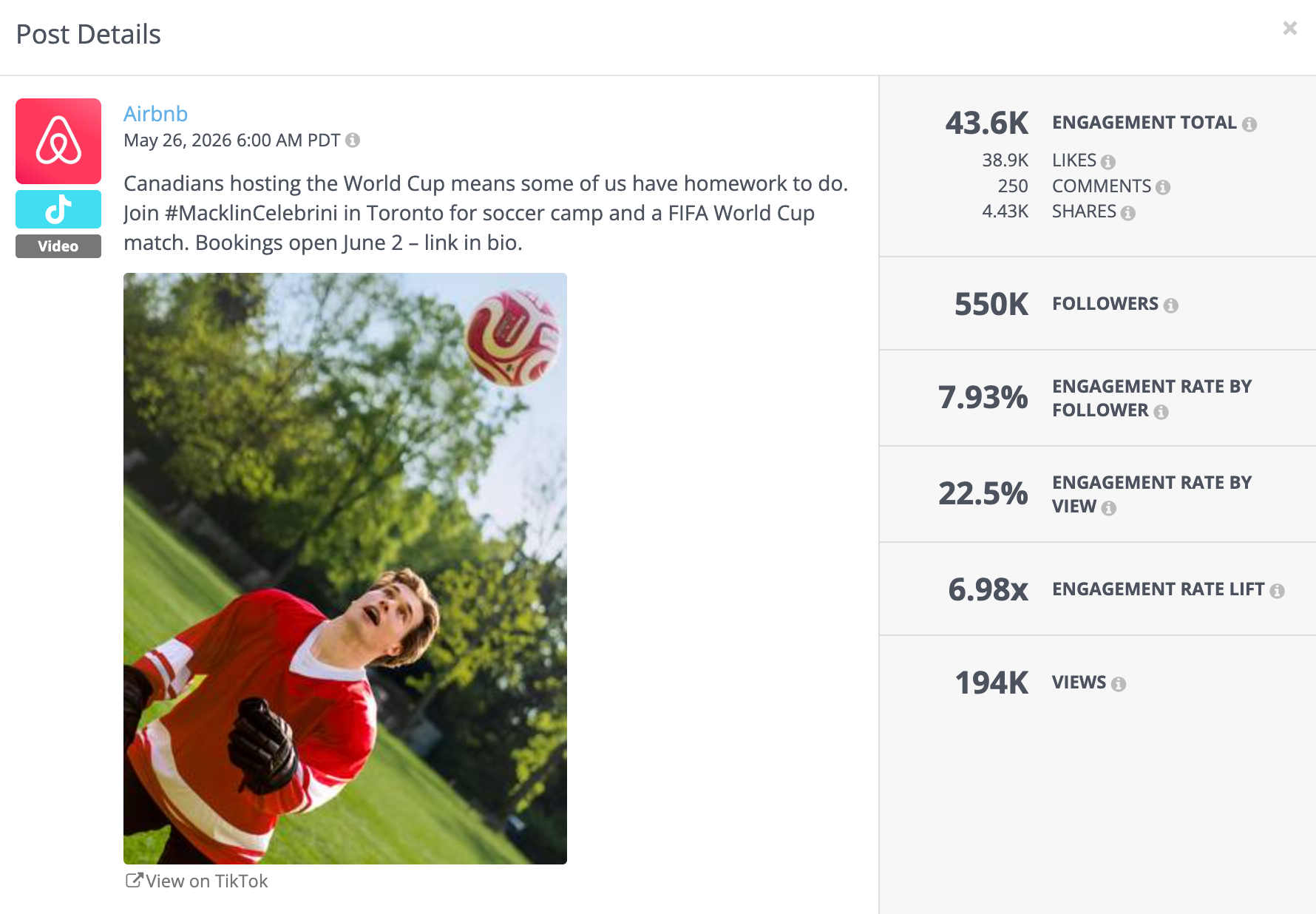
Airbnb, for example, is offering a soccer camp experience hosted by Canadian NHL player Macklin Celebrini, designed as a nod to Canada's role as a host nation. It's a creative way to tap into the excitement while making the World Cup feel accessible to local fans.
Meanwhile, AMC Theatres is taking a more straightforward approach, inviting fans to come together in cinemas by broadcasting matches on the big screen.
With ticket prices and travel costs dominating the negative conversation, several brands are positioning themselves on the right side of the affordability debate with sweepstakes and giveaways that deliver cost-saving benefits and exclusive rewards.
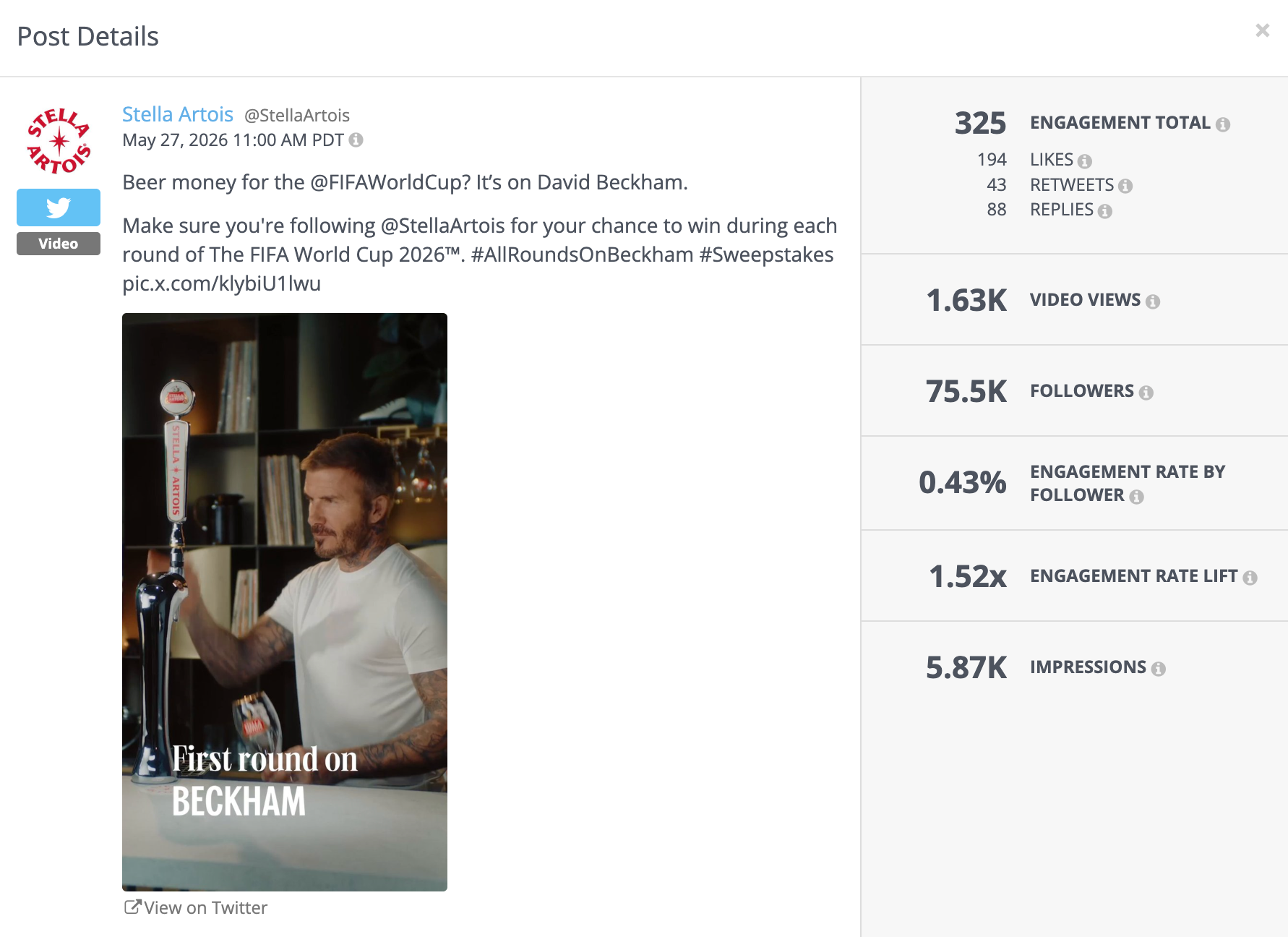
For instance, Stella Artois’s "All Rounds on Beckham" sweepstakes gives fans a chance to win money toward their bar tab during every round of the tournament. It's a smart move that taps into the communal viewing experience while directly addressing the cost conversation.
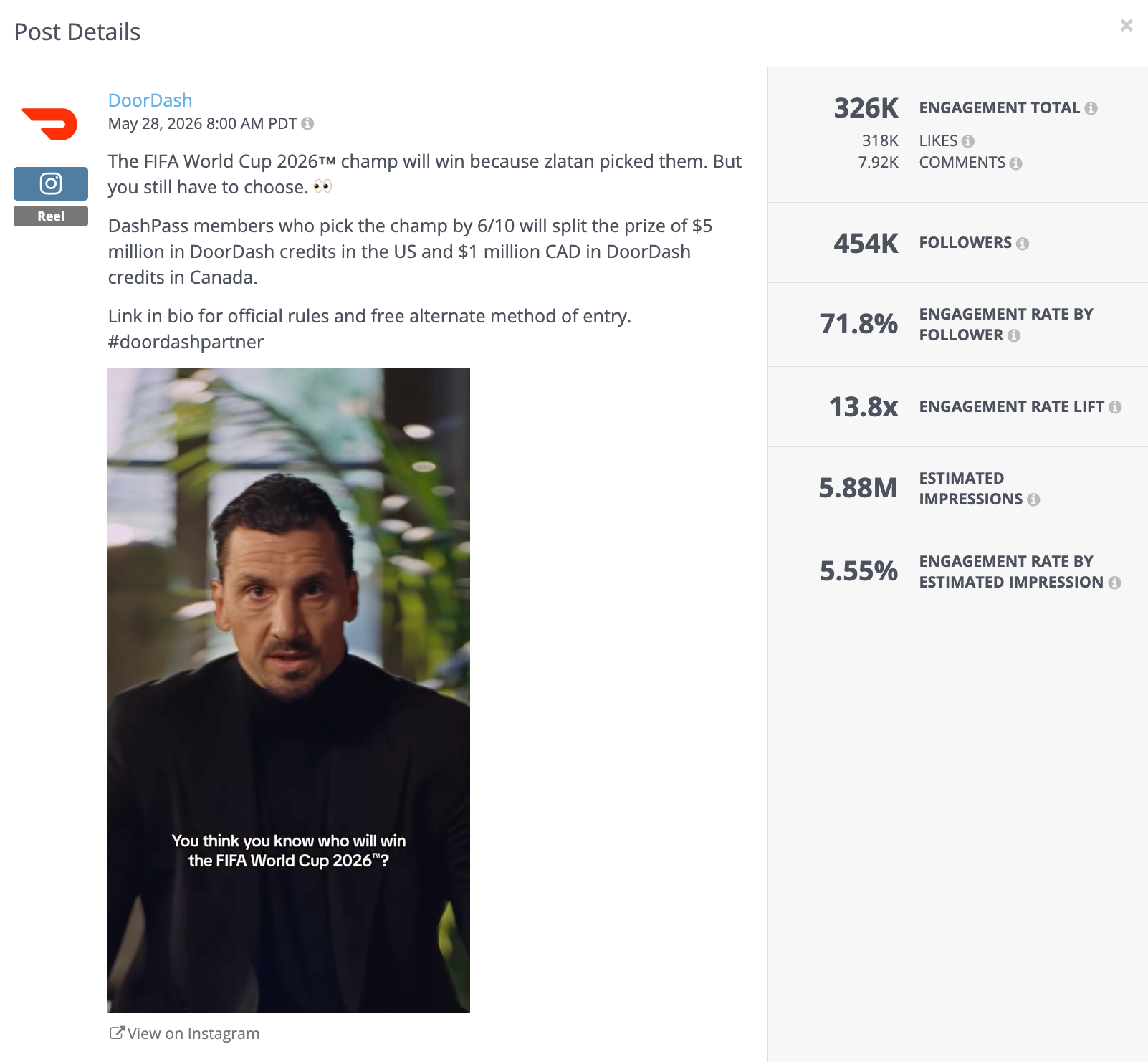
DoorDash is going even bigger. DashPass members can pick their predicted winner, and those who get it right will split a $5 million prize in DoorDash credits (or $1 million CAD in credits in Canada). It’s low friction to enter, high reward, and exactly the kind of campaign that builds goodwill when fans are already feeling squeezed for cash.
The third area brands are tackling is the logistical complexity of a tournament spread across three massive countries. Across the US, Canada, and Mexico, fans are navigating unfamiliar cities, long distances, and uncertain logistics. This opens up an opportunity for brands (particularly regional ones in host cities) to actually solve a problem rather than simply showing up as a sponsor logo and calling it a day.
DoorDash is also a strong example here. As an official World Cup supporter, they're offering free transport to stadiums for DashPass members with tickets through their "Deliver Us To Fútbol" initiative, specifically targeting cities where getting from the city center to the stadium is notoriously tricky. It's a smart move because it's rooted in their core offering (delivery, convenience) while solving a real fan pain point.
While official FIFA travel partners like Qatar Airways and American Airlines are already locked in, regional brands have an opportunity to improve the local logistics experience and strengthen brand sentiment in the process.
So, what can other brands learn from these early moves? Based on the social data and the tactics already gaining traction, here are three opportunities to connect with fans during the FIFA World Cup 2026™:
All of the above is grounded in actual intelligence on what fans are saying, feeling, and complaining about across social media right now. For this analysis, we used Rival IQ for social listening and social content data and Quid Terminal for the broader market intelligence layer.
Quid is a market intelligence platform that pulls together social media conversations, news, and online discussions and distills them into clear, actionable insights. Instead of wading through raw data, you get a sharp, curated picture of the environment your brand is operating in, with recommended next steps built in.
For instance, here's a snapshot of the actionable insights Quid pulled from the World Cup conversation:
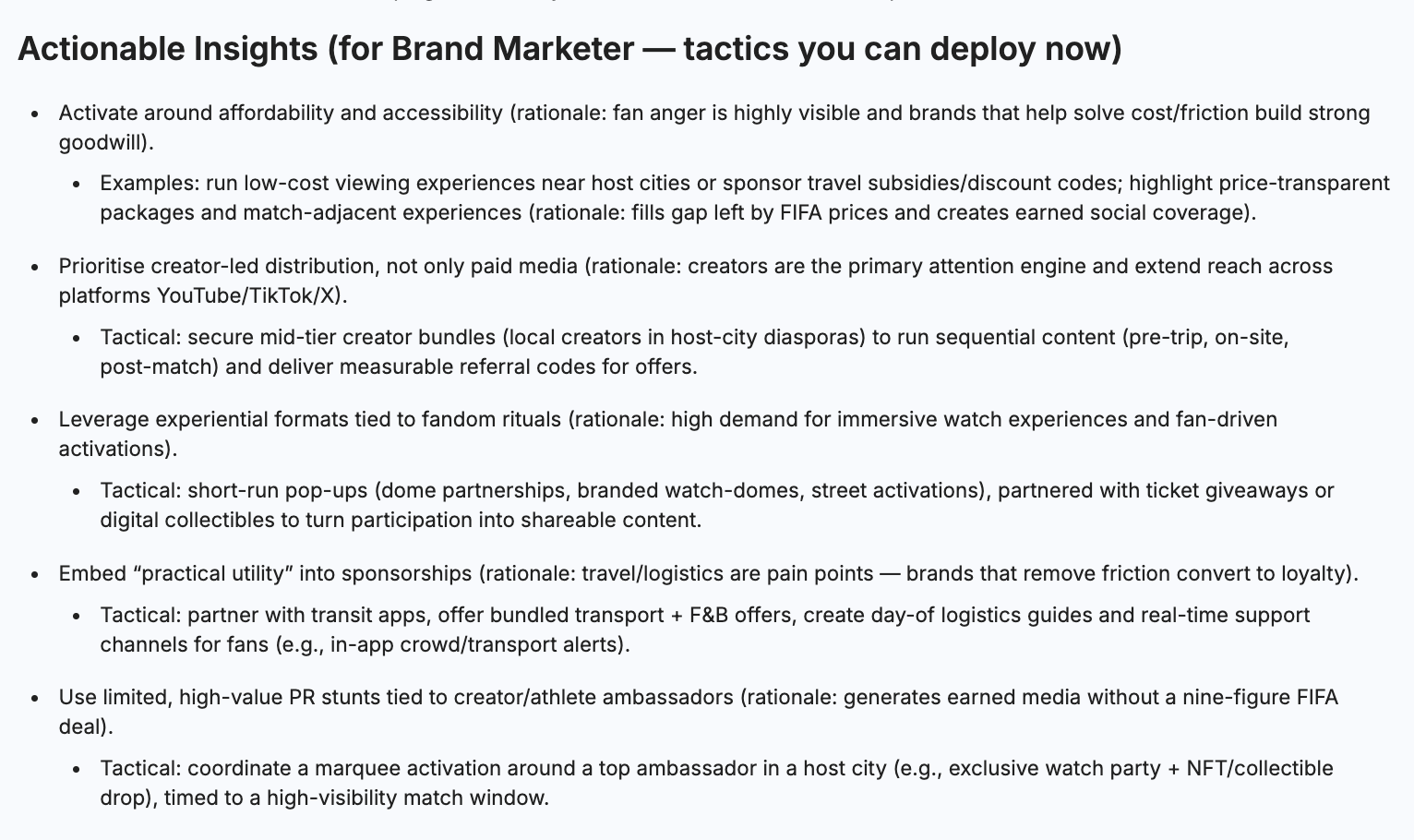
In other words, instead of spending time trying to figure out what fans are saying and what your brand should do about it, you can use Quid Terminal to get actionable recommendations that are fully grounded in the underlying data.
The World Cup doesn't give brands a second chance to make a first impression. With billions of fans tuned in and conversations moving fast, the difference between a campaign that lands and one that gets ignored often comes down to one thing: knowing what fans actually care about before you show up. That's exactly what market intelligence makes possible.
Want to see what Quid can surface for your brand? Book a demo today.
Social listening tracks what people are saying about a brand or topic on social platforms. Market intelligence goes a layer deeper by aggregating signals from social media, news, forums, and online discussions to give brands a fuller picture of the competitive landscape, consumer sentiment, and emerging trends. Think of social listening as one input and market intelligence as the complete analysis.
Market intelligence lets brands monitor fan sentiment in real time, identify dominant themes (both positive and negative), spot gaps competitors aren't addressing, and time campaigns to align with conversation peaks. Rather than guessing what fans care about, brands can act on evidence.
Modern platforms like Quid can surface trend shifts and sentiment changes in near real-time. This makes it possible to adjust messaging or double down on what's resonating as the World Cup unfolds, not just before it starts.
Platforms like Quid aggregate data from social media conversations, online news, blogs, forums, and other public digital sources. They then apply AI-powered analysis to surface themes, sentiment, emerging narratives, and competitive signals. Brands get a consolidated, curated view of the landscape rather than a mountain of raw data.
