

.png?width=1252&height=362&name=QUID_Logo_WHITE%20(2).png)
Subtle cosmetic intervention is no longer niche. It is structured, normalized behavior operating at scale, shaped by clinical innovation and, increasingly, by social visibility. What once sat behind clinical gates is now moving through consumer channels, reframed as maintenance rather than transformation.
Procedures that were previously associated with risk, recovery, or significant change are now positioned as incremental, low-commitment decisions. At the same time, the conversation surrounding them has flattened. There is less debate, less stigma, and far more routine engagement. The result is a category that behaves less like elective medicine and more like a repeatable consumer habit.
That tension defines the space, with clinical credibility on one side and casual normalization on the other, and we’re exploring each below.
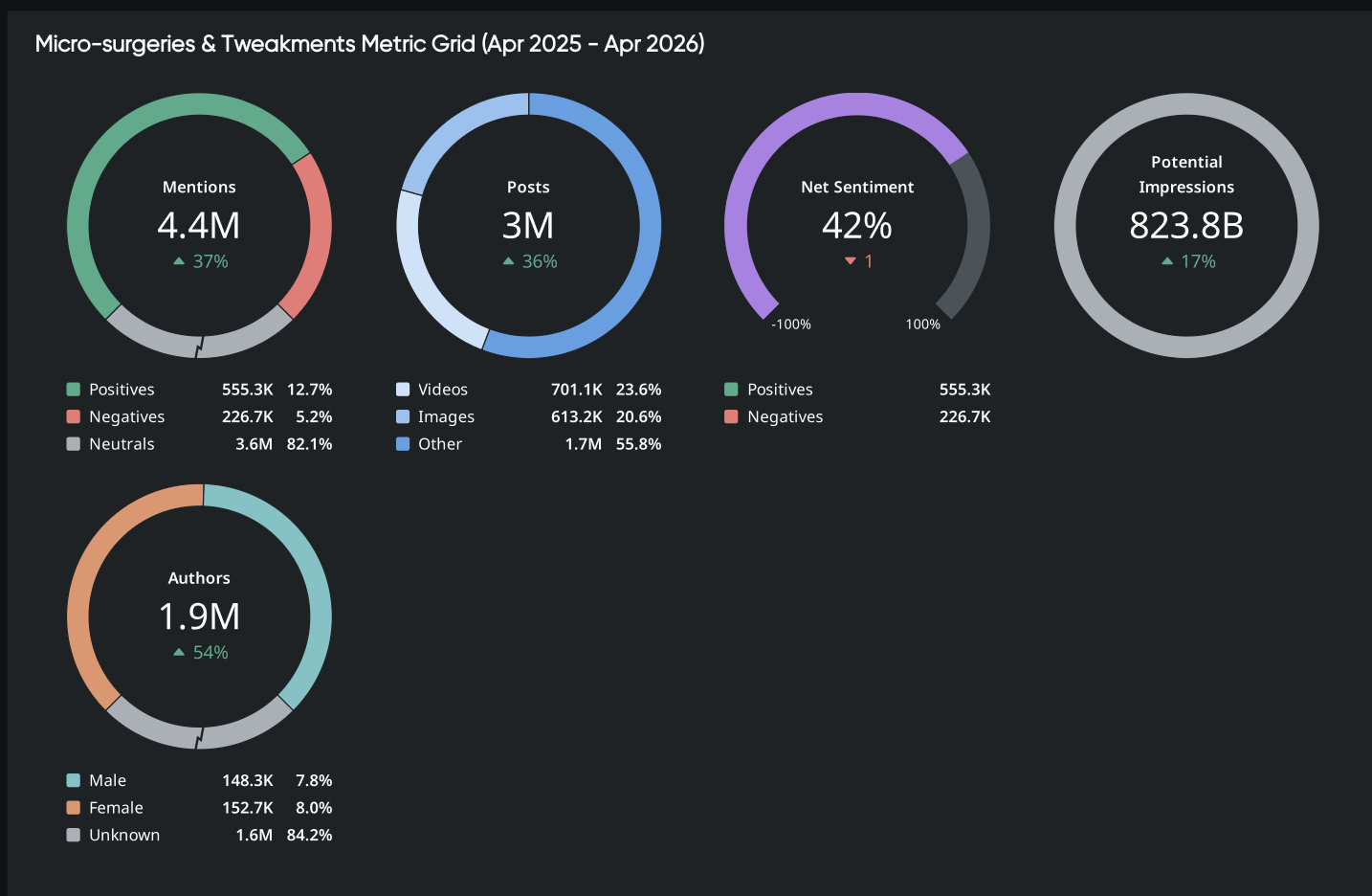
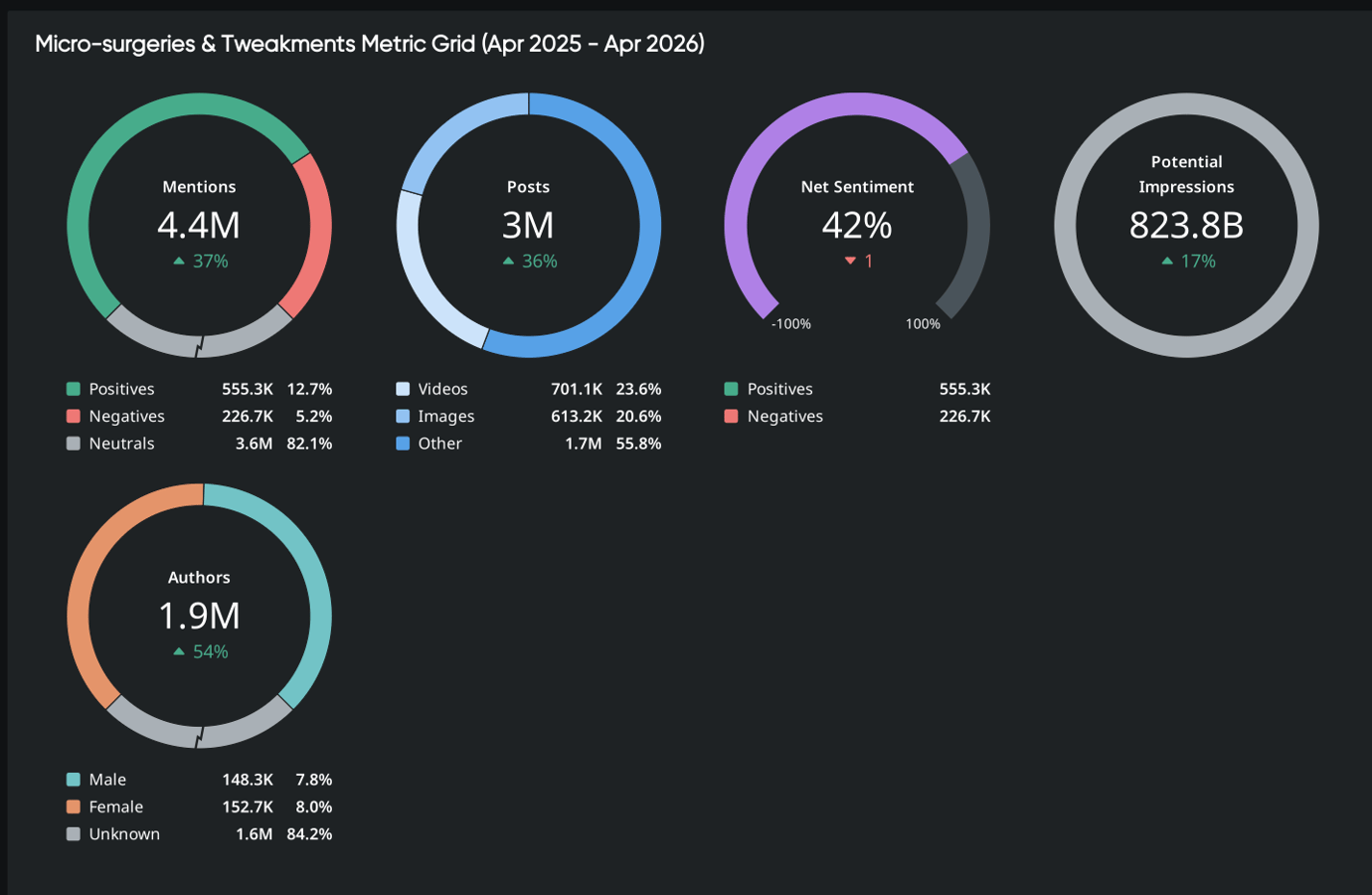
The dataset shows 4.4 million mentions and 3 million posts, with 82.1% neutral sentiment.
The timeline makes that visible. Activity holds within a relatively stable range month to month, without sustained spikes tied to specific events. Even where sentiment fluctuates, volume does not collapse or surge in response.
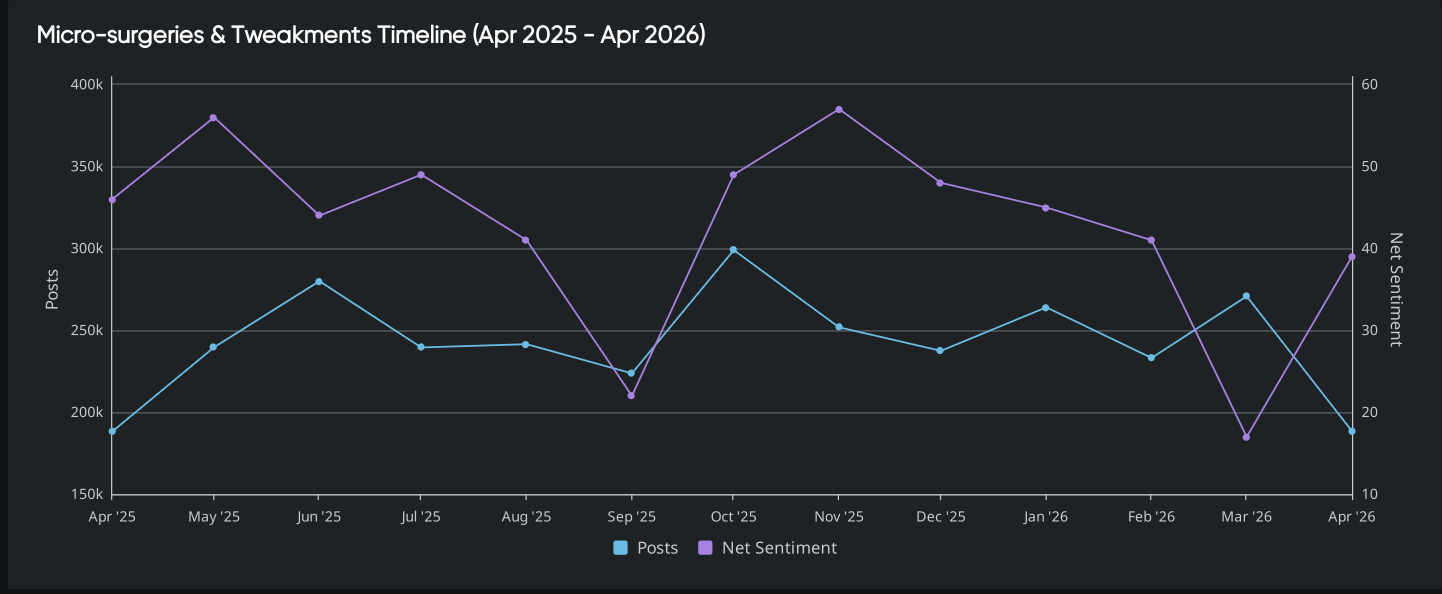
That stability indicates ongoing engagement rather than reactive interest. People are not entering the conversation because something happened. They are already in it, returning to it, and acting within it.
This signals embedded behavior, not a fad.
Coverage across media sources frames micro-surgery as a technology-driven shift.
Device innovation is doing the heavy lifting:
Commercial signals confirm the shift from innovation to adoption:
What used to require full surgical intervention is being reframed as manageable, targeted, and increasingly routine.
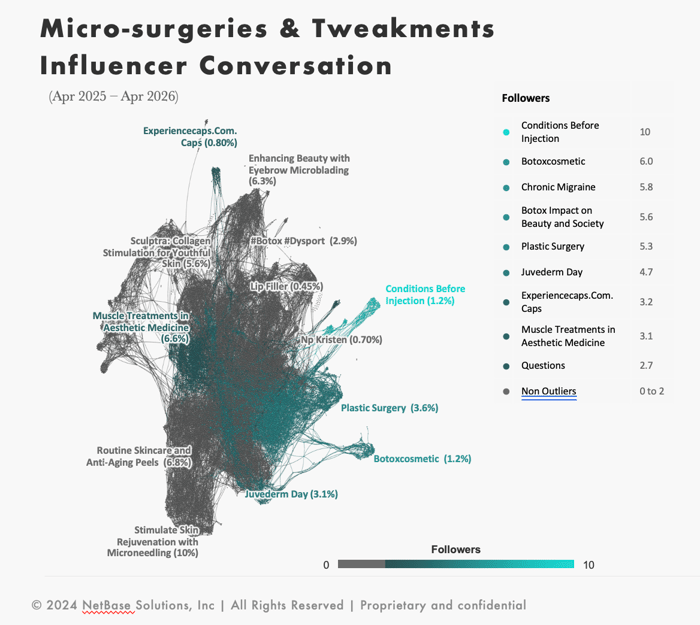
The influencer cluster data shows where attention concentrates:
These are positioned as medical decisions, but framed as lifestyle maintenance.
Media coverage reinforces that positioning:
The language stays clinical. The delivery becomes consumer-facing.
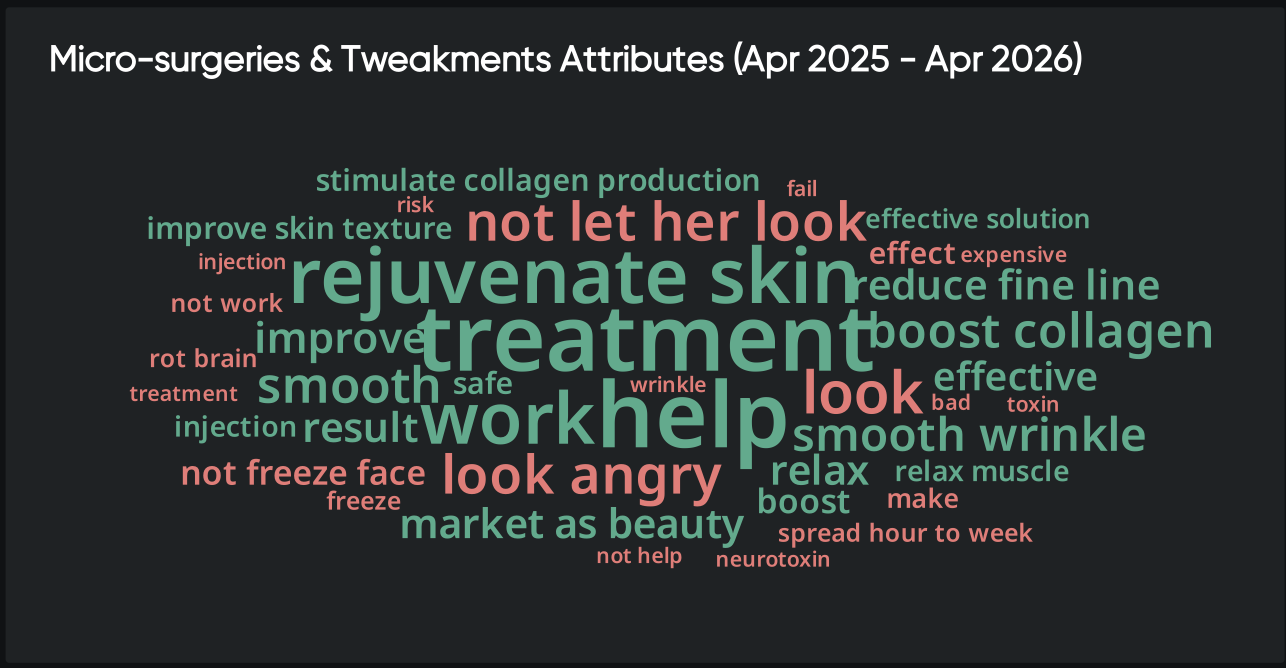
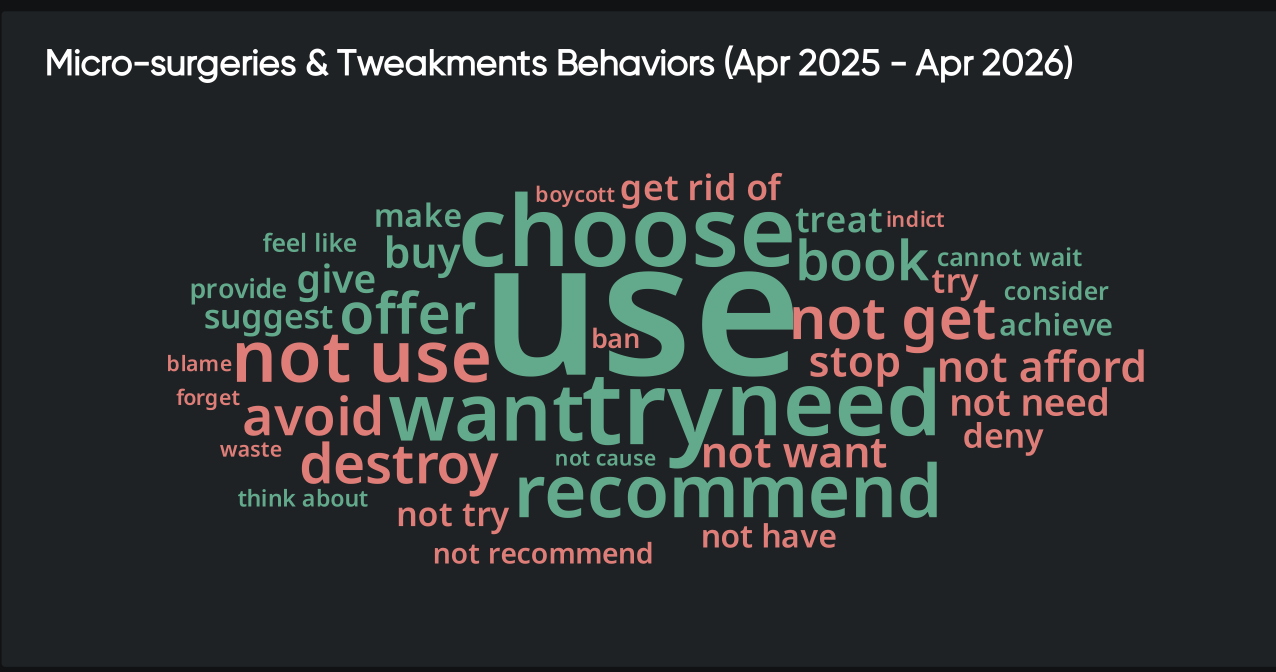
The attribute and behavior signals show how people are engaging:
This is decision-oriented language.
At the same time, emotional signals remain mixed:
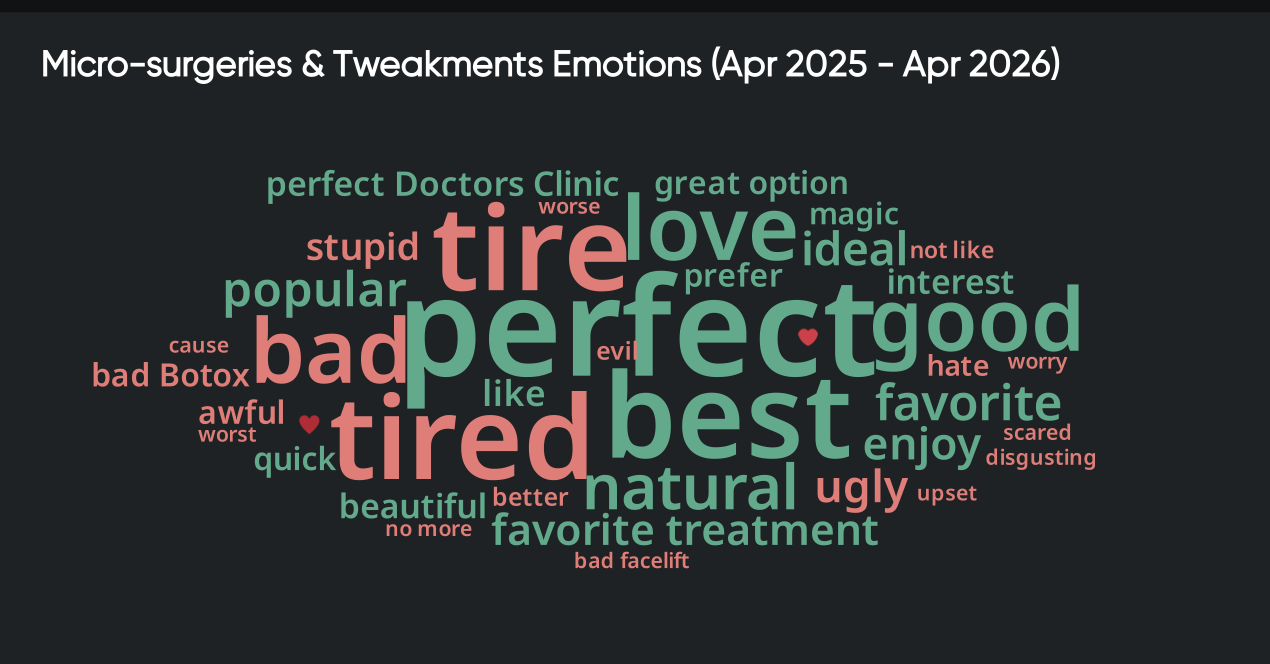
That combination shows confidence in the category, not blind trust.
TikTok adds another layer:
Without filtering, the conversation becomes misleading.
Gender distribution across trends remains relatively balanced across most categories, with slight variation depending on treatment type.
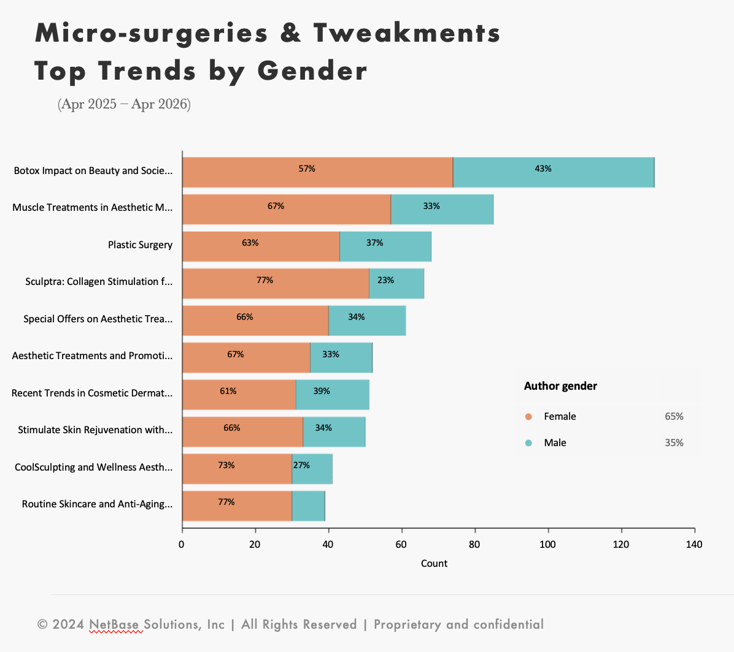
That consistency reinforces the key point that these “tweakments” are not a niche audience behavior. It is broadly distributed.
Behavior signals further support this:
The “low-key glow up” reflects incremental change, not transformation.
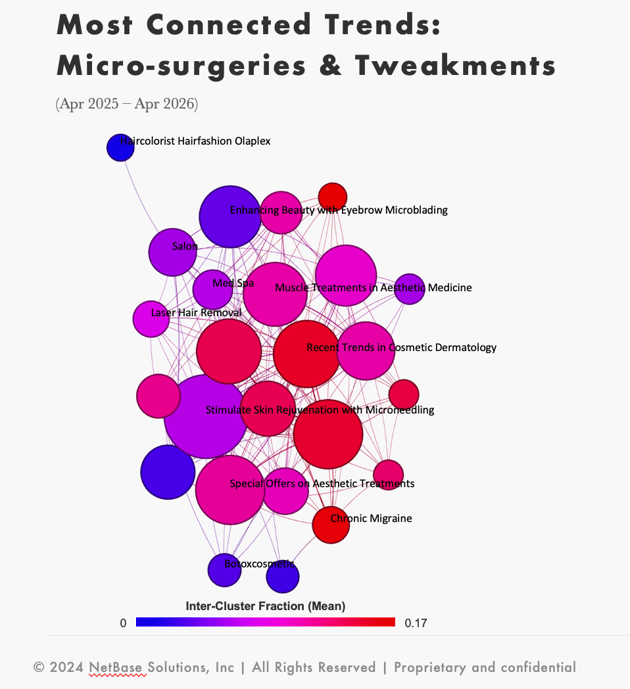
The network of connected trends shows how tightly linked the ecosystem has become:
This is an expanding network of services. At the same time, media coverage highlights structural pressures:
And the risks:
Access is scaling. Standardization is not keeping pace.
This trend is not driven by aesthetics alone. The data shows a system forming:
That creates a repeatable behavior loop:
That loop is what drives scale.
This analysis is not based on isolated articles, trending posts, or surface-level summaries. It is built from millions of data points across sources, structured and analyzed to identify patterns in behavior, sentiment, and adoption over time.
That distinction matters. A standard search will show you what is being said, but it will not show you:
Without that structure, it is easy to mistake visibility for significance, and this is where most analyses breaks down. They overweigh what is loud and miss what is consistent.
Quid surfaces what is actually shaping decisions, not just what is being talked about in the moment.
If you are tracking emerging categories like micro-surgeries and “tweakments,” the question is whether you understand how the conversation is evolving beneath the surface, not merely if it exists.
Quid enables teams to:
This is how organizations move from reacting to trends to anticipating them.
If you need to understand where your market is heading before it becomes obvious, Quid can show you. Because by the time it is obvious, it is already saturated. Reach out today!

What are “tweakments”?
Minimally invasive cosmetic treatments such as fillers, microneedling, and laser procedures designed for low downtime and repeat use.
Why is neutral sentiment so high?
Because the behavior is normalized. People are not debating whether to engage. They are deciding how.
Are micro-surgeries and tweakments the same?
No. Micro-surgeries are clinically driven procedures enabled by advanced medical devices. Tweakments are consumer-facing aesthetic services.
What role does social media play?
It accelerates discovery and shapes perception through firsthand experiences, often simplifying risk.
What risks are emerging?
Inconsistent provider quality, regulatory gaps, and misinformation due to oversimplified content.