

.png?width=1252&height=362&name=QUID_Logo_WHITE%20(2).png)
Minimalism is not disappearing, but it is losing emotional dominance. Across beauty and fashion conversations, consumers are increasingly shifting toward visible individuality, expressive styling, and emotionally driven aesthetics.
The movement is not simply about “more color” or louder products. It reflects growing fatigue with algorithmic sameness, rigid beauty norms, and aesthetics that feel optimized for platforms instead of people.
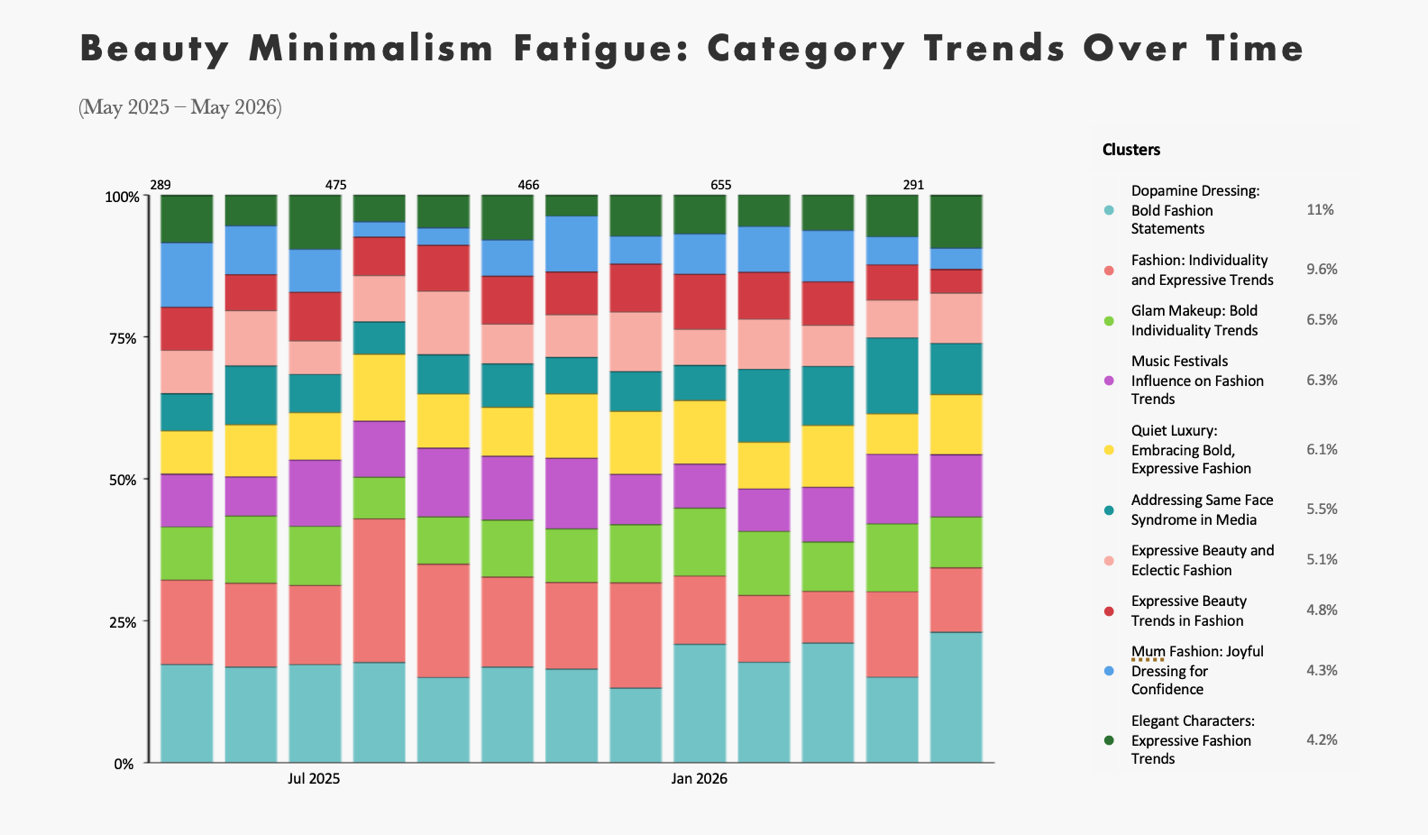
Quid analysis from May 2025 through May 2026 shows a network dominated by conversations tied to self-expression, dopamine dressing, bold makeup, eclectic fashion, and “same face syndrome” criticism rather than restraint-focused beauty narratives.
This matters because traditional search and generative AI summaries often flatten these conversations into simple “maximalism is trending” headlines. But a true network analysis tells a more complicated story, detailing a behavioral response to aesthetic homogenization.
• Dopamine dressing emerged as the single largest conversation cluster at 11% of the network
• Individuality and expressive fashion trends represented 9.6% of total conversation volume
• “Same face syndrome” appeared repeatedly as a frustration point tied to social media-driven homogeneity
• Bold beauty and statement makeup conversations consistently centered around authenticity, creativity, and visible self-expression
• Quiet luxury did not disappear. It evolved into a more expressive and emotionally visible form
• The conversation spans fashion, beauty, music culture, gaming aesthetics, creator culture, and identity signaling simultaneously
One of the clearest signals across the dataset is frustration with visual uniformity.
The phrase “same face syndrome” appears repeatedly throughout both beauty and media-related conversations. The criticism reflects a broad dissatisfaction with algorithm-driven aesthetics, where consumers feel style, beauty, and identity have become flattened into repeatable templates.
The Quid network shows this frustration surfacing across:
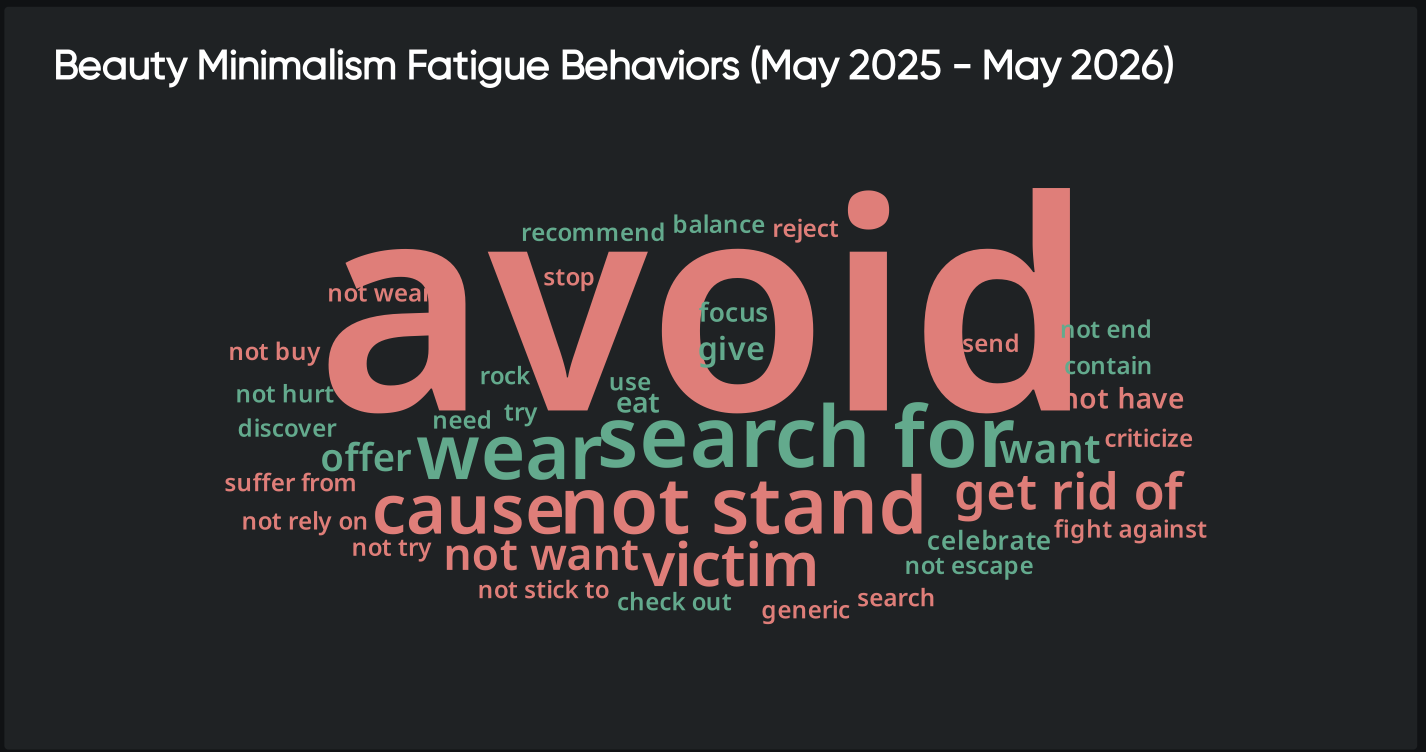
The behaviors visualization reinforces how strongly the conversation is driven by rejection-oriented language including “not stand,” “not want,” “reject,” “fight against,” and “get rid of,” signaling active resistance to perceived generic or repetitive aesthetics.
That crossover shows this is not an isolated backlash against a single trend cycle, but a broader reaction against environments in which consumers increasingly feel pressured toward the same visual outcomes.
Traditional search surfaces keywords. Network analysis surfaces behavioral relationships.
That distinction is important because the conversation is not simply “people like bold fashion now.” The underlying emotional driver is dissatisfaction with sameness itself.

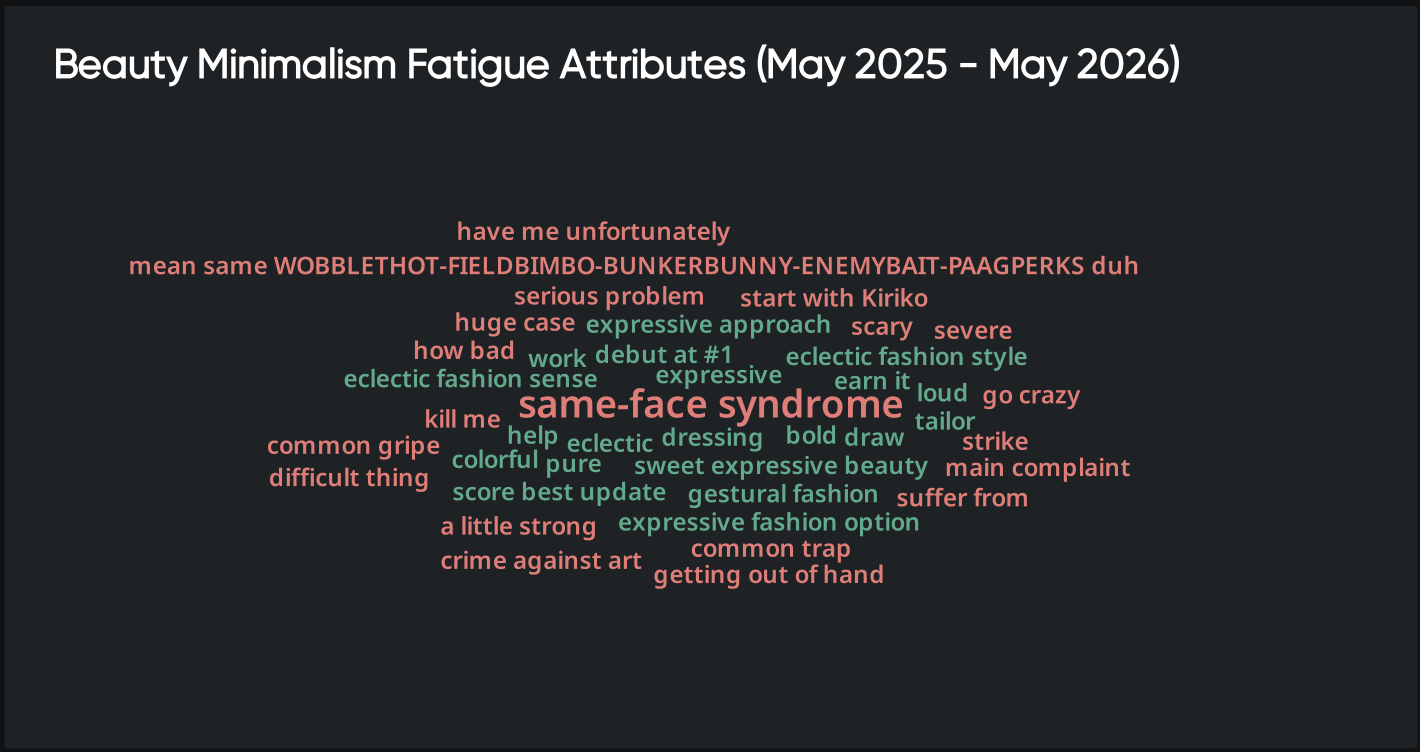
The attributes visualization reinforces how heavily the conversation centers around “same-face syndrome,” alongside terms like “expressive,” “eclectic dressing,” “bold,” and “colorful,” showing tension between individuality and aesthetic repetition.
The largest conversation in the dataset was not luxury. It was dopamine dressing at 11% of the conversation network.
That is significant because the language surrounding dopamine dressing consistently focuses on:
The trend behaves less like a fashion microtrend and more like emotional signaling. Consumers are not only choosing products because they “look good.” They are choosing products that visibly communicate energy, individuality, optimism, or personality.
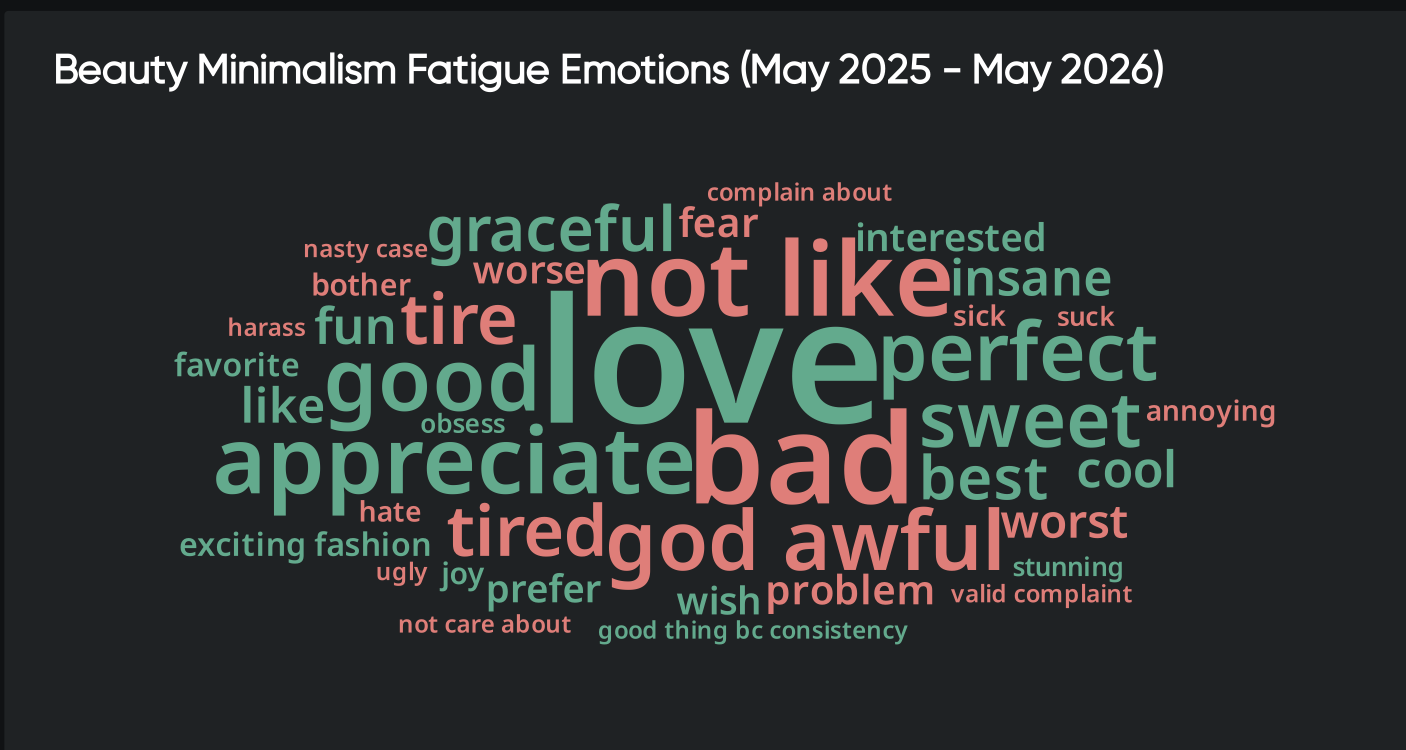
The emotion analysis reveals a split between enthusiasm and frustration. Positive emotional language such as “love,” “fun,” “cool,” and “joy” appears alongside fatigue-driven language including “tired,” “annoying,” “problem,” and “not like,” reflecting both excitement around expressive beauty and exhaustion with repetitive aesthetics.
The conversation repeatedly ties expressive aesthetics to emotional recovery and identity reinforcement. That shift changes how brands should think about positioning.
Minimalist branding often emphasized refinement, neutrality, and restraint. Expressive beauty conversations prioritize recognition, differentiation, and emotional visibility.

One of the more interesting findings in the Quid network is that quiet luxury still appears prominently at 6.1% of the conversation network. But the surrounding language changed.
The conversation no longer centers purely on restraint or invisibility. It increasingly overlaps with:
That suggests the market is not abandoning aspiration. Rather, it is redefining what aspiration looks like. Consumers still want elevated aesthetics. They increasingly want those aesthetics to feel identifiable and emotionally specific rather than anonymous or interchangeable.
This is where search-based analysis often breaks down.
A standard Google or AI search might conclude: “Quiet luxury is declining while maximalism rises.” The Quid network shows something more nuanced:
Those distinctions make all the difference when it comes to product positioning and campaign strategy.
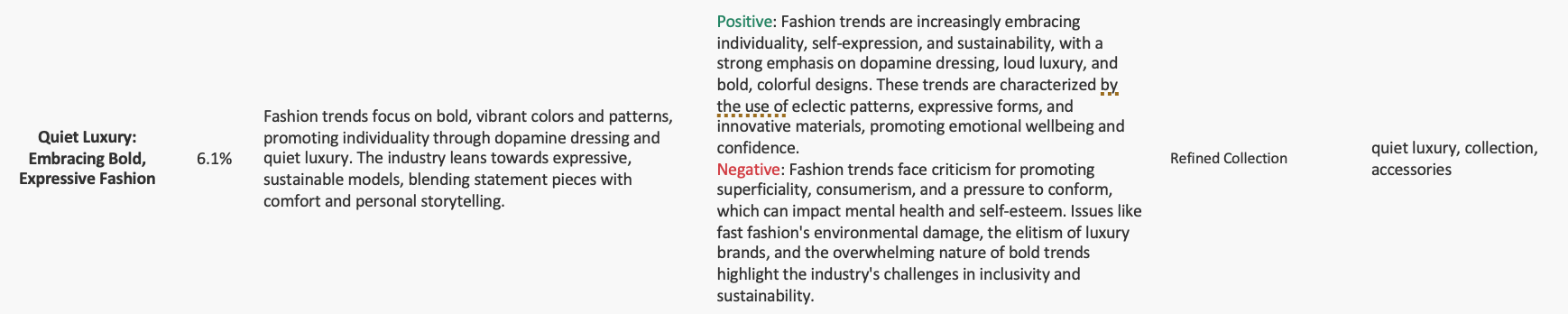
The strongest throughline across the network is not maximalism itself, but visible individuality.
Clusters tied to statement makeup, eclectic fashion, expressive beauty, character design, and personal style repeatedly emphasize:
At the same time, negative sentiment consistently focuses on:
That tension explains why statement beauty is resonating now.
Consumers are reacting against aesthetics that feel socially mandatory, algorithmically repeated, or disconnected from personal identity. The result is a shift toward beauty and fashion choices that feel visibly authored by the individual.

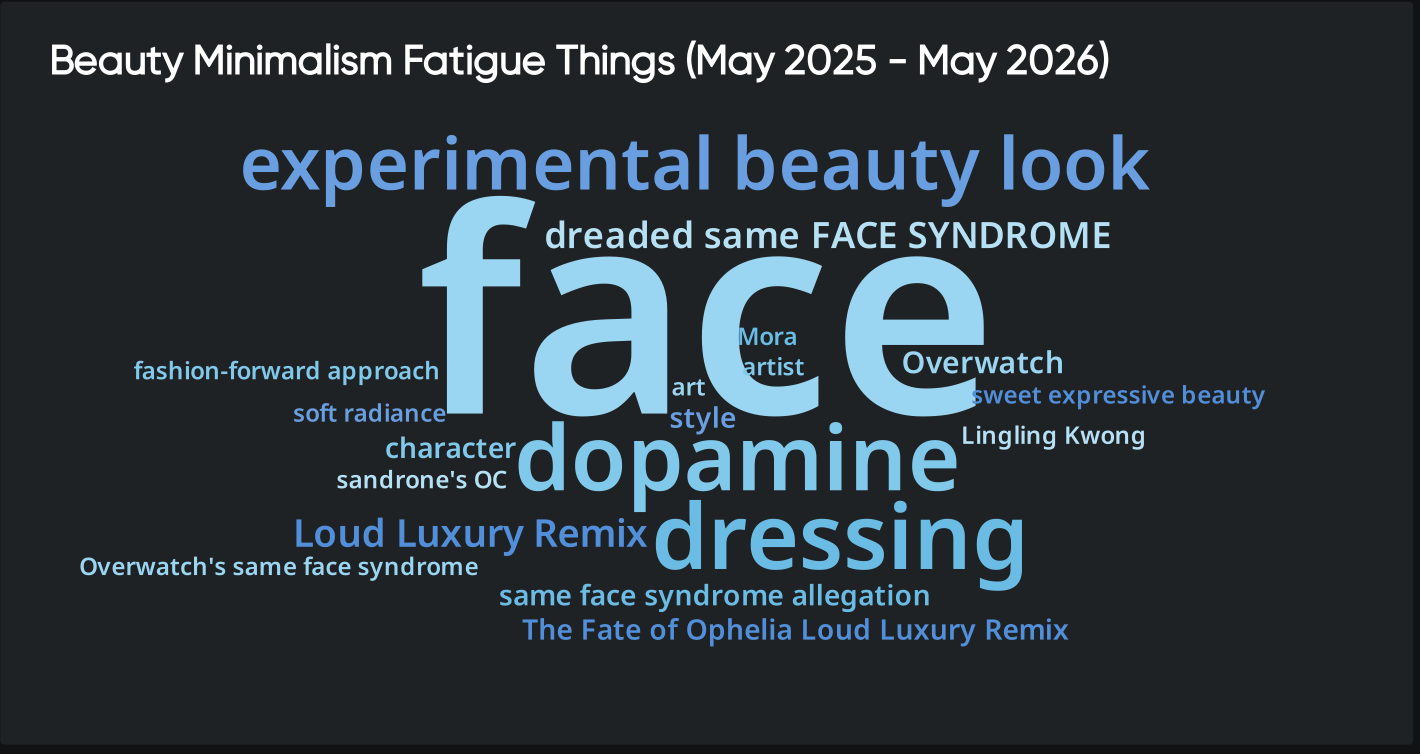
The “Things” visualization highlights how concepts like “experimental beauty look,” “dopamine dressing,” and “same face syndrome” dominate the conversation ecosystem, reinforcing the shift toward experimentation and visible identity signaling.
This trend should not be interpreted as permission to simply become louder. Consumers are not rewarding noise alone. The network repeatedly shows backlash against superficiality, commercial excess, and performative trend cycling.
What consumers appear to reward instead is recognizable identity. Brands positioned around expressive beauty may benefit from:
At the same time, brands relying too heavily on interchangeable “clean” aesthetics risk blending into an increasingly saturated visual environment.
The larger takeaway is structural. Search engines and generative AI tools summarize trends after they become obvious, but Quid maps how those narratives connect while they are still evolving. That means brands can see:
That is the difference between trend observation and behavioral intelligence. And right now, the network suggests consumers are becoming far more interested in being recognizable than being optimized.