

.png?width=1252&height=362&name=QUID_Logo_WHITE%20(2).png)
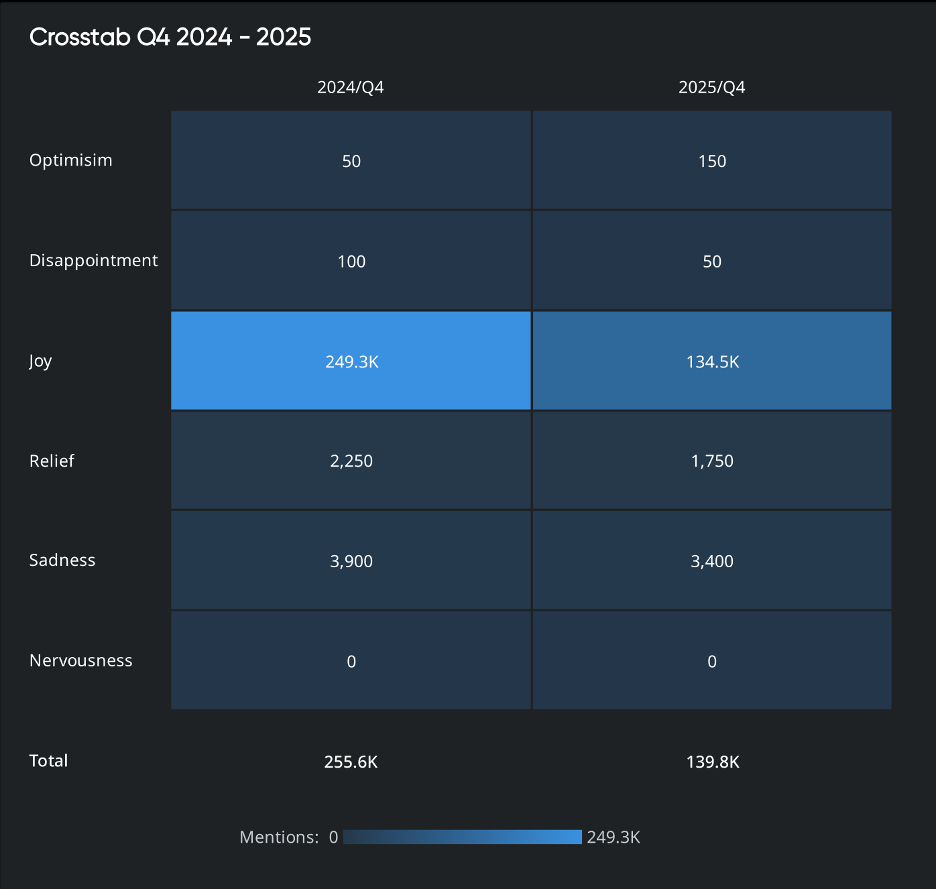
New Year’s resolutions are often unrealistic and sometimes performative, but they still carry weight in the month’s that follow, if only subconsciously.
They show how people expect pressure, effort and risk to show up in the year ahead. For retailers, that makes resolution intent one of the earliest signals of how consumers will think about spending and its tradeoffs. That intent looks different each year.
As 2025 wraps up, resolutions for 2026 are more guarded. People seem to be thinking carefully about how much effort they can actually sustain and where the challenges will hit.
Year-end resolution intent hints at something important. Whether people believe success will come from pushing harder or from putting better systems in place to reduce stress and exposure.
The contrast between 2025 and 2026 resolutions shows:
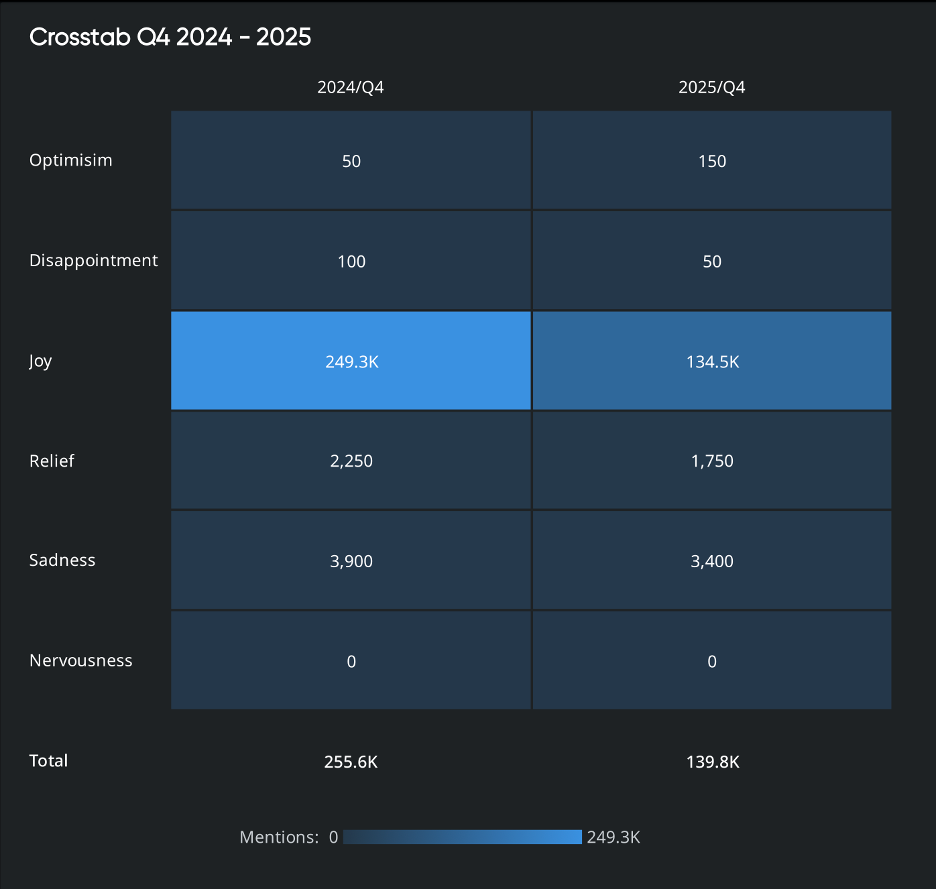
This comparison shows expressions of joy decline meaningfully from Q4 2024 to Q4 2025. Neutral sentiment and negative emotions do not shift dramatically, but they persist, with optimism slightly elevated.
People aren’t overjoyed, but they also aren’t panicking. They’re may just be recalibrating their expectations.
To understand what that means for 2026, this analysis looks at two views side by side. How top-tier media is framing the year ahead and how consumers on TikTok are planning to act on it in everyday life.
Top-tier media coverage covers 2026 resolutions grounded in measurable action. They reflect how organizations, policymakers and industry leaders believe people will need to navigate the year ahead in these key areas:
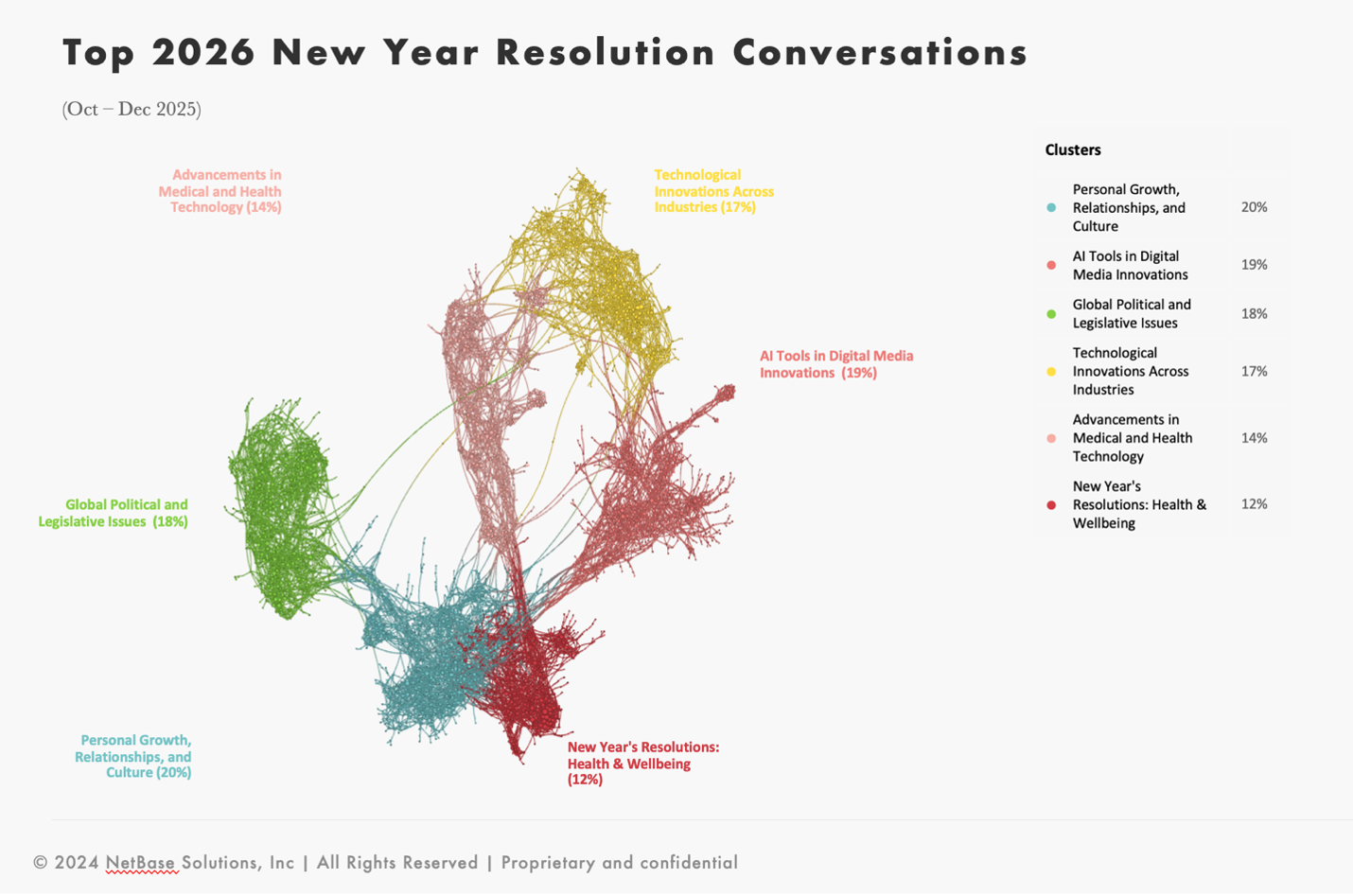
Career mobility is scattered across numerous conversations and is front and center for many in the coming year.
Morningstar reports that 38 percent of employed workers in the U.S. plan to look for a new job in the first half of the year. Last year, that number was at 29 percent. Tech and healthcare workers, Gen Z professionals, and working parents show the highest intent to move.
The underlying narrative focuses on career growth and development, even in what has become a harsh job-search environment. Workers are realizing no job is secure, so they no longer feel compelled to stay at a company that isn’t investing in its employees’ futures.
And part of that aligns with consumer priorities and well-being goals.

Most years, physical fitness and self-improvement top the New Year resolution charts, and this year is no different. But the media is reporting that mental health and “aging in place” are figuring prominently in the 2026 plans for both consumers and the systems that support them.
The shift makes sense, as consumers seek comfort and reliability over novelty these days. Systems that offer coordinated, tech-enabled support to ease individual’s burdens will be attractive for obvious reasons.
Health and aging conversations are happening more within technology and systems conversations, not lifestyle ones. People are planning for sustained support, not short-term change.
As Quid’s AI Agent reveals: “Resolutions center more on mental health, aging quality, and value (cost + wellness) than purely aspirational goals. Corporate and non‑profit commitments reinforce this: Bell commits $10M for mental‑health programs in 2026 and frames January 21, 2026 as “a day dedicated to mental health awareness, acceptance and action.” DiMe launched a “blueprint for scaling connected health solutions” to enable aging in place, explicitly framing 2026 as a year for practical, tech-enabled eldercare. Compared to 2025, resolutions shift from personal fitness/appearance to sustained emotional wellbeing, caregiving solutions, and infrastructure (home & tech) that enable independence.”
Top-tier media reports on programs launching in early 2026 emphasizing education, safety and governance. These programs are preventative, to get ahead of potential exposure before problems arise.
In the coming years, individuals will need to manage increasingly complex digital environments with less margin for error.
“Digital participation has reached a point where education and resilience are essentials, not luxuries.” - markets.businessinsider.com (Ayavefe, GDRI)
Sustainability resolutions for 2026 focus on proof rather than positioning, which lies in stark contrast to 2025, which was shaped by ideological debate.
Industry coverage reports a push for demonstrating tangible value. Debate will be replaced by measurement, as organizations are called to demonstrate progress rather than intent.
That same mindset is seen in food and dining culture.
Dining-related resolutions for 2026 speak to comfort, local sourcing and affordable indulgence, and away from 2025’s more experimental and novelty-driven culinary focus.
The emphasis is on reliability and emotional return.
“Consumers are seeking meals that deliver joy and familiarity without breaking the bank,” reflecting a broader preference for offerings that balance sustainability, affordability, and everyday satisfaction.
Our Quid AI Agent Summarizes Top-Tier Media’s take on 2026 as “people’s resolutions are shifting from individual aspiration to pragmatic resilience: more career moves and upskilling; mental‑health and aging‑in‑place priorities backed by major funding commitments; digital literacy and verified information as actionable goals; sustainability that demands measurable transition and adaptation; and consumer choices that privilege comfort, local sourcing, and value.
Compared with 2025, the tone is less about aspirational trend‑chasing and more about tangible, measurable changes — education, verified programs, financial and care commitments, and product value — giving brands and strategy teams precise levers to act on in Q1 2026.”
TikTok reflects the same underlying shift, expressed through everyday decisions that center on capability, comfort, and timing.
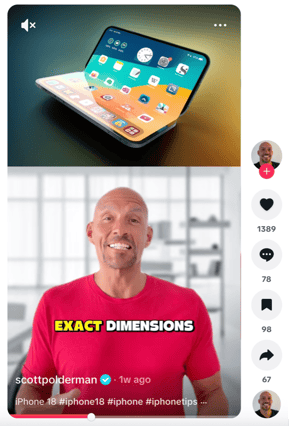
Many users describe 2026 as a year to change the tools they rely on. Operating system upgrades, new device form factors, and workflow features are discussed as ways to function more efficiently, not as indulgences.
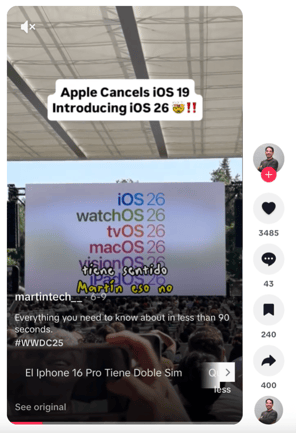
https://www.tiktok.com/@martintech__/video/7514093612368465157
https://www.tiktok.com/@scottpolderman/video/7586769090115652919
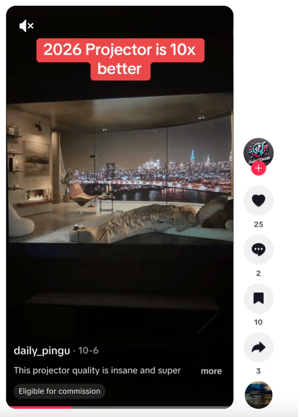
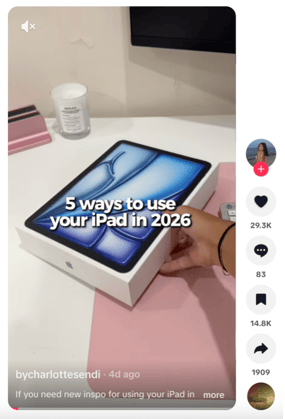
TikTokers describe plans to upgrade entertainment setups, screens and organizational tools that increase control and predictability.
This mirrors top-tier media’s comfort-and-value narrative, but here we see it in action through the lens of personal spending and setup decisions:
https://www.tiktok.com/@daily_pingu/video/7558260970552904990
https://www.tiktok.com/@bycharlottesendi/video/7588224123440991519
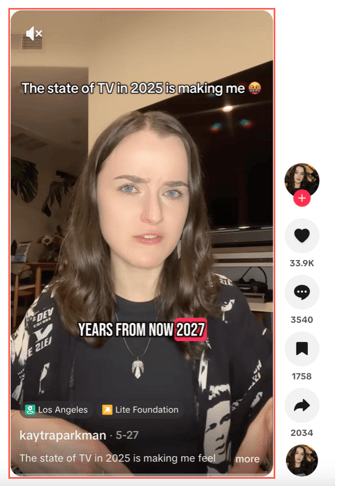
People exhibit increasingly fragmented attention and little patience with long content gaps. They’re resolving to narrow focus and synchronize purchases with known release calendars. This creates tighter timeframes for retailers to capture their time, money and engagement.
https://www.tiktok.com/@kaytraparkman/video/7509002355539512606
The TikTok Consumer Summary is important for retailers to consider in 2026 planning.
“For 2026 people are resolving to change tangible aspects of daily life more than soft lifestyle promises: upgrading devices and OS (iOS 26, foldables), investing in at‑home entertainment (projectors, iPad workflows), and synchronizing purchases with big entertainment releases (GTA6, Switch 2, MCU/DC calendar).
Compared with 2025, the shift is from intermittent gadget chatter and streaming-first consumption to coordinated upgrade decisions tied to release calendars and stronger demand for predictable content cadence.”
People are planning for a year that feels demanding, with consumers showing less tolerance for wasted effort. They are preparing for challenges, with some optimism sprinkled on top.
Compared to 2025, there’s a shift from:
This signals a weary combo of realism, fatigue and adaptation. Expectations for 2026 are grounded and tied to how people believe they will need to operate to exist in our digital landscape.
Resolutions offer an early read on how consumers will allocate attention, money and effort in the months ahead.
Brands that align to this mindset in Q1 2026 will be better positioned to meet consumers where they are, not where last year’s narratives assumed they would be.
Want to explore how these shifts show up in your category, audience or market?
Reach out today, and learn how Quid can help your team track emerging intent signals early, connect them to real behavior, and translate them into smarter product, content and campaign decisions.