

.png?width=1252&height=362&name=QUID_Logo_WHITE%20(2).png)
.png?width=1598&name=PRODUCT%20RELEASES%20(4).png "PRODUCT RELEASES (4)")
Key takeaways:
The answer to a good research question is rarely sitting in one dataset, which is why Ask Q will soon be able to run a single question across several of them at once and tell you how they relate.
If you want to know whether the complaint you're seeing on social has started showing up in the press, the answer lives across two datasets. If you want to know whether competitors are already positioning around a theme your audience keeps raising, part of the answer is in social data and part of it is in company data. If you want to know whether the issue your support team keeps hearing about is actually widespread, you need your own customer feedback and public conversation side by side.
Multidataset Analysis is built for exactly those questions. Here's what it will do and why it changes how you'd approach a research question in Quid.
A dataset is the specific body of text your question runs against. Rather than searching everything at once, a dataset is scoped to something particular: your brand, your category, a competitor set, an audience, or your own internal feedback, with defined sources, languages, and date ranges.
These focused datasets are what allows you to go deeper into the data, getting precise, detailed answers to key questions, traced back to real posts and articles.
Ask questions of a dataset through Ask Q, the conversational layer inside Quid Terminal, typing a question in plain language and get a complete, data-backed answer back in minutes, with the source content sitting behind it so you can check where it came from.
Multidataset Analysis is a new Ask Q capability, coming soon, that will let you query, compare, and synthesize insights across multiple datasets at the same time, in one session.
Today, Ask Q answers against one dataset at a time. That works well when you already know in which scope your answer lives. The trouble is that you often don't, and plenty of key strategy questions have answers sitting across two or three datasets at once.
The current workaround is to ask the same question separately in each relevant dataset, then compare or compile the answers yourself. You'll get the right answer this way, it just takes three times as long, because you're asking the question three times, reading three sets of results, and then doing the reconciliation yourself. Piecing together the story across multiple sets of data is where the most strategic analysis occurs, and it's the part Multidataset Analysis takes on directly. Ask once, and the comparison across every relevant dataset comes back as part of the answer.
Query across datasets in one prompt. You'll be able to interrogate several topics or datasets at once, so comparing social conversation against news, or market data like patents, investments and M&A activity, happens inside a single question, returning answers based on combined data.
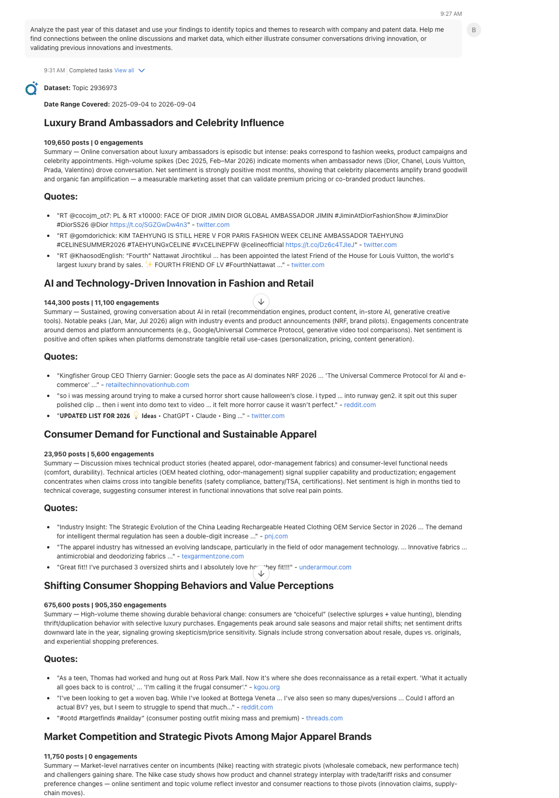
Get the correlations, not just the answers. Because the datasets are read together rather than one after another, the analysis will surface the overlaps between them, the points where a narrative shifts as it moves from one source to another, and the places where they disagree. That last one tends to be the most valuable. A claim that holds up in social data but falls apart in news data is a finding all on its own.
Choose between single and multi-dataset. Picking a single dataset isn't going away. Broad questions benefit from breadth, and specific questions often benefit from focus, so the choice stays yours.
Say a complaint starts showing up in consumer sentiment about a product in your category.
Inside one dataset, you can uncover this sentiment shift, the volume of conversation around it, the tone, and whether the volume is growing. That's a clear read on what's happening and how fast, and it's often exactly what you need.
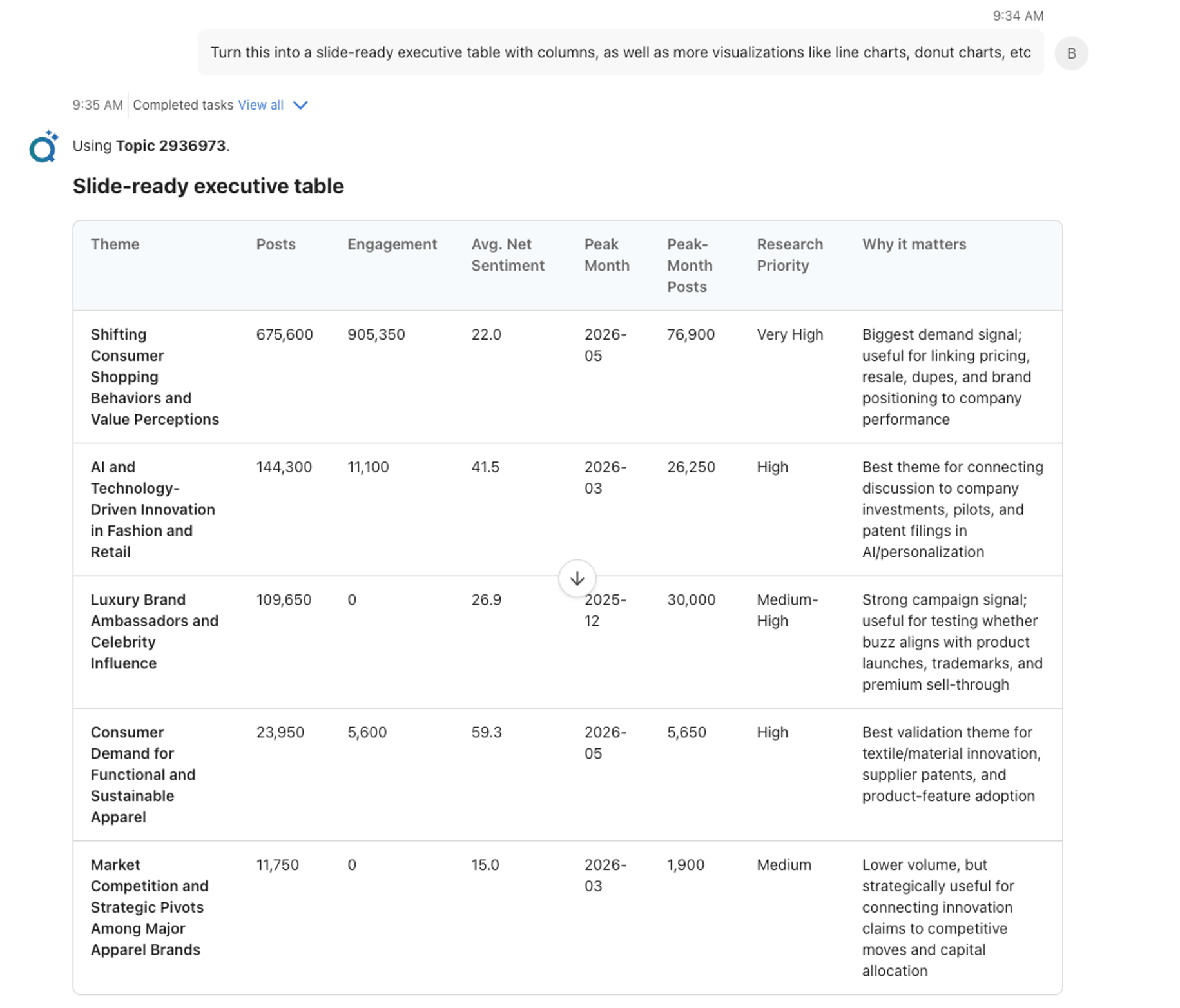
When the decision is bigger, you'll want to see that read in context, and the context lives in your other datasets:
Each of those has a clear answer in its own dataset. What Multidataset Analysis adds is the relationship between them, and that's where the decision actually gets made.
Because the datasets are read together, the answer comes back with a shared timeline. You can see whether the complaint appeared in customer feedback months before it reached social, which tells you this was detectable long before it became public. You can see whether competitor messaging shifted before the press coverage or after it, which tells you whether they're leading the narrative or reacting to it like you are. You can see whether the funding and patent activity predates the conversation entirely, which tells you the market identified this need well ahead of the complaint.
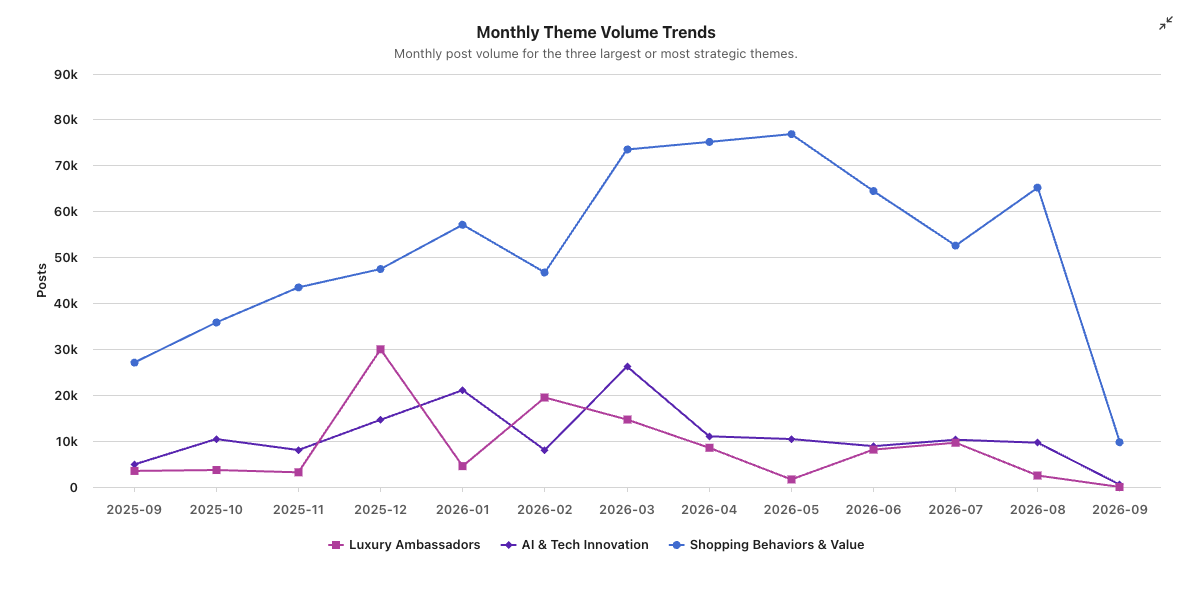
You also get proportion. A theme that's loud on social and absent from news is a community conversation. The same theme showing up in both, with coverage accelerating, is a category story. Those two situations look identical inside a single dataset and call for completely different responses.
Sequence tells you what caused what. Proportion tells you how urgent it is. Together they turn four separate readings into a position you can brief upward and defend.
The same goes for the questions that come up most often. Is this spike a real consumer shift or just a media narrative amplifying a few loud voices? Is our competitor's new positioning actually landing with people? Is the complaint we keep hearing internally showing up publicly? None of those have answers inside a single dataset, which is why they've usually been answered slowly or only partly.
Every answer Ask Q returns is built from real, compliantly sourced content, and each finding links back to the specific posts and articles it came from. Open any line of the analysis and you can read what produced it, take it into a presentation, or cite it in client work.
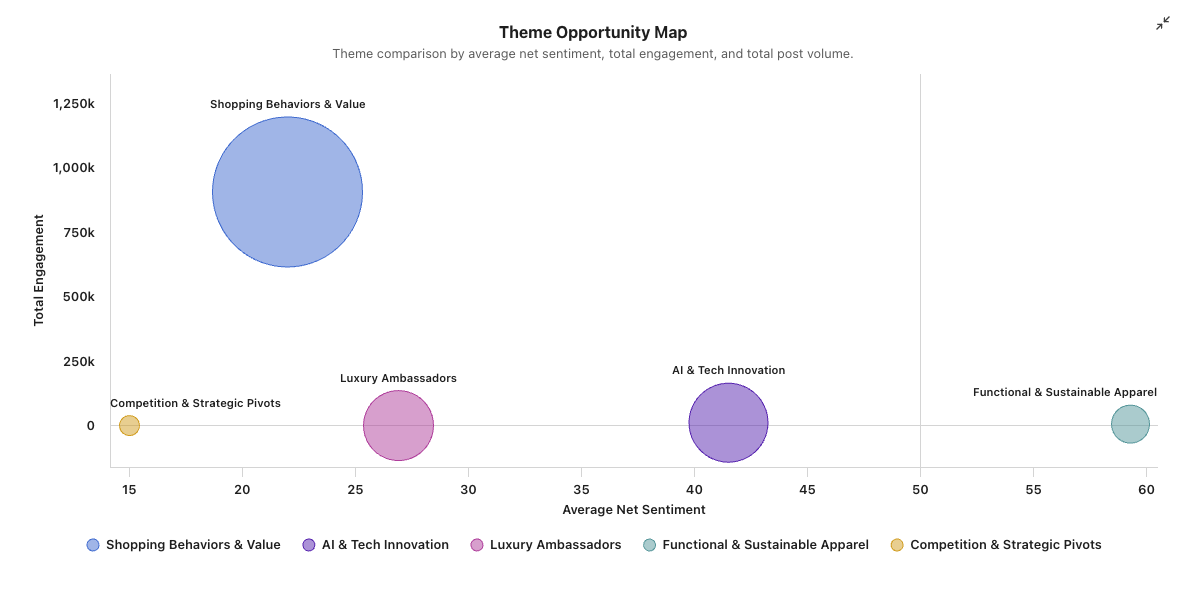
That foundation is what makes multidataset analysis possible in the first place. Quid ingests more than two petabytes of data through direct partnerships with Meta, Reddit, TikTok, and YouTube, alongside news from over 580,000 sources, broadcast transcripts, patent filings, investment and company data, reviews, and forums. Your own material sits in the same environment: customer feedback, NPS, support tickets, CRM records, search trends.
Comparing social conversation against news coverage against patent activity only works when all three are licensed, current, and structured to the same standard. Because they are, the more datasets a question spans, the more of that foundation is working on your answer, and every part of it stays traceable to its source.
Datasets are scoped for a reason, but those boundaries are drawn around data sources while your questions are shaped by business problems. The two don't always line up. A question about whether your category is turning against an ingredient has its answer spread across social conversation, news coverage, reviews, and patent filings.
Multidataset Analysis will mean you don't have to break a question into pieces to fit the way the data is organized. You'll just ask it.
Multidataset Analysis is coming soon to Ask Q inside Quid Terminal. Want to see what Ask Q can already do against your own data? Request a free demo.
Multidataset analysis means querying and comparing several separate datasets together in one analysis, rather than examining each one on its own and combining the results manually. In Quid, it will let a single Ask Q question run across multiple datasets and return an answer about how they relate.
It matters because most business questions involve more than one kind of data. Whether a social media complaint is turning into a press story, or whether a competitor is already acting on a trend, are questions whose answers sit across two sources. An answer from a single dataset can only describe one side of that.
Yes. Selecting a specific dataset stays available, and it's often the better choice for narrow questions where extra breadth would only add noise.
Traceability is what makes it verifiable. Every Ask Q answer links back to the posts and articles it drew from, so you can follow any finding to its source and confirm it, whether the answer came from one dataset or several.
Multidataset Analysis is coming soon to Ask Q inside Quid Terminal.