


Coming up with creative ideas for a social campaign is rarely the problem. The harder part is figuring out which ideas have a chance of connecting with your audience, particularly when the trends and content attracting attention can look completely different from one platform to another.
A Black Friday campaign offers a good example. On X, the images drawing attention might be promotional graphics promising a television, laptop, or gift card to someone who follows an account and enters a giveaway. On Instagram, the same shopping event might be dominated by fitness creators wearing promotional apparel, with discount codes and shopping links tucked into the accompanying captions. Both approaches are attracting engagement, but understanding what makes them different requires looking beyond the products being promoted.
For teams researching creative direction, that means reviewing individual posts, comparing engagement, identifying visual patterns, and figuring out which findings are relevant to their own brand. Doing that across several platforms takes time, especially when the research needs to be repeated for different categories, competitors, or campaigns.
Quid's Popular Images Agent brings that work together in a single brief. It identifies highly engaged images related to a subject across X/Twitter, Instagram, and Facebook, then combines the original imagery, engagement figures, and post links with an analysis of the themes and creative approaches appearing across channels. Instead of starting with a blank mood board or a collection of disconnected examples, teams can see what content is attracting attention and investigate the patterns behind it.


When social teams want to understand what's working visually in a category, they're often piecing together information from several sources. They might search for relevant posts on Instagram, review competitor activity on X, and use native analytics to compare the content they're finding. Each platform provides a different view, making it difficult to build a consistent picture of the creative landscape.
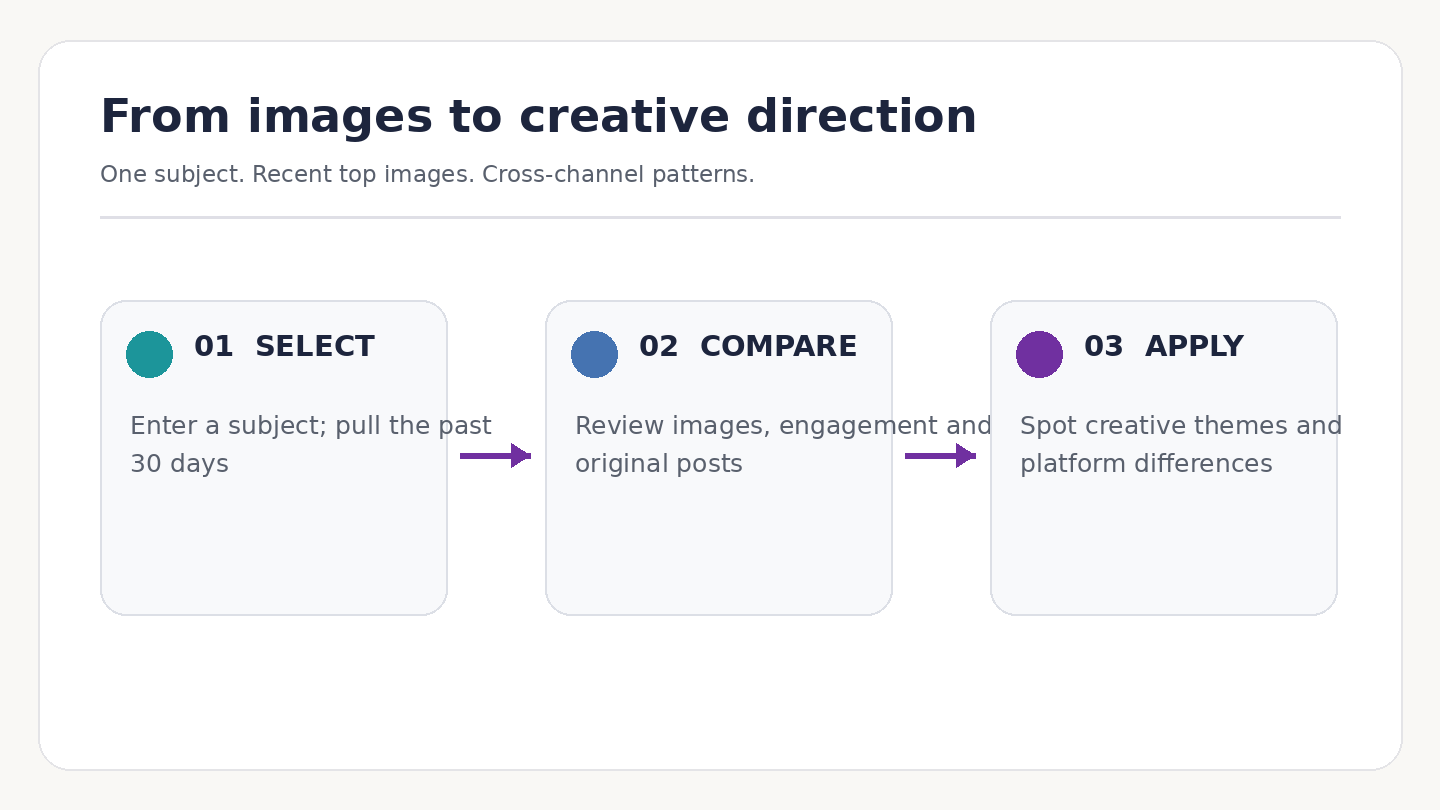
The Popular Images Agent provides a repeatable way to conduct that research. Users enter a subject, which can be a brand, product, campaign, category, or broader cultural theme, and the agent examines related image posts from the previous 30 days across X/Twitter, Instagram, and Facebook.
It identifies the highest-engagement examples available for the subject and organizes them by platform, bringing together the images themselves, likes, shares or reposts, comments, and links to the original posts. This makes it possible to examine the actual content behind the rankings rather than relying on engagement numbers without visual context.
The agent also analyzes the content of the images and the themes appearing across each platform. The resulting brief includes an overview of the broader findings, followed by platform-specific sections that explain which creative approaches are prominent, how brands and creators are communicating, and where the content differs between channels.
That combination of visual evidence and written analysis is especially useful when researching a category that generates a large volume of content. A team planning a seasonal campaign, for example, can use the agent to examine the promotions, imagery, and creative approaches currently receiving attention, then explore individual posts to understand what those examples might suggest for its own work.
To see how the agent works, we ran two analyses around subjects that are closely connected to holiday shopping: Black Friday and Gifts.
Both subjects involve consumer products and purchasing occasions, but they generate very different kinds of imagery. Black Friday is heavily associated with promotions and retail activity, while gifts can be connected to anything from product purchases and seasonal celebrations to relationships, memories, and personal milestones.
The briefs highlight those differences while showing how the same subject can take on a distinct character depending on the social platform.
They also demonstrate why a list of popular images becomes much more useful when it's accompanied by an explanation of the creative themes connecting them.
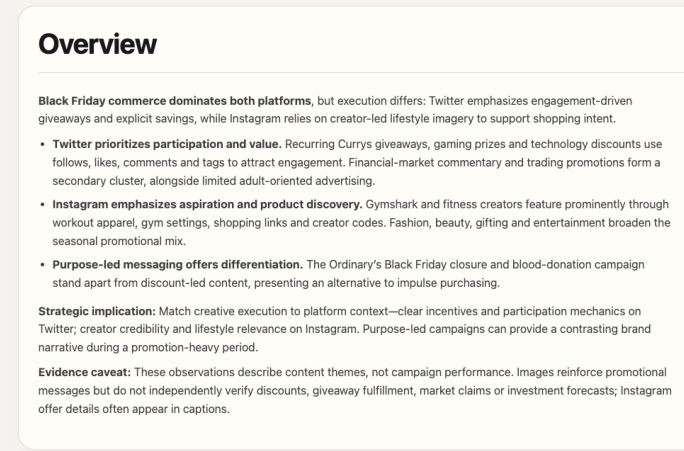
The Black Friday brief reveals two approaches to attracting attention during the same shopping event. On X/Twitter, many of the most-engaged images are built around explicit offers, prizes, and actions audiences can take to participate. Instagram's leading examples, meanwhile, place more emphasis on creators, lifestyle imagery, and the products being promoted in everyday or aspirational settings.
This difference becomes clearer when you examine the individual posts.
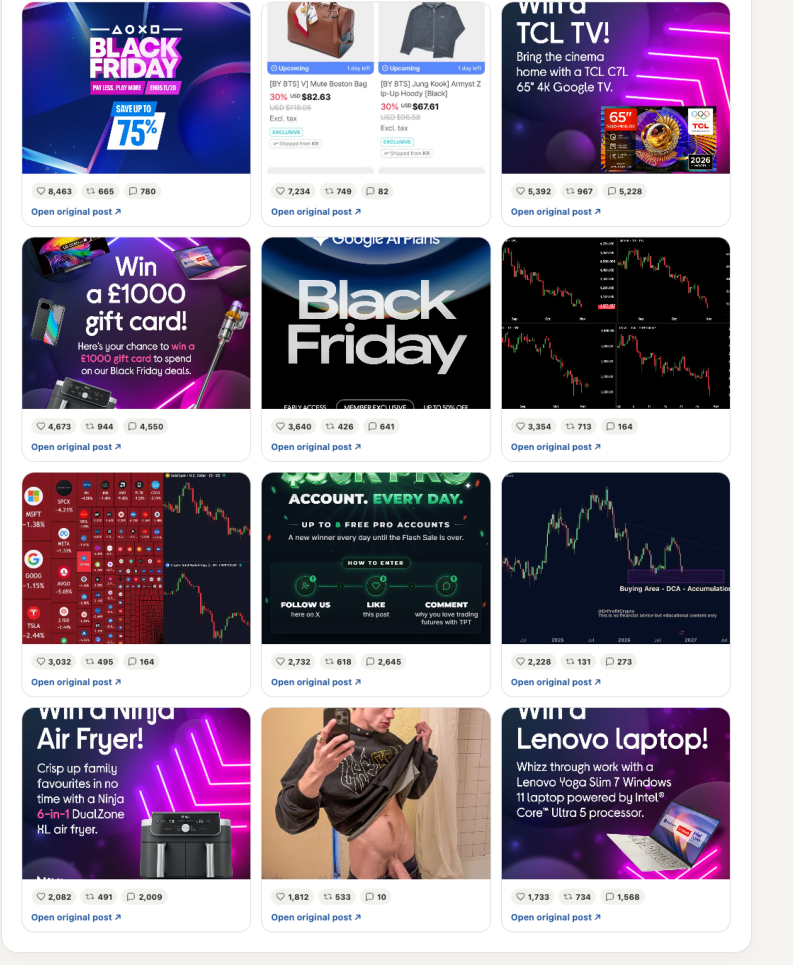
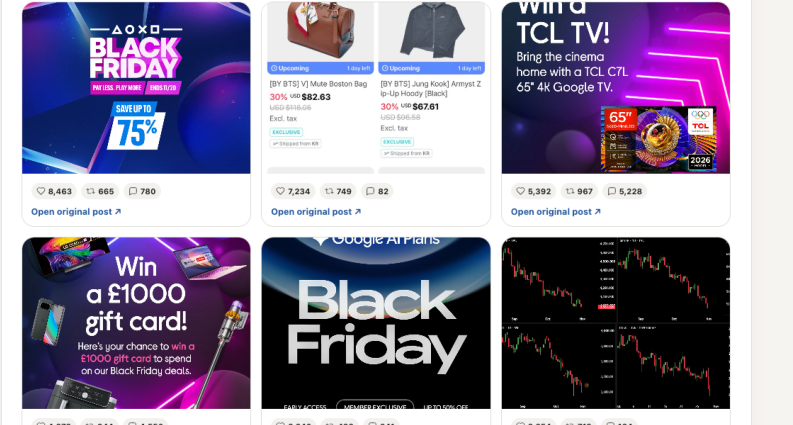
Among the most popular Black Friday images on X/Twitter, Currys stands out for its repeated use of promotional giveaways. The brief includes posts advertising prizes such as a TCL television, Lenovo laptop, Ninja air fryer, and £1,000 gift card, with the imagery making the potential reward immediately recognizable.
The accompanying promotions encourage audiences to follow, like, comment, or tag others to enter. The top image in the Black Friday X/Twitter results recorded 30,073 likes, while several other giveaway posts generated thousands of interactions.
Other prominent examples include PlayStation-related discounts, promotional graphics for Google AI subscriptions, and retail offers emphasizing price reductions or limited-time opportunities. The brief also identifies a smaller group of financial and trading-related promotions that adopt Black Friday messaging outside conventional retail categories.
These images often prioritize clarity over subtlety. Products are displayed prominently, discounts are easy to spot, and the incentive for engaging with the post is usually explicit. The promotional offer is central to the creative, rather than something audiences need to discover in the caption.
For teams developing campaigns on X, the findings offer concrete examples of how brands structure participation-driven promotions. They also raise useful questions for creative testing, including whether a prominent product image, a clear incentive, or the mechanics of a giveaway are most relevant to the audience a campaign is trying to reach.
Of course, a popular giveaway doesn't establish that the same creative will drive product sales or meaningful customer engagement for every brand. The brief shows which posts attracted attention and how they were constructed, giving teams a starting point for further investigation.
Instagram's Black Friday results look noticeably different, with fitness and lifestyle content featuring prominently among the most popular images.
Gymshark appears throughout the brief, often through creators wearing workout apparel in gyms, fitness selfies, and other settings familiar to their audiences. Rather than placing a large discount message at the center of every image, the content frequently introduces products through the people wearing or using them.
Shopping links, creator codes, and promotional details help connect that lifestyle content to Black Friday offers, but the images themselves are often focused on the creator, the product, or the activity.
The leading Instagram image in the brief recorded 117,216 likes, substantially more than the leading X/Twitter example. That comparison is useful as a description of the observed posts, although differences in audiences, account sizes, and platform behavior mean it shouldn't be treated as evidence that Instagram's creative approach is inherently more effective.
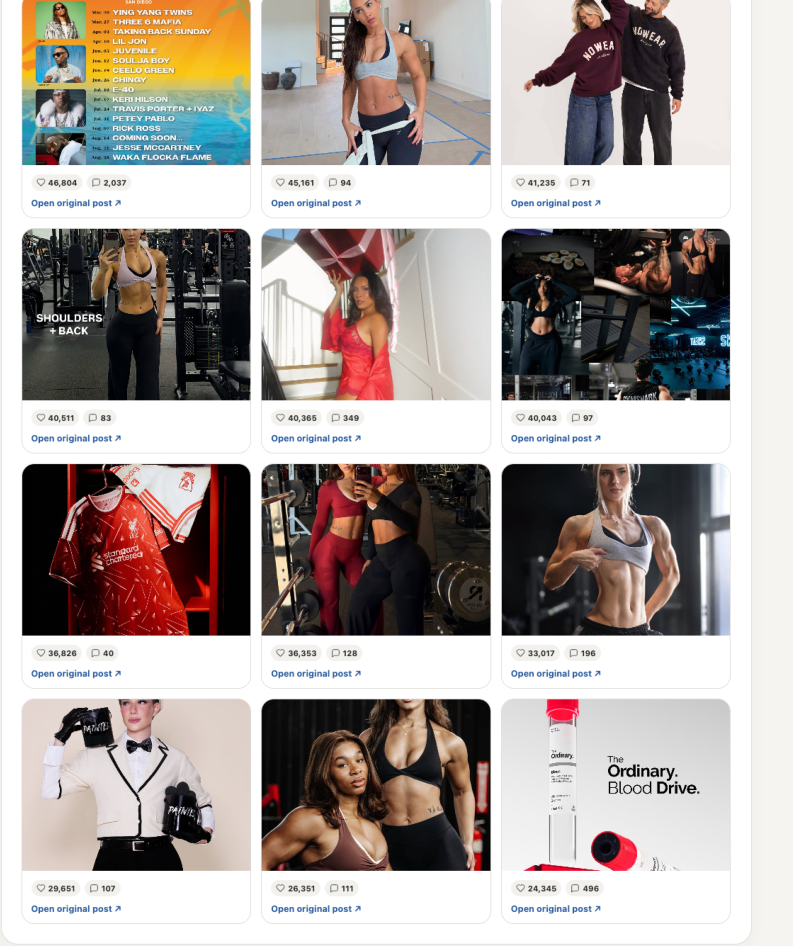
The brief also surfaces fashion, beauty, and entertainment content, alongside a campaign from The Ordinary that connects Black Friday to blood donation rather than conventional discounting. These examples show that brands can participate in the same seasonal moment through approaches that reflect very different identities and objectives.
For creative teams, the Instagram findings provide useful references for integrating products into familiar content formats, working with creators, and exploring how promotional messaging can sit alongside content audiences already follow.
Looking at the two platforms together gives the Black Friday findings a clearer practical application.
On X/Twitter, many of the popular posts make a direct exchange with the audience: engage with the content for a chance to win a prize, or pay attention to an offer because it promises a specific saving. On Instagram, products are more frequently presented through creators and lifestyle-oriented content, with the shopping opportunity connected to that existing context.
Neither pattern is a universal formula for success, but both provide examples that marketing teams can use when planning their own campaigns. A brand might investigate whether a participation-driven promotion is appropriate for its X audience, while developing separate Instagram creative that features products through relevant creators or use cases.
That kind of platform-specific thinking is difficult to develop from aggregate engagement figures alone. The images, messaging, and surrounding context help explain what the audience was actually seeing.
The second brief explores Gifts, a subject that appears closely related to Black Friday but produces a much broader collection of content.
While product gifting and seasonal shopping still appear, many of the most popular images are associated with relationships, celebrations, nostalgia, and shared experiences. The analysis includes everything from family photographs and personal milestones to entertainment fandom, celebrity tributes, and cultural commentary.
These examples illustrate an important aspect of visual research: the meaning of a subject can extend well beyond its most obvious commercial associations.
For a brand working in a gifting category, examining those broader connections can help identify the occasions, experiences, and emotions people associate with giving or receiving something meaningful.
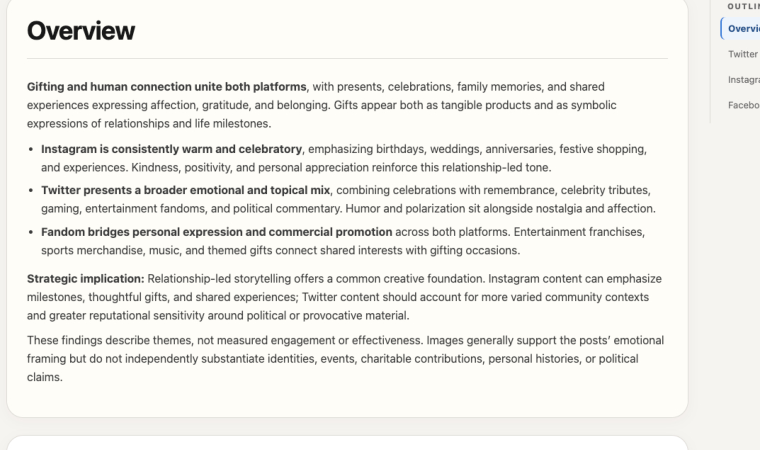
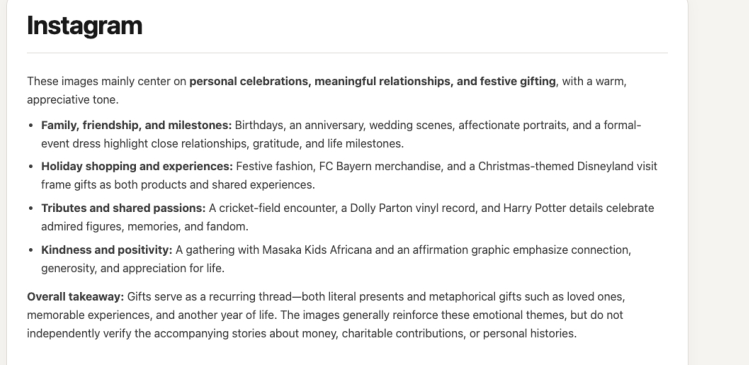
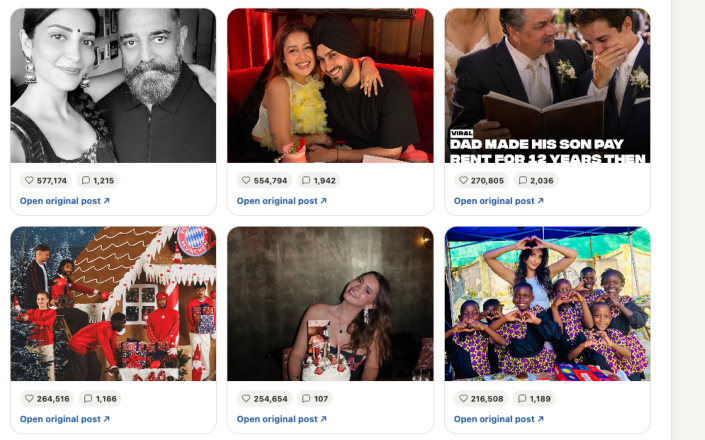
Instagram's Gifts results are particularly centered on people and the occasions that bring them together.
Popular images include birthday celebrations, anniversaries, weddings, family milestones, affectionate portraits, sporting achievements, and tributes. Some involve physical presents or products, while others relate to experiences and memories that people value.
The leading Instagram post recorded approximately 1.89 million likes, demonstrating the substantial attention an individual celebratory moment can receive.
Across the examples, imagery often communicates the significance of an occasion through the people involved and the relationships being celebrated. A birthday photograph may attract engagement because of the person featured, while a wedding or anniversary post can resonate through the milestone itself.
The brief also includes promotional imagery and merchandise connected to familiar interests and fan communities, showing how products can appear alongside the more personal stories associated with gifting.
For brands, these findings suggest opportunities to explore content that places products within the occasions people are celebrating. A gifting campaign might emphasize family traditions, the experience of receiving a thoughtful present, or the memories associated with a special event, depending on the category and audience.
The important distinction is that popular celebratory posts aren't necessarily examples of successful gift marketing. They reveal the kinds of imagery and emotional themes appearing prominently around the subject, which teams can then assess for relevance to their own campaigns.
The Gifts analysis on X/Twitter includes some of the same relationship-oriented themes, but it also reveals a wider mix of cultural subjects.
Alongside birthdays, personal photographs, celebrations, and messages of appreciation, the most popular images include entertainment fandom, gaming content, celebrity tributes, and political commentary.
Some posts feature recognizable franchises and collectibles, while others use nostalgic photographs or personal stories to communicate affection and remembrance. A broader gifting-related subject can therefore capture content that has little connection to shopping but remains relevant to the emotional or symbolic meaning of a gift.
For brands researching the category, the distinction is important because high engagement alone doesn't make an image a useful creative reference. A post may attract substantial attention because of a celebrity, a political argument, or an existing fan community rather than the gifting theme a marketer hoped to investigate.
The agent's summaries help surface those differences, allowing teams to examine the images in their original contexts before deciding whether they offer meaningful inspiration.
The contrast between these two briefs demonstrates why the subject matters as much as the platform.
Black Friday produces an image landscape closely tied to promotions, retail offers, and product discovery. Gifts brings a wider range of personal and cultural associations into view, particularly celebrations, relationships, entertainment, and shared experiences.
For a team developing holiday creative, those findings could lead to several different research directions. A discount-focused campaign might benefit from examining how other retailers communicate offers, while a gifting campaign built around personal relationships might draw more relevant inspiration from the celebrations and emotional storytelling appearing in the Gifts brief.
In both cases, the analysis helps teams identify specific creative themes that are worth examining rather than relying on assumptions about what a holiday or shopping occasion should look like.
The Popular Images Agent does more than collect image posts and arrange them by engagement. Its written analysis looks across the available results to identify recurring subjects, visual approaches, brand messaging, and differences between platforms.
In the Black Friday brief, that means recognizing how giveaway mechanics and discount graphics feature prominently on X/Twitter while creator-led fitness and lifestyle imagery is more visible on Instagram. For Gifts, it means identifying the connections between celebrations, relationships, fandom, and cultural discussion without assuming that every popular image reflects the same audience motivation.
The overview brings these observations together, while the individual platform sections provide the examples behind them. Teams can move between the overall findings and the original posts to examine how particular brands or creators present their content.
This is particularly helpful when several images appear to follow a similar creative approach. Instead of treating each post as an isolated example, a researcher can explore whether the pattern is appearing across multiple accounts, which platforms feature it most prominently, and how it relates to the broader subject.
It's equally useful for identifying where the evidence is limited. Both example briefs provide substantial results for X/Twitter and Instagram, but their Facebook sections do not contain comparable image galleries. That means the clearest creative comparisons in these examples come from the two platforms with visible supporting data.
The agent's analysis provides direction for creative research and testing, rather than a causal explanation of why a post performed well. Engagement figures, visual patterns, and post context can suggest useful hypotheses, but other factors such as audience size, distribution, and timing can also influence performance.
One of the most practical applications is researching creative direction before a campaign is developed. Rather than beginning with general inspiration or last year's highest-performing assets, teams can examine the content currently drawing attention around a relevant category, brand, or cultural moment.
For seasonal campaigns, that might mean looking at how retailers are presenting promotional offers, which creator formats feature prominently, or whether lifestyle imagery is appearing more often than product-focused graphics. The findings can inform creative briefs and generate ideas for A/B testing, with original posts available for review when more context is needed.
The agent can also support competitive research. Running an analysis on a competitor's brand provides a way to review popular associated imagery, investigate recurring content approaches, and compare how that brand appears across social channels. This can help teams identify creative conventions in their category or spot approaches worth researching further.
Agencies working across several clients may find the repeatable workflow particularly useful. A campaign team can investigate one category before developing a concept, run a separate analysis on a competitor, and revisit a subject later to see whether different imagery is appearing among the most-engaged posts.
Another application is understanding the broader cultural context around a product or campaign. The Gifts brief illustrates how quickly a seemingly commercial subject can extend into personal relationships, entertainment, and current events. Recognizing those connections can help teams explore more relevant themes while also identifying content that may be inappropriate for their brand.
None of these applications requires treating the most popular image as the creative everyone should copy. The value comes from having enough evidence to understand the range of approaches being used and make more informed decisions about which ones deserve attention.
The agent begins with a single input: the subject you want to research. That could be a specific brand or product, a competitor, a campaign theme such as Black Friday, or a broader topic like Gifts.
Once submitted, the agent examines the previous 30 days of available image content across X/Twitter, Instagram, and Facebook, identifies the leading examples, and organizes them into a brief with images, engagement counts, original post links, and a cross-channel summary.
The published workflow describes a typical run time of approximately 15 minutes, with the completed brief available through Quid Terminal and the user's inbox.
Researchers can review the overview for the main findings, then explore the platform sections to inspect individual examples. Because the brief retains the original post links, teams can also examine the surrounding context and decide which observations are most relevant to their work.
For organizations that regularly research campaigns, competitors, or trends, this provides a more consistent way to collect and review visual evidence without rebuilding the same research process for each new subject.
The images that attract attention on social media can tell marketing teams a great deal about how a category is being presented, but interpreting those images requires more than reviewing engagement counts.
The Black Friday and Gifts briefs show how much variation can exist between platforms and subjects, from explicit giveaway mechanics and creator-led shopping content to celebrations, personal relationships, and cultural conversations.
Quid's Popular Images Agent helps teams investigate those patterns through a repeatable workflow that brings together the visual content, engagement data, original posts, and cross-channel analysis.
Whether the goal is developing a campaign, researching a competitor, or exploring a cultural moment, the agent provides evidence that teams can use to sharpen their creative thinking and decide what to test next.
The Popular Images Agent is a Quid Q Agent that identifies highly engaged image posts associated with a subject across X/Twitter, Instagram, and Facebook. It produces a brief containing image thumbnails, engagement counts, direct links to original posts, and a written analysis of the creative patterns appearing across platforms.
The agent requires a subject, which can be a brand, product, campaign, category, competitor, or broader topic. It then handles the available platform research and cross-channel analysis.
The agent examines the previous 30 days of available image posts. This makes it useful for researching recent creative activity around seasonal events, campaigns, competitors, and developing trends.
The brief includes available engagement figures such as likes, shares or reposts, and comments alongside the original images and post links. The exact metrics displayed can vary by platform and source.
Facebook is included in the agent's supported workflow, although the availability of results depends on the subject and the data accessible for the selected time period. The Black Friday and Gifts example briefs include detailed X/Twitter and Instagram results but no comparable Facebook image galleries.
Yes. Users can enter a competitor's brand as the subject to examine popular associated imagery, supporting engagement figures, and the creative patterns identified across the available platforms.
The published workflow describes a typical completion time of approximately 15 minutes, after which the brief is available in Quid Terminal and the user's inbox.