

.png?width=1252&height=362&name=QUID_Logo_WHITE%20(2).png)
.png?width=1380&name=Q%20Agent%20Spotlight%20(9).png "<span id=\"hs_cos_wrapper_name\" class=\"hs_cos_wrapper hs_cos_wrapper_meta_field hs_cos_wrapper_type_text\" style=\"\" data-hs-cos-general-type=\"meta_field\" data-hs-cos-type=\"text\" >Q Agent Spotlight: The Brand Sentiment Agent</span>")
Every brand has a public narrative. Some of it is intentional: the messaging, the campaigns, the carefully worded press releases. The rest is built by consumers, one post at a time, across platforms that the brand does not control and often cannot fully see. The Brand Sentiment Agent was built to close that gap. It analyzes what is actually driving sentiment for a brand across major social platforms and returns a structured brief covering the key positive and negative themes, the emotions in play, the most persistent complaints, and the meaningful differences in how each platform talks about that brand.

The distinction from a category-level sentiment analysis is important. This agent is not asking how people feel about a product space. It is asking how people feel about a specific brand, what is shaping those feelings, and where the gaps are between the brand narrative and the consumer reality. That is a different kind of intelligence, and for brand teams, communications functions, and agencies managing reputations, it is often the most consequential kind.
The overview section opens with the full cross-platform picture before the brief breaks into platform-by-platform analysis. In a brief run on a major consumer electronics brand, the cross-platform themes that emerged tell a story that is more complicated than either a brand health score or a social listening dashboard would show on its own.
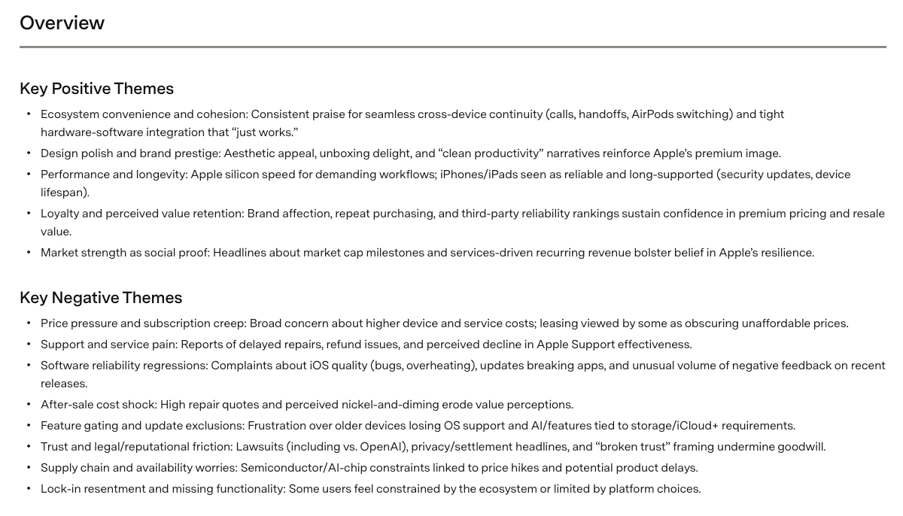
On the positive side, the brief found deep and consistent praise for ecosystem convenience and cohesion, specifically the seamless cross-device experience including calls, handoffs, and accessory switching that users describe as hardware and software integration that simply works. Design polish and brand prestige are equally consistent positives, with unboxing experiences, clean productivity narratives, and premium brand framing appearing across platforms. Innovation perception remains strong, particularly around silicon performance and the longevity of device support.
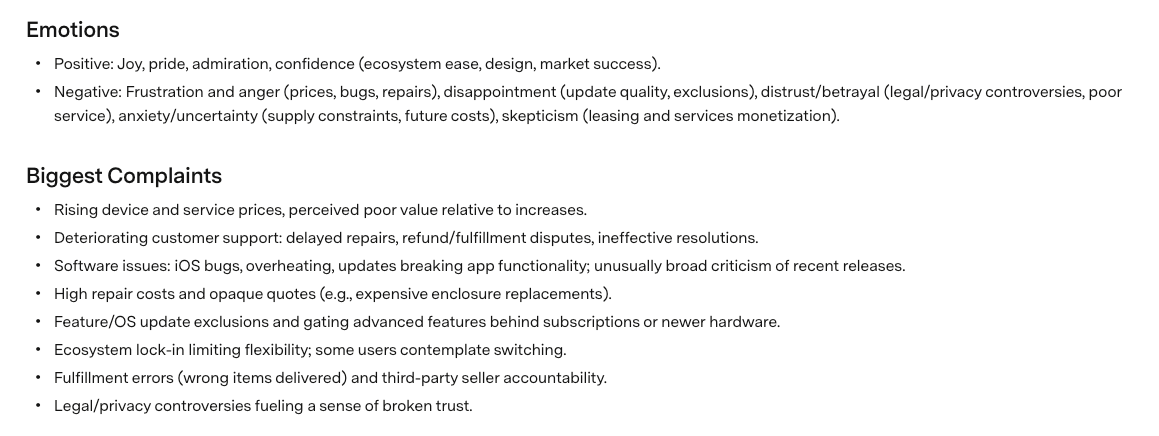
The negative themes are equally specific and, in several cases, more urgent. Price pressure and subscription creep dominate: broad concern about rising device and service costs, with leasing programs viewed by some as obscuring unaffordable list prices. Support and service pain surfaces across platforms as a distinct and growing thread, with delayed repairs, refund issues, and a perceived decline in support quality generating some of the most emotionally charged posts in the dataset. Software reliability regressions have become a notable theme, with an unusually broad volume of criticism around recent OS updates, bugs, and apps breaking after upgrades. After-sale cost shock, feature gating tied to storage and subscription requirements, and trust friction around legal and privacy controversies round out a set of negative themes that are specific, consistent, and actionable.
The emotions the brief surfaced capture the full range: joy, pride, admiration, and confidence on one side; frustration and anger around prices and repairs, disappointment around update quality and exclusions, anxiety and uncertainty around supply constraints and future costs, and skepticism around leasing and services monetization on the other. Understanding that emotional register is what separates a brief that describes sentiment from one that explains it.
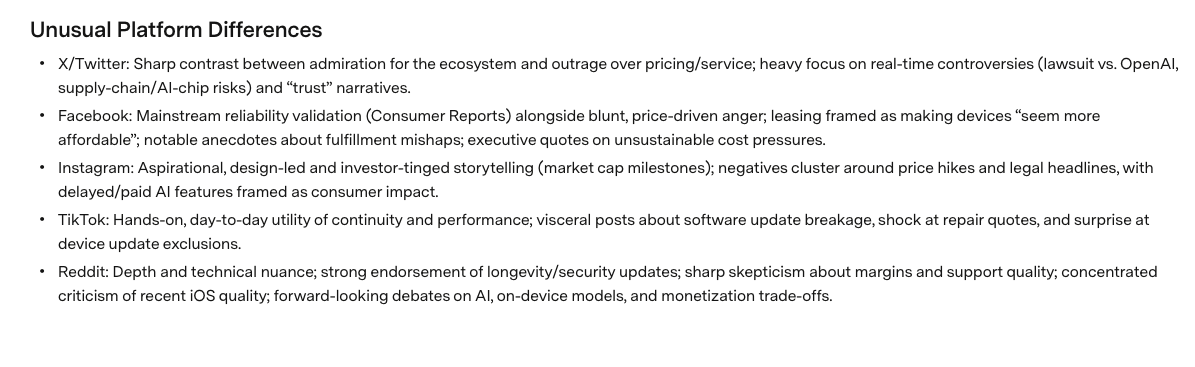
Twitter/X
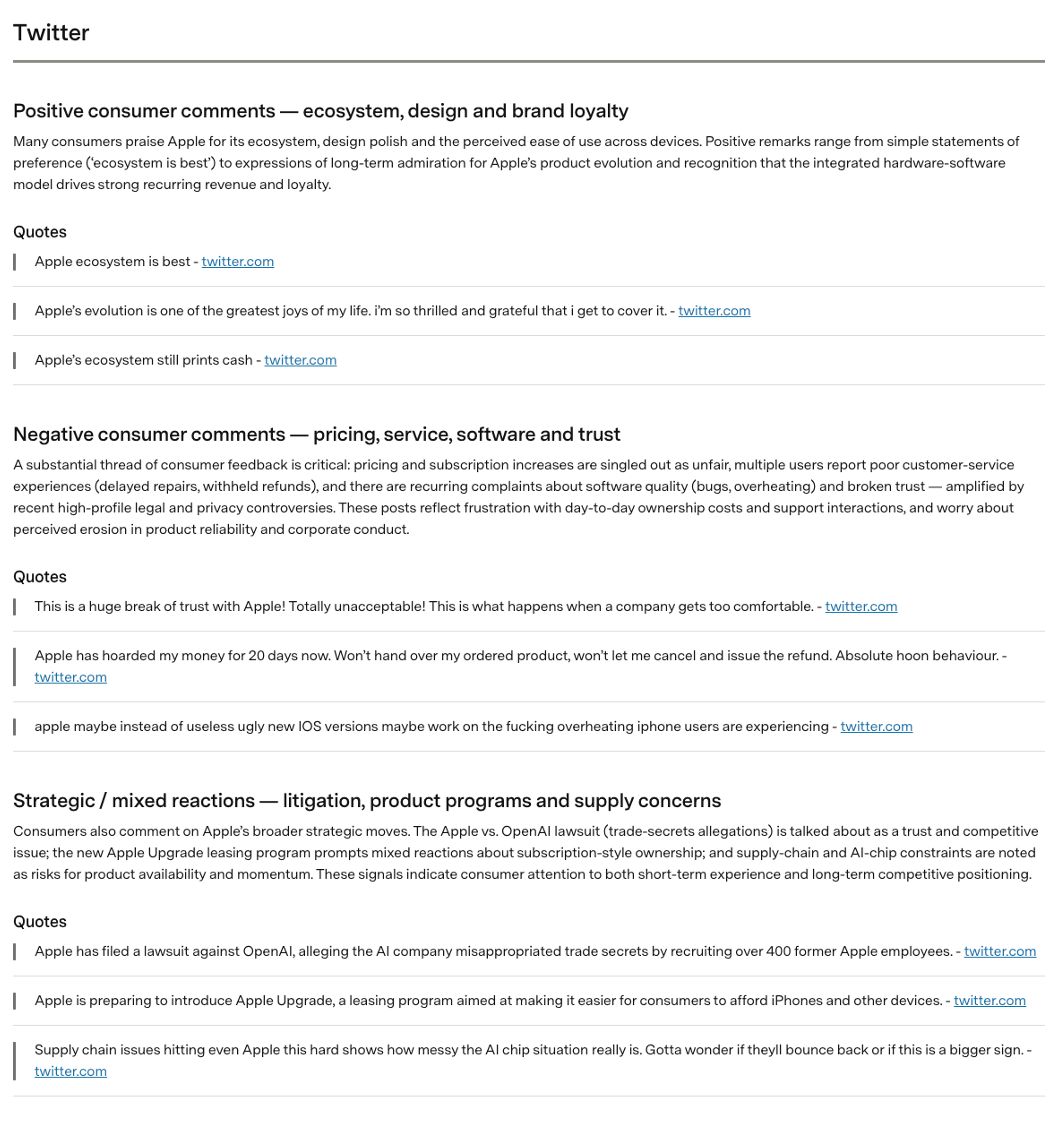
A sharp contrast defines the platform. Admiration for the ecosystem coexists with real-time outrage over pricing, service failures, and legal controversies. The brand vs. OpenAI lawsuit, supply chain concerns, and trust narratives are concentrated here more than anywhere else in the dataset. This is the platform where strategic and reputational signals surface fastest, making it the most important channel to monitor for early warning.
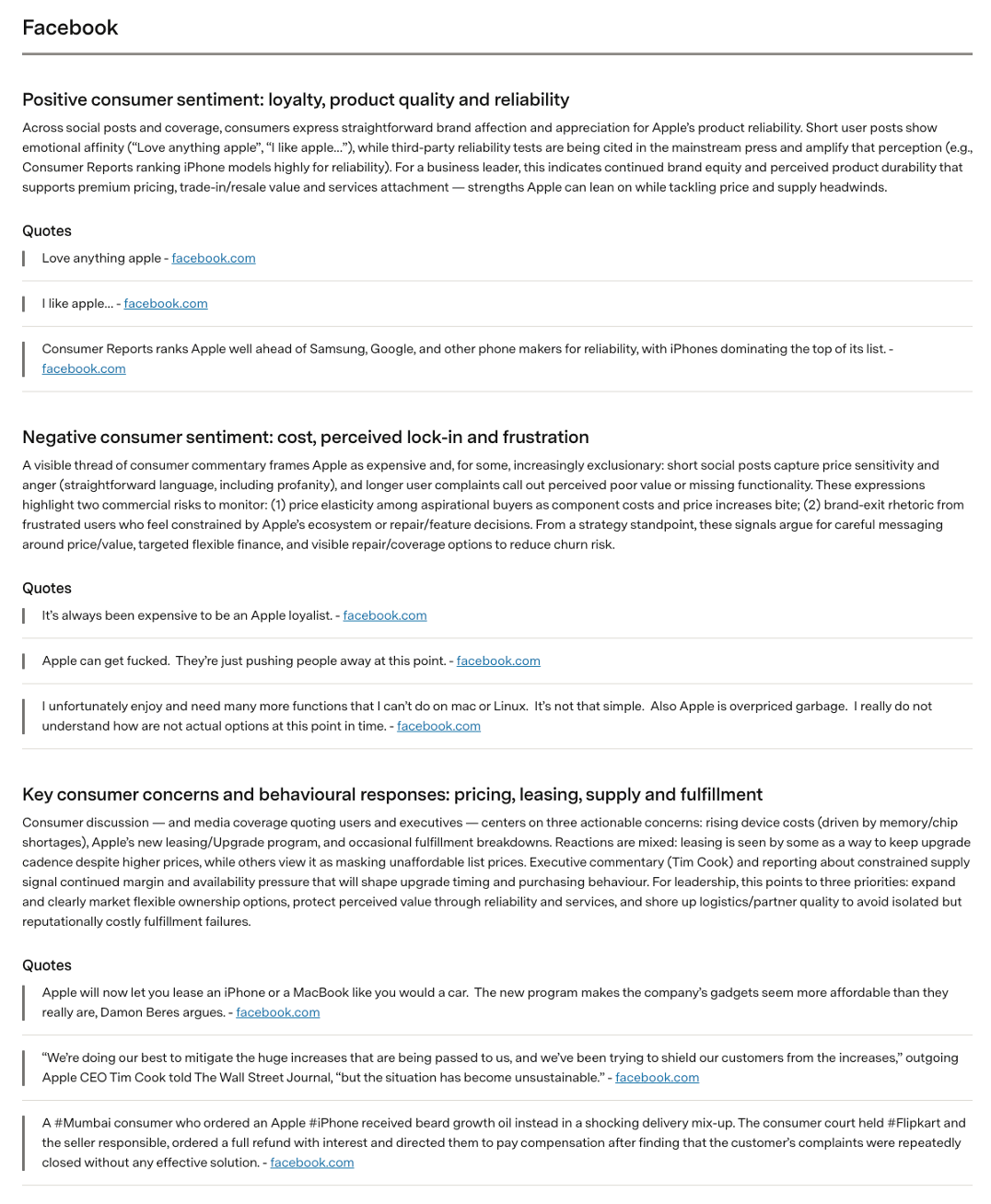
Mainstream reliability validation sits alongside blunt, price-driven anger. Third-party reliability rankings and positive consumer reports appear here, reinforcing premium perception. But leasing is framed as making devices seem more affordable rather than as a genuine value, and fulfillment failures generate pointed, highly visible consumer complaints. This platform holds both the strongest brand affinity and some of the clearest articulations of consumer frustration about cost and access.
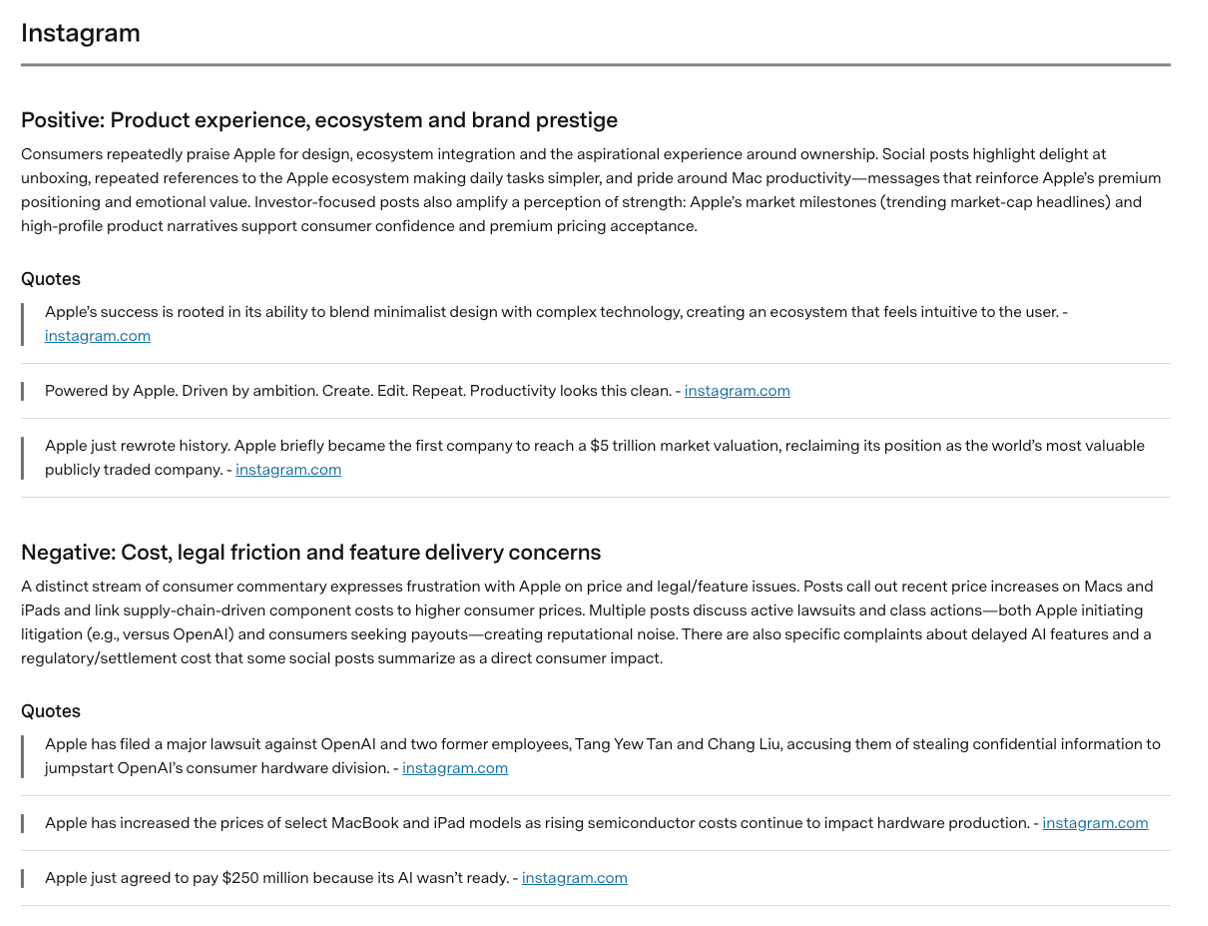
Aspirational and design-led in its framing, with investor-adjacent storytelling amplifying market milestones alongside product narratives. Ecosystem design language and the emotional experience of ownership dominate. The negative thread here is distinct: litigation headlines, price increase reporting, and AI feature delays surface through editorial and news content rather than consumer posts, meaning the negative signals on this platform are largely reputational rather than experiential.
TikTok
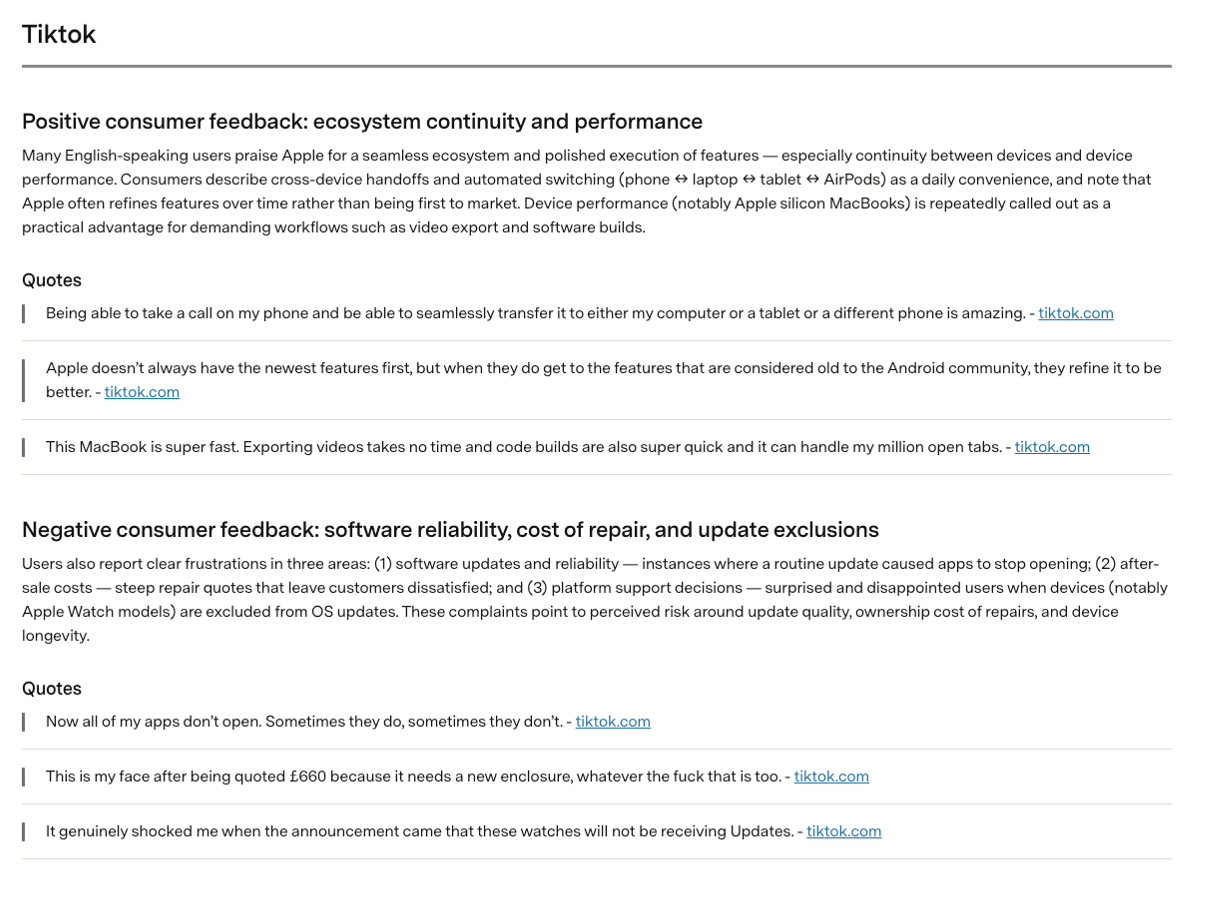
Hands-on, day-to-day utility and performance drive positive sentiment. Users praise cross-device continuity, fast hardware, and the polished execution of everyday features. The negative signals are equally concrete: update breakage, steep repair quotes, and device exclusions from OS updates generate visceral and specific reactions. TikTok is where the gap between premium brand promise and real ownership experience shows up most directly.
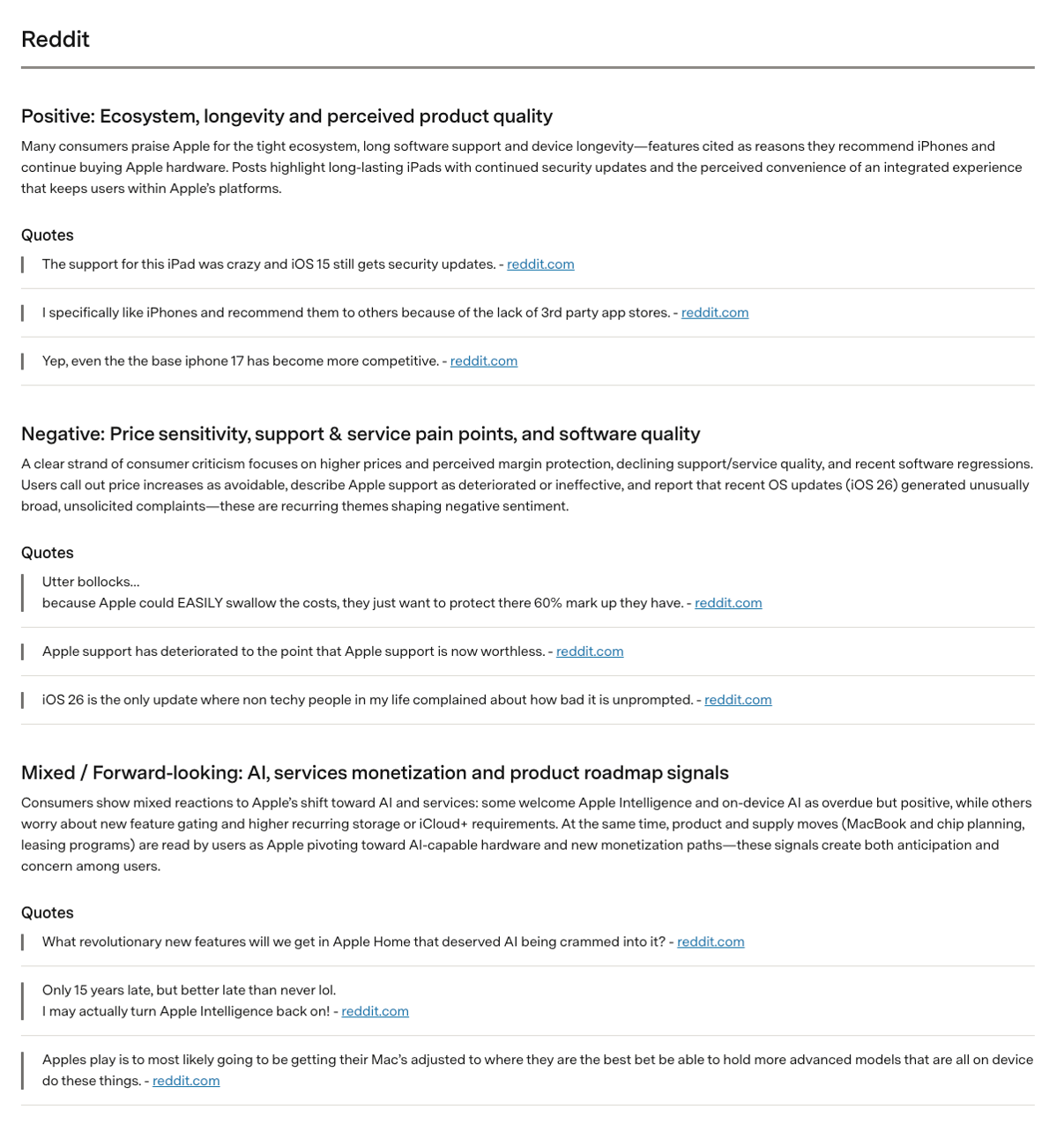
The most technically nuanced platform in the brief by a significant margin. Strong endorsement of security updates and device longevity sits alongside sharp skepticism about margins, support quality deterioration, and recent iOS regression complaints. Debates about AI features, on-device models, and monetization trade-offs indicate a technically informed audience that engages with the brand's strategic decisions as critically as its products. Reddit is where long-term brand trust is interrogated most seriously.
The actionable insights section of the brief translates those findings into specific, prioritized recommendations. One addresses the need to distinguish pitched and brand-driven coverage from organic consumer sentiment in share-of-voice tracking, because the two tell fundamentally different stories and conflating them produces misleading readings of brand health. Another establishes platform-specific alert thresholds tied to the signal patterns the brief identified, so the team is responding to emerging issues at the speed the platforms move rather than after the fact. A third focuses on building a weekly competitive and white-space briefing that maps sentiment by theme and platform, giving leadership a consistent and defensible view of where the brand stands and what to do about it.
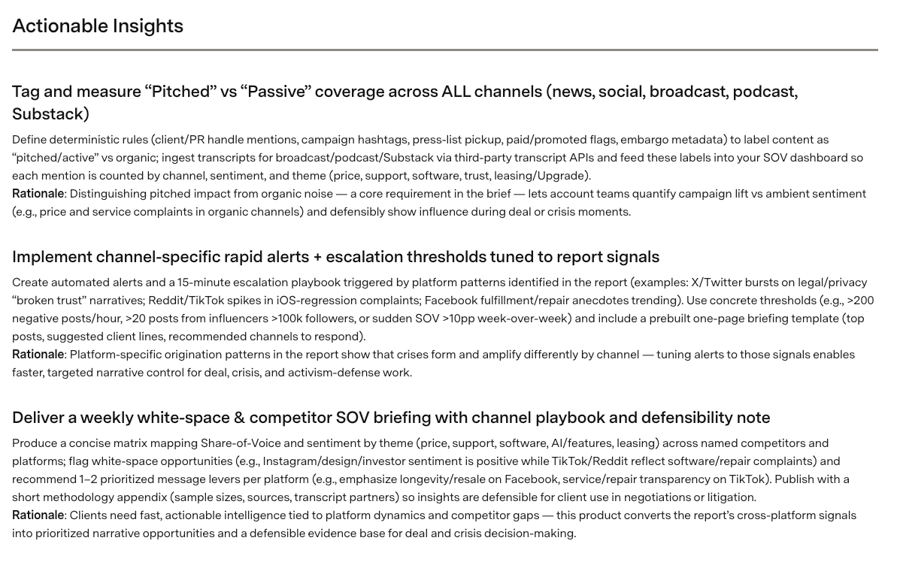
Each recommendation connects to a specific finding. That connection is what makes the brief something a team can work from, not just something they read.
You give the agent a brand name and its category context. It analyzes sentiment across the social platforms in scope, identifies the thematic and emotional patterns driving the conversation, surfaces the platform-specific differences, and delivers the complete brief to your inbox and inside Quid Terminal in about 10 minutes. Every finding comes from Quid's compliant source network, which means the posts, the themes, and the language all reflect real consumer conversation rather than model-generated assumptions about how a brand is probably perceived.
Ask Q is available inside Terminal alongside the brief for follow-up. If a finding in the overview raises a question about a specific platform, a complaint theme needs more context, or you want to understand what the data implies about a specific messaging or communications decision, Ask Q works through those questions against the same sourced data that built the brief.
If the question is less about how a specific brand is performing and more about how a broader category or topic is being discussed across platforms, the Subject Sentiment Agent covers that terrain. The two agents are designed to complement each other: brand-level intelligence and category-level intelligence, from the same platform and the same data infrastructure.
The Brand Sentiment Agent is available now inside Quid Terminal. Any brand, any category. The brief you get back in 10 minutes shows you what is actually driving how people feel about that brand across every major social platform, with the platform differences surfaced and the actionable path forward included. That is not something a dashboard can produce. It is something an agent built on real, sourced data delivers.

Q Agent briefs are built on compliant, sourced data. Every insight is traceable and verifiable inside the platform.