


Earnings call season moves fast. Eight company reports, 30 transcripts, and a leadership team that needs cross-sector themes by Friday. The Earnings Call Analysis Q Agent handles that whole job: it reads transcripts across a defined company universe and returns a structured executive brief in about two hours.

Key Takeaways
The output is a structured executive brief organized into five parts: an executive summary, sector trends, forward-looking commentary by confidence tier, company spotlights, and an Ask Q interface for follow-up questions.
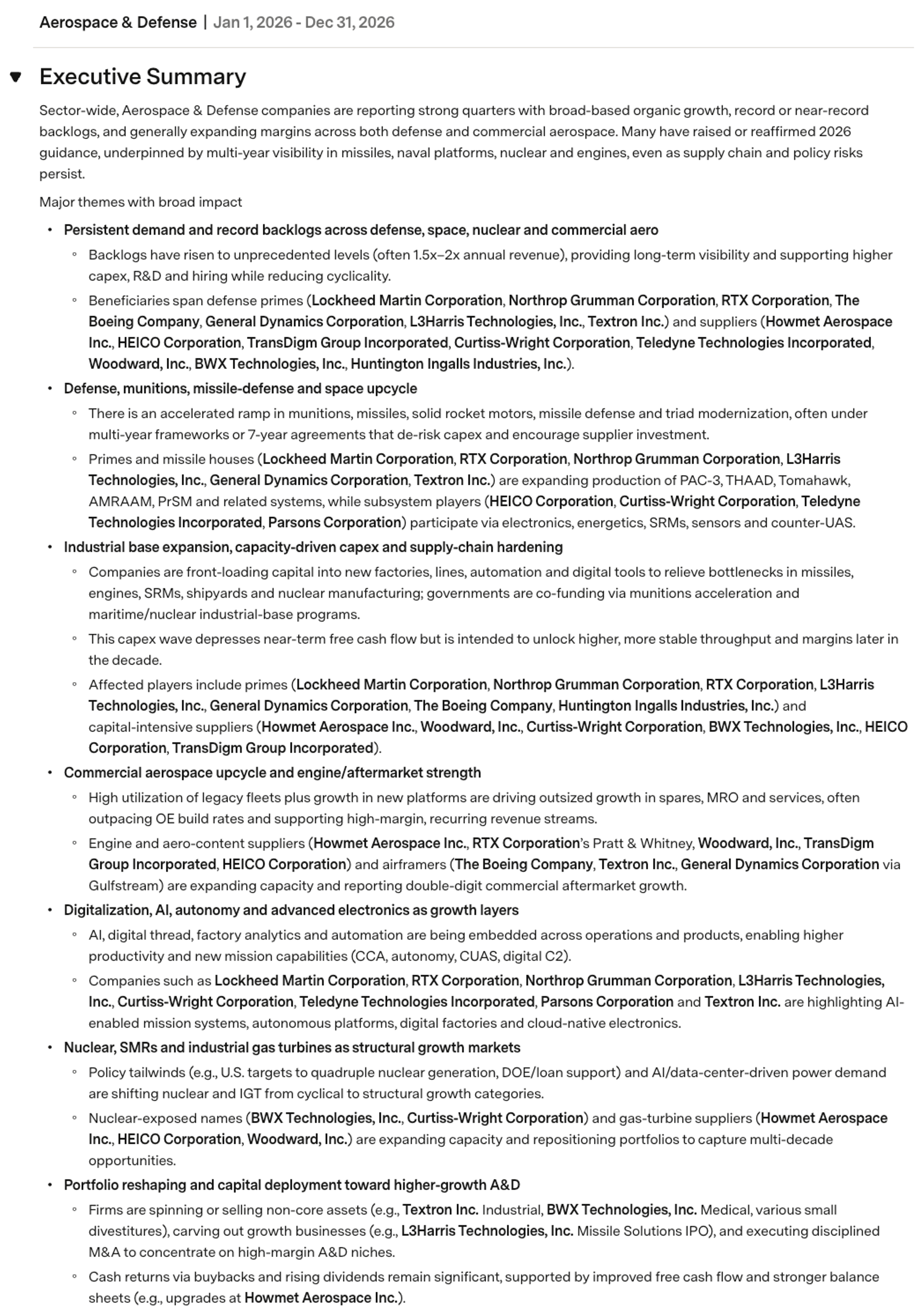
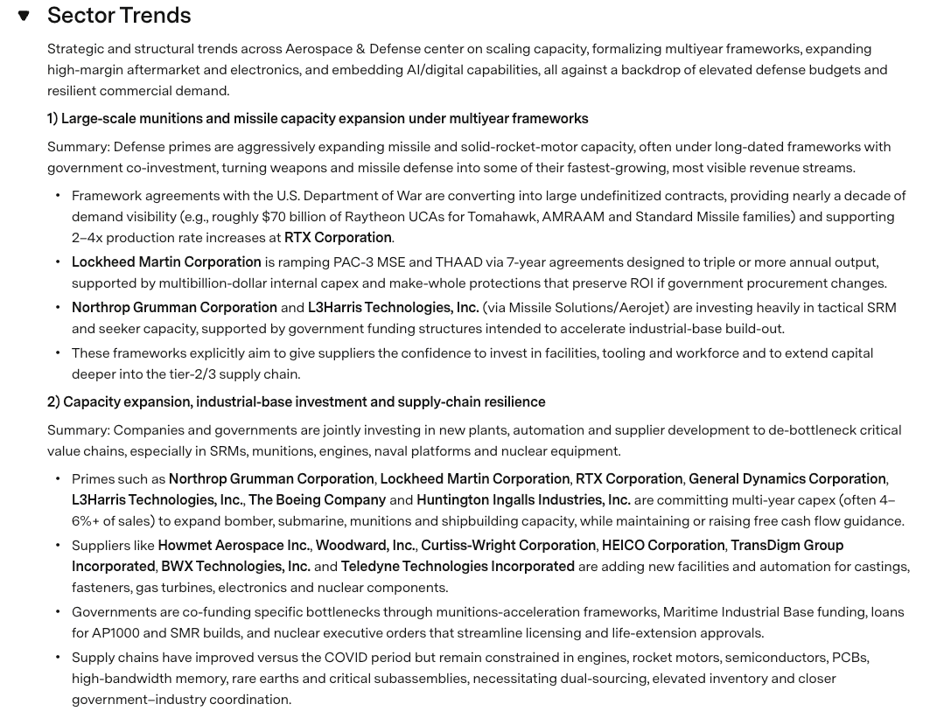
The executive summary surfaces the dominant themes across the full company set — not a list of what each company said, but patterns that cut across the universe. For a year-long look at Aerospace & Defense, that might mean record backlogs alongside supply-chain fragility, or commercial aviation recovery running parallel to defense upcycles. Both are real, and a transcript-by-transcript read wouldn't easily surface the tension between them.
Sector trends break those themes into discrete threads, each grounded in what executives actually said. Forward-looking commentary goes further: it separates confident statements from cautious ones from genuinely uncertain ones, which gives analysts something more useful than a sentiment score. A CFO's language about backlog conversion is different from their language about outer-year capex, and the agent captures that difference.
Company spotlights pull key figures and strategic framing for each organization in the brief. Financial performance numbers sit next to the narrative the executive team is constructing for investors, so a reader gets both dimensions in one place.
The analyst does. Before the agent runs, the user defines the set of companies they want to cover and the time window. That input drives everything: which transcripts get pulled, which companies appear in spotlights, which themes emerge from the cross-company read.
That flexibility matters because earnings call analysis isn't one-size-fits-all. An investor relations team tracking a competitive set needs different coverage than a strategy team mapping an industry vertical, or a consulting team preparing a client brief. The same agent handles all three, because the scope is defined at the input rather than hardcoded into the agent.
The time window can be a single quarter or a full year. A year-long analysis picks up through-lines that a quarterly read misses: which capacity investments started as cautious language and became committed spending, which supply-chain concerns shifted from forward-looking risk to live operational issue.
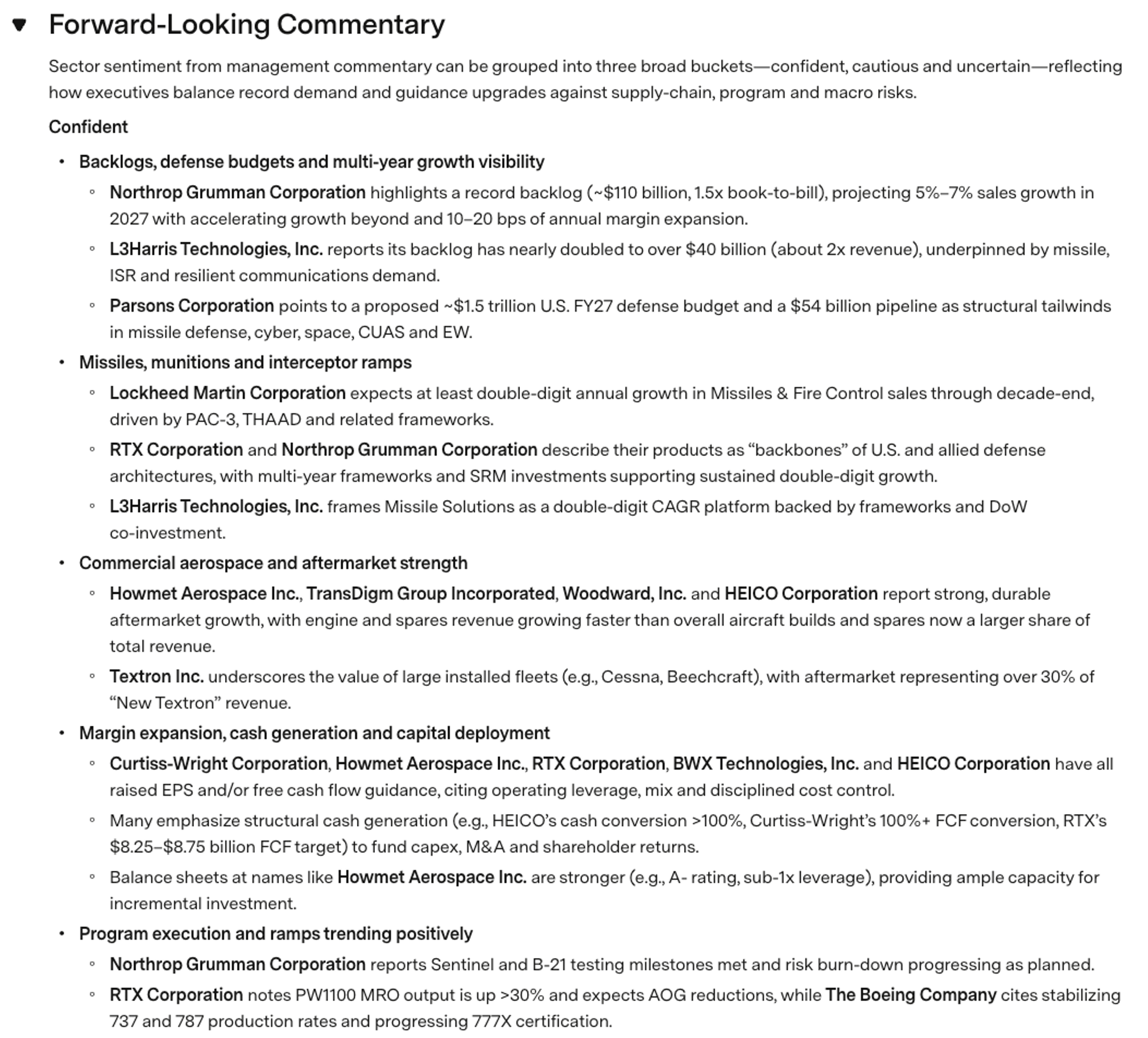
This is the part of the brief that tends to be most useful for investment and strategy decisions, because it separates what executives believe from what they're watching.
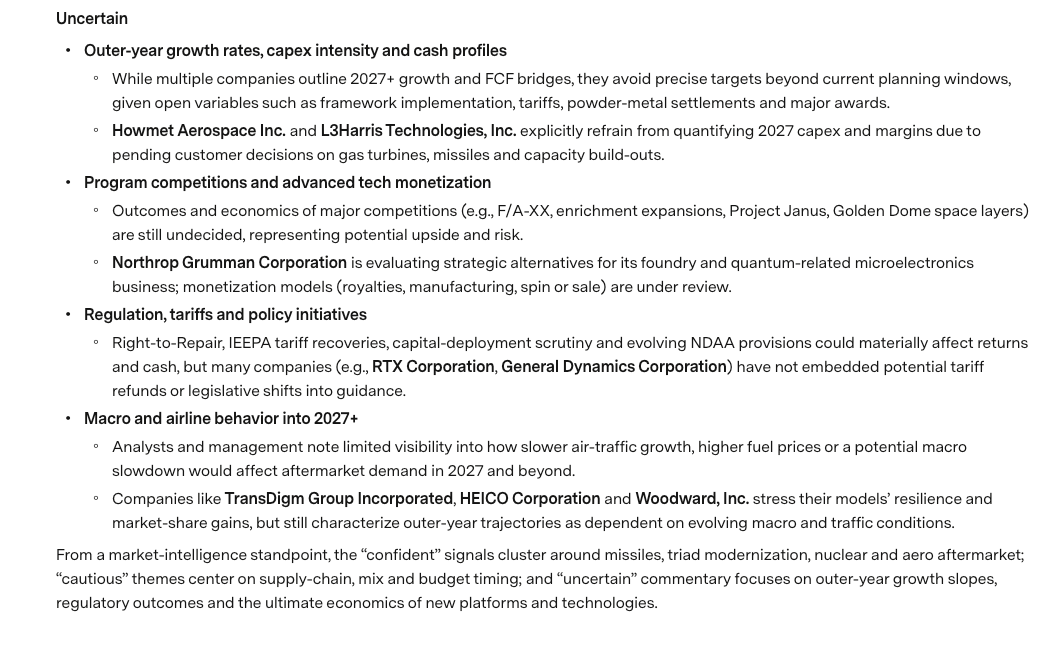
The agent categorizes forward-looking statements into three tiers. Confident commentary covers things executives are committing to: backlog conversion rates, contracted revenue, capacity expansions already underway. Cautious commentary covers things they're monitoring: margin headwinds from program mix, supply-chain fragility, budget timing uncertainty. Uncertain commentary covers genuinely open questions: outer-year growth trajectories, program competition outcomes, macro impacts on downstream customers.
That three-way split is more useful than a single sentiment reading, because it tells an analyst not just what executives think but how firmly they think it. A CFO who is confident about near-term revenue but uncertain about two-year capex plans is telling you something specific about where their visibility ends.
Each spotlight in the brief pulls two things together: the financial performance figures from the transcript and the strategic narrative the executive team is building.
Financial performance covers the key metrics executives cited: revenue figures, growth rates, margins, backlog numbers, cash flow. Strategic narrative covers the framing executives are using with investors: what they're prioritizing, what they're hedging, which markets they're positioning toward, which capabilities they're building.
Those two elements usually tell different stories in isolation. Revenue growth without the strategic narrative misses what management is signaling about future positioning. The narrative without the numbers misses whether the business can execute on what leadership is saying. Together they give a reader a complete read on where each company stands and where it's headed.
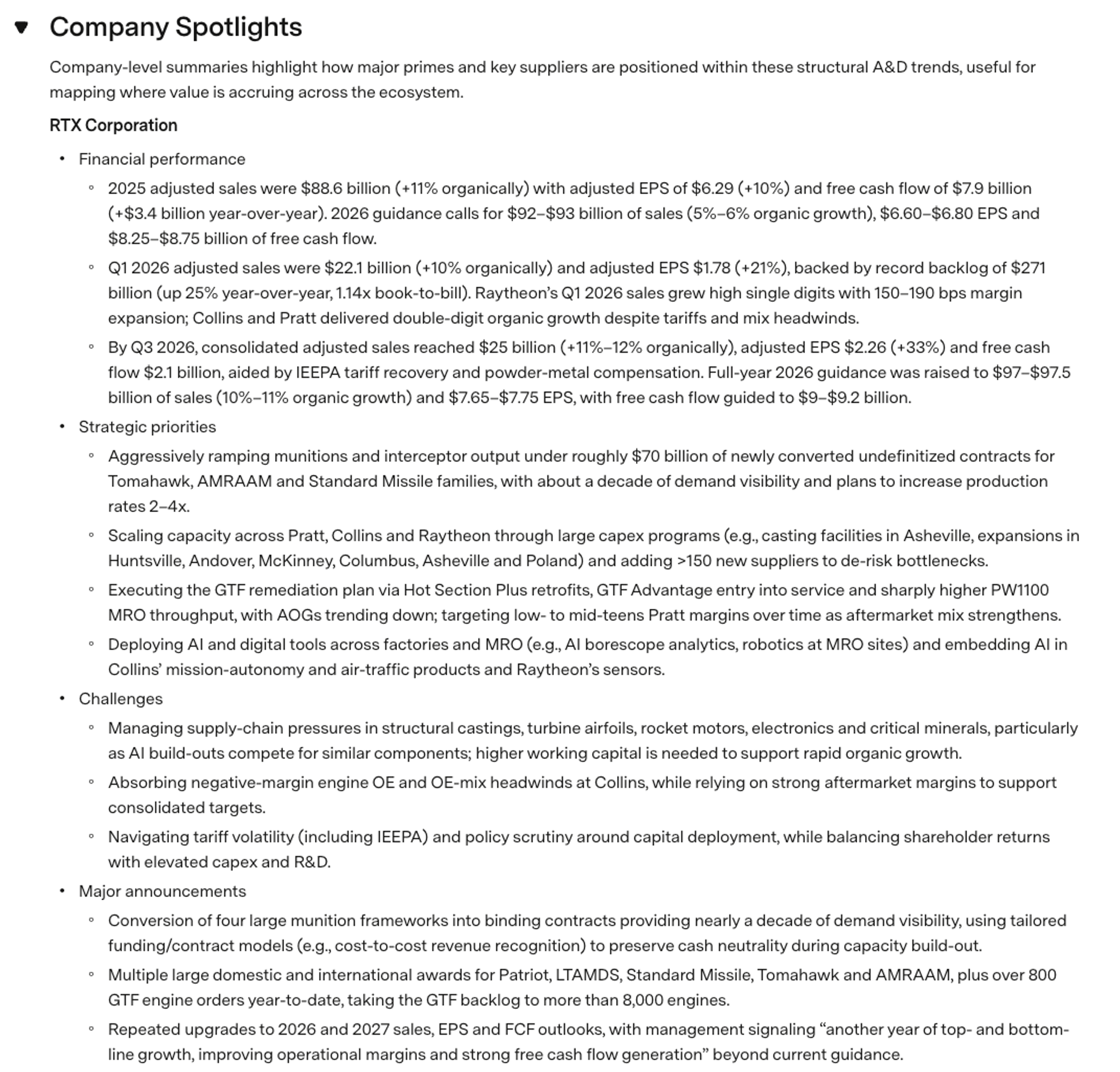
For a set like Aerospace & Defense, spotlights might cover the shift from commercial aviation recovery to defense upcycle at RTX, Boeing's restructuring trajectory, or how smaller suppliers like HEICO and Howmet are outperforming their primes on margin.
The manual process for transcript analysis runs something like this: download each transcript, read through it for relevant passages, note the figures, write up a summary, then try to find the cross-company patterns in what you've assembled. For eight companies over a year, that's a multi-day project before any synthesis begins.
The agent compresses that into a single brief. The figures are pulled automatically. The themes are identified across the full corpus rather than assembled from individual summaries. The forward-looking language is categorized by confidence tier rather than left for the analyst to interpret from tone.
What remains is judgment: which themes matter for the specific decision being made, which company signals are worth following up on, what questions the brief surfaces that need a primary source answer. That's what Ask Q handles — conversational follow-up questions directly against the brief's underlying data.
The Earnings Call Analysis Q Agent handles the extraction, synthesis, and structuring of earnings call data across a custom company universe, so the analyst can spend their time on interpretation and decision-making rather than transcript review. The brief it produces covers sector themes, confidence-tiered forward-looking commentary, and individual company spotlights, all from a defined scope the user sets at the input.
For teams that track a competitive set, cover an industry vertical, or need to synthesize executive language at scale, the agent turns what would otherwise be a manual, multi-day workstream into a two-hour brief.

What industries does the Earnings Call Analysis Agent cover?
The agent runs on any industry where earnings call transcripts are available. The user defines the company universe at the input, so coverage follows the scope the analyst sets: a sector, a competitive peer group, a custom mix of companies across verticals.
How current is the transcript data?
Transcripts are pulled from Quid's data infrastructure, which covers public company earnings calls. The date range is set by the user, so analysts can pull a single quarter, a full year, or any custom window.
Can the brief be run on a single company?
The agent is designed for a company set rather than a single organization — the cross-company read is where most of the analytical value comes from. For a single-company deep dive, the Ask Q interface lets analysts query the brief at a company-specific level once the broader analysis is complete.
How does forward-looking commentary differ from sentiment analysis?
Sentiment analysis returns a directional score: positive, negative, neutral. Forward-looking commentary in this brief categorizes statements by executive confidence level — certain, cautious, uncertain — which captures the structure of what management is saying rather than just its tone. A CFO can be highly positive in sentiment and highly uncertain about their guidance range simultaneously; the three-tier split captures that distinction.
What does Ask Q let analysts do?
Ask Q is a conversational interface that lets analysts query the brief directly. After the initial analysis runs, a user can ask follow-up questions — about a specific company, a particular theme, or a metric cited in a spotlight — and get answers drawn from the underlying transcript data rather than a general language model.