

.png?width=1252&height=362&name=QUID_Logo_WHITE%20(2).png)
.png?width=1380&name=Q%20Agent%20Spotlight%20(16).png "<span id=\"hs_cos_wrapper_name\" class=\"hs_cos_wrapper hs_cos_wrapper_meta_field hs_cos_wrapper_type_text\" style=\"\" data-hs-cos-general-type=\"meta_field\" data-hs-cos-type=\"text\" >Q Agent Spotlight: The SWOT Analysis Agent</span>")
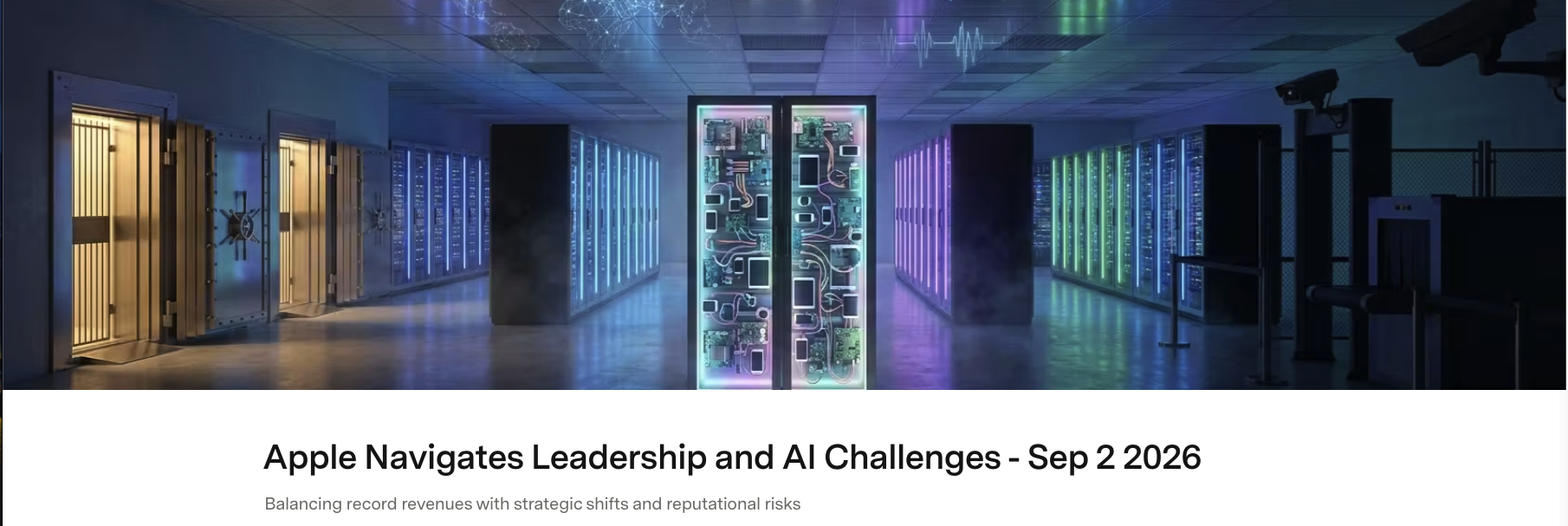
The SWOT framework has been a fixture of strategic planning for decades, and for good reason: organizing intelligence into strengths, weaknesses, opportunities, and threats is a useful way to make sense of where a brand or business stands and what it should be paying attention to. The problem is not the framework. It is what typically goes into it. Most SWOT analyses are built from internal assumptions, existing beliefs, and the outputs of workshops where the same team that manages the brand also assesses it. The strengths reflect what leadership is proud of. The weaknesses are the ones everyone already knows about. The opportunities align with whatever the organization is already planning. The threats are the competitors that have already been in the conversation for a year. The output is structured, but it is not grounded in what the world outside the organization is actually saying.

The SWOT Analysis Agent was built to change the inputs. It generates a structured SWOT for any brand, company, product, industry, or strategic initiative and grounds every dimension in real conversation, media, and market signals rather than internal assumptions. Strengths are documented because the market is genuinely acknowledging them. Weaknesses surface because consumers, analysts, and journalists are naming them, often with significant specificity and visibility. Opportunities are identified because demand signals and competitive gaps in the data point to where room actually exists. Threats are flagged because the patterns that precede them are already visible in conversation before they escalate into crises. The result is a brief that a strategy team, communications function, or agency can bring into a planning session, a leadership briefing, a competitive assessment, or a pre-launch pressure test with confidence that the intelligence it contains reflects the actual strategic environment.
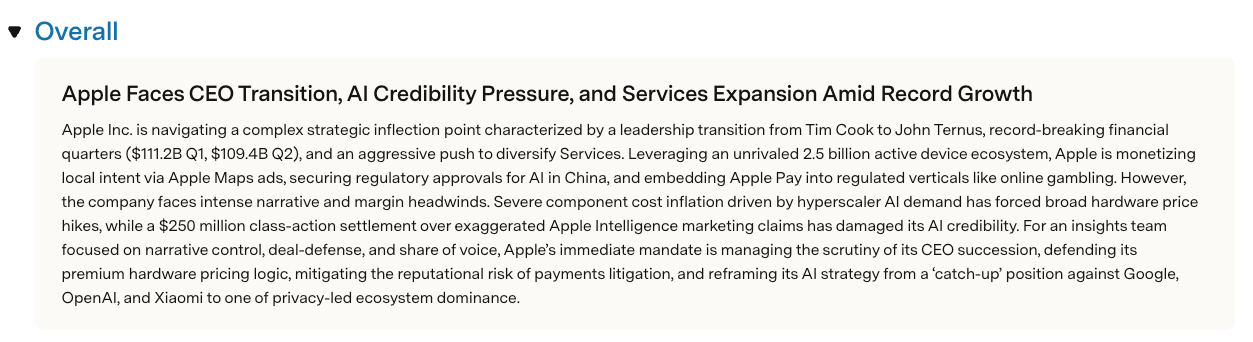
The brief opens with an overall summary that frames the strategic context before any of the four SWOT dimensions are developed. This is not background filler. It is the lens that shapes how the rest of the brief should be read, and the agent constructs it from what the signals actually show rather than from a standard company description.
In a brief run on a major technology company at a significant strategic inflection point, that summary captured a CEO transition, back-to-back record financial quarters, an aggressive push to diversify revenue into regulated Services verticals, and simultaneous pressure from a $250 million class-action settlement over AI marketing claims, hardware margin compression driven by hyperscaler demand for the same memory components the brand itself requires, and broad consumer frustration with price increases hitting the hardware lineup all at once. Reading that summary, a strategy team immediately understands not just where the company stands but what forces are in tension and why this particular moment in the company's history requires careful navigation rather than business as usual.
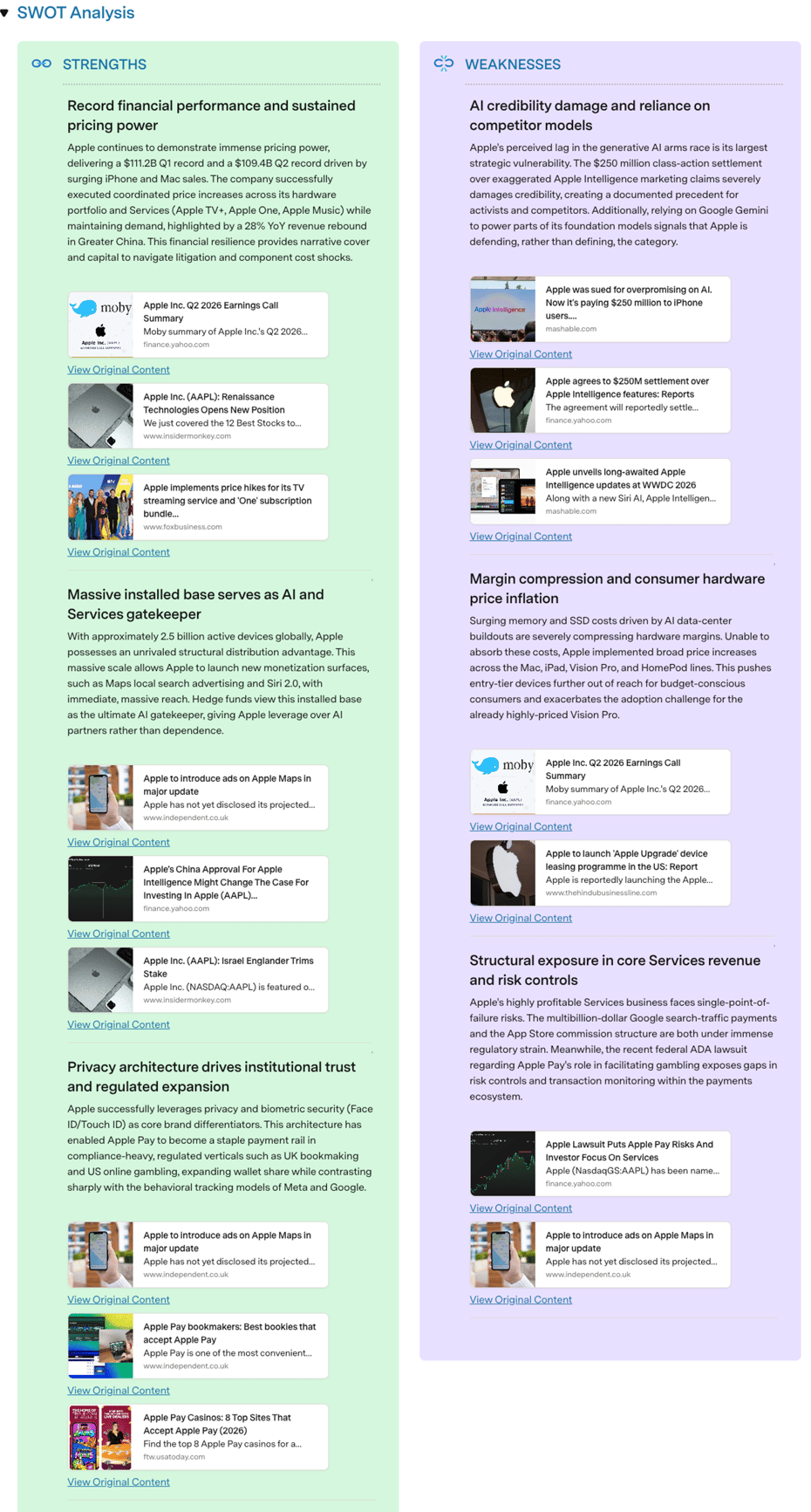
One of the most valuable things the SWOT Analysis Agent does is distinguish between capabilities a company believes it has and capabilities that external signals confirm it genuinely possesses. Those two things are not always the same, and strategy built on the former tends to be more fragile than strategy built on the latter.
In the brief, one of the primary strengths documented is an installed base of approximately 2.5 billion active devices that functions as a structural distribution advantage no competitor can meaningfully replicate on any realistic timeline. The brief goes further than stating the number, tracing the mechanism through which it creates strategic value: that installed base enables immediate monetization of new surfaces, including local search advertising and voice assistant integration, at a reach and cost structure that competitors cannot match without the customer acquisition investment that building their own base would require. Hedge funds cited in the brief describe this as the ultimate AI gatekeeper position, a brand that AI partners need access to rather than one that depends on them. That framing did not originate in an internal strategy document. It comes from the market observing the structural advantage and putting it in writing.
Privacy architecture as a driver of institutional trust is the second strength the brief documents, and again it is grounded in what that capability has actually enabled rather than what the brand claims it represents. The brief traces how biometric security infrastructure has opened access to compliance-heavy verticals, with regulatory approvals in specific markets and expansion into areas like regulated payments that competitors relying on behavioral tracking models cannot enter. The strength is specific, sourced, and tied to demonstrable outcomes rather than asserted as a brand value.
This is the section where grounding a SWOT in real external signals produces the most distinctly different output from the conventional approach. Internal teams are typically the last to fully acknowledge organizational weaknesses, and the signals that precede and confirm them are often clearly visible in consumer conversation, analyst commentary, and media coverage long before they surface in planning documents or leadership reviews. The agent surfaces those signals with the evidence attached.
The brief identified structural exposure in the core Services revenue model as a significant weakness, not as a future risk to be monitored but as a current condition already playing out. The brand's most profitable segment carries single-point-of-failure dynamics: the multibillion-dollar default search arrangement and App Store commission structure are both under simultaneous regulatory pressure, and the brief documents this through sourced reporting on the specific legal and competitive challenges in play rather than framing it as a theoretical concern.
Hardware margin compression is documented with equal specificity and grounding. Surging memory and SSD costs driven by AI data-center buildouts have severely compressed margins, and the brand's response, broad price increases across the hardware lineup, has created downstream effects that the brief traces through consumer sentiment and analyst coverage: entry-tier devices moving out of reach for budget-conscious buyers, the adoption challenge for higher-end products becoming more difficult to overcome, and a pricing sensitivity narrative in consumer conversation that is already visible and growing. This is a structural problem already in motion, not a scenario being modeled.
The Opportunities section is where the agent's grounding in real signals produces a different kind of intelligence than strategic planning workshops typically surface. Rather than identifying what would be nice to pursue or what aligns with existing plans, it identifies where signals in conversation, competitive positioning, and market behavior indicate that real room to move exists right now and why the timing makes it actionable.
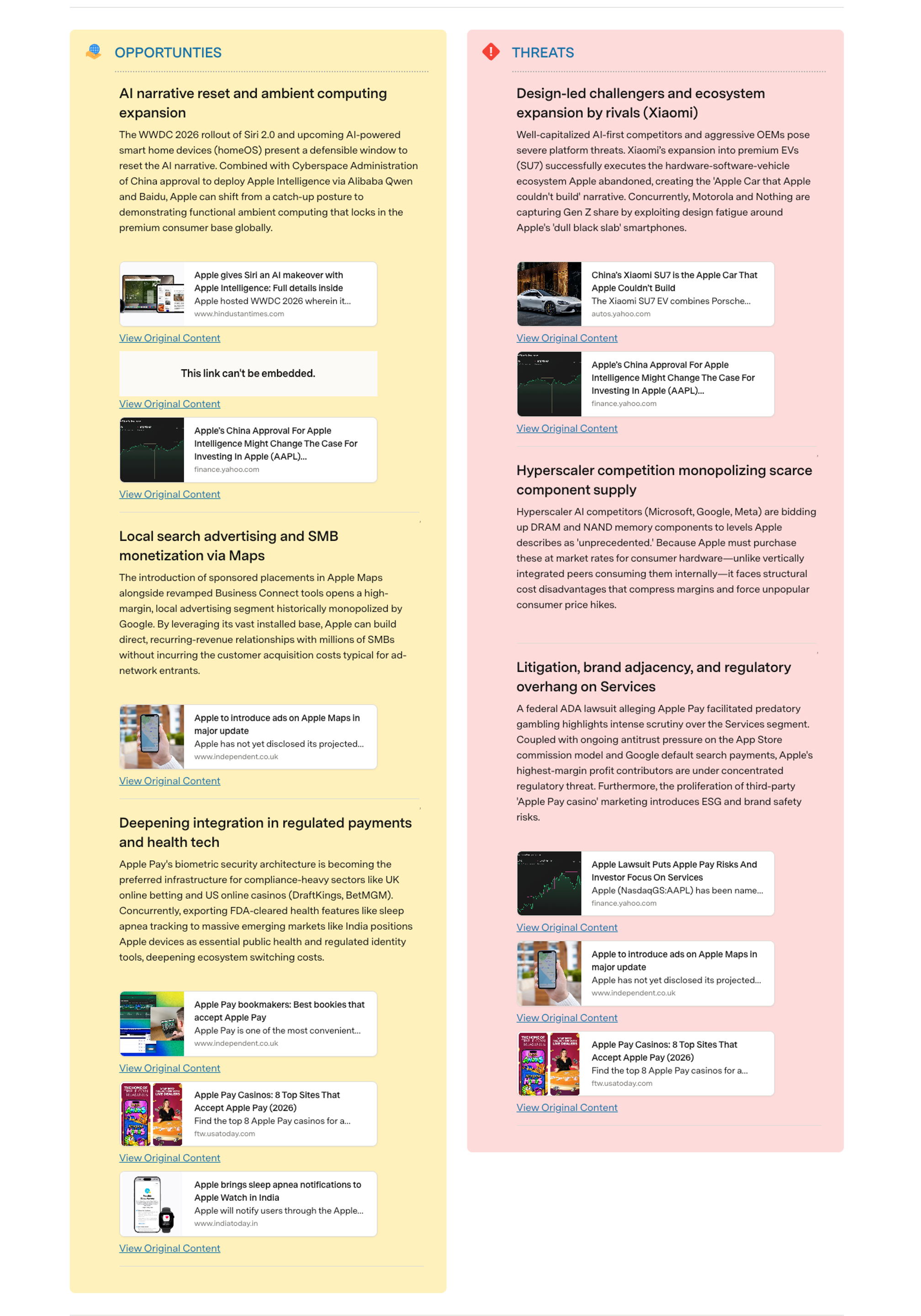
The brief identified the upcoming rollout of AI-powered capabilities and smart home devices as a genuine window to reset an AI narrative that the class-action settlement had damaged, particularly given regulatory approval to deploy AI capabilities in China through local partners. The opportunity is specific and time-bound rather than aspirational: the capability is arriving, the distribution infrastructure is in place, and the window to shift from a catch-up posture to demonstrating functional ambient computing that reinforces the premium consumer relationship is open and identifiable.
Local search advertising and small business monetization through Maps represents a second opportunity the brief identifies as high-margin and historically monopolized by a major competitor. By introducing sponsored placements alongside revamped small business tools, the brand can build direct revenue relationships with millions of businesses without incurring the customer acquisition costs that ad networks require, because the installed base and the local intent signal through Maps already exist. The brief makes the mechanism clear rather than simply noting that an opportunity exists.
The Threats section is where the real-time grounding of the agent produces intelligence that makes the difference between strategy that anticipates and strategy that reacts. Threats that are identified after they have fully materialized are not useful for planning. The value lies in identifying the early signal patterns while there is still time to respond effectively.
The brief flagged design-led challengers and ecosystem expansion by rivals as a threat that is already active and generating narrative momentum. A major competitor has executed on a hardware-software-vehicle ecosystem integration that media is now actively comparing to what the brand under analysis did not build, with the comparison appearing in enthusiast media as a sustained narrative rather than a single story. Concurrently, other competitors are capturing younger consumer segments by leaning into design aesthetics that contrast with the incumbent's hero product, exploiting what commentary describes as design fatigue. These are not hypothetical future risks. They are narratives already running in the conversation that the brief surfaces with specific sourced examples.
Hyperscaler competition for the same memory components the brand needs for its hardware is documented as a structural threat creating margin pressure from the supply side, with the consequence that the brand is being forced into consumer price increases at a moment when pricing sensitivity is already a dominant theme in consumer conversation. And litigation, brand adjacency, and regulatory pressure on Services are documented as a third cluster, with specific legal proceedings, ongoing antitrust challenges, and the proliferation of third-party gambling and casino content attaching to a payments brand creating ESG and reputational exposure that requires active management rather than passive monitoring.
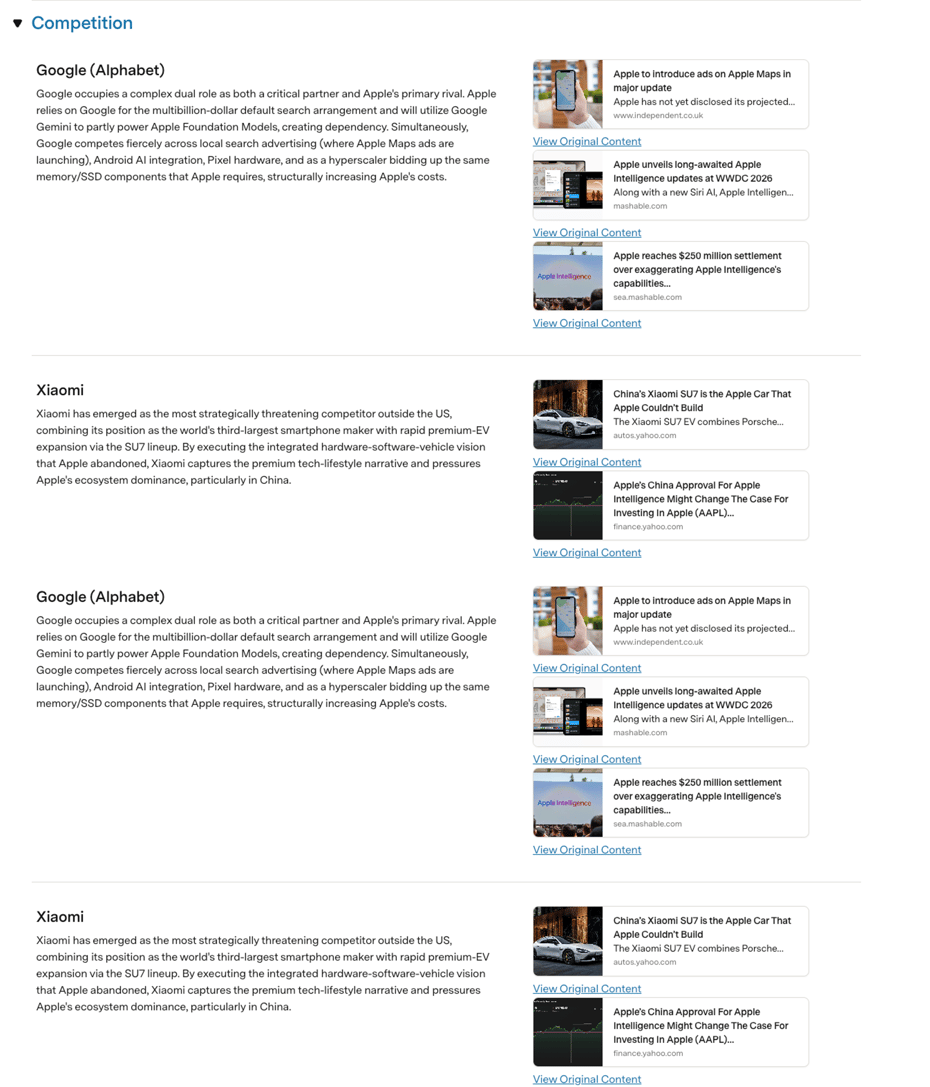
Beyond the four SWOT dimensions, the brief includes a dedicated Competition section that maps the specific strategic posture of primary rivals. This goes further than naming who the competitors are. It documents how each one is creating pressure, which mechanisms are driving that pressure, and where those mechanisms are most clearly visible in the data. In the brief, this means a specific accounting of how one major rival simultaneously functions as a critical partner and a primary competitive threat, leveraging dependencies to create structural cost disadvantages while competing fiercely across multiple surfaces. It means a detailed read of how a hardware challenger is executing on an ecosystem vision that directly challenges the incumbent's narrative in ways that are gaining traction in media coverage and consumer conversation. Understanding competitors at that level of specificity is what separates competitive intelligence from a list of names.
That closing section reflects an important design principle of the brief. Analysis that stops at diagnosis leaves teams with the work of determining what to do about it, which is where internal biases and assumptions tend to reassert themselves. The SWOT Analysis Agent brief connects the findings to the actions, so the intelligence has somewhere to go.
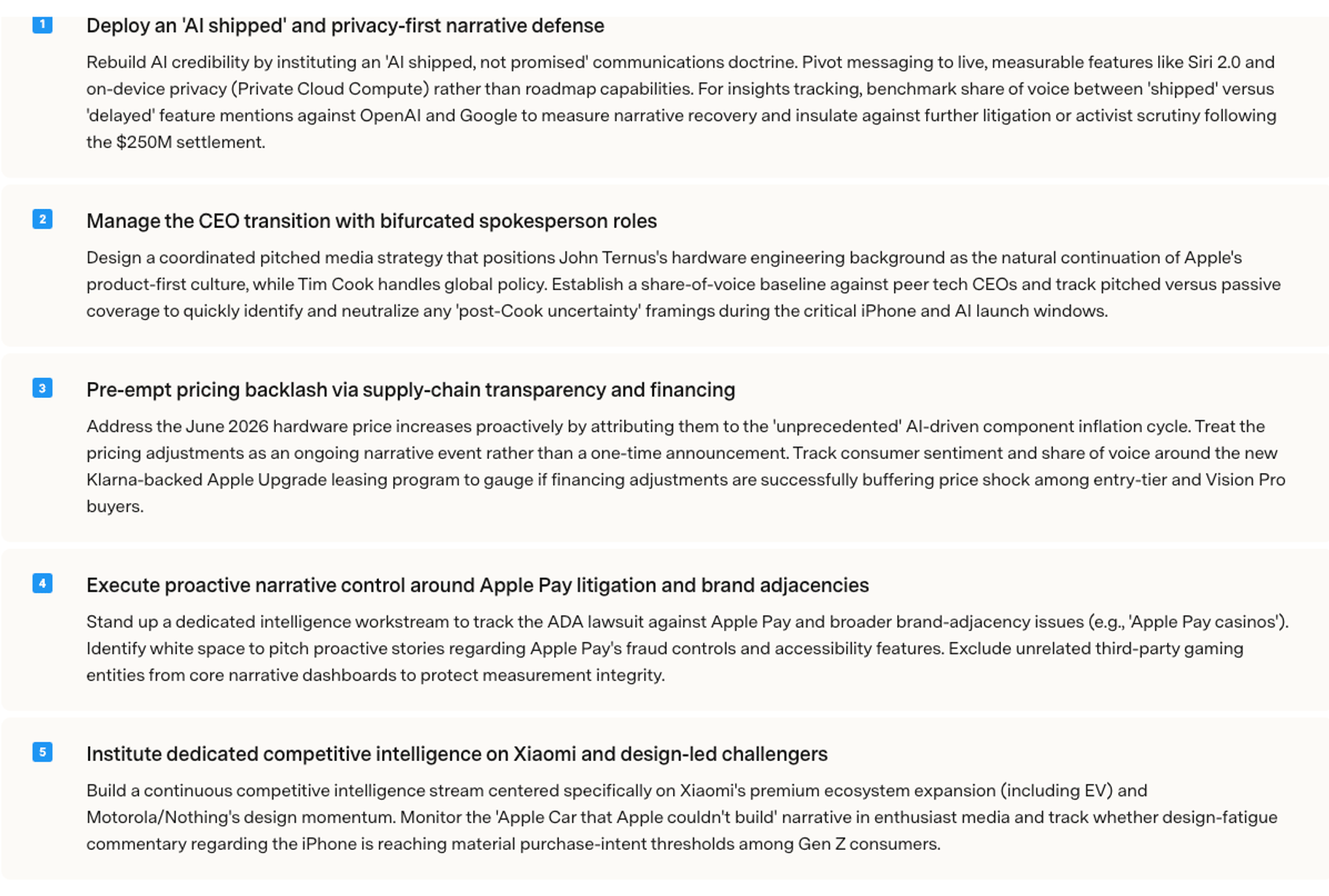
The brief closes with a set of prioritized, specific recommendations that connect directly to what the SWOT and competition analysis found. Each recommendation is tied to a specific finding from the brief and comes with the operational reasoning for why it is the right response given what the data shows. In the brief, those recommendations address rebuilding AI credibility through a privacy-first and capability-led narrative, managing a CEO transition through a coordinated spokesperson strategy that accounts for the different audiences each leader speaks to, pre-empting pricing backlash through supply-chain transparency rather than reactive messaging, executing proactive narrative control around the payments litigation before it expands into broader brand adjacency risk, and building a dedicated competitive intelligence stream focused specifically on design-led challengers who are gaining ground in the consumer conversation.
This section reflects an important design principle of the brief. Analysis that stops at diagnosis leaves teams to determine the implications on their own, which is precisely where internal assumptions tend to reassert themselves and where the grounded intelligence the agent produced gets diluted. The SWOT Analysis Agent connects the findings to the actions, so the intelligence has somewhere to go and the team has a clear starting point for what to do next.
A SWOT built on internal assumptions tends to confirm what a team already believes about itself and its environment. A SWOT built on what the market is actually saying tends to surface the things the team has not yet fully reckoned with, and to do so with evidence that makes them harder to dismiss. The difference between those two outputs is often the difference between planning that is optimized for the situation as it is and planning that is optimized for the situation as leadership prefers to see it.
Because the SWOT Analysis Agent grounds every dimension in sourced external signals, the resulting brief is not just more accurate. It is more defensible. A strength that can be supported with what analysts, investors, and media are saying about it is a stronger brief asset than one that lives primarily in brand positioning documents. A weakness that is already documented in the public record cannot be set aside as speculative. A threat that is already visible in conversation has a different weight in a planning session than one that a team hypothesized. That grounding is what makes the brief useful in a board room, credible as the basis for consequential decisions, and productive as a starting point rather than the end of a conversation.
For leadership and strategy teams, the brief produces the kind of externally grounded strategic view that internal planning processes rarely generate on their own, in a form that is structured and sourced enough to present rather than requiring additional synthesis or interpretation.
For brand and communications teams, the weaknesses and threats in the brief are the signals that are already in the public record, giving teams what they need to respond to narratives that are forming rather than reacting to ones that have already hardened.
For competitive intelligence functions, the combination of a grounded SWOT and a dedicated competition section in a single brief gives analysts a structured, evidence-based starting point for deeper investigation.
For agencies preparing for a new client engagement or building a strategic pitch, the brief provides a fast, sourced read of the client's actual strategic position that changes the quality and specificity of the first conversation.
For anyone pressure-testing a launch, an investment, or a response to an emerging situation, the agent replaces internal assumption-checking with a review of what the real signals are already showing.
You give the agent a brand, company, product, industry, or strategic initiative. It analyzes the conversation, media, and market signals surrounding that subject, organizes the intelligence into the four SWOT dimensions alongside competition profiling and prioritized recommendations, and delivers the complete brief to your inbox and inside Quid Terminal. Every finding is sourced, which means it is traceable and verifiable. Ask Q is available inside Terminal for any follow-up, running against the same data that built the brief.
The SWOT Analysis Agent is available now inside Quid Terminal. Any brand, company, product, industry, or initiative. The brief that comes back is grounded in what the market is actually saying about the subject, and that turns out to be a meaningfully different starting point for strategy than what most planning begins with.

Q Agent briefs are built on compliant, sourced data. Every insight is traceable and verifiable inside the platform.