

.png?width=1252&height=362&name=QUID_Logo_WHITE%20(2).png)
.png?width=1380&name=template%20big%20title%20(1).png "<span id=\"hs_cos_wrapper_name\" class=\"hs_cos_wrapper hs_cos_wrapper_meta_field hs_cos_wrapper_type_text\" style=\"\" data-hs-cos-general-type=\"meta_field\" data-hs-cos-type=\"text\" >Search, Social, and Community: The Three-Layer Signal Stack Retail Needs in 2026</span>")
TikTok can tell you what is trending. Google can tell you what people are searching. Neither tells you why a trend matters, who is driving it, or whether it represents a fleeting moment or a durable shift in consumer behavior.
That distinction matters more than ever for apparel brands. In a category where trends emerge daily and consumer attention is fragmented across platforms, knowing that a hashtag exists is no longer enough.
Brands need to understand what sits underneath the trend. Using Quid's TikTok Trend Leaderboard alongside behavioral and audience signals reveals a deeper story about how consumers are discovering, evaluating, and buying fashion in 2026.
The examples highlighted in this article represent only a small slice of the analysis available through Quid's Trend Leaderboard and connected consumer intelligence platform. For demonstration purposes, we focus on a handful of apparel and accessories trends surfaced from TikTok data.
We help brands explore hundreds of related signals, audience segments, behavioral patterns, platform-specific conversations, and cross-channel connections to build a much more complete view of emerging consumer behavior.
A TikTok trend list is useful, but a TikTok trend list without context is a leaderboard. The difference is significant.
Consider several of the leading Apparel & Accessories trends surfaced through Quid's Trend Leaderboard.
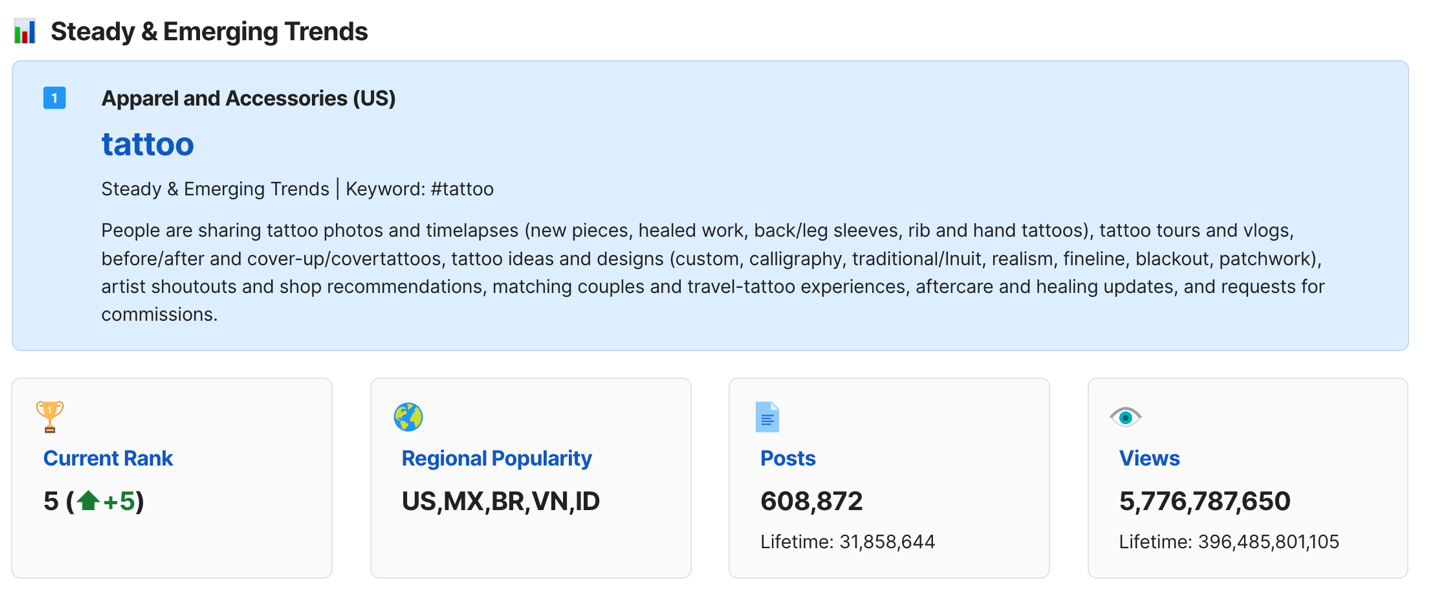
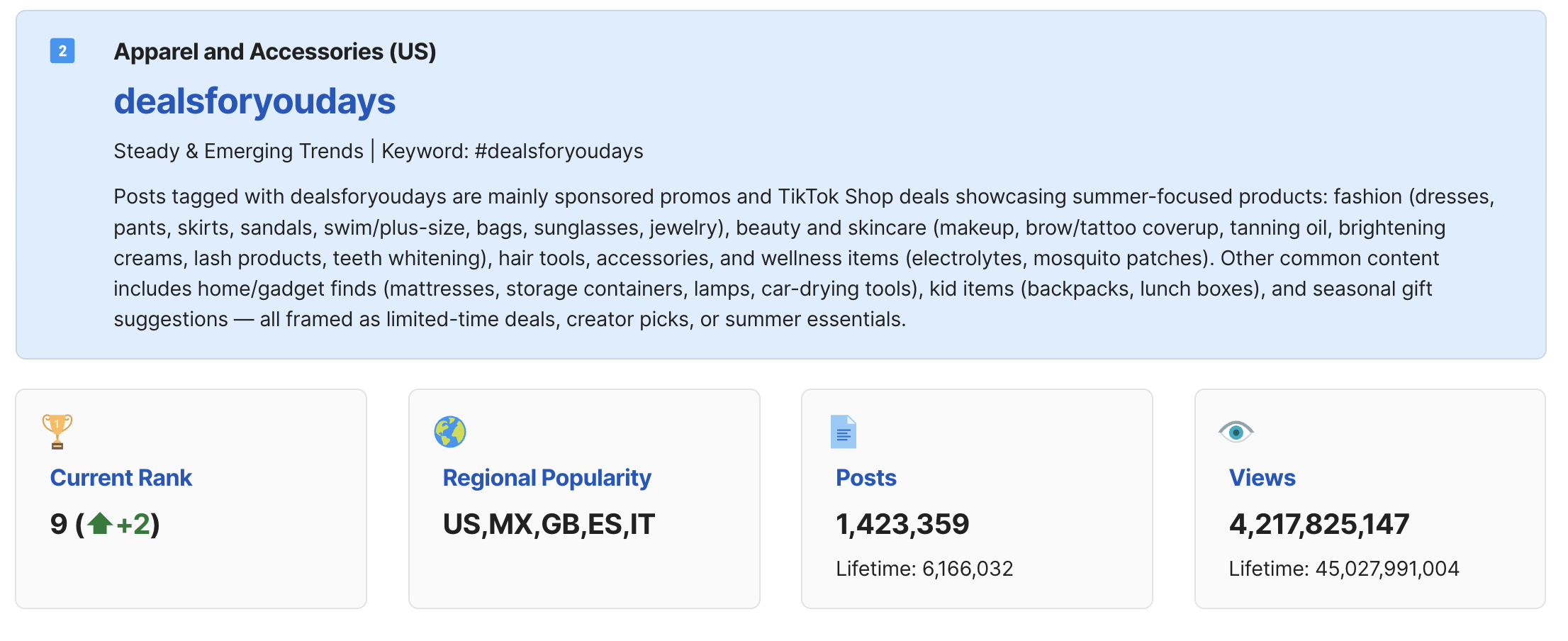
At first glance, the trends seem unrelated. One centers on tattoo culture; the other focuses on deal-oriented shopping content. Yet both point toward something larger.
The tattoo trend, ranked #5, generated more than 608,000 posts and 5.7 billion views. The content is driven by self-expression, creator storytelling, artist recommendations, and personal identity.
Meanwhile, #dealsforyoudays generated more than 1.4 million posts and 4.2 billion views, fueled by TikTok Shop promotions, creator recommendations, limited-time discounts, and shopping discovery.
The trends themselves differ, but the underlying consumer behavior does not. Both demonstrate consumers using social platforms as decision-making environments rather than passive entertainment channels.
One of the clearest signals across the dataset is the growing importance of affordability.
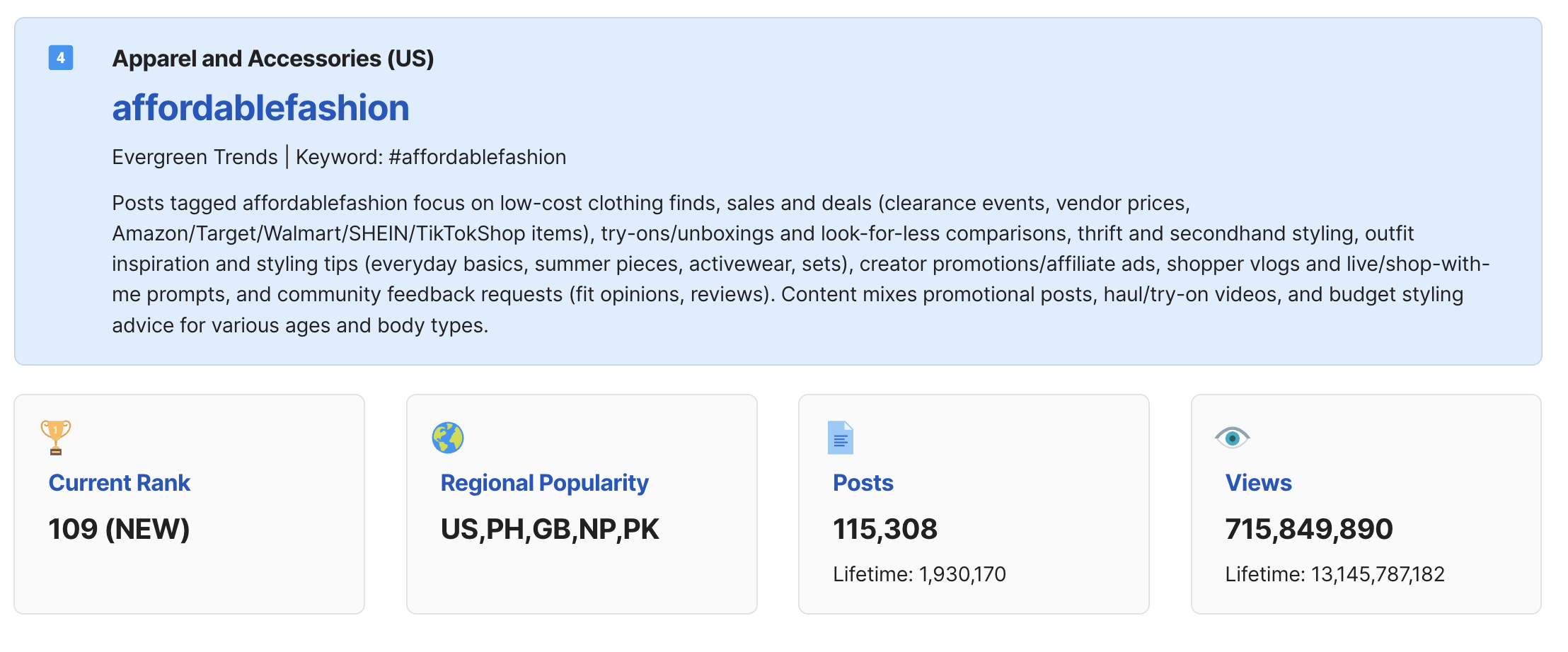
The affordable fashion trend sits among Quid's evergreen trends and provides a useful example of why trend analysis needs context.
A basic trend list would tell a brand that affordable fashion is popular. The deeper insight comes from understanding how consumers engage with that trend.
The content combines:
This is a consumer behavior pattern where value, validation, and social proof increasingly shape purchase decisions. Consumers already know whether something is fashionable, they want to know if it is worth buying.
One of the strongest themes across the TikTok fashion ecosystem is that shopping itself has become collaborative. Consumers increasingly document:
They seek feedback before purchasing rather than after. The result is a feedback loop where content creation, community participation, and commerce happen simultaneously.
This behavior appears across wedding guest dresses, matching sets, Walmart finds, thrift shopping, and plus-size fashion. The purchase journey is becoming visible.
Trend popularity alone does not tell a brand who is participating. Audience data does.
One example comes from the plus-size fashion conversation.
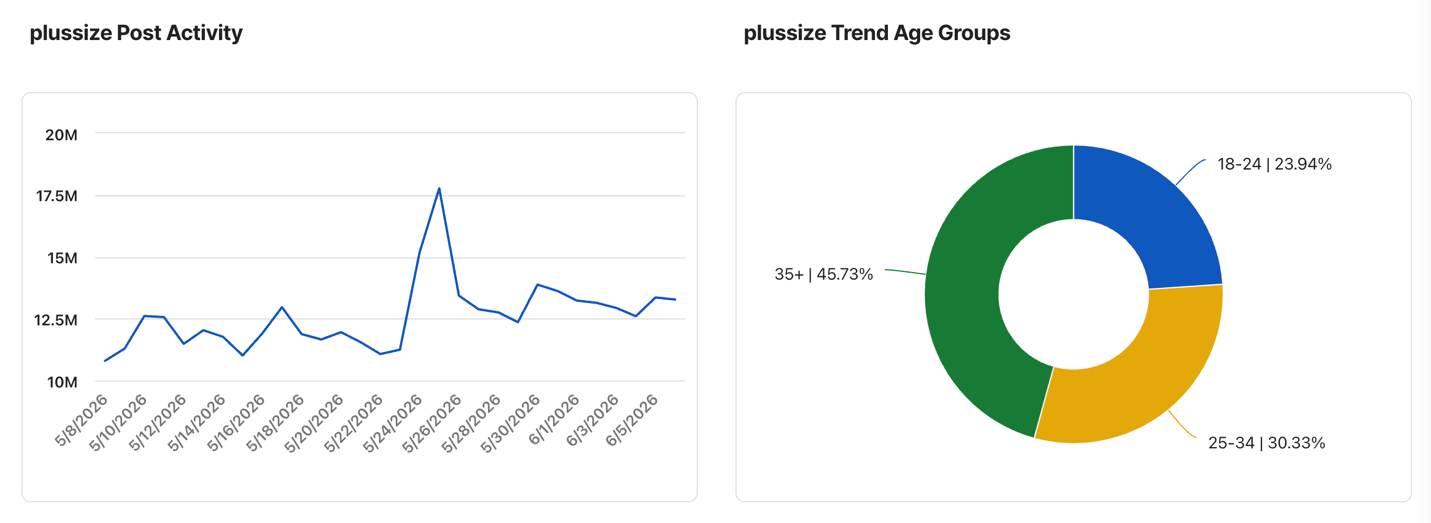
Nearly 46% of participation comes from consumers aged 35+, while another 30% comes from the 25-34 segment. Combined, that means more than three-quarters of engagement is coming from adults over 25.
The activity chart also shows sustained engagement over time rather than a short-lived spike. Without demographic context, a brand might assume TikTok trends are primarily driven by Gen Z audiences. The data tells a different story.
In plus-size fashion, older consumers are helping to drive the conversation and sustain engagement over multiple weeks. That changes messaging, creative strategy, and product positioning decisions.
The vacation outfits trend tells a similar story.
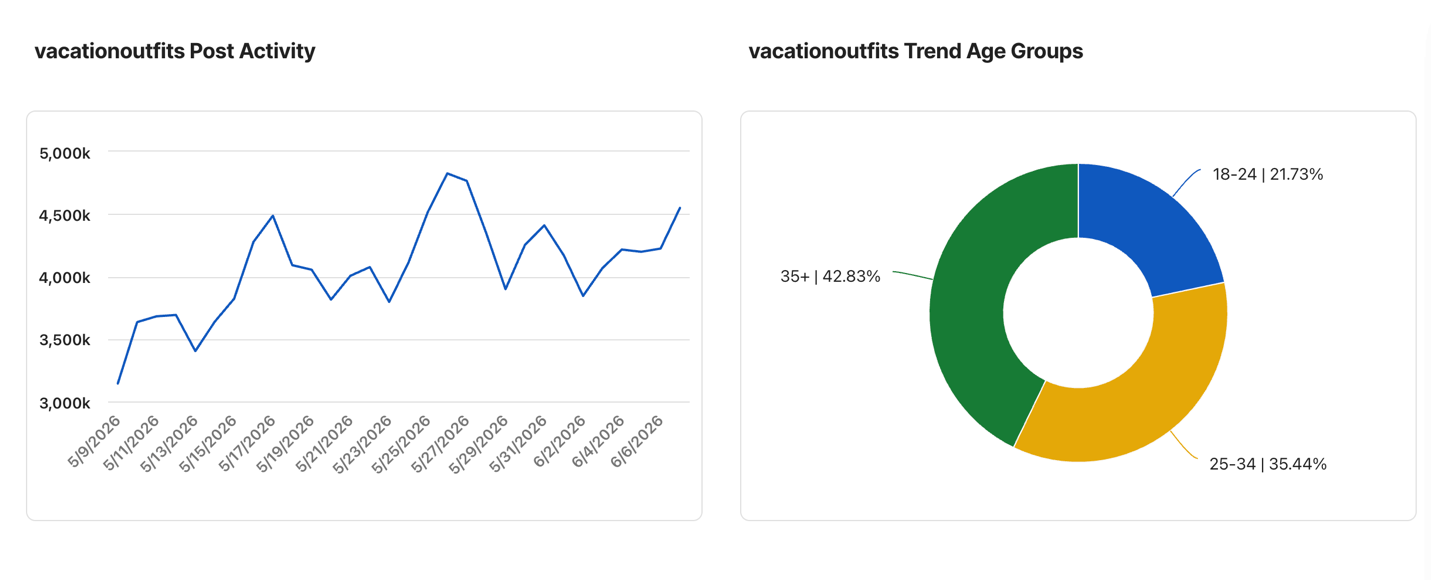
While younger consumers remain active participants, the largest audience segment again comes from consumers over 35. The trend also demonstrates relatively stable activity rather than extreme volatility.
For brands, this suggests vacation fashion is operating less like a viral moment and more like an ongoing consumer need state.
Consumers are chasing trends and solving a problem:
Those questions create opportunities for brands to provide guidance, not just products.
Some of the most revealing insights come from trends that appear unrelated on the surface.
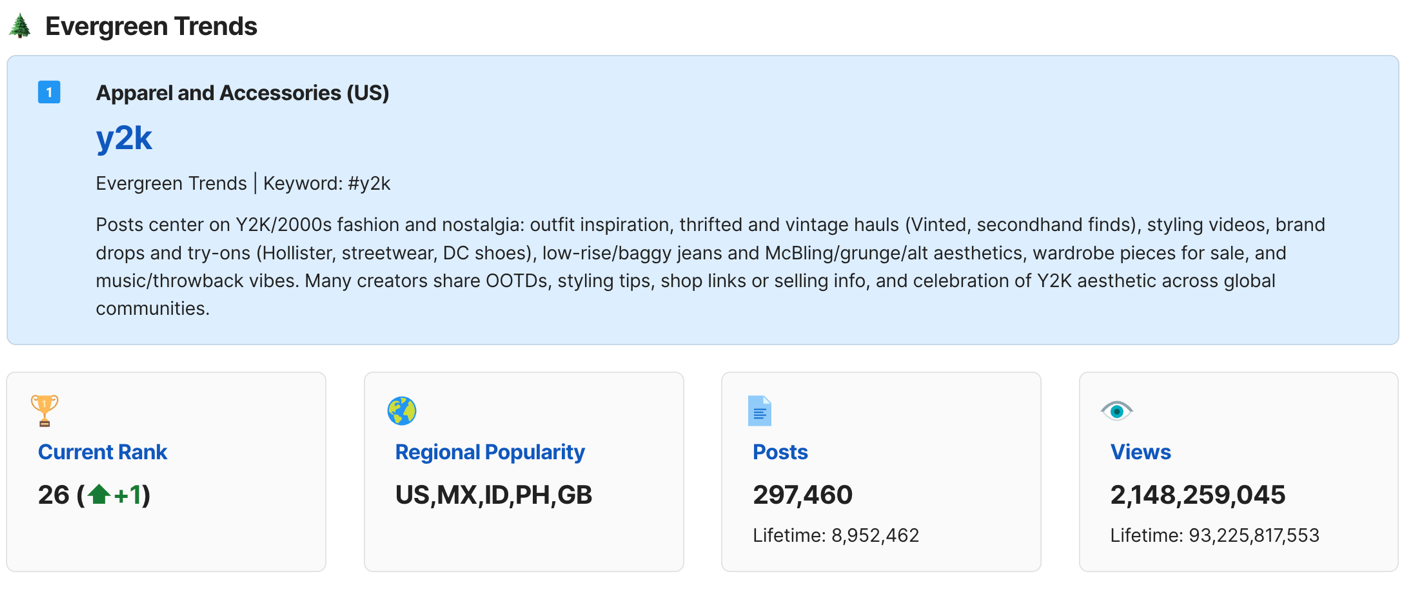
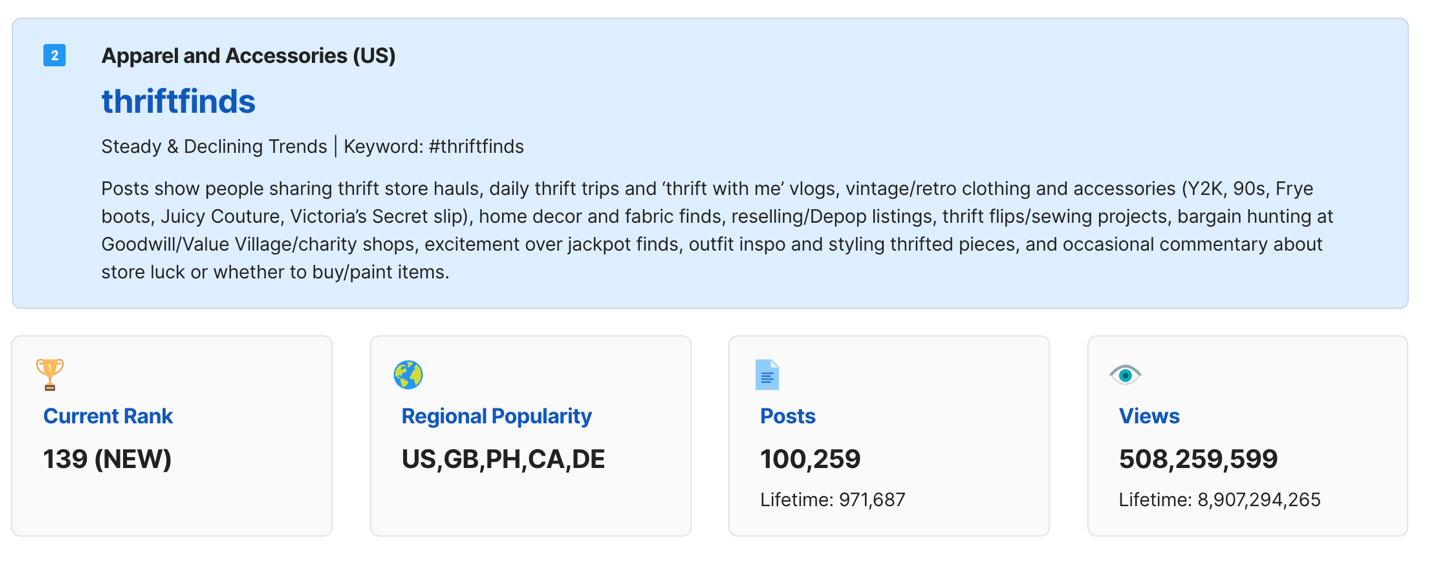
Viewed independently, these appear to be separate trends. Viewed together, they reveal a larger consumer movement.
Consumers increasingly value individuality, uniqueness, and personal style exploration over standardized fashion consumption. The connection becomes visible only when brands can move beyond isolated trend observations and examine the broader behavioral landscape.
A Google search can tell you that #Y2K is popular. TikTok can tell you that #plussizefashion is trending. Neither can easily show:
That is where connected intelligence becomes valuable.
The goal is not simply identifying trends. It is understanding the behaviors, audiences, and motivations underneath them. Because the brands that win are rarely the first to spot a hashtag. They are the first to understand what the hashtag actually means.
The difference between trend monitoring and consumer intelligence is context. Quid helps brands move beyond surface-level trend reporting to understand the audiences, behaviors, and signals shaping demand across social, search, news, and community conversations.
If your team wants to understand not just what is trending, but why it matters, reach out to Quid to see how connected consumer intelligence can help uncover the signals hidden beneath the noise.