

.png?width=1252&height=362&name=QUID_Logo_WHITE%20(2).png)
At first glance, seasonal purchasing appears to be driven by trends and aesthetics. But when behavior is analyzed more closely, a different pattern emerges. Consumers are not choosing between style and function. They are prioritizing utility and using aesthetics to support and justify the purchase.
Key Takeaways
From the Q Agent analysis of top-tier media, the imbalance is almost comical.
That is a landslide. Consumers are not wandering around thinking about color palettes. They are responding to:
The “fashion vs. function” framing sounds clever until you look at behavior. Function is doing the heavy lifting. Aesthetics just makes the purchase feel better.
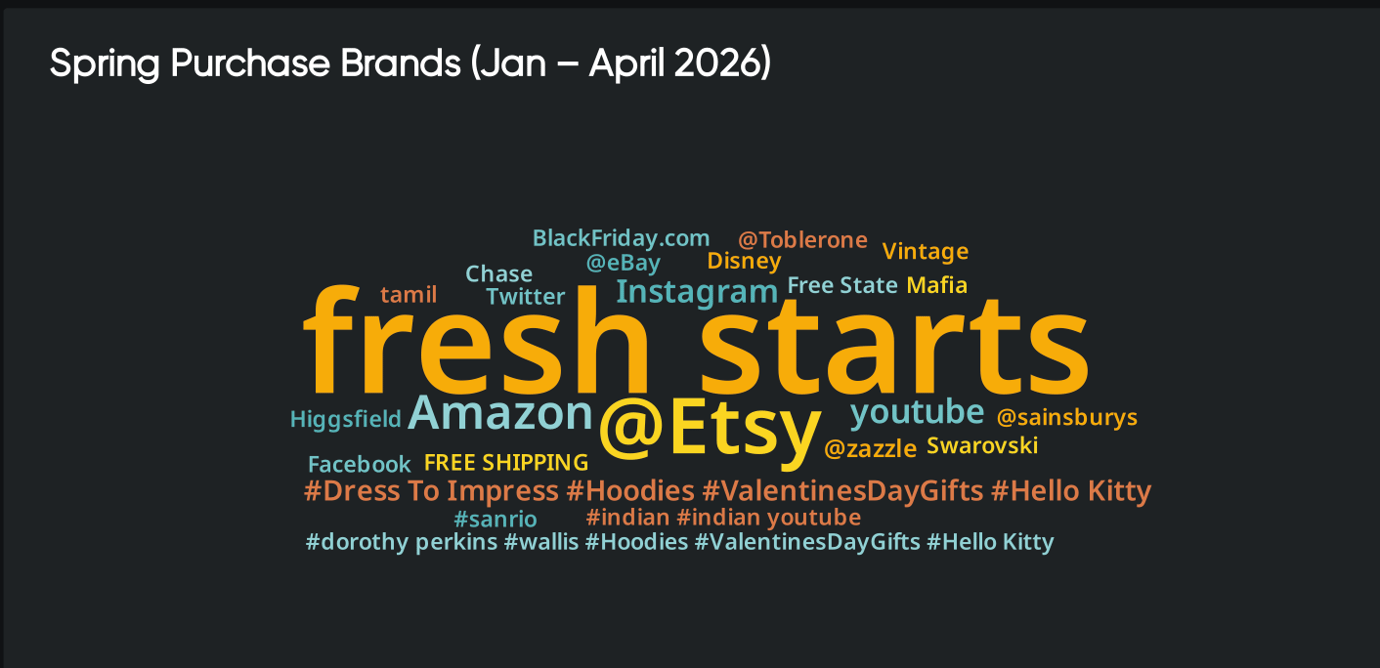
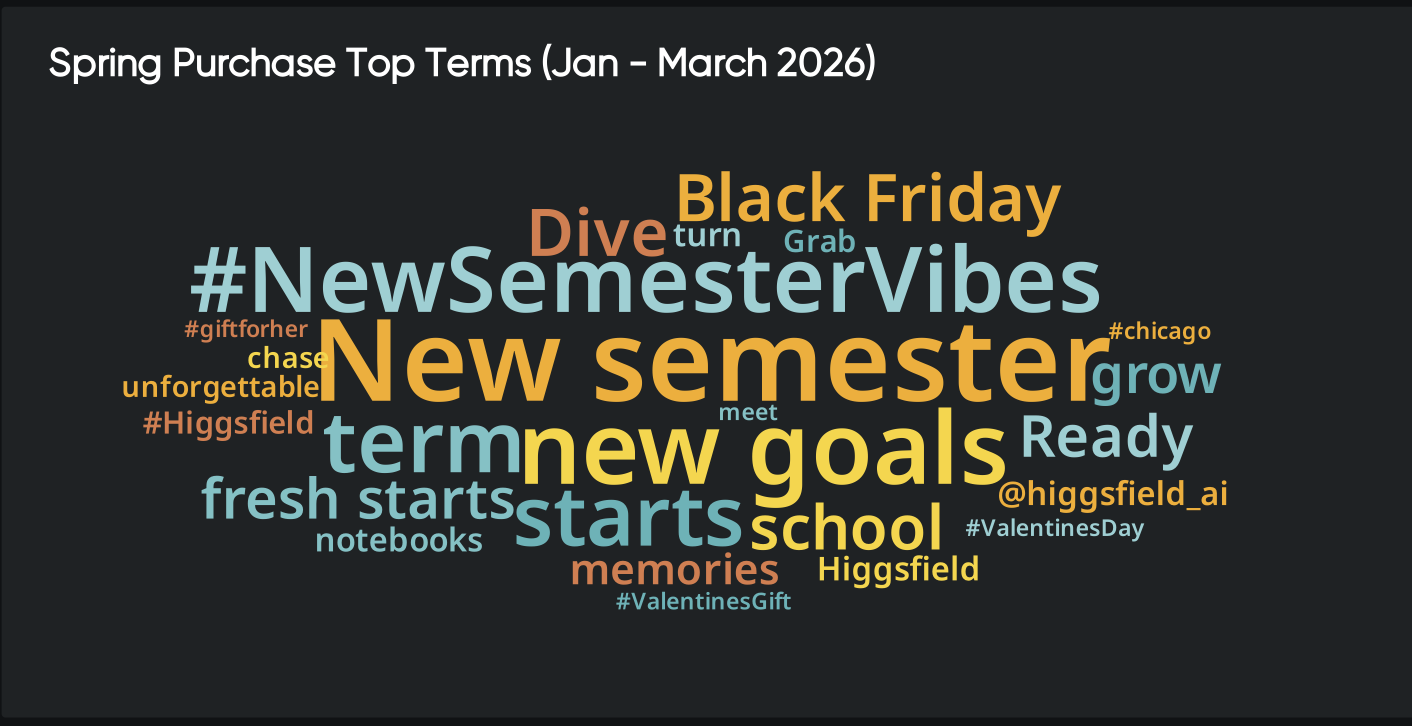
Terms like “fresh starts,” “new semester,” and “Black Friday” reinforce that seasonal purchasing is anchored in reset moments and structured buying cycles. These are not aesthetic signals, but timing cues that align with functional needs and planned spending behavior.
The behavior cloud tells you everything you need to know. Words like “buy,” “search for,” “order,” and “use” dominate. Not “style,” not “aesthetic,” not “vibe.” This aligns with the dataset, where action-oriented terms dominate the conversation, reinforcing that seasonal purchasing is driven by execution rather than exploration.

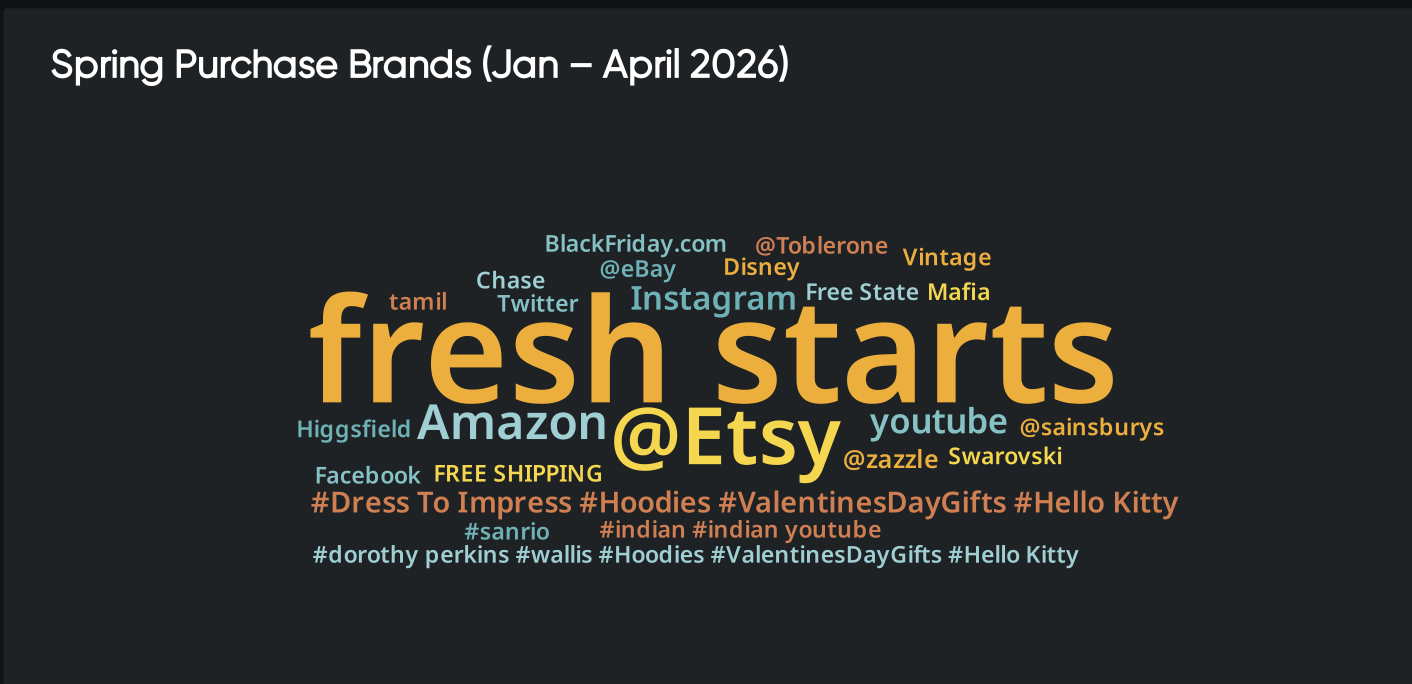
Even the emotion layer leans practical. Yes, there is “love,” “excited,” and “favorite,” but mixed right in are “easy,” “tired,” “useless,” and “nightmare.” That is not aspirational shopping. It captures people trying to get things done with as little friction as possible.
The mix of positive and negative emotional language in the same word cloud indicates that purchases are often reactive, tied to solving immediate needs rather than pursuing idealized or aesthetic outcomes.
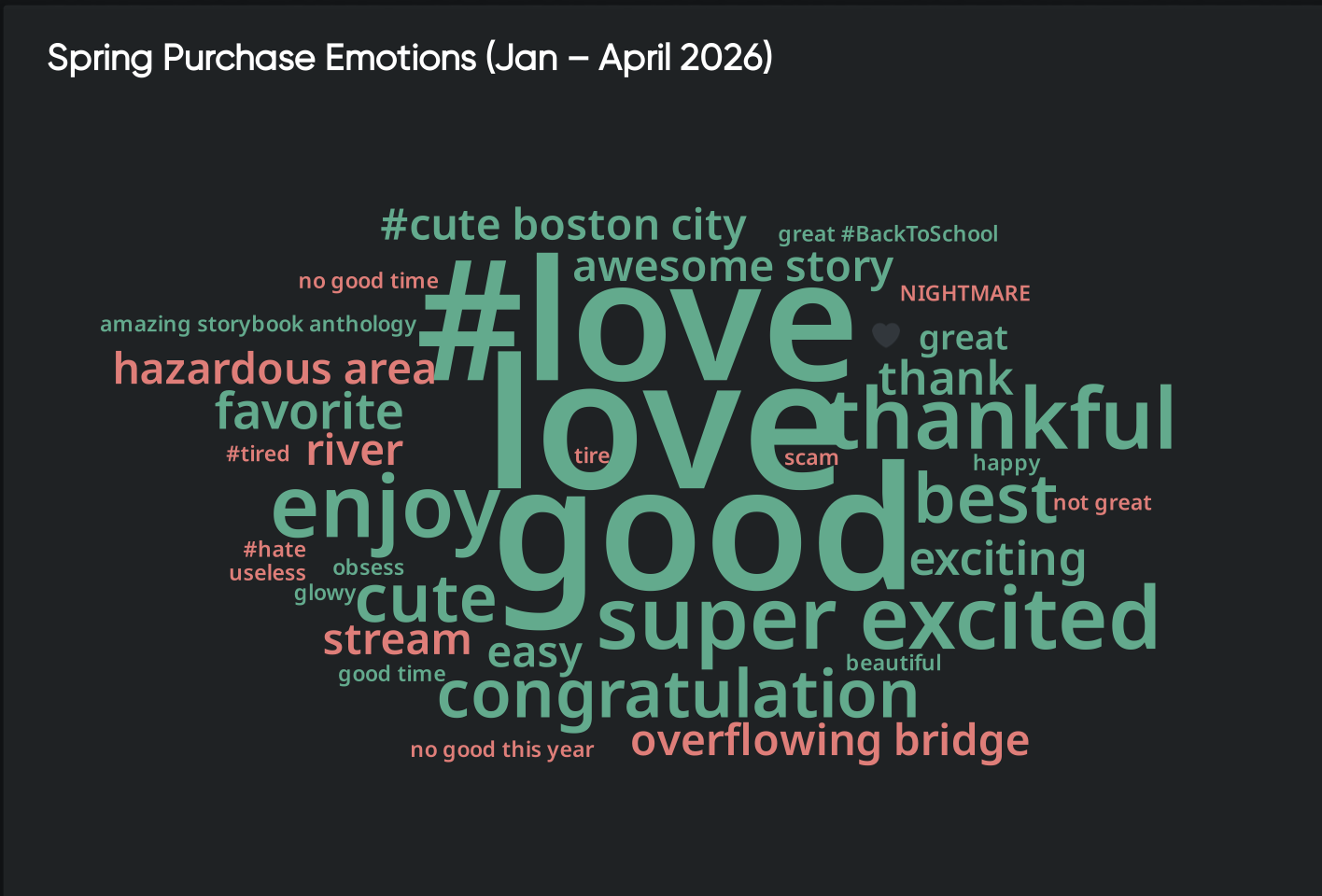
And then you get terms like:
These are not style cues, but calendar triggers.
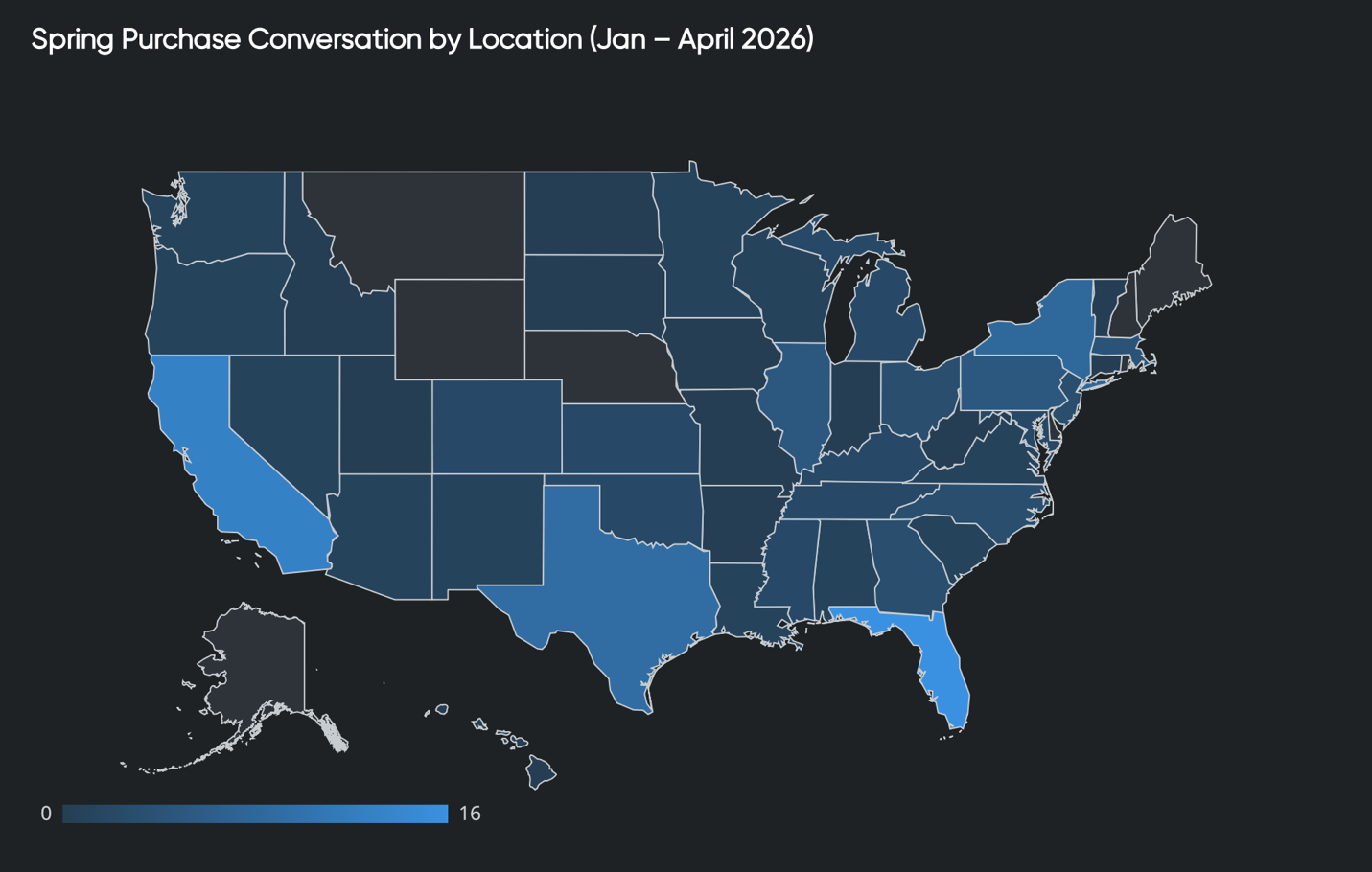
The geographic distribution shows consistent participation across regions, indicating that seasonal purchasing behavior is broadly shared rather than concentrated in trend-driven markets. This supports the conclusion that utility-based demand scales more evenly than aesthetic-driven trends.
From the media dataset, seasonal purchasing is driven by very predictable mechanisms:
1. Promotions create urgency: Limited-time sales compress decision-making. People buy because the window exists. “Amazon’s Big Spring sale… a chance to save money…”
2. Utility aligns with real-life tasks: Spring cleaning, home organization, seasonal wardrobe shifts. Not optional. “There’s no better time to invest in some quality fridge organizers.”
3. Financial timing matters: Tax refunds and post-holiday recovery shape what people are willing to spend. “Nearly half of holiday shoppers say they expected to go into debt…”
4. Weather and logistics interfere: Even foot traffic changes behavior. “One of the wettest Februarys on record saw shoppers shy away from in-store visits…”
None of this has anything to do with whether something is “cute.” It has everything to do with when buying makes sense. This timing-driven behavior is also reflected in the dataset, where recurring seasonal terms and purchase triggers appear consistently across both media coverage and consumer conversation.
Now we get to the part that confuses everyone. TikTok is saturated with:
It looks like fashion is driving everything. It is not. This perception is amplified by the visual nature of short-form content, which prioritizes aesthetic presentation even when underlying purchase decisions are grounded in practicality. Even in those same videos, creators justify purchases with:
Nobody just says, “I bought this because it’s pretty.” They say it fits well, it is affordable, and it works for multiple occasions. Aesthetic content drives attention and function closes the sale.
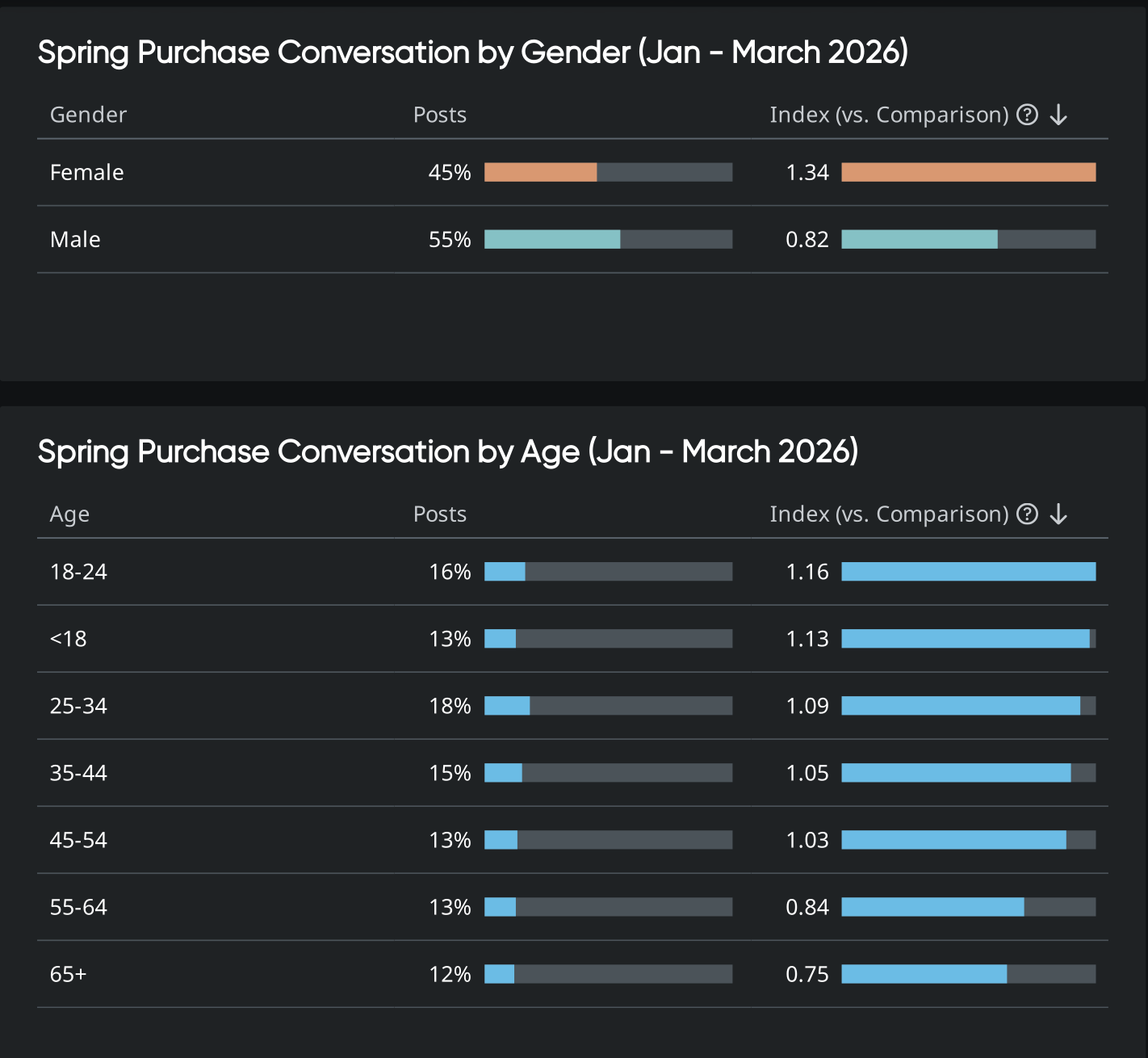
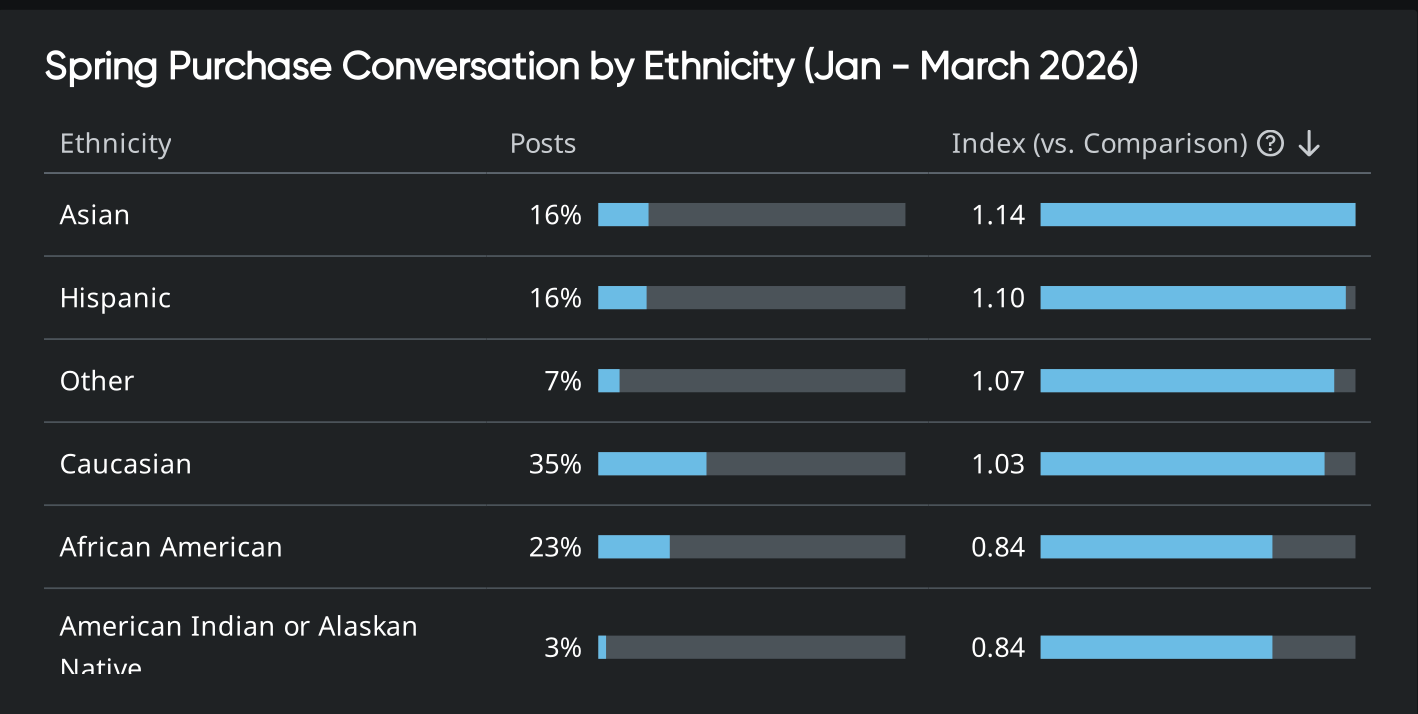
The relatively even distribution across gender, age, and ethnicity suggests that seasonal purchasing behavior is consistent across demographic groups. This further reinforces that utility-driven decision-making is a broad behavioral pattern rather than a segmented trend.
Here’s the part people keep oversimplifying. Consumers are not choosing between fashion and function. They are stacking them:
If a product fails at step three, it does not matter how good it looks. It does not convert.
Brands still behave like aesthetics lead demand. They build campaigns around:
Then wonder why conversion lags unless they discount. But it’s because they skipped the actual driver. They are optimizing for attention signals rather than purchase signals, which creates a disconnect between campaign performance and actual conversion behavior. Consumers are asking:
If the answer is unclear, the purchase stalls.
This is where Quid actually matters, not as a dashboard decoration but as a decision tool.
1. Lead with utility, not aesthetics: Make the functional benefit obvious immediately. Not buried in product specs.
2. Align with timing signals: Promotions, tax cycles, weather, and seasonal tasks drive purchase windows. This includes monitoring promotional cycles, financial triggers such as tax refunds, and regional demand shifts influenced by weather and logistics.
3. Pair function with one aesthetic hook: Not five. One. Enough to justify desire after utility is clear.
4. Monitor where conversion actually happens: Agent-driven discovery and in-flow discounts are changing timing. “Allowing brands to offer a special discount… while users are looking for a product recommendation…” This is increasingly important as agent-driven discovery environments enable purchases to occur at the point of search, reducing the gap between intent and transaction.
5. Treat returns as part of the system: Seasonal buying includes overbuying. That is baked into the model now.
The Reality Everyone Is Dancing Around
Consumers like aesthetics. They talk about aesthetics. They share aesthetics. But, they buy utility. And then they dress it up afterward, so it feels like a lifestyle decision instead of a practical one.
Quid does not just show what people are talking about. It shows what actually drives decisions beneath the surface, so brands can align timing, messaging, and product strategy before the purchase happens instead of reacting after. Reach out today to learn more!
Are consumers prioritizing function over fashion this spring?
Yes. Conversation volume and behavioral signals show that utility, pricing, and timing are the dominant drivers.
Why does social media make it seem like fashion is leading?
Because aesthetic content performs well visually. It attracts attention, but it does not fully explain conversion behavior.
What actually triggers seasonal purchases?
Promotions, seasonal tasks, financial timing, and availability of new products.
Do aesthetics matter at all?
Yes, but as a secondary factor. Aesthetic appeal enhances a purchase that is already justified by function.
How should brands adjust their strategy?
Lead with functional value, align with seasonal timing, and use aesthetics as reinforcement rather than the primary message.