

.png?width=1252&height=362&name=QUID_Logo_WHITE%20(2).png)
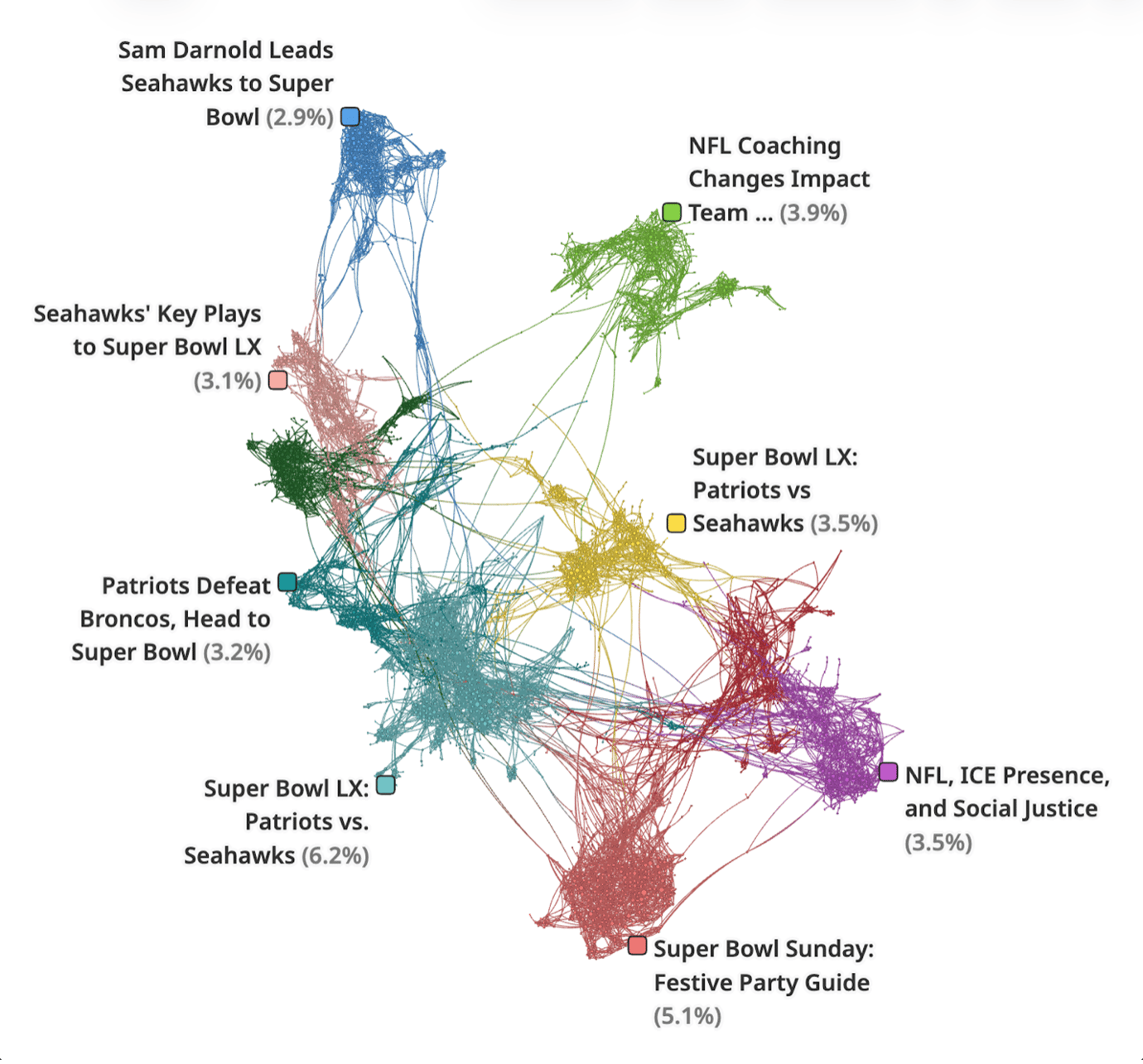
By the time Super Bowl LX kicked off, the biggest moments had already happened.
The ads had millions of views. The halftime show was debated before it aired and boycott language was circulating alongside watch-party plans. Celebrities were trending weeks in advance. For those not paying attention — the narrative was built long before the coin toss.
What Defined Super Bowl LX
Between January 25 and February 8, the Super Bowl generated 17.4 millionmentions and 1.8 trillion potential impressions:
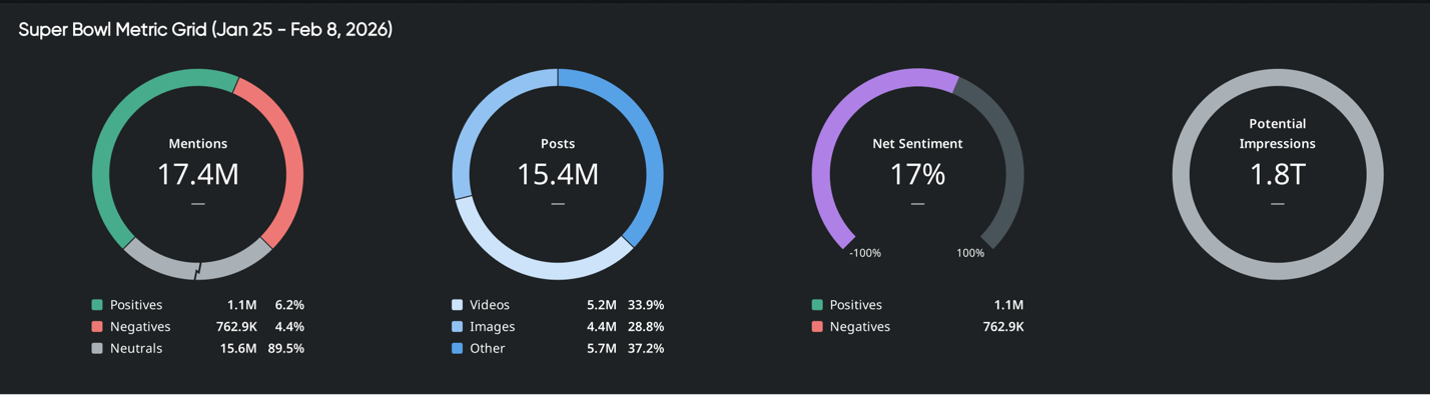
That level of scale no longer belongs to a single broadcast. It belongs to an ecosystem.
Super Bowl LX confirmed what leading brands already understand. Tentpoleevents are no longer moments, but distributed cultural systems that unfoldacross platforms, identities and competing interpretations.
This year, the game itself shared the stage with teaser campaigns engineered as mini-premieres. There was a halftime show that triggered political and cultural clustering in real time and a fan base that could celebrate and criticize simultaneously.
The scoreboard told one story and the data told another. In 2026, the data is the real headline.
By the time kickoff arrived in Santa Clara, most of the biggest ads had already lived full digital lives.
With 30-second spots priced at $10 million, brands refused to gamble everythingon a single airing. Instead, they stretched the moment. Teasers dropped weeksin advance. Cinematic trailers circulated on YouTube and influencers reactedbefore the ads even aired.
The Recap timeline shows conversation volume building steadily fromJanuary 25 through game day
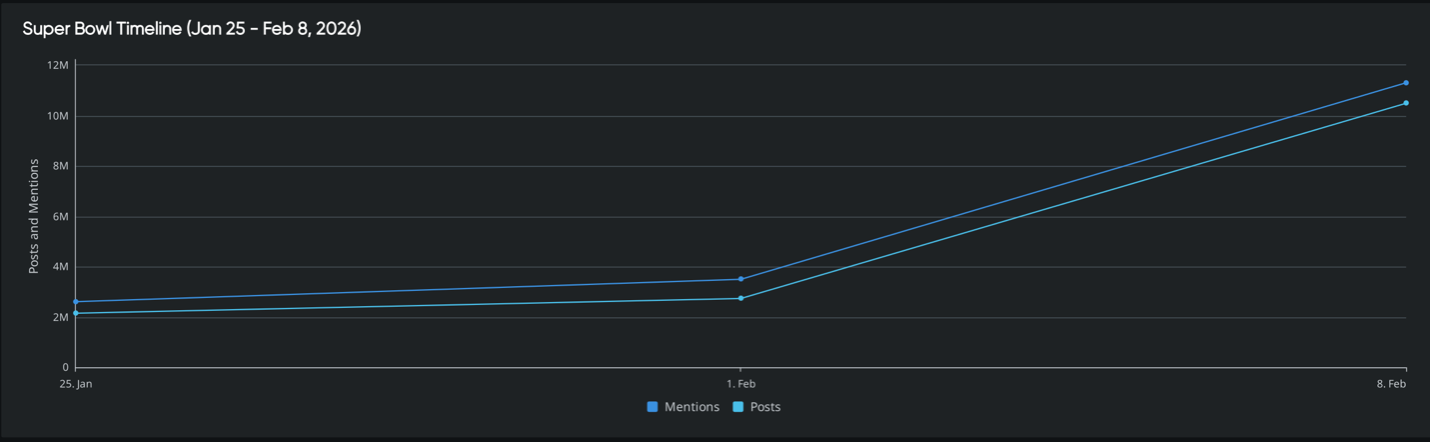
This takes brands beyond countdown marketing to serialized storytelling.
Teasers functioned as cultural probes, with brands testing tone and gauging sentiment. They let audiences debate the creative before the creative officially debuted.
By kickoff, viewers were not seeing ads for the first time, rather they were watching the climax of narratives already in motion.
Super Bowl LX advertising clustered across three creative modes that surfacedrepeatedly in conversations.
Some brands chose prestige, with film directors and stylized pacing. The ads are short films.
Square space did this, leaning into arthouse surrealism with Emma Stone. And Grub hub adopted elevated, theatrical framing with George Clooney. These spots signaled ambition. They were engineered to feel culturally relevant rather than commercially urgent.
This approach aligned most closely with Commercial Innovation andCreative Strategy discussions in pre-event analysis. Brands operating in this mode sought long-tail cultural centrality rather than short-term virality.
Prestige creative slows the scroll, and it aims to be revisited, and each certainly deserves as much.
Other brands moved toward speed.
Skittles embraced surreal unpredictability. Bud Light leaned into chaotic humor with Peyton Manning and Post Malone. These campaigns treated Super Bowl advertising as spectacle and leaned into it.
This strategy fits how people use these platforms. With 58 percent of overall conversation occurring on Twitter, and meaningful participation across TikTok and Reddit, absurdist and meme-native creative benefited from rapid reaction cycles.
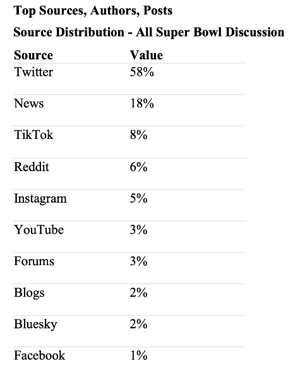
Absurd humor works best in fast-moving spaces. When most of the conversation is happening on platforms like Twitter and TikTok, speed matters.Weird, meme-ready ads spread quickly because people react instantly, screenshot them, remix them, and argue about them. That kind of creative is designed for momentum, not subtlety.
The strongest creative pattern this year was how brands used celebrities.These were not simple endorsements. The celebrity was part of the story.
Lady Gaga in the Rocket/Redfin campaign was not just there to sing.She brought built-in meaning around reinvention and belonging. Kendall Jenner’s Fanatics spot leaned directly into how the internet already talks about her. MrBeast helped Salesforce connect enterprise software to creator culture.
In each case, the brand did not need to explain the celebrity. The audience already had context. The ad simply activated it.
Though Budweiser stole the show in Influencer & CelebrityActivation share of voice in pre-event analysis, and its celebrity influencer wasn’t even human.
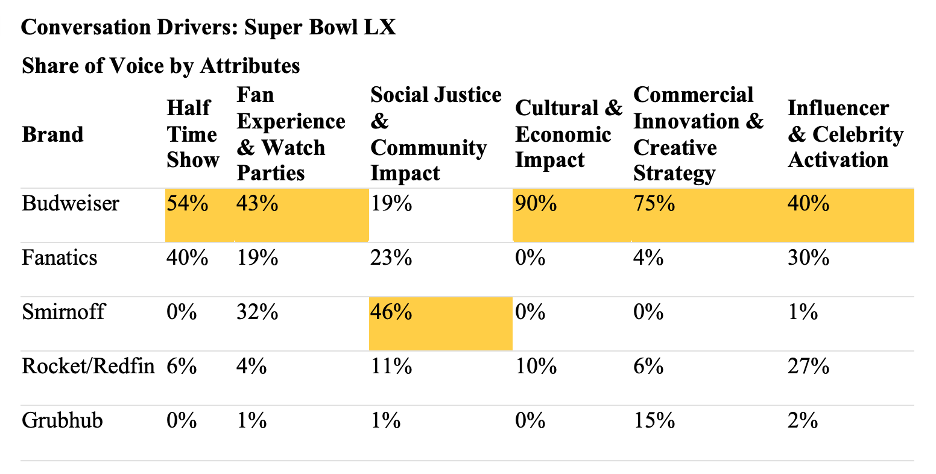
The same forces that amplified prestige, absurdity, and celebrity also shaped the halftime discourse. The advertising and cultural ecosystems are no longer separable. They feed each other.
Which brings us to halftime, where the analysis shows that halftime did not exist in isolation.
A 4.1 percent cluster formed around political and cultural clashes.
A 3.3 percent cluster centered on Bad Bunny’s performance.
A 2.7 percent cluster captured calls to boycott the NFL
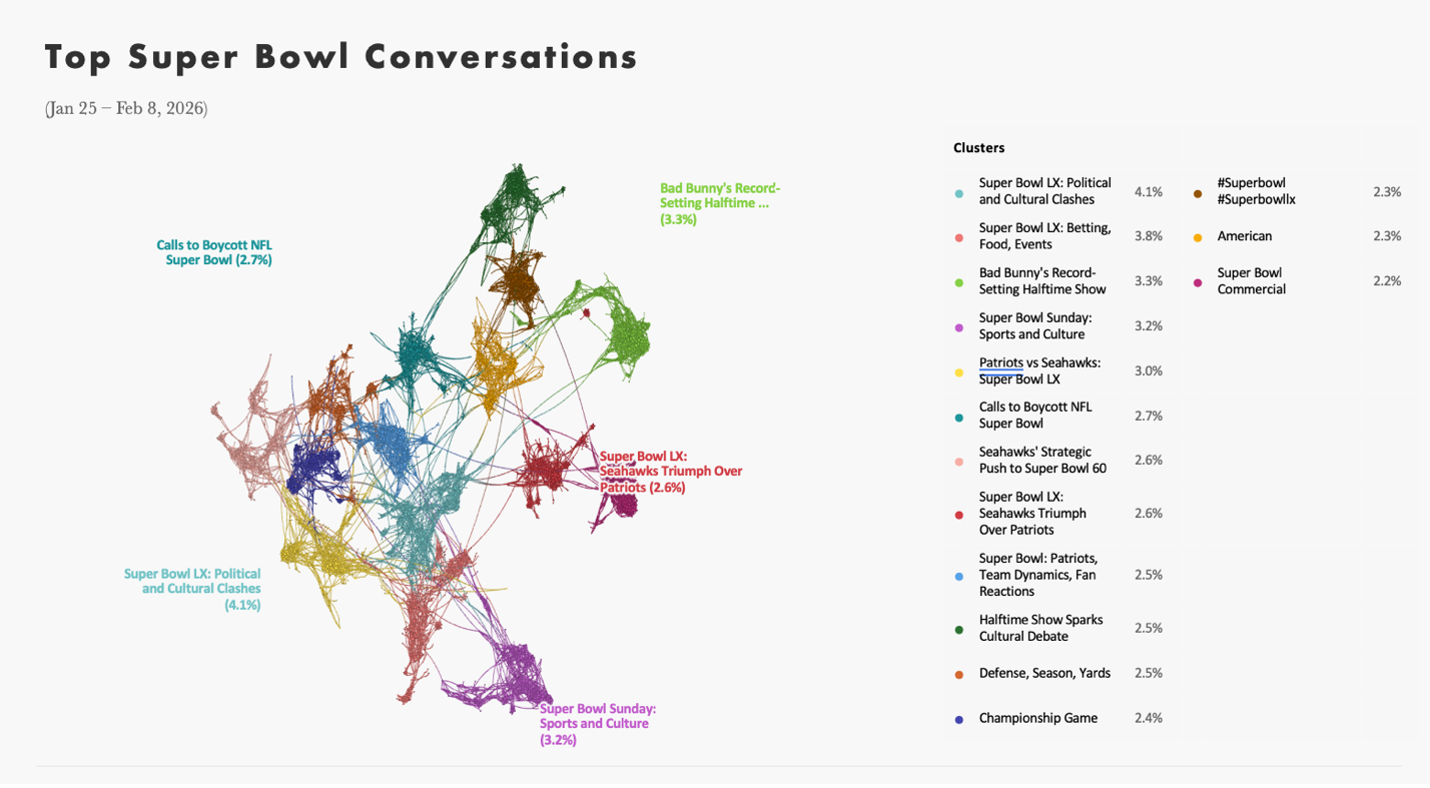
For some, the halftime show represented cultural pride and Latino visibility. For others, it became a platform for political critique and institutional scrutiny.
The behavior cloud reinforces this duality. “Watch” and “boycott” appear within the same data ecosystem:
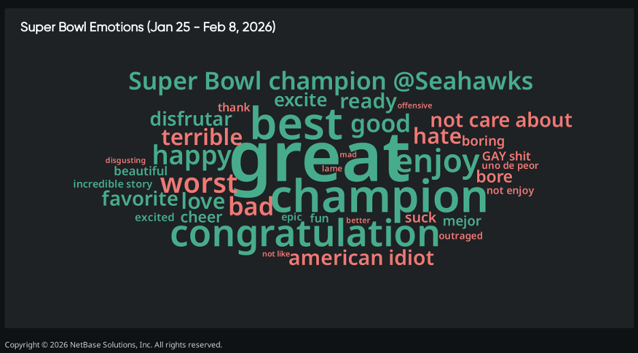
Participation and protest now coexist, with the Super Bowl still serving as entertainment, but also a live diagnostic of cultural tension.
While fans debated matchups, the conversation centered on emotional frames with everything from redemption arcs and rematch history to legacy branding and comeback momentum.
The Seahawks generated intense fan-driven engagement. The Patriots activated heritage equity and sponsor alignment.
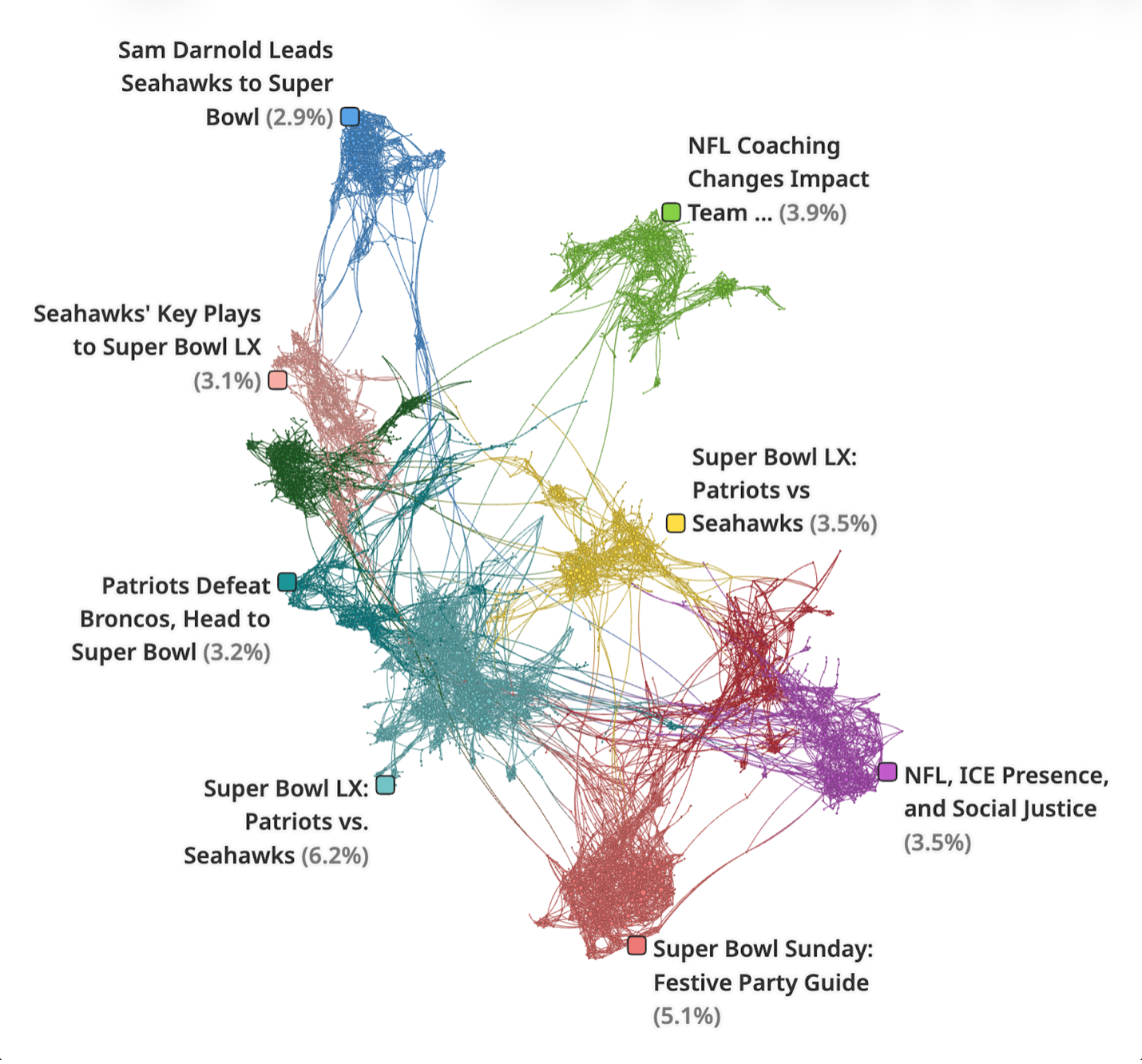
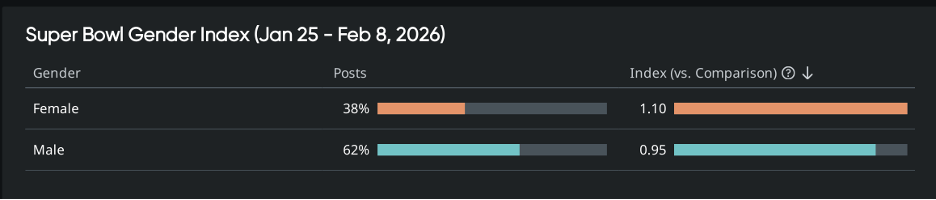
Demographically, conversation skewed 62 percent male and 38 percent female:
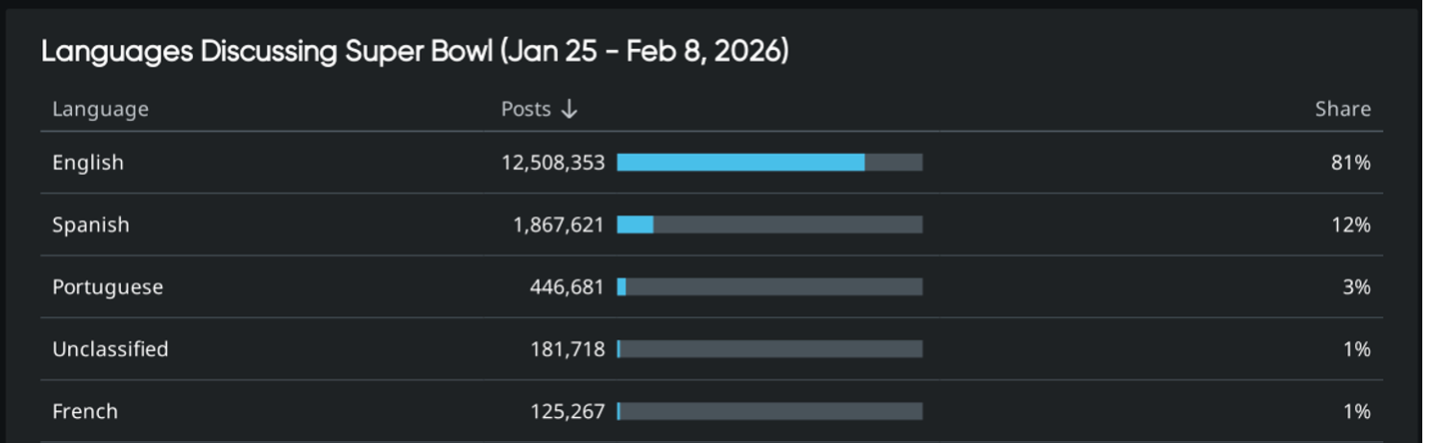
English accounted for 81 percent of discussion, Spanish for 12 percent:
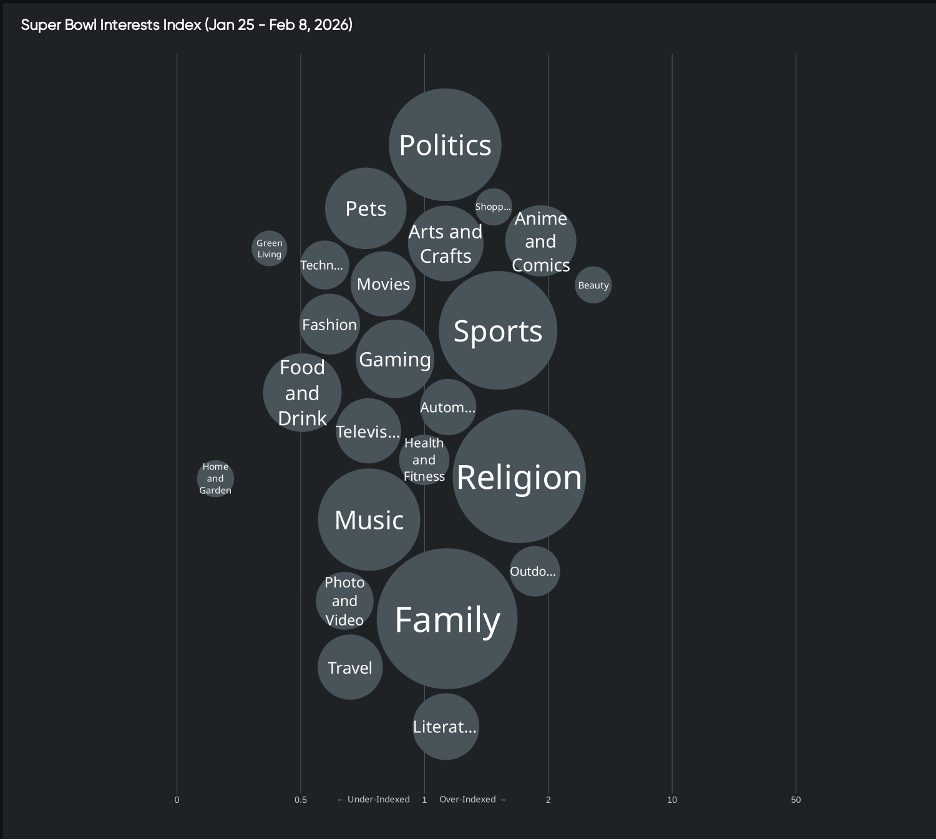
Interests over-indexing spanned sports, music, politics, and food and drink:
The emotional cloud contained both celebration and condemnation. Words like “champion,” “best,” and “love” appeared alongside “offensive,” “outraged,”and “disgusting”
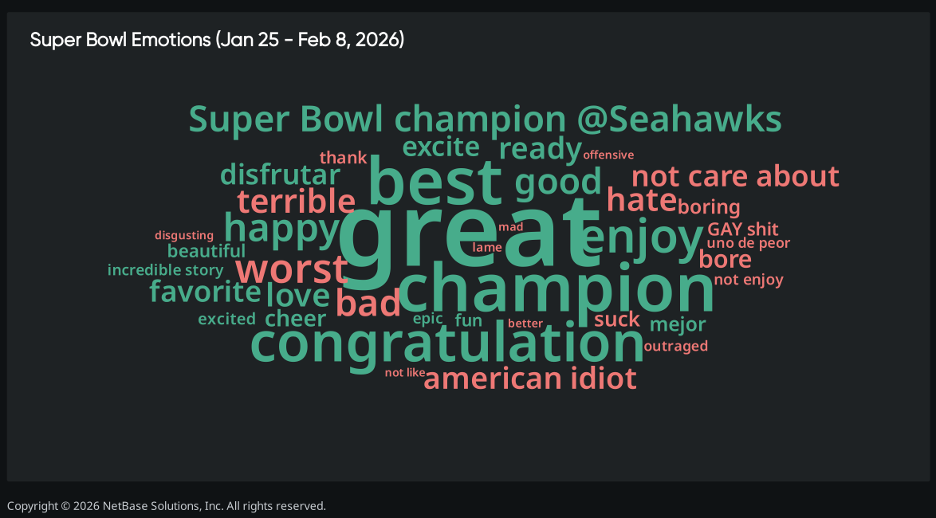
This was a layered, polarizing emotional moment.
The Super Bowl remains the largest media-synchronized audience. But the metrics that define success now live off the broadcast. Brands that architected full-funnel ecosystems captured sustained engagement. Brands relying solely on in-game visibility competed inside a narrowing window.
Super Bowl LX confirms structural evolution across five dimensions:
The game still matters, but brand impact now depends on how effectively companies navigate the cultural system surrounding it. In 2026, influence determines longevity.
Super Bowl LX generated extraordinary scale, but scale alone no longer defines success.
Advertising strategies clustered into prestige storytelling, meme-native absurdity, and celebrity-driven contextual framing. Influencer activation and cultural clustering signals confirm that narrative architecture matters more than airtime alone.
Halftime conversation revealed measurable political and cultural segmentation, reinforcing that tentpole events now function as cultural diagnostics.
Brands that engineered multi-platform ecosystems captured centrality.Brands that treated the broadcast as a singular event competed for fragmented attention. Super Bowl ROI now depends on narrative continuity and real-time signal monitoring.
Cultural moments build, fracture, and evolve across platforms. Quid helps brands detect emerging narratives early, track volatility as it unfolds, and measure influence beyond reach.
Connect with the Quid team to see how real-time cultural intelligence can inform your next major campaign.