

.png?width=1252&height=362&name=QUID_Logo_WHITE%20(2).png)
TikTok is not just influencing what people buy. It is structuring how they decide.
TikTok is compressing decision-making into repeatable, low-effort behaviors. What appears spontaneous is often pre-conditioned. Users are not exploring broadly. They are selecting within patterns they have already adopted.
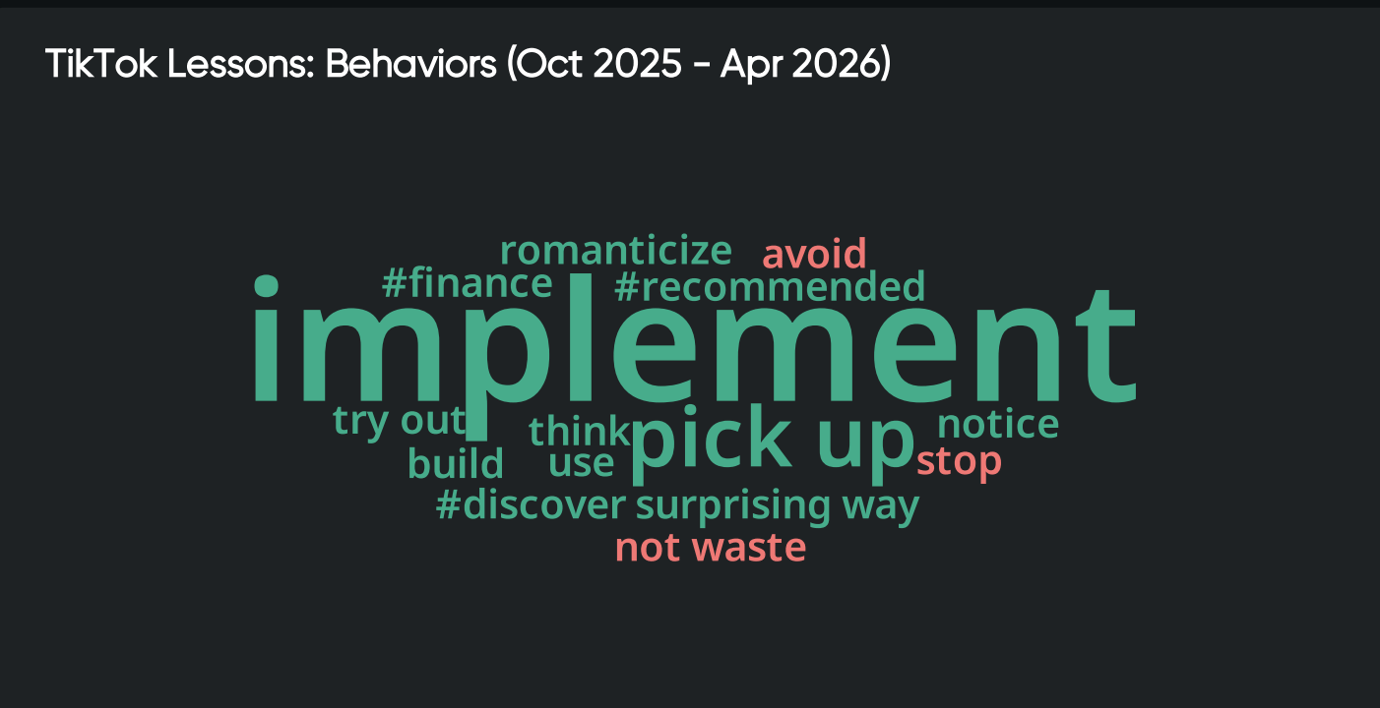
What looks like random product discovery is actually a repeatable pattern of micro-habits. Small actions, short loops, and immediate validation cycles that reduce decision friction. And when you map those behaviors with Quid, the pattern stops being anecdotal and starts being measurable.

Let’s start here, because this is where most people get it wrong. TikTok is not driven by trends. It is driven by repetition. The Quid dataset shows language clustering around:
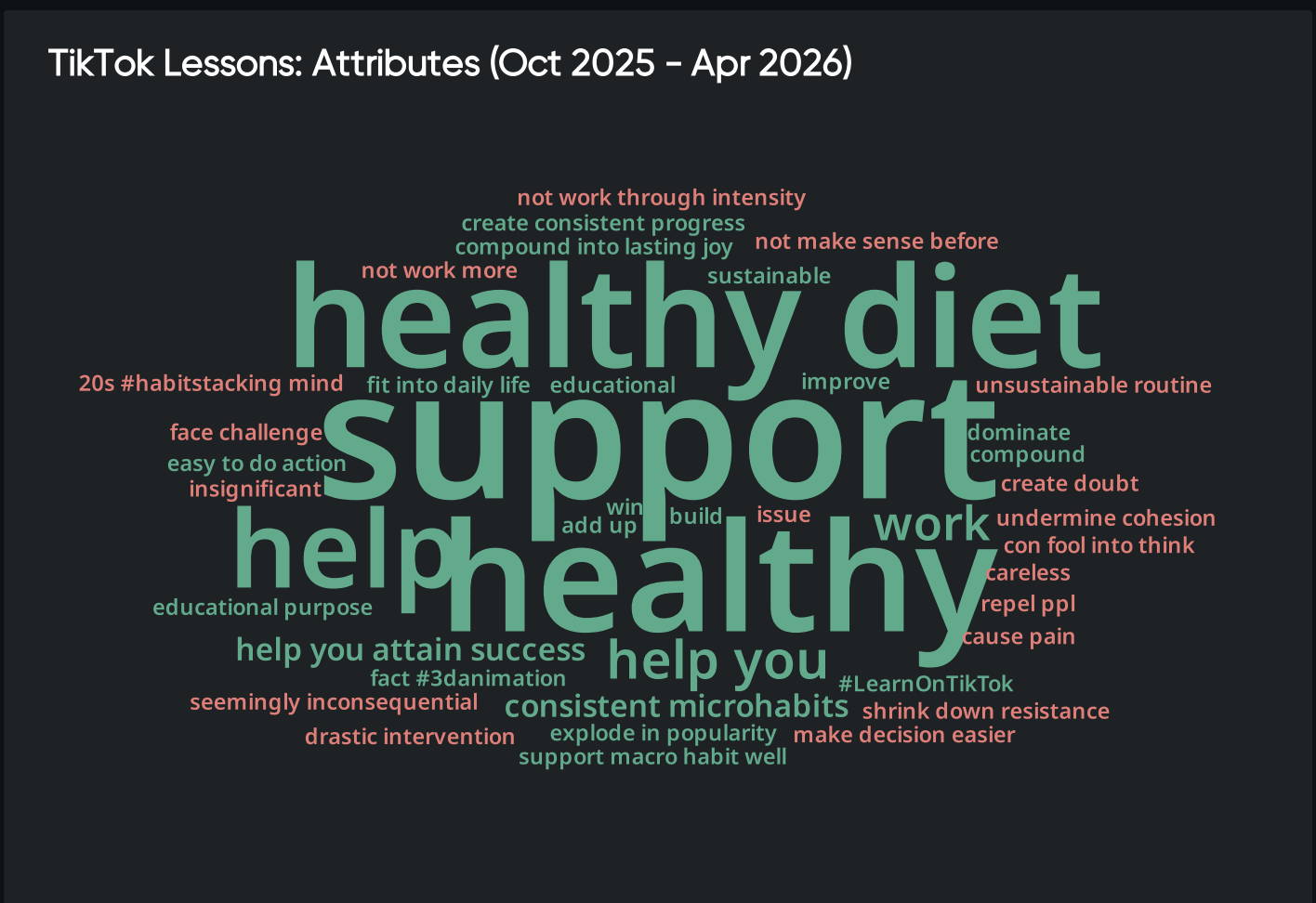
People are not searching for big transformations. They are adopting small, repeatable actions that “fit into daily life” and “compound into lasting results.”
That is why:
This clustering is not random. It reflects action-oriented language tied to execution, not exploration. People are not asking what they should do. They are being shown what to do next, and adopting it immediately.
That behavior pattern does not operate in isolation. It is reinforced by how content makes people feel while they are adopting it.
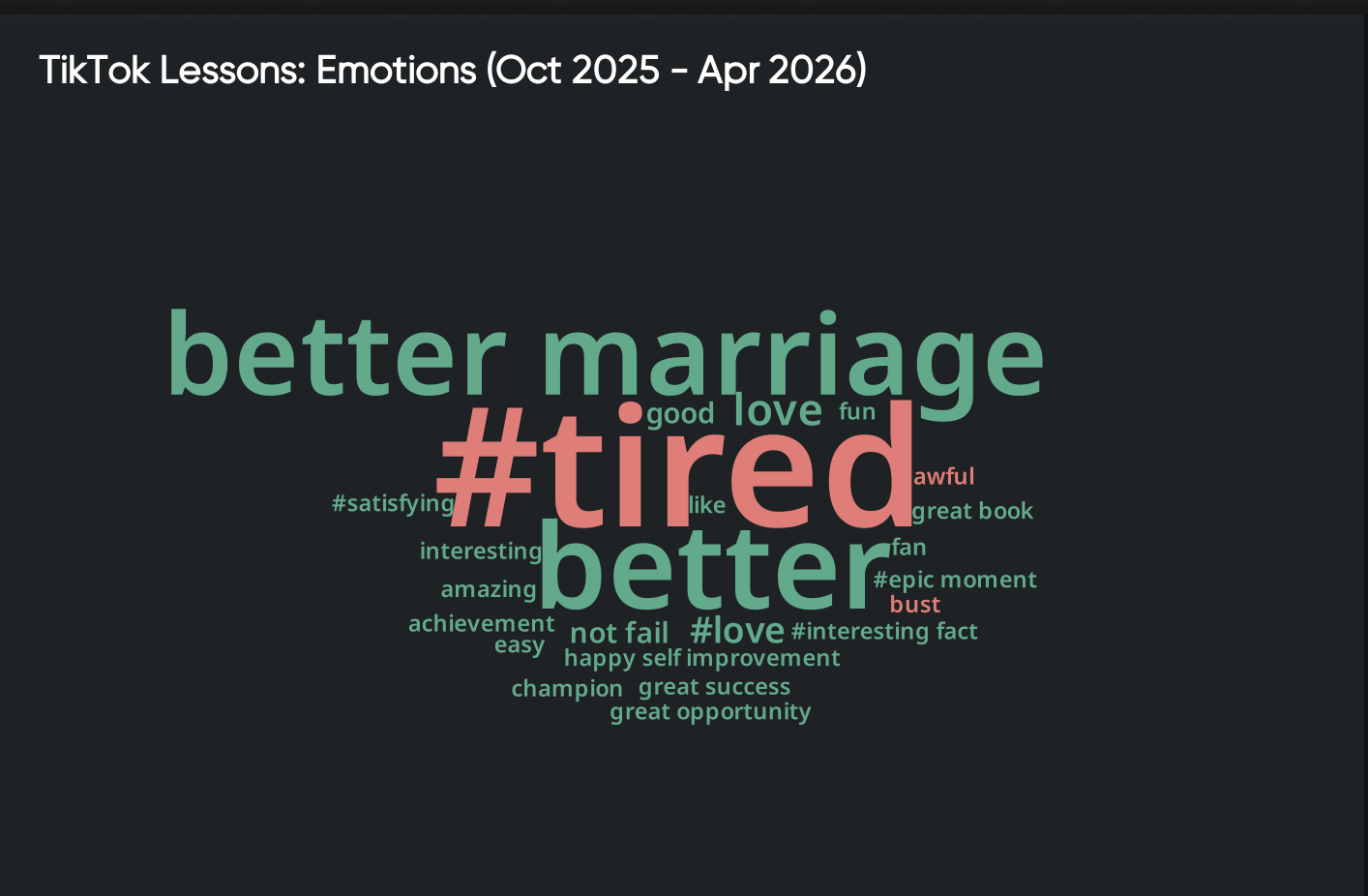
This is the part most marketing teams ignore. The emotional signal is not hype. It is stability. Dominant signals include:
And then one stands out: #tired. Fatigue shows up as a driver, not a barrier. Users are selecting solutions that reduce effort, simplify decisions, or eliminate unnecessary steps. That is the context, as people are not chasing novelty. They are reducing friction. This explains why:
The overarching emotion here is relief. That emotional stability is what allows the behavior to scale without resistance.
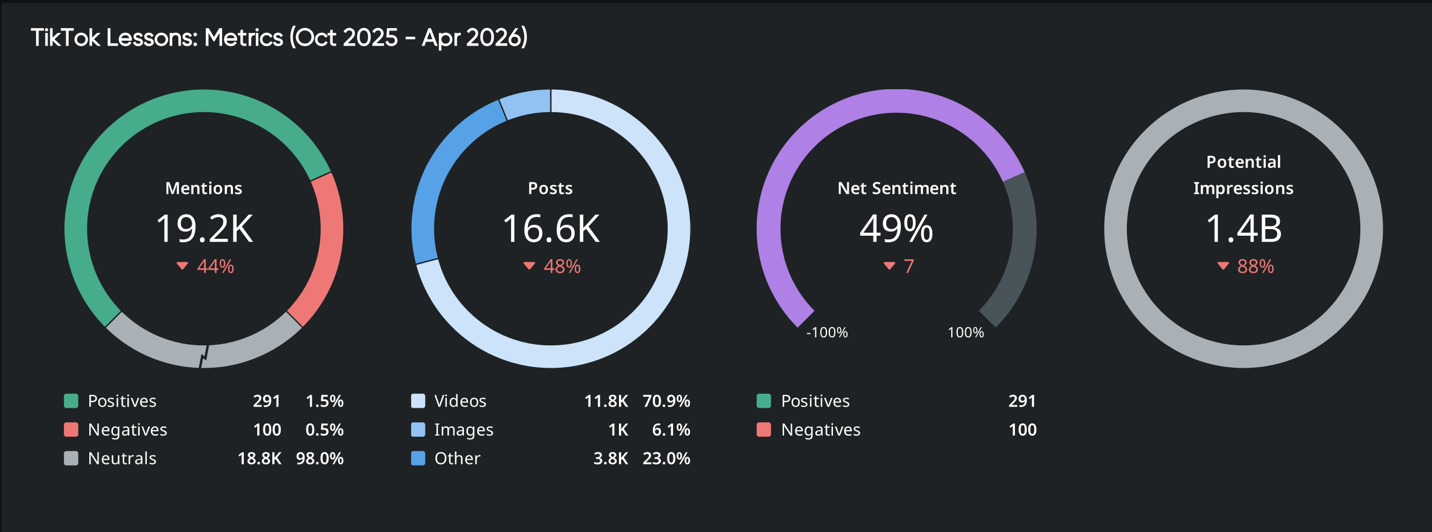
The dataset removes any remaining doubt.
At that level of neutrality, sentiment stops acting as a signal of preference and starts acting as a signal of habit. People are not reacting to content. They are learning from it and using it. It confirms that this behavior has moved past experimentation into routine adoption. People are not debating it, they are just doing it.
Which is exactly when behavior becomes durable.
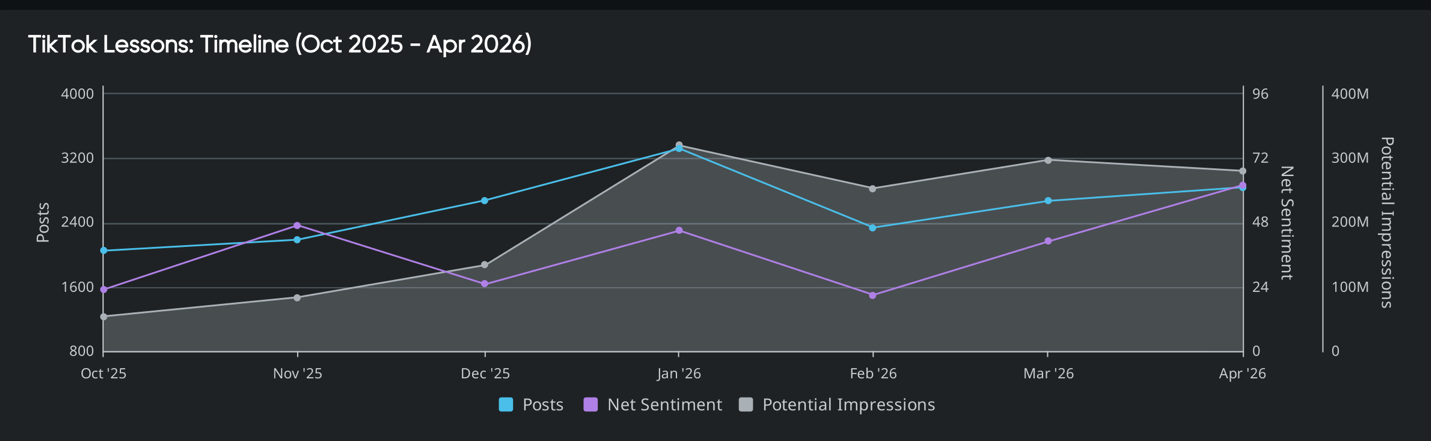
The timeline shows steady activity across months. There are no dramatic spikes and no collapse. Just consistent engagement, that tells you:
Which is why brands chasing one-off “viral wins” keep missing it. Consistency here indicates behavioral reinforcement loops. Users are not cycling through trends. They are returning to the same formats, routines, and solutions repeatedly.
That consolidation is what makes “single-solve” content disproportionately effective.
This is where product discovery actually happens. TikTok compresses problems into 30–60 second demonstrations:
These are problem → solution loops and they work because they are specific, repeatable, and they are immediately testable. Each example eliminates decision complexity. There is no browsing phase. No research phase. The content itself acts as both validation and instruction.
That same structure becomes even more powerful in categories where trust is required before adoption.
TikTok has turned into a live testing environment. It’s the place where products move from fringe to mainstream because creators show usage in real time, with results framed as personal proof. Formats are simplified here, into daily routines.
This creates a hybrid trust model. Authority is not removed. It is layered underneath visible demonstration. When both align, adoption accelerates. But there is a catch. Trust only holds when:
Anything else gets ignored or questioned.
When those conditions are not met, skepticism spreads just as quickly as adoption. The same mechanism that builds trust can dismantle it. That dynamic becomes more volatile when applied to information, not just products.
TikTok is now a real-time information channel that includes breaking news, protests, and civic mobilization, as well as fundraising and community action.
It also includes misinformation, manipulated content, and rapid narrative distortion. It is the same distribution mechanism, applied to higher-risk information. This means brands operating in this space need verification workflows, response protocols, and controlled messaging.
Speed removes the buffer between content and consequence. Information is acted on before it is verified. This is where visibility without structure becomes a liability.
The same amplification mechanics also shape how culture forms and spreads. And once something spreads, you are reacting, not shaping.
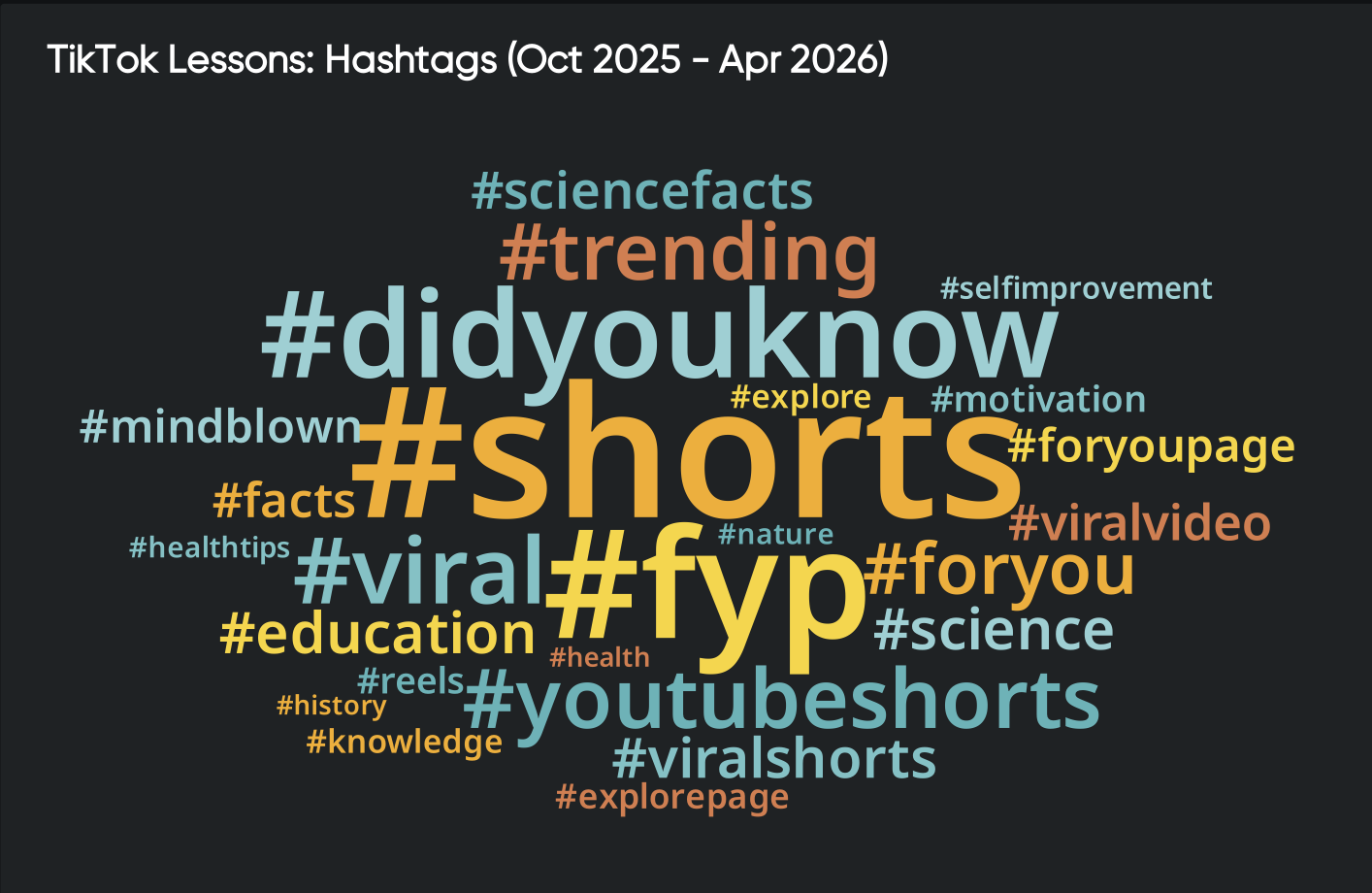
The hashtag layer tells you how content travels:
This reflects both reach and replication velocity. Content succeeds when it can be reused, adapted or remixed quickly. That is why:
Content is not judged on originality. It is judged on how easily it can be reproduced and adapted across contexts. That is what turns content into a system, and that system is being driven by a broad, distributed audience.
The audience is behaviorally aligned, not demographically narrow. The data shows distribution across multiple age brackets, diverse demographic groups, with slightly higher female participation, but broadly balanced.
Adoption patterns are consistent across segments, which reinforces the idea that micro-habit behavior is not tied to identity. It is tied to usability.
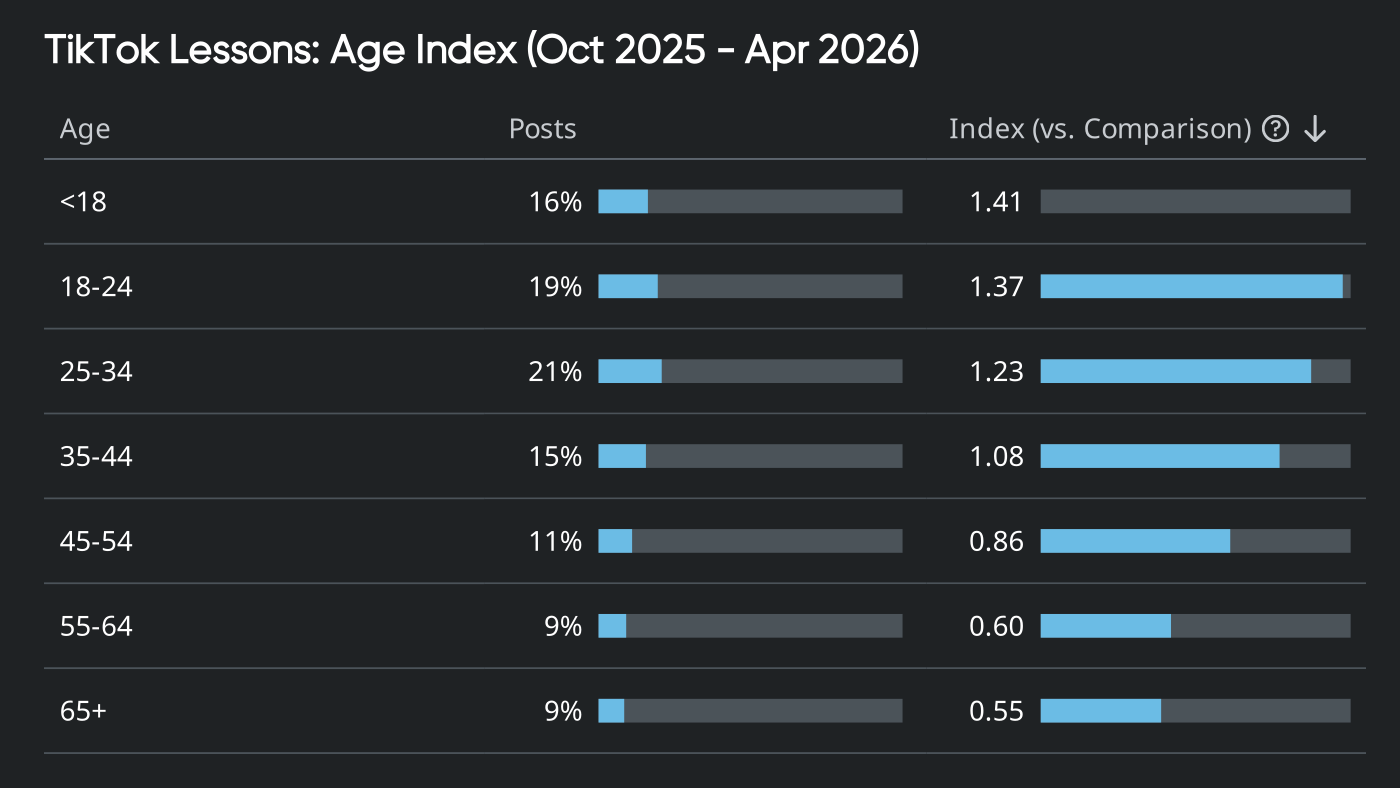
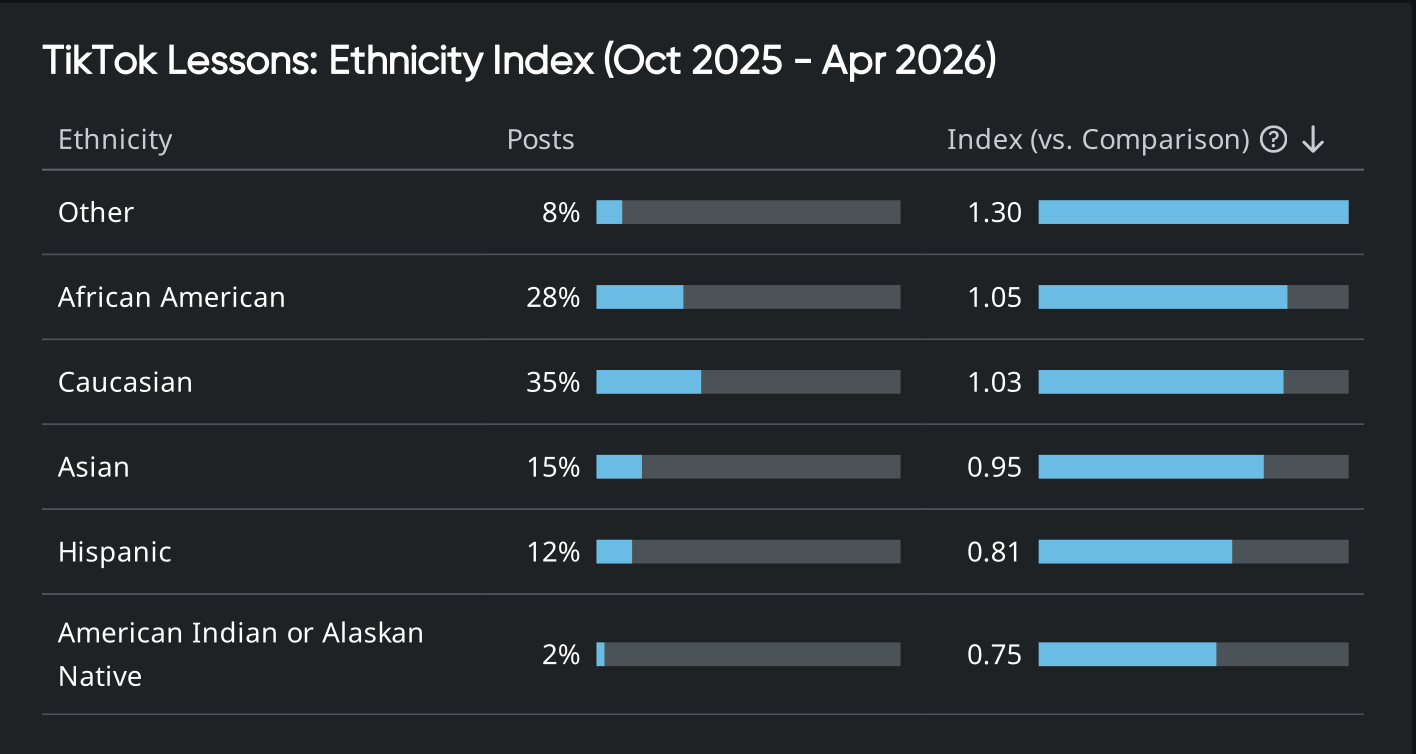
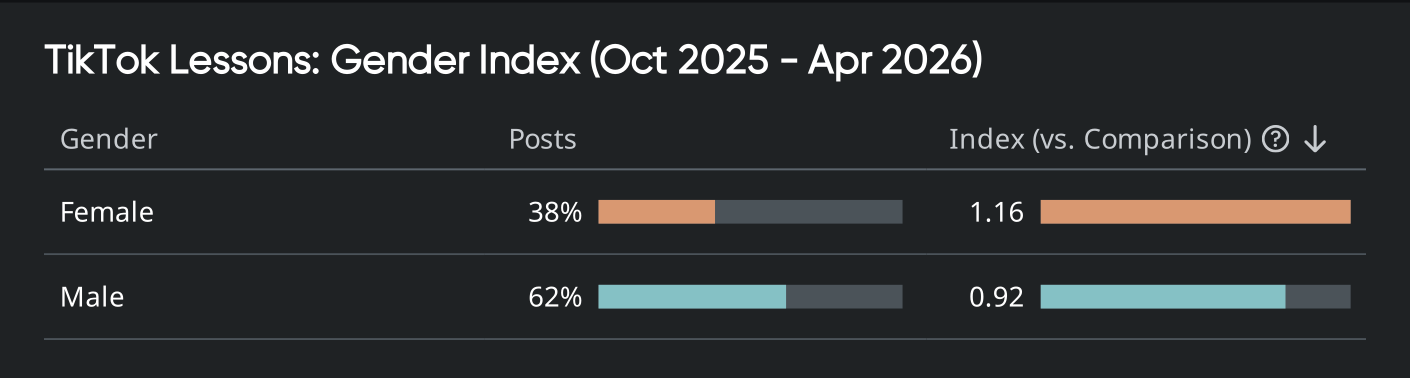
It shows TikTok as a behavior layer spreading across the general population. Which leads to the part most analyses avoid.
Most analysis stops at “TikTok drives discovery.” That is useless. The Quid view shows something more specific—about behavioral integration:
Which creates three implications:
This is where the usual GenAI summary falls apart. A prompt can tell you: “TikTok is popular for product discovery.” But because it lacks structured inputs, it cannot distinguish between signal and noise, or between temporary spikes and stable behaviors.
Quid shows:
It maps how behaviors stabilize into decisions over time, not just what people are saying. That is the difference between describing a trend and understanding how it will impact decisions that drive conversions. And that’s what your analyses must uncover to compete. That distinction allows teams to act early rather than react late.
If you are relying on surface-level summaries to understand TikTok behavior, you are already behind the curve. Quid surfaces where behaviors are stabilizing, how signals are evolving, and what is actually driving decisions beneath the content.
That is the difference between reacting to trends and acting on them. Quid provides the visibility needed to act on these signals as they form, not after they have already shaped the market. Connect with us today ot learn more!
What are micro-habits in the context of TikTok?
Small, repeatable actions that users can easily integrate into daily routines, often demonstrated through short-form content.
Why is neutral sentiment so high?
Because the behavior is normalized. People are not reacting emotionally. They are consistently engaging.
Why do “lifehack” videos convert so well?
They solve a single, clear problem and can be tested immediately.
Is TikTok still mainly entertainment?
No. It functions as a hybrid platform for discovery, validation, news, and cultural distribution.
What is the biggest risk for brands?
Misinformation and loss of message control due to rapid, decentralized content spread.