

.png?width=1252&height=362&name=QUID_Logo_WHITE%20(2).png)
.png?width=1380&name=template%20even%20text%20(16).png "<span id=\"hs_cos_wrapper_name\" class=\"hs_cos_wrapper hs_cos_wrapper_meta_field hs_cos_wrapper_type_text\" style=\"\" data-hs-cos-general-type=\"meta_field\" data-hs-cos-type=\"text\" >What Actually Moves During Spooky Season and What Just Gets Clicks?</span>")
Halloween conversation starts long before October. Quid's analysis shows a meaningful difference between Halloween topics that generate broad conversation and those tied to shopping behavior.
From June through September 2026, Quid identified 5.1 million Halloween mentions and 4.6 million posts.
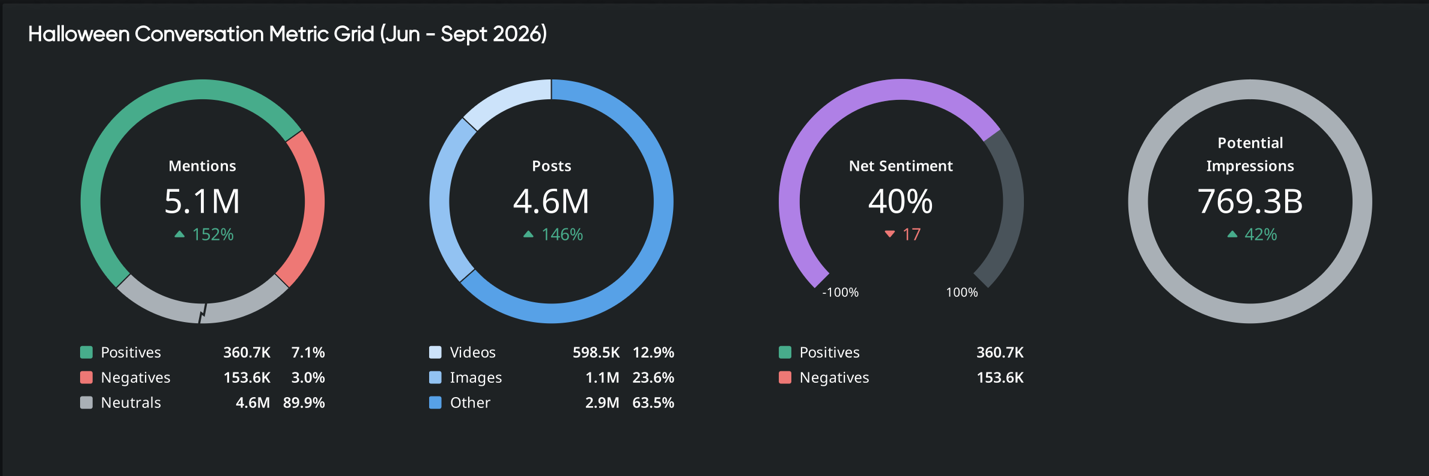
Conversation climbed throughout the summer before accelerating as fall approached. But attention alone does not tell brands what consumers intend to buy.
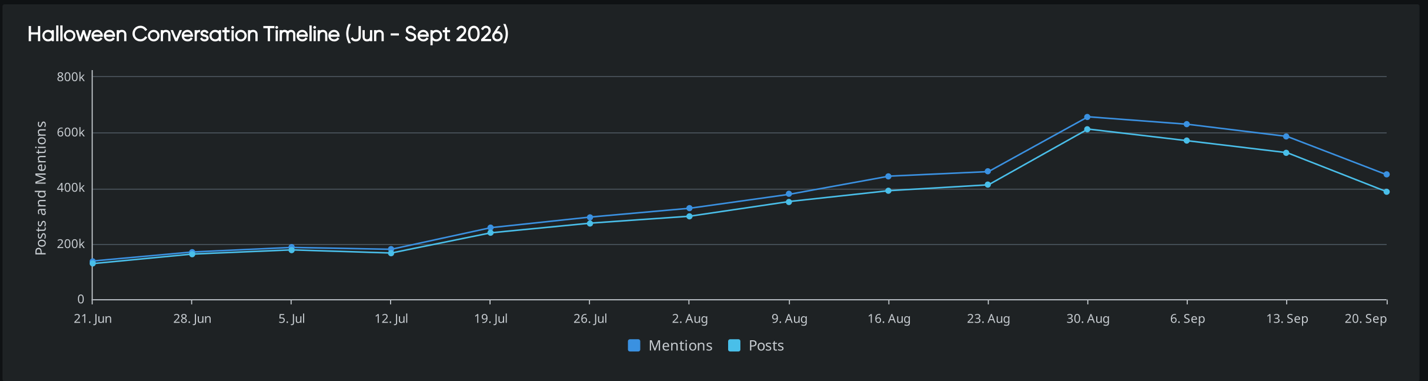
How much Halloween conversation is happening?
Quid identified 5.1 million mentions and 4.6 million posts being shared online from June through September 2026.
What generates the most general Halloween conversation?
The most general Halloween conversation centers on Halloween horror entertainment. This subsection is the largest cluster in the broader social conversation at 9.9%.
What stands out when consumers talk about buying?
Early seasonal shopping, affordable and distinctive decor, promotions, costumes, apparel and beauty all emerge prominently in the purchase-focused network.
Does high Halloween engagement indicate purchase intent?
Halloween engagement does not necessarily indicate purchase intent, no. Entertainment, events and cultural conversation can attract substantial attention without showing the same transactional signals found in shopping-focused conversations.
When does Halloween shopping begin?
The data shows consumers shopping and preparing well before October, including explicit discussion of early purchases, discounts and limited availability.
The broader conversation is purchase-oriented, while discussion shifts toward decor, costumes, apparel, beauty, and other products consumers can use to participate in the season. This insight is critical for brands deciding where to put October budget and creative energy.
Entertainment owns a significant share of the broad Halloween conversation.
Halloween horror entertainment represents 9.9% of the overall Quid Discover network. Another 5.8% cluster centers on Halloween films, songs and stories. Halloween Horror Nights accounts for another 3.6%.
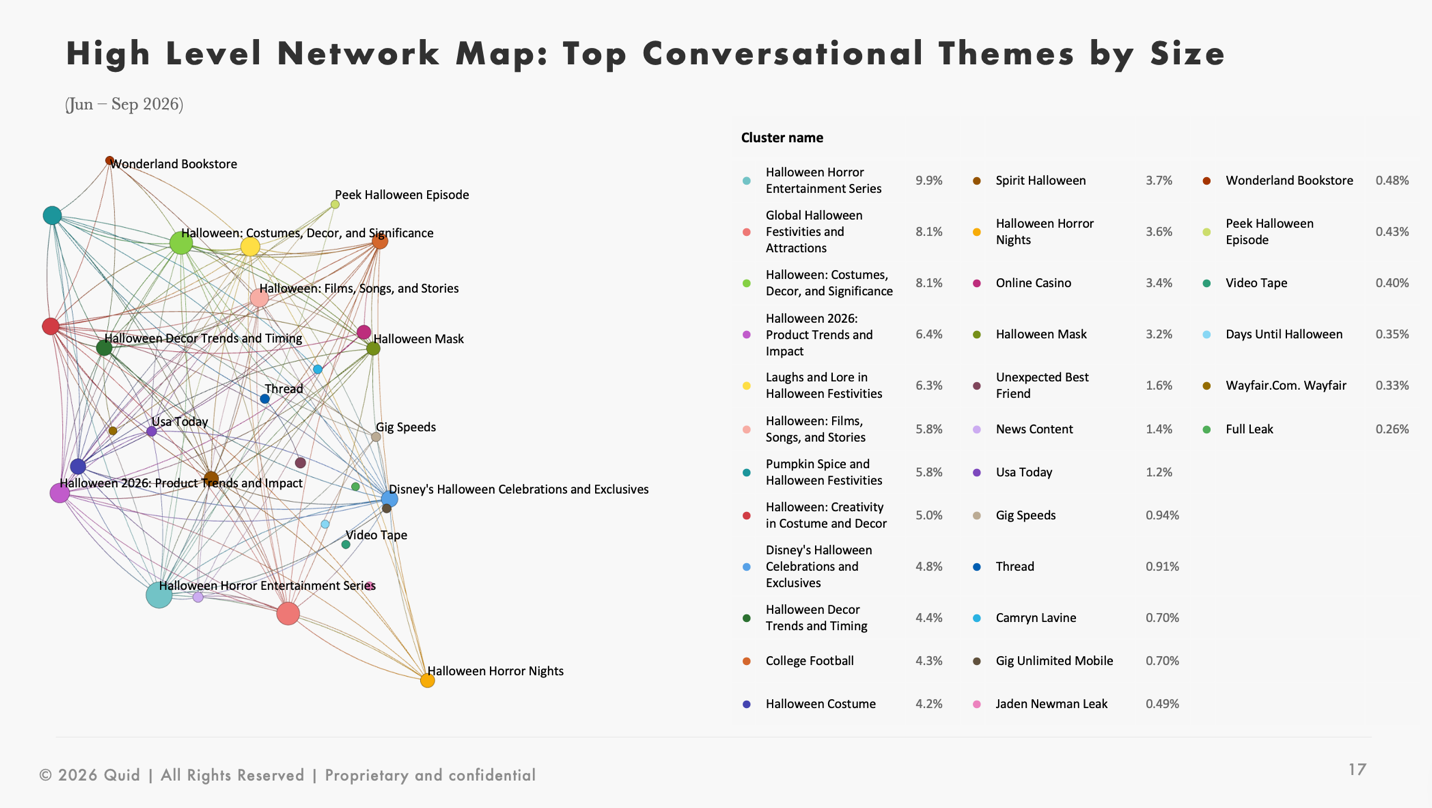 Those conversations demonstrate cultural attention. Consumers are discussing movies, franchises, music, games, attractions and other seasonal entertainment.
But the purchase-intent network tells a different story.
When Quid isolates shopping-oriented Halloween conversation, products and shopping behaviors move to the foreground.
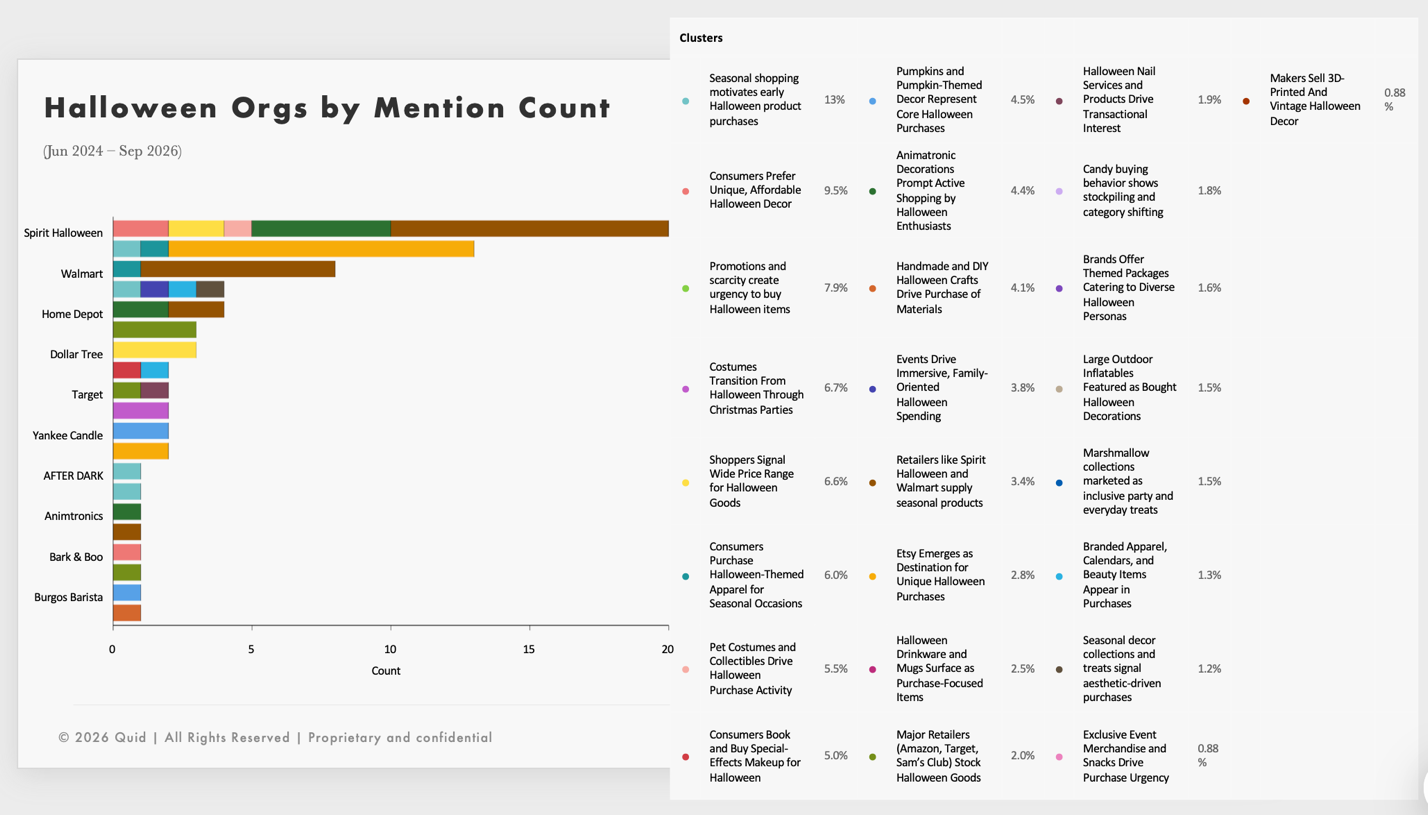
The largest cluster, representing 13% of the purchase-focused network, centers on early seasonal shopping. Consumers discuss wanting Halloween merchandise, beginning preparations early and responding to discounts and free shipping offers.
Another 7.9% centers on promotions and scarcity, including sellouts, limited availability and calls to buy before products disappear.
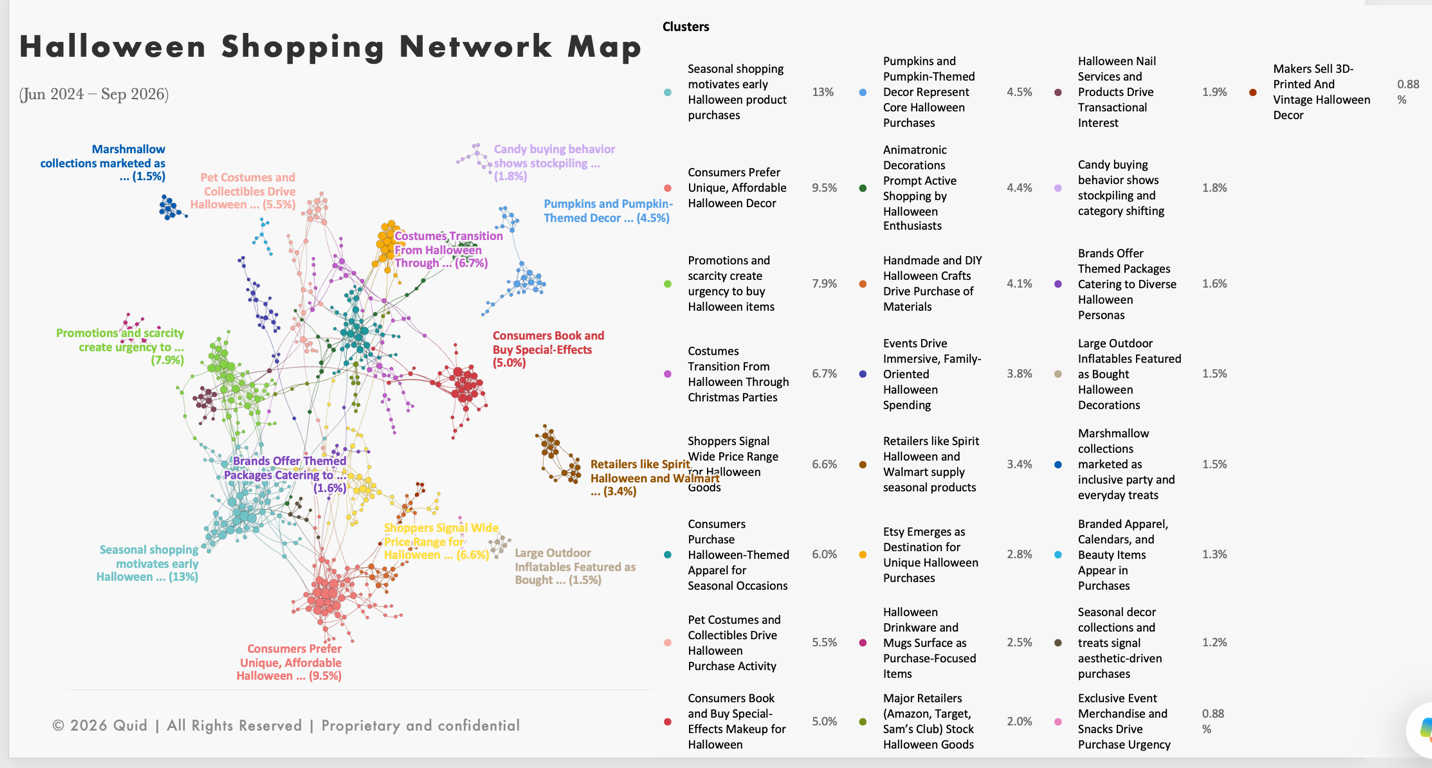
That distinction shows marketers that Halloween participation starts while consumers are still anticipating the season. Waiting until October to introduce seasonal products can mean arriving after some shoppers have already started looking.
The broader Halloween conversation also contains strong action-oriented language. “Buy,” “go for,” “wear,” “watch,” “need,” “order,” “check out” and “recommend” all appear prominently in Quid’s behavior analysis. At the same time, phrases such as “not buy,” “not want,” “cancel” and “stay away” show that consumer activity includes rejection as well as interest.
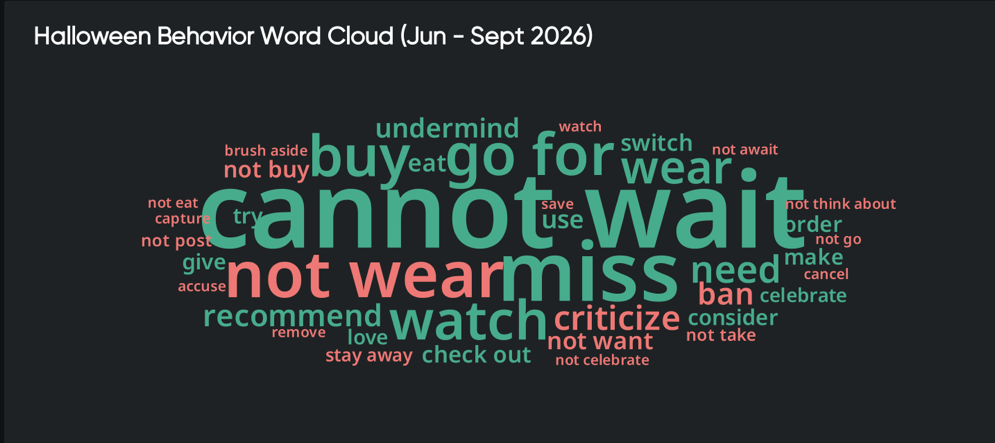
Volume alone cannot show whether consumers are moving toward or away from something. Behavioral language adds another layer. With it, brands can see the actions appearing around Halloween conversation and then investigate the underlying posts to understand what consumers are considering, purchasing, avoiding or recommending.
Decor appears repeatedly across the purchase-intent data rather than existing as one isolated trend.
Unique, affordable Halloween decor represents 9.5% of the purchase network. Consumers discuss actively hunting for inexpensive, unusual and hard-to-find pieces. Additional clusters capture pumpkins and pumpkin decor, animatronics, DIY craft materials, outdoor inflatables, drinkware and handmade or vintage-inspired pieces.
Animatronics offer a particularly clear example. Consumers discuss products from Spirit Halloween, Home Depot and Lowe's, including specific items and in-store pickups.
Decor therefore gives brands several ways into the season, from inexpensive impulse purchases to larger statement pieces.
The retailer data reinforces that behavior. Spirit Halloween leads organizational mentions in the purchase-focused network, followed by Walmart and Home Depot, with Dollar Tree and Target also appearing prominently.
Costumes remain important, but the purchase conversation extends much further.
Costumes account for 6.7% of the purchase-focused network, with shoppers discussing multiple looks, pet costumes and outfits that can extend into other seasonal occasions. Halloween-themed apparel represents another 6%, while pet costumes and collectibles account for 5.5%. Special-effects makeup represents 5%.
Smaller categories reveal additional opportunities. Halloween nails, drinkware, handmade crafts, branded beauty items and event-exclusive merchandise all appear in transactional conversations.
The opportunity extends beyond selling something consumers need on October 31. Consumers are buying products that let them participate in spooky season for weeks or months.
Candy is central to Halloween, but it occupies a relatively small 1.8% of the purchase-intent network.
Within that conversation, however, the behavior is distinctly transactional. Consumers discuss buying candy early to avoid shortages, purchasing in bulk and looking for alternatives to manage cost. The analysis also identifies discussion of changing candy preferences and product mixes.
That makes candy a useful reminder that conversation size and commercial relevance answer different questions. A category does not have to dominate social conversation to represent a real purchase occasion.
Halloween attention is broad. Purchase intent is much more specific.
Entertainment can provide reach because movies, horror franchises and events naturally generate conversation. The shopping network shows where consumers begin moving from seasonal interest toward action: early shopping, distinctive decor, scarcity, costumes, apparel, beauty and collectible products.
For brands, the strongest Halloween strategy may therefore connect the two.
Halloween creates plenty of clicks. The more valuable signal is what consumers do once they are in the mood to participate.
Contact Quid to uncover the consumer conversations signaling where attention is turning into action.
What is purchase intent in social conversation?
Purchase intent refers to signals such as consumers discussing buying, ordering, shopping, pricing, availability or obtaining specific products. These signals should not be treated as confirmed sales.
Which Halloween category shows the strongest purchase signals in this analysis?
The largest purchase-focused cluster centers on early seasonal shopping, while decor appears across several additional purchase clusters.
Are costumes still important for Halloween brands?
Yes. Costume conversation represents 6.7% of the purchase-focused network and includes traditional costumes, multi-use outfits and pet costumes.
Does viral Halloween content mean consumers are buying?
No. The broader Halloween network contains substantial entertainment and cultural conversation that demonstrates attention without necessarily demonstrating transactional intent.
When should brands begin Halloween marketing?
The data shows Halloween shopping behavior beginning before October, including early preparation, product searches and responses to promotions.