

.png?width=1252&height=362&name=QUID_Logo_WHITE%20(2).png)
.png?width=1380&name=template%20even%20text%20(9).png "<span id=\"hs_cos_wrapper_name\" class=\"hs_cos_wrapper hs_cos_wrapper_meta_field hs_cos_wrapper_type_text\" style=\"\" data-hs-cos-general-type=\"meta_field\" data-hs-cos-type=\"text\" >What Does the Pumpkin Spice Conversation Reveal About Fall Consumer Trends?</span>")
The pumpkin spice debate has been stuck on the wrong question for a decade. It was never whether the PSL is over, it's what other flavors consumers now look for in fall.
Has pumpkin spice peaked?
The data does not show a clear decline. Pumpkin spice remains a major seasonal conversation, while consumer reactions range from enthusiastic to fatigued.
What flavors are gaining attention alongside pumpkin?
Apple, maple, salted caramel, chai and gingerbread appear across the TikTok conversation, with additional experimentation around flavors such as Fuji apple and ginger.
Are consumers abandoning pumpkin spice?
No. Pumpkin remains prominent in beverages, baking, snacks, décor and seasonal shopping. Consumers are also engaging with a broader range of fall products and rituals.
Why should brands care?
A broader definition of fall creates more ways to participate in seasonal demand. Brands can retain familiar pumpkin products while testing complementary flavors, formats and experiences.
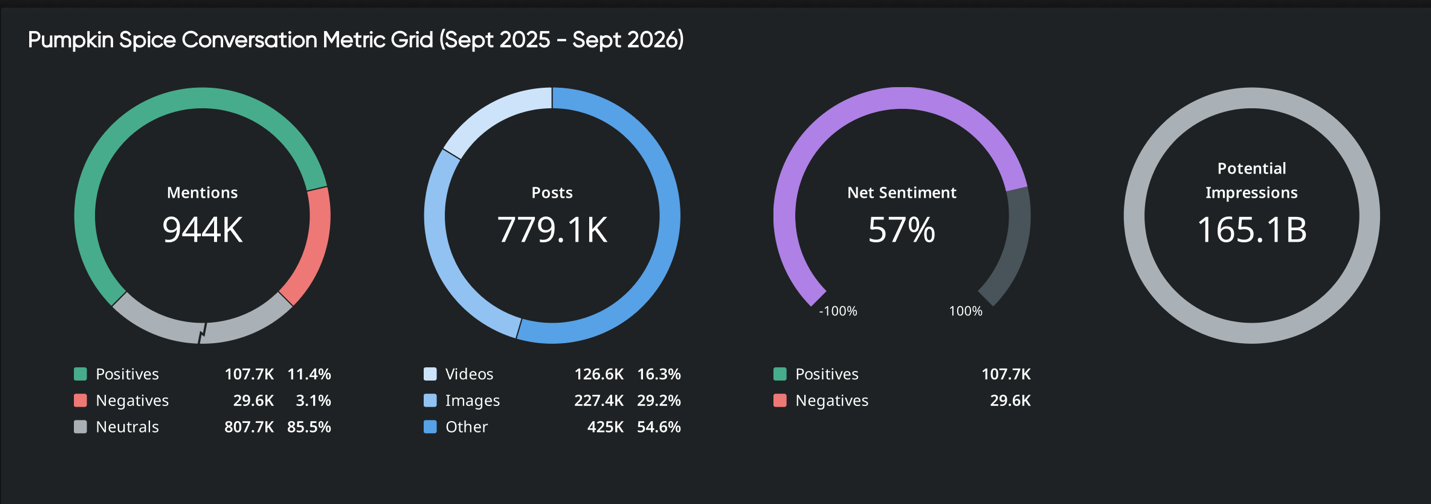
Quid data shows pumpkin spice still carries substantial cultural and commercial weight. Across the broader pumpkin spice conversation from September 2025 through September 2026, Quid identified 944,000 mentions and 779,100 posts, with 165.1 billion potential impressions. Net sentiment reached 57%.
But pumpkin is sharing the season, as TikTok conversations reveal consumers exploring apple, maple, salted caramel, chai, gingerbread, and other seasonal flavors alongside pumpkin. Major brands and retailers are doing the same, expanding their fall assortments instead of relying on one familiar flavor.
For retailers and CPG brands, that makes the pumpkin spice conversation bigger than whether the PSL has peaked. The more valuable question is what consumers are using to define fall now and where brands have room to expand.
The broader conversation does not support writing pumpkin spice off. Quid's Pumpkin Spice Conversation Metric Grid shows 944,000 mentions across the September 2025 to September 2026 period. Of those conversations, 107,700 were positive, 29,600 were negative and 807,700 were neutral.
The language surrounding pumpkin spice also contains both sides of the cultural relationship. Attributes include "love," "favorite," "delicious," "crave," "excited" and "obsess," alongside "hate," "gross," "tired" and "worst." Behaviors show consumers wanting, trying, buying, ordering and making pumpkin spice products, while others talk about avoiding or not wanting them.
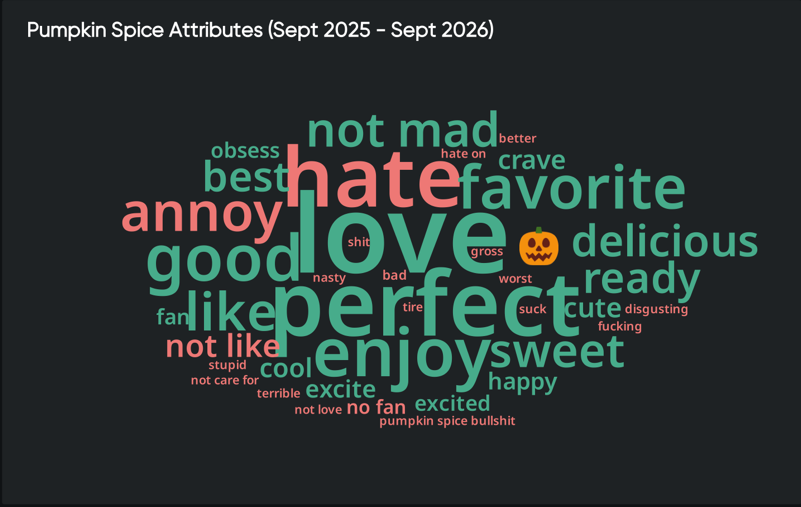
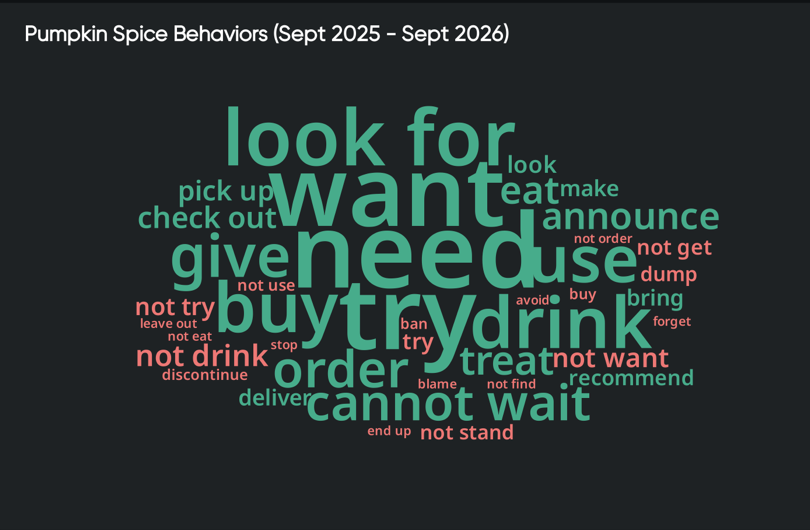
That mixed response demonstrates that polarization around a familiar seasonal product can look very different from disappearance.
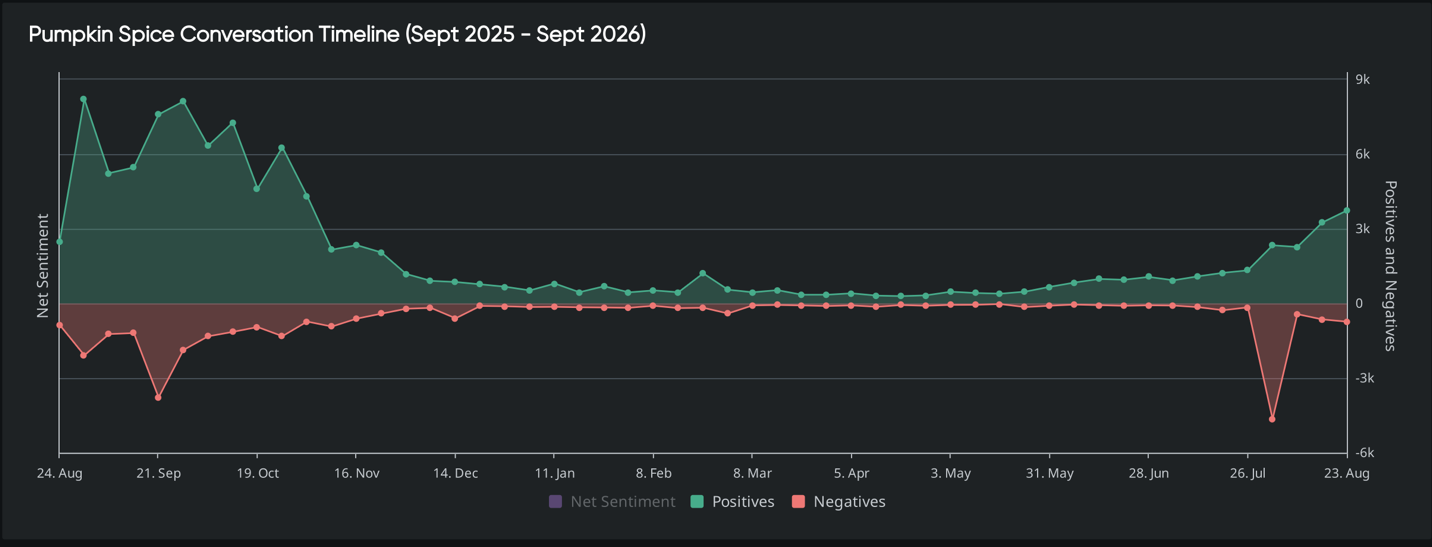
The timeline provides additional context. Pumpkin spice conversation follows a pronounced seasonal cycle, rising around the fall season rather than maintaining the same level of attention throughout the year.
For brands, continued scale changes the strategic question. Removing pumpkin simply because consumers joke about pumpkin-spice fatigue could mean walking away from a highly recognizable seasonal cue. The stronger opportunity is to understand what consumers want alongside it.
The TikTok network makes the expansion of fall particularly clear. The largest cluster in Quid's Flavored Drink Network Map is "Consumers Exhibit Mixed Enthusiasm for Pumpkin Spice This Season," representing 12% of the network. But it sits within a much broader collection of conversations.
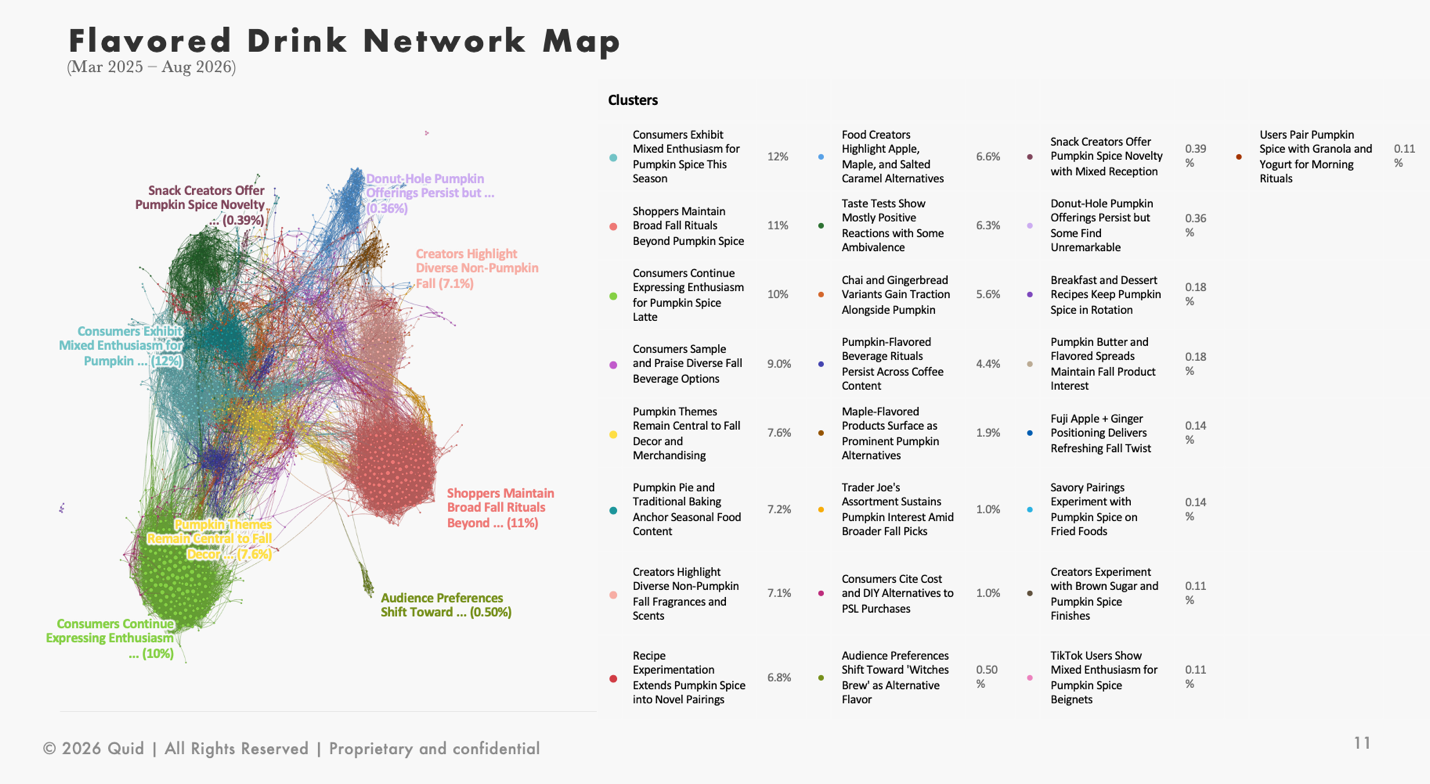
"Shoppers Maintain Broad Fall Rituals Beyond Pumpkin Spice" represents another 11%, while continued enthusiasm for the Pumpkin Spice Latte accounts for 10%. Other substantial clusters focus on pumpkin décor and merchandising, non-pumpkin fall fragrances, apple, maple and salted caramel alternatives, chai and gingerbread and broader beverage experimentation.
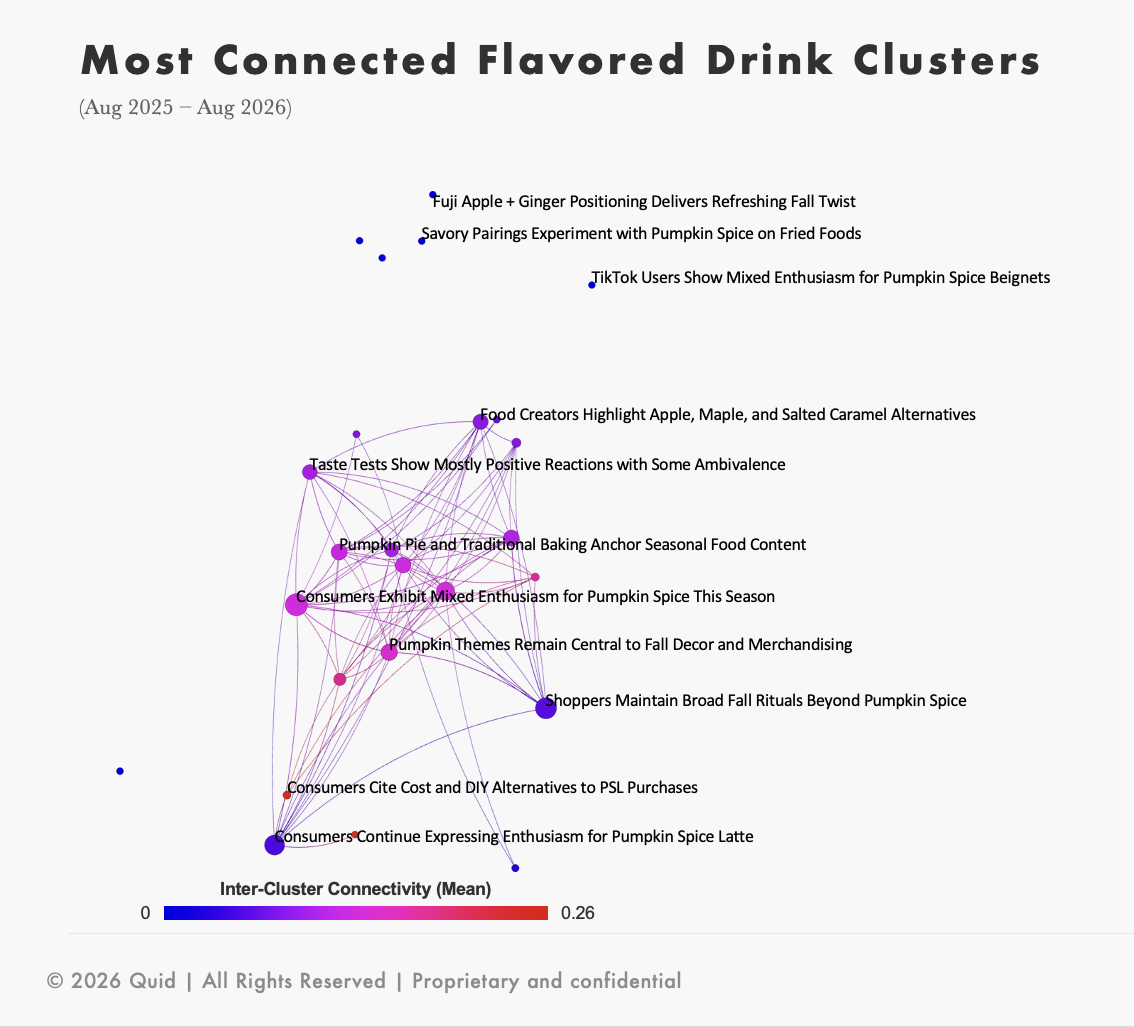
The network shows why looking only at the biggest flavor can obscure the larger opportunity. Pumpkin remains central, but consumers are connecting fall to a collection of tastes, products and rituals.
That gives brands more territory to work with. A seasonal strategy can serve consumers who still wait for pumpkin spice every year while creating additional entry points for people who prefer apple, maple, chai or another fall profile.
Flavor is only one way consumers experience the season. The second-largest TikTok cluster, at 11% of the network, centers on broader fall rituals. Quid identified conversation around seasonal shopping trips, fall décor, clothing, movie marathons and cozy routines.
Pumpkin itself also extends beyond taste. Another 7.6% cluster centers on pumpkin themes in fall décor and merchandising, with creators featuring pumpkin table décor, clothing and seasonal products.


That distinction opens a much larger seasonal opportunity, one where the retailer does not have to win the pumpkin spice beverage battle to participate in pumpkin season.
Brands should therefore evaluate the consumer behaviors surrounding a seasonal trend, not simply the product category where the trend first became famous.
Apple and maple provide two of the strongest signals in the current data. The TikTok network contains a 6.6% cluster devoted specifically to food creators highlighting apple, maple and salted caramel alternatives. Creators feature apple pie, apple cider donuts, maple butter, maple-flavored spreads and other products across recipes and seasonal product testing.
Maple also emerges independently. Quid identifies a cluster around maple-forward products including maple sea salt popcorn, maple leaf cookies, maple butter, maple lattes and maple-glazed donuts. Some products combine maple and pumpkin rather than forcing consumers to choose between them.


The media data reinforces that pattern. We see Aldi pairing apple cider and pumpkin within its autumn assortment. Trader Joe's is bringing back apple cider donuts, while Thomas' is returning pumpkin spice and maple French toast bagels.
For brands, these signals point to portfolio expansion. Familiar seasonal flavors can extend an assortment without requiring consumers to learn an entirely new definition of fall.
The TikTok data also shows consumers engaging with spice-forward alternatives, along with a distinct conversation cluster around chai and gingerbread variants gaining traction alongside pumpkin. Posts include iced pumpkin chai, iced gingerbread chai and chai spice lattes, with consumers using chai both in combination with pumpkin and as a seasonal option of its own.
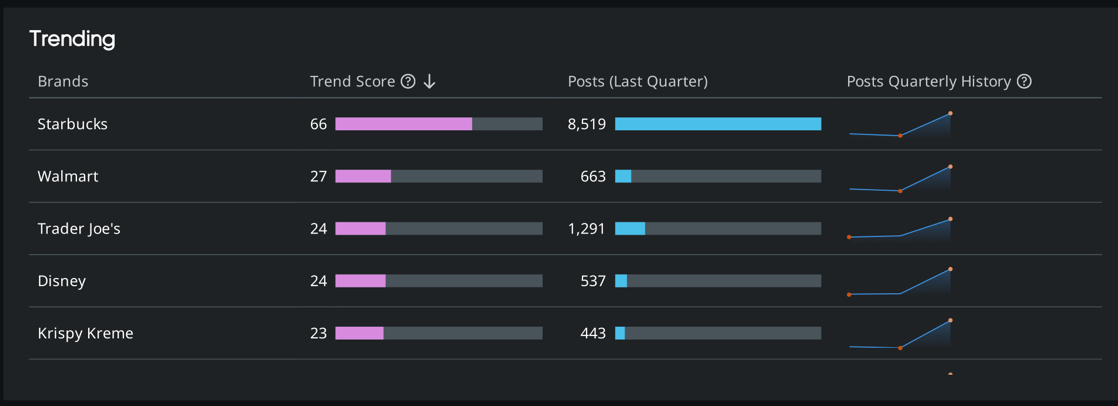
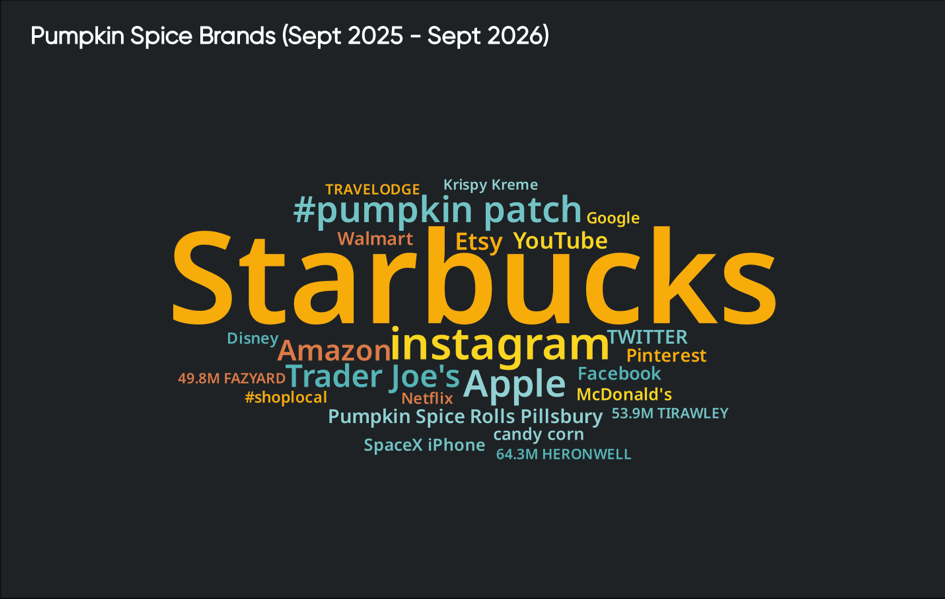
Starbucks' 2026 fall menu provides a commercial example. Alongside pumpkin, coverage shows the company introducing banana bread-inspired drinks and a chai-cider hybrid, with pecan also returning to the menu.

The opportunity here extends beyond launching another flavored latte.
Brands can watch which flavor families consumers naturally connect. Chai, cider, gingerbread and pumpkin can overlap, creating opportunities for combinations, limited editions and product extensions that retain recognizable seasonal cues while offering something new.
Some signals point considerably further away from traditional pumpkin spice.
Quid identified positive early reactions to a Fuji apple and ginger seasonal flavor, with TikTok reviewers comparing the profile to sparkling apple cider with a light ginger kick. Another small cluster centers on consumers preferring "Witches Brew" seasonal beverages over pumpkin options.
The media analysis also surfaces tiramisu and ube. Dunkin' introduced four limited-time tiramisu-inspired drinks, while Chobani introduced an ube sweet cream coffee creamer. These signals need context though, as their presence does not establish them as the next pumpkin spice. They show where experimentation is occurring.

Brands can use smaller conversation clusters as areas to investigate rather than immediate proof of mass-market demand. Brands need to distinguish between established flavors, growing alternatives, and early signals worth watching.
Pumpkin also continues to evolve and move into everyday routines. Creators use pumpkin spice in chia pudding, yogurt bowls, granola and other breakfast formats.

That creates another path for brands, as innovation does not have to begin by replacing the dominant flavor. Product format, pairing, occasion and use case can create new territory around an existing consumer association.
Another issue behind fall flavor strategy is that consumers know when brands are trying to start fall early.
The media analysis identified substantial conversation around consumers shifting seasonal timing and pushing back on "season creep." Monthly post volume for that theme reached 351 in May, 2,894 in June, 3,419 in July and 3,142 in August.
At the same time, early conversation gives brands an obvious reason to launch seasonal products before fall officially arrives. That creates a genuine planning problem. Consumer interest can begin early without every consumer welcoming an increasingly early rollout.
Brands should evaluate timing as part of the trend itself. Conversation can help teams identify when anticipation begins, when it accelerates, and when early launches start generating resistance.
The calendar alone cannot answer those questions.
The Pumpkin Spice 2026 dashboard adds another dimension by showing that the conversation does not distribute evenly across audiences.
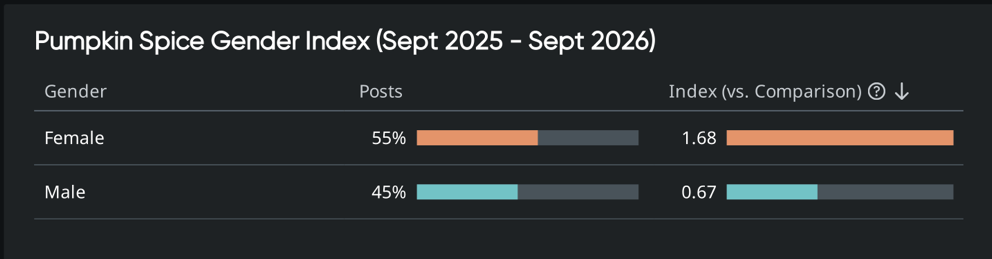
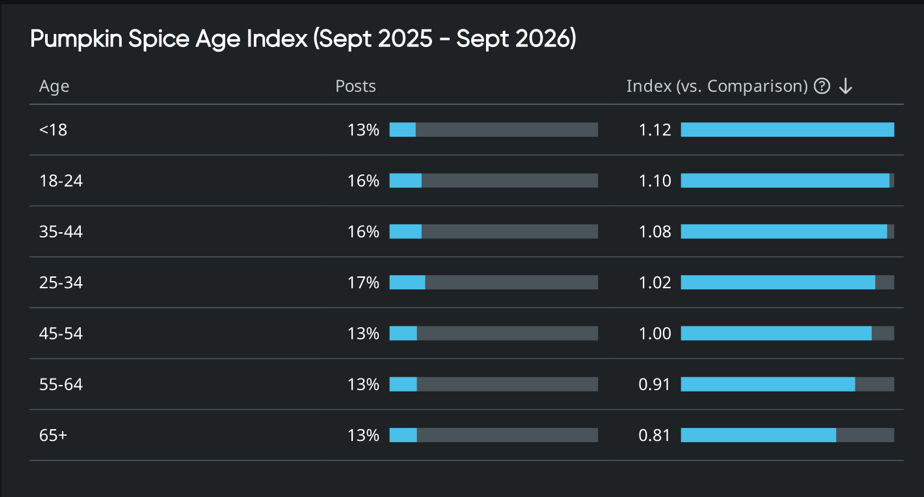
Women account for 55% of the identified gender conversation and index at 1.68 against the comparison audience. Men account for 45% but index at 0.67. The age view also shows differences in how age groups index within the conversation.
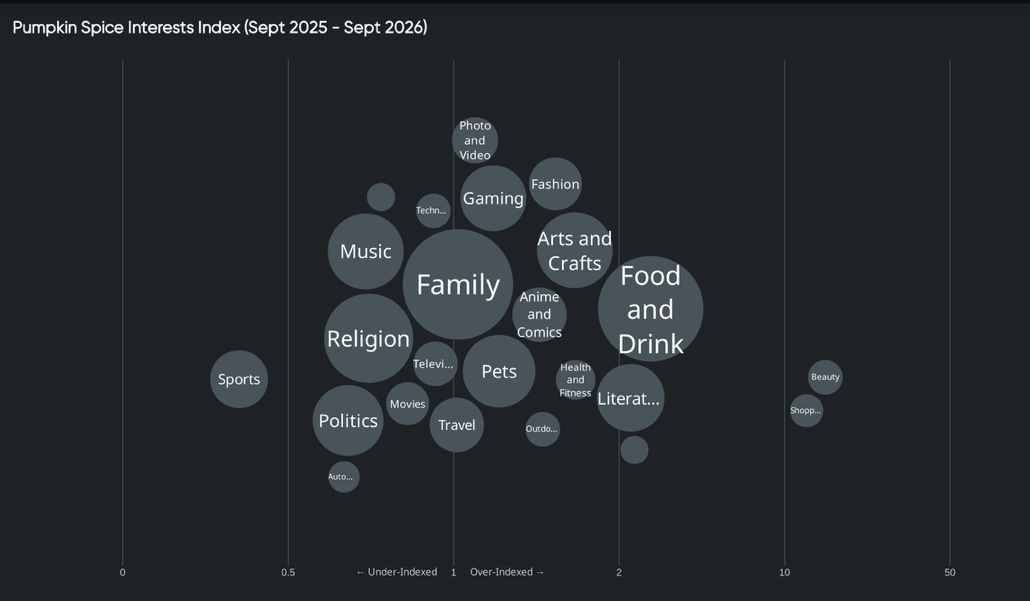
The interests view maps pumpkin spice conversation across areas including family, food and drink, arts and crafts, music, pets, gaming, sports, travel, fashion, beauty and shopping.
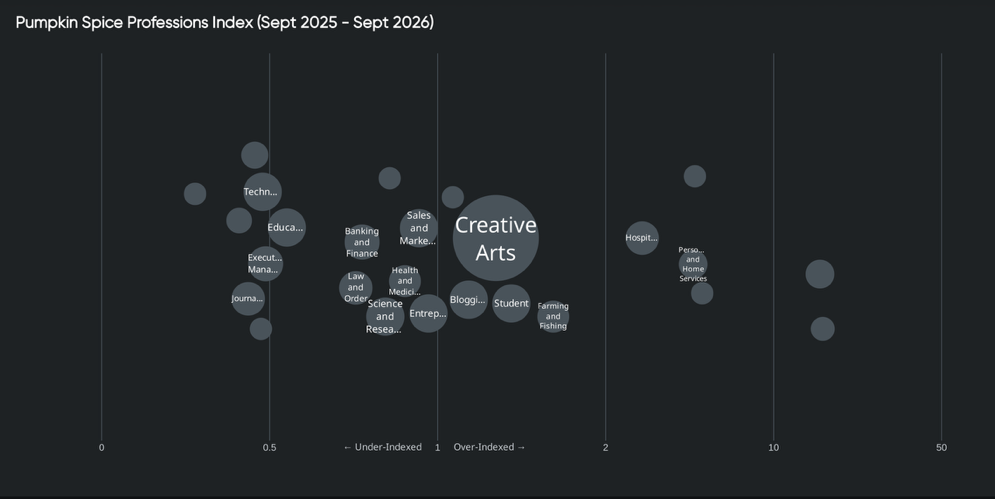
The professions view similarly shows conversation spanning creative arts, science and research, sales and marketing, education, technology and other fields.
For brands, audience indexing can help move seasonal planning beyond a generic "pumpkin spice consumer." Volume tells teams how much conversation exists. Indexing helps show where an audience appears strongly relative to a comparison population.
That can inform which audiences deserve deeper analysis before teams make decisions about creative, channels or product positioning.
Pumpkin spice is still loved, but fall has more room than pumpkin spice alone can fill. The broad conversation remains substantial. Social data shows continued enthusiasm for PSLs, pumpkin baking and pumpkin-themed merchandising.
At the same time, consumers are exploring apple, maple, salted caramel, chai, gingerbread and other flavor families, while broader rituals show that seasonal demand extends well beyond food and beverages.
For brands, that creates several strategic questions worth tracking:
The goal should not be finding one flavor capable of dethroning pumpkin spice. The opportunity is understanding how the consumer definition of fall is expanding and deciding where a brand belongs within it.
That is the "why care" for brands. A trend can remain powerful while the market around it changes. Brands that only measure whether pumpkin spice is up or down can miss the new behaviors, adjacent tastes and emerging opportunities forming around it. Quid helps teams see those relationships while there is still time to act on them.
Quid brings together media, social and consumer conversation to reveal how trends connect, which audiences are driving them and where new opportunities are beginning to emerge.
Contact Quid to see what your consumers are telling you before the next trend becomes obvious to everyone.

Has pumpkin spice peaked?
The data analyzed here does not show a clear collapse in pumpkin spice interest. Quid identified 944,000 mentions across the broader September 2025 to September 2026 conversation, while TikTok data shows continued enthusiasm for PSLs, pumpkin baking, seasonal products and merchandising.
What flavors could compete with pumpkin spice for fall attention?
Apple, maple, salted caramel, chai and gingerbread are among the clearest alternatives in the analyzed conversation. The data also contains smaller signals around options including Fuji apple and ginger, tiramisu and ube.
Why should brands track smaller flavor trends?
Smaller conversation clusters can help brands identify areas worth investigating before they become broadly established. Their presence alone does not prove mass-market demand, so teams should evaluate them alongside conversation growth, audience behavior and connections to larger trends.
Why does season creep matter to fall marketing?
The media analysis shows substantial conversation around early seasonal marketing. Consumers can anticipate fall products early while still objecting to brands rushing the season, making launch timing another signal brands should monitor.
How can brands use Quid for seasonal planning?
Quid can help teams examine conversation volume alongside network relationships, audience indexing, behaviors, attributes and emerging conversation clusters. That broader view helps brands distinguish established seasonal anchors from adjacent opportunities and earlier innovation signals.