

.png?width=1252&height=362&name=QUID_Logo_WHITE%20(2).png)
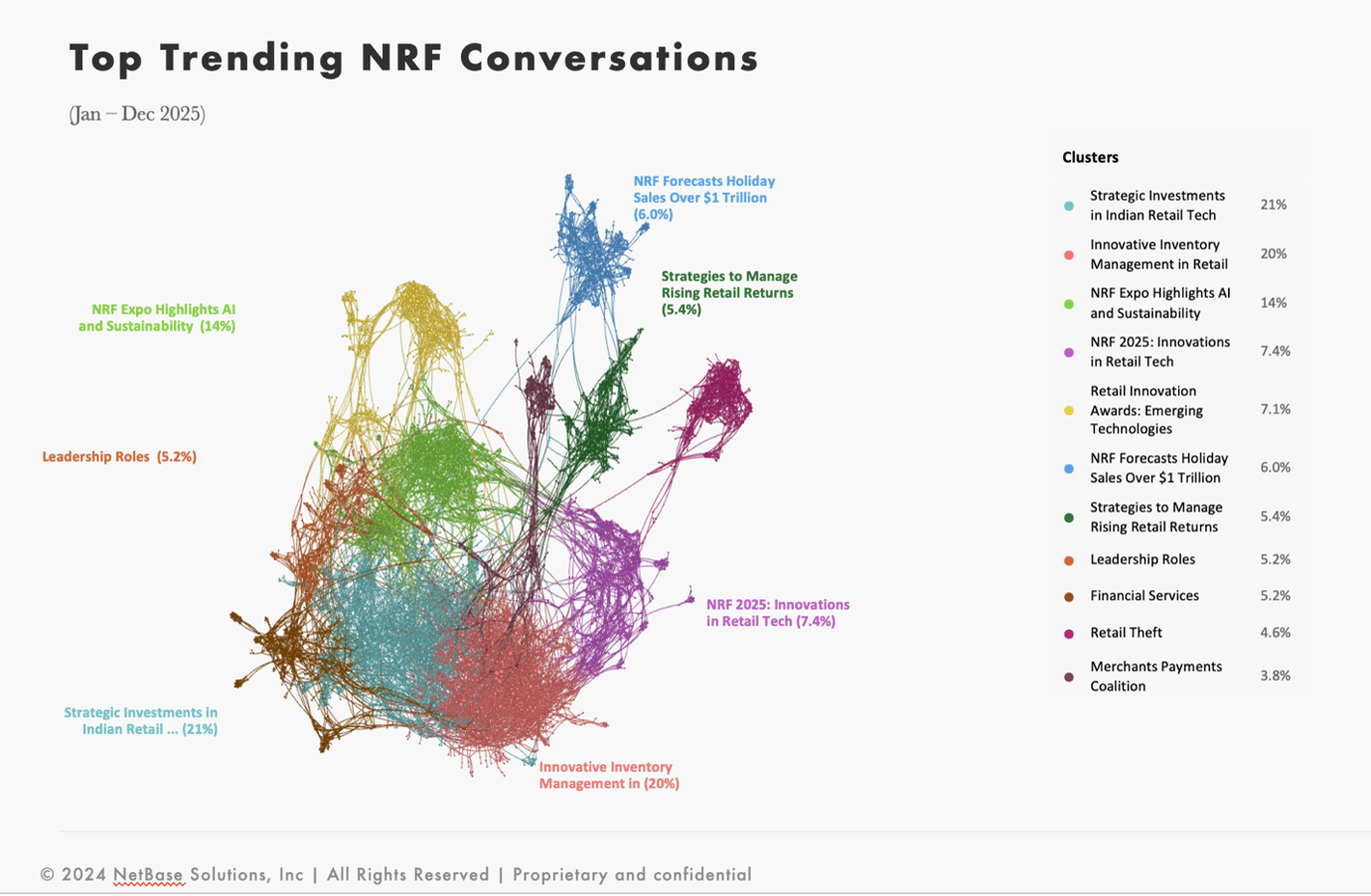
Retail enters 2026 after several years of sustained pressure. Inflation cycles. Supply chain instability. Rapid technology adoption. Shifts in how consumers shop, plan, and spend.
NRF brings those forces into focus. At a high level, the overarching NRF visual sets the frame for how retail leaders are thinking about the year ahead. It reflects a market that is no longer reacting to disruption in isolation, but instead aligning technology, operations, and leadership around execution.
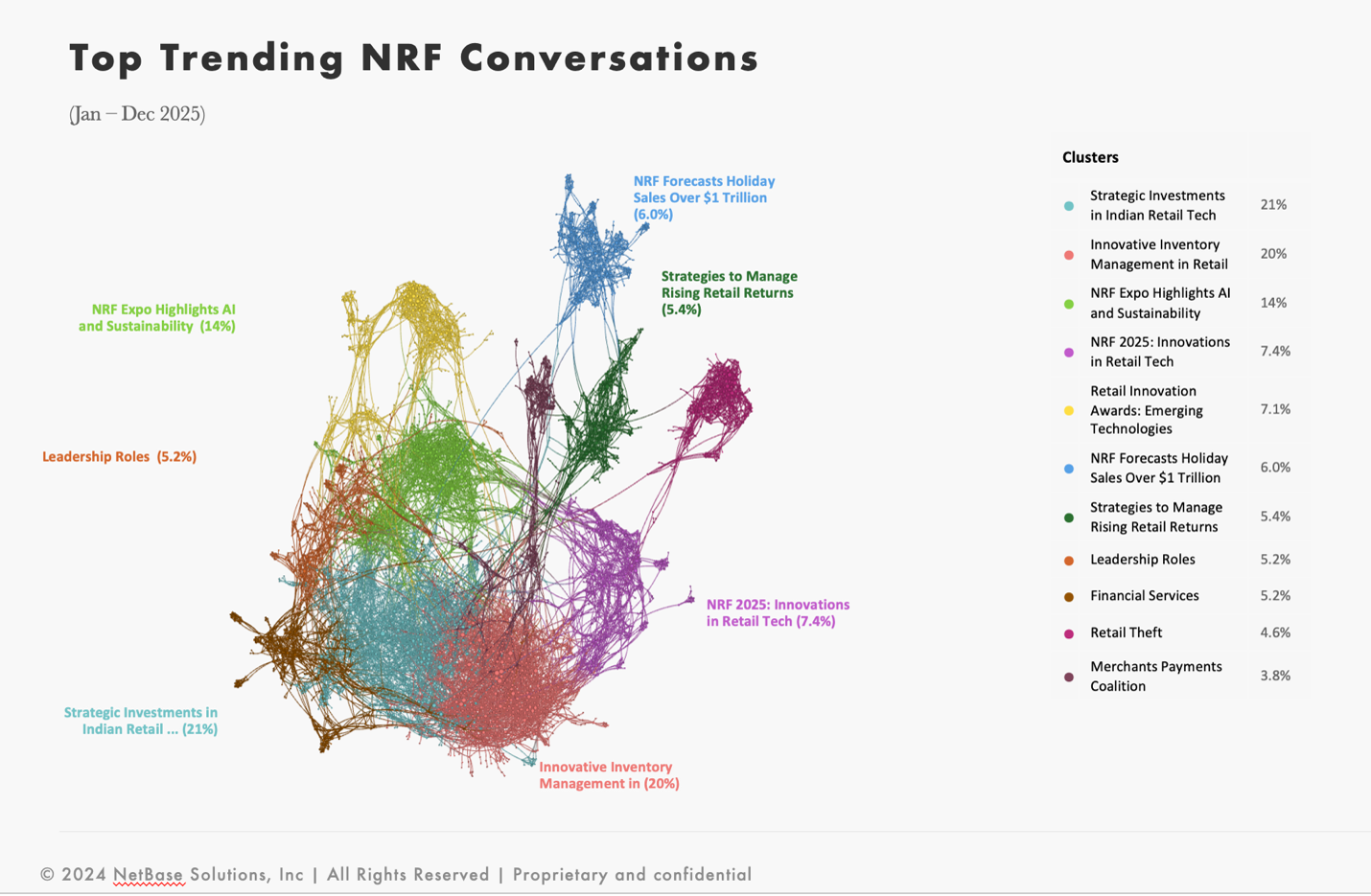
The retail sector is undergoing a significant transformation driven by technological innovations and shifting consumer behaviors. Key themes include the adoption of advanced technologies to enhance operational efficiency, the strategic management of evolving consumer preferences, and tackling economic and operational challenges. Retailers are also focusing on sustainability and ethical practices to meet consumer expectations and ensure environmental responsibility. Here's a breakdown:
Technological Innovations in Retail: The integration of technologies like AI, IoT, and automated systems is reshaping retail, enhancing operational efficiency and improving customer experiences. This theme covers the adoption and impact of these technologies across various retail operations.
Consumer Behavior and Market Trends: This theme addresses the shifting consumer preferences towards online shopping, sustainability, and personalized experiences, influenced by technological advancements and economic factors.
Challenges in Retail Operations: Retailers are facing challenges such as inventory management, theft, and adapting to new consumer behaviors, with economic pressures necessitating efficient returns management and innovative solutions.
Economic Impact and Market Dynamics: Focuses on how economic variables like inflation and consumer spending power affect retail growth and market dynamics, with insights into retail sales trends and projections.
Sustainability and Ethical Practices: Increasing commitment to sustainability and ethical practices in retail, aiming to reduce environmental impact and enhance consumer trust through sustainable and ethical operations.
With that context in place, the late-2025 NRF dataset allows us to zoom in. Rather than relying on opinion or prediction, it organizes retail conversation into measurable signals across sentiment, attributes, behaviors, and themes.
Read together, these visuals show an industry that has moved past reaction and into recalibration.
The NRF Metric Grid provides a high-level snapshot of how retail conversation is behaving.
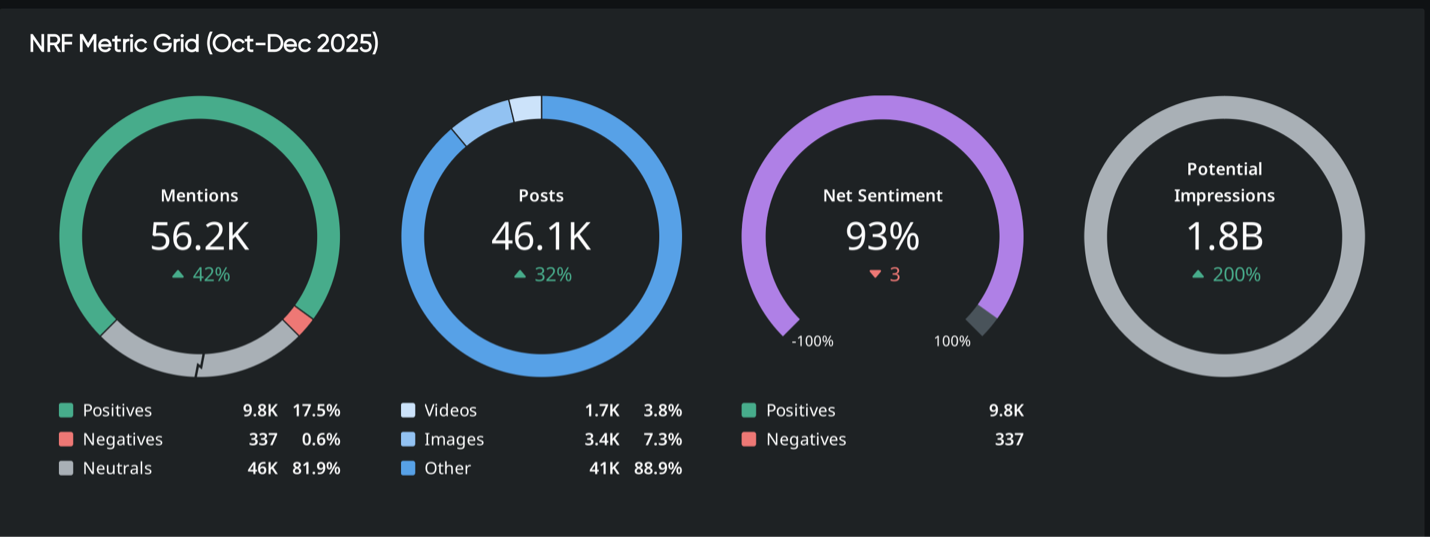
High conversation volume
Overwhelmingly neutral tone
Strong positive sentiment
Very limited negative activity
Retail discussions are neither panicked, nor showing exaggerated optimism.
Retailers and industry observers conversation reflects evaluation, adjustment, and forward-looking decision-making rather than reaction to shocks.
Conversation Attributes show what is driving the discussion.
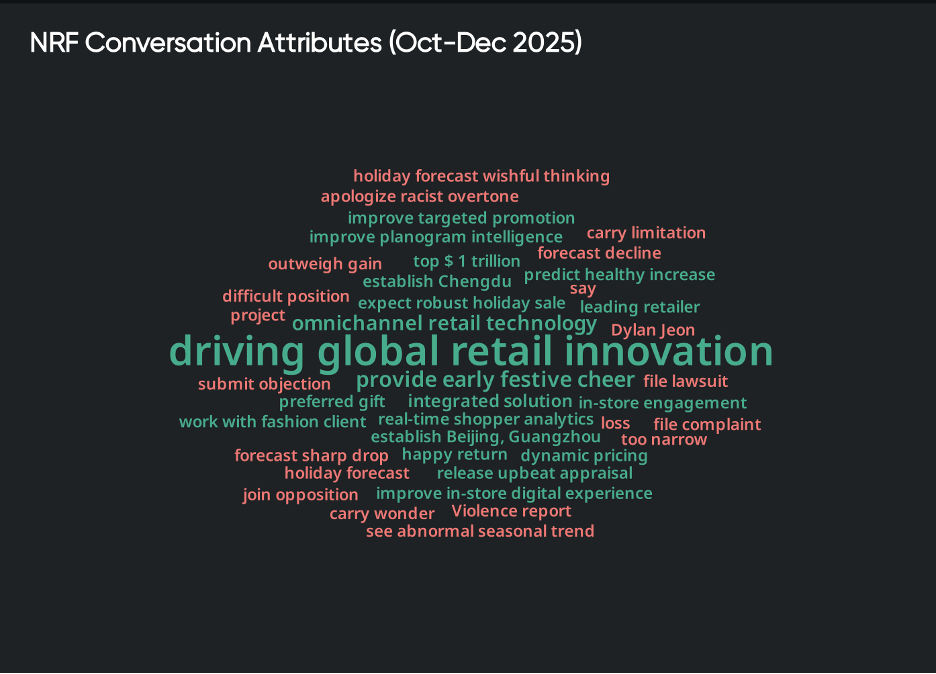
The most prominent attributes include:
Driving global retail innovation
Omnichannel retail technology
Real-time shopper analytics
In-store digital experience
Dynamic pricing
Expectations of robust holiday sales
These attributes point to a retail environment focused on execution. Innovation appears, but it is tied directly to operations. Digital tools are framed around visibility, pricing, and in-store engagement rather than abstract transformation.
Retail attention is settling around tools and capabilities that support daily decisions, and conversation emphasizes how retail functions, not just what it aspires to become.
Emotions capture how retail conversation sounds emotionally.
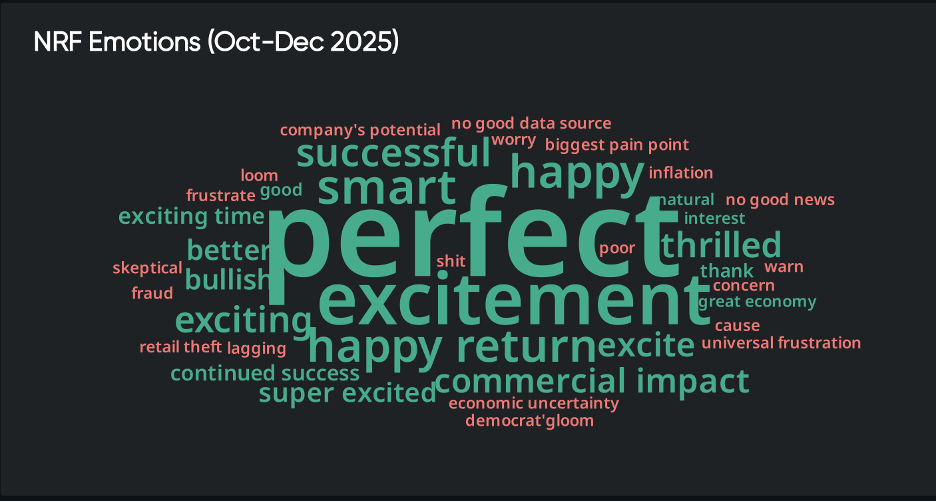
Positive emotional language dominates:
Excitement
Successful
Thrilled
Happy
Bullish
At the same time, caution remains present:
Concern
Inflation
Uncertainty
Frustration
Retail sentiment reflects confidence and awareness. Retailers and observers acknowledge economic pressure without letting it dominate the narrative. Optimism exists, but it is measured.
This emotional balance often appears when industries feel capable of managing complexity rather than being overwhelmed by it.
Behaviors point to action, not attitude.
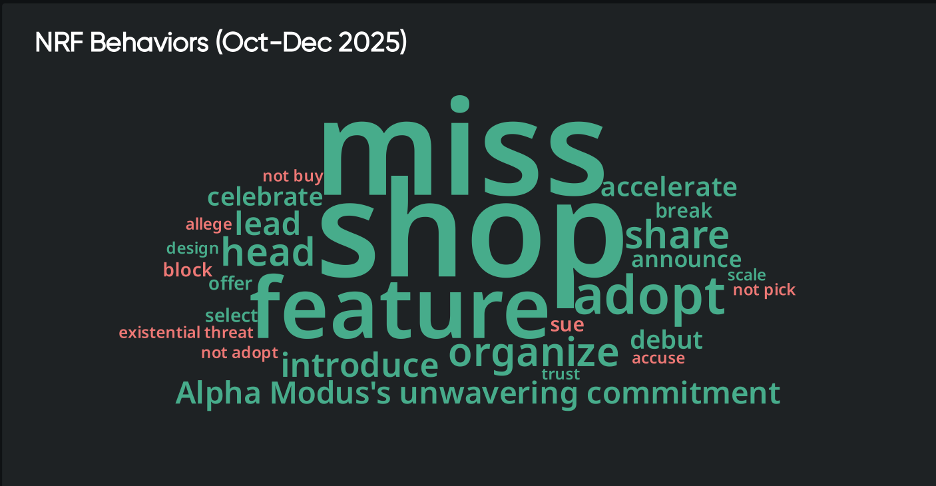
Key behaviors include:
Adopting features
Scaling operations
Introducing new capabilities
Organizing and planning
Designing retail experiences
Selecting technology partners
These verbs describe movement, not hesitation. Retailers are implementing, adjusting and scaling rather than waiting.
Behavioral language suggests momentum. Retailers are acting within constraints, not delaying decisions until conditions improve.
The topics consumers raise in retail discussions translate abstract trends into tangible focus areas for future-facing brands.
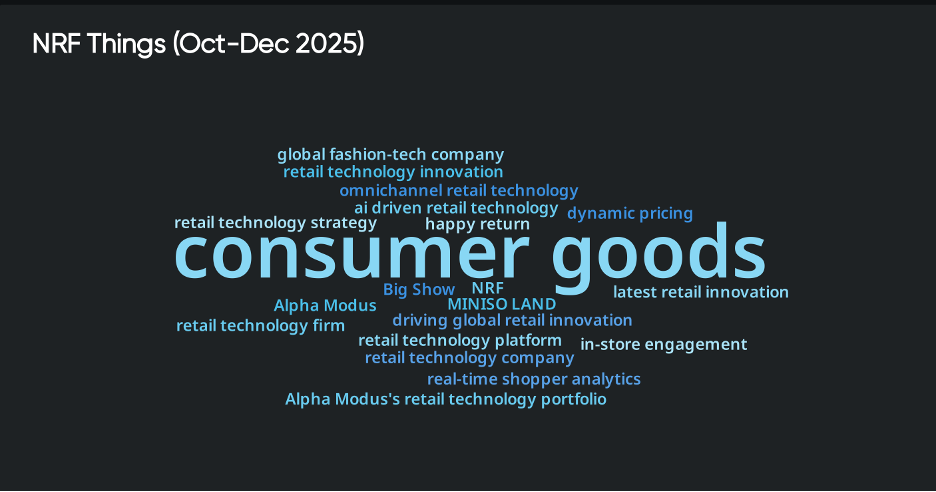
Frequently referenced items include:
Retail technology platforms
AI-driven retail technology
Omnichannel retail strategies
Real-time analytics
In-store engagement
These are operational components of modern retail environments.
Retail attention is centered on systems and capabilities that directly influence performance. The conversation favors infrastructure over experimentation.
Trending hashtags reveal how retail conversation is clustering socially.
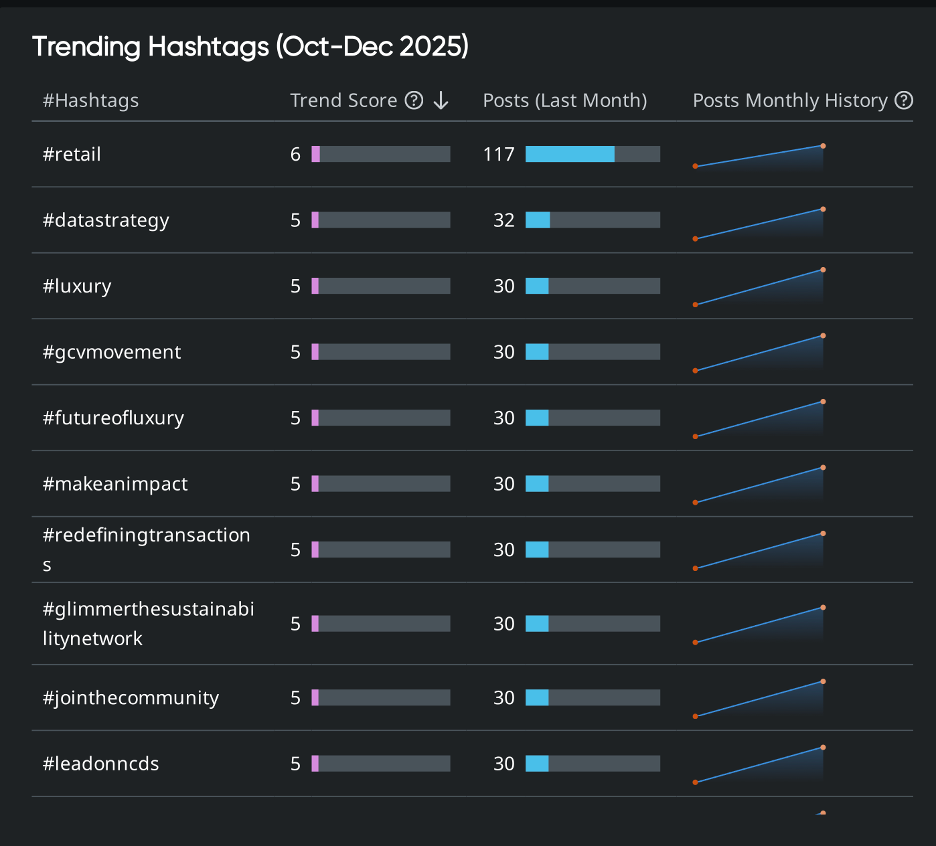
Common themes include:
Retail
Data strategy
Luxury
Future-focused retail conversations
Community and leadership signals
Hashtags indicate how conversation travels. These themes suggest retail discussions are spreading through professional, strategic, and leadership-oriented channels rather than consumer hype cycles.
Across all visuals, technology appears repeatedly, but always tied to use.
AI, analytics, and omnichannel tools are discussed as part of retail’s operating model. They support pricing, inventory decisions, customer engagement, and planning cycles.
Technology is shown as embedded infrastructure rather than a standalone trend.
When viewed together, the NRF visuals tell a consistent story.
Retail is emotionally steady and focused on infrastructure. It is managing economic pressure without retreat and aligning around execution rather than experimentation.
2026 consumers will reward retailers that integrate tools well, read consumer signals accurately and plan within constraint.
Key Takeaways
Retail sentiment remains stable and constructive
Technology is embedded in everyday retail operations
Consumers continue to engage, with value and planning in mind
Supply chain and economic pressure remain part of strategy
NRF acts as a directional reference point for retail leadership
Retail is not standing still. It is tightening its focus and preparing deliberately for what comes next.
Quid helps retail and consumer brands translate signals like these into clear strategy, planning and action. Connect with our team to understand what these NRF trends mean for your business.