

.png?width=1252&height=362&name=QUID_Logo_WHITE%20(2).png)
Key Takeaways:
Trust in sponsored content has always been something brands had to earn. But in recent years, the bar has moved. Consumers are more vocal than ever about what feels genuine and what doesn't, and social media has become the place where that verdict gets delivered in real time.
The “deinfluencing” wave that started on TikTok a few years back is a good example of this shift. What began as a niche corner of creator culture has grown into something much more mainstream, signaling how audiences are paying closer attention, asking harder questions, and making more deliberate choices about who and what they trust.
To understand what consumers now expect from branded content, we used Quid to monitor and analyse social sentiment around sponsored content, creator partnerships, and brand authenticity across platforms. Here's what the data revealed.
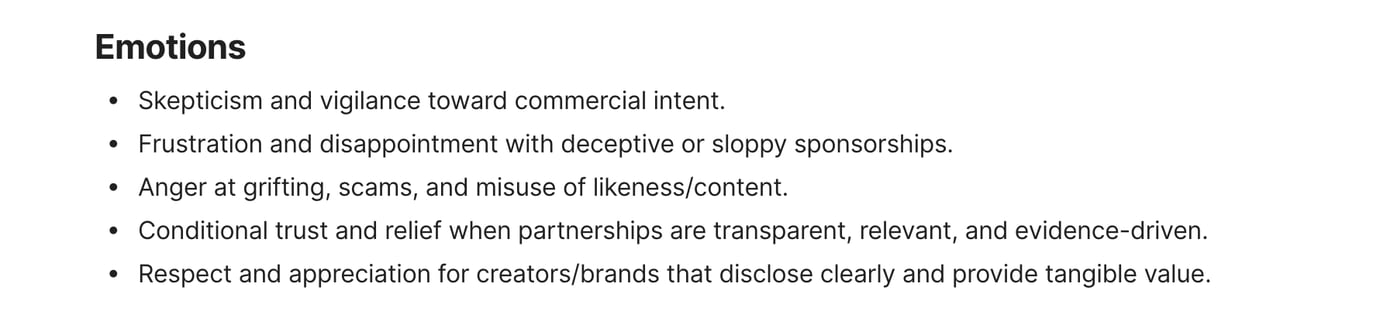
Conversations online make it clear that skepticism toward paid content isn't an outlier reaction but a baseline. Most consumers approaching sponsored posts are already slightly on guard, and certain signals can push them even further into distrust.
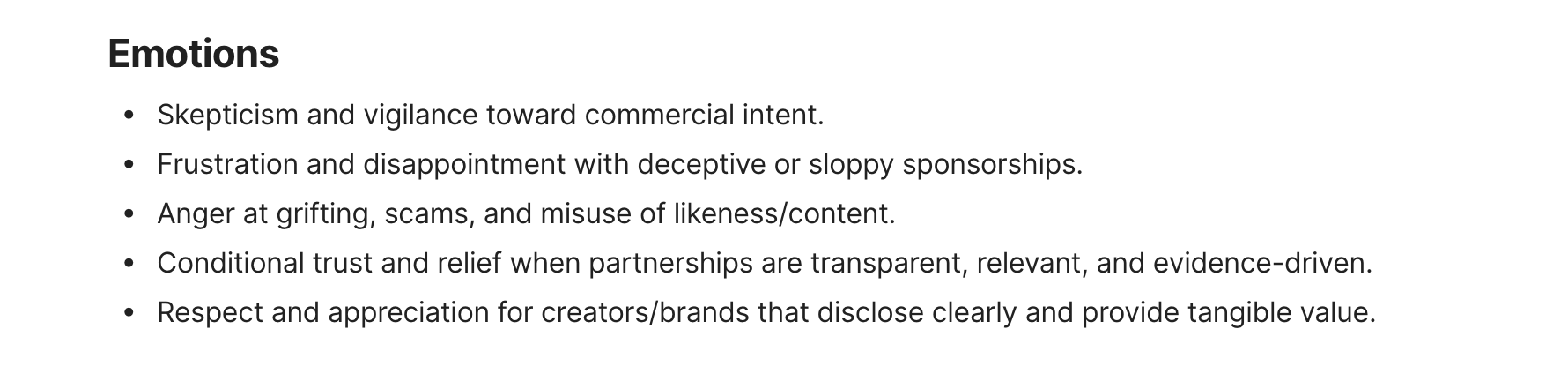
Disclosure is a big factor here. Generic, boilerplate tags like "Paid partnership" or "Ad” are increasingly seen as red flags, especially when they're small, tucked away, or added late. This is because audiences have grown to recognise these as the minimum-effort version of transparency. The tags convey limited information and, as such, provide little reassurance as to whether the content was authentic or not.
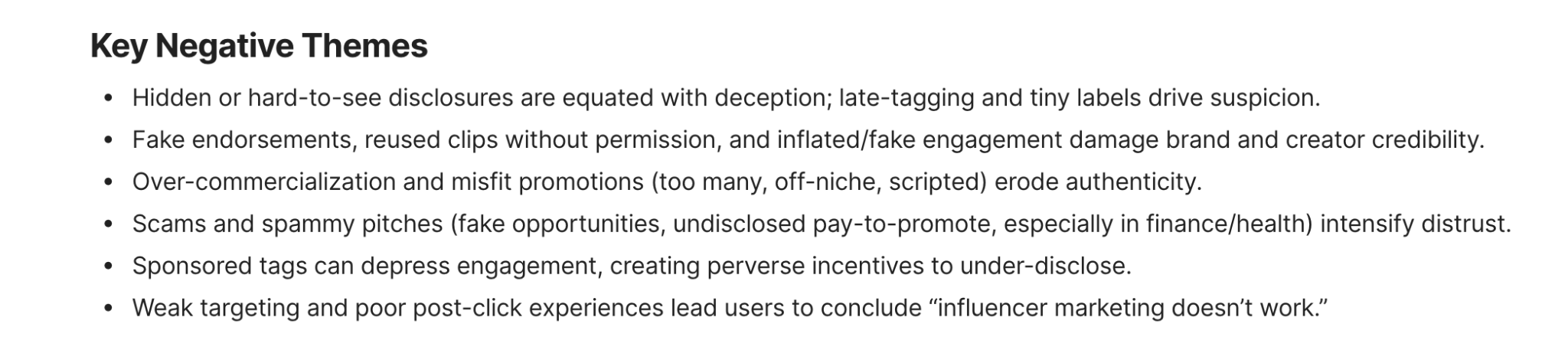
Brand-creator fit is another thing consumers are judging. When a partnership feels unexpected, or when the brand's values don't align with the creator's established identity, that mismatch gets flagged.
Whether consciously or not, users look at a creator's past brand choices and off-platform behavior to determine whether the partnership makes sense. When there’s weak brand alignment and a lack of creative control, trust in both the creator and the brand takes a blow.
It's also worth noting that platform context shapes how all of this lands. X/Twitter audiences skew the most openly cynical about sponsored content across the board, while Instagram and TikTok users tend to be more receptive, though only when content is useful, transparent, and fits the creator’s voice.
Want the full platform-by-platform breakdown? This Quid brief goes deeper into sentiment differences across channels.
So what are people saying they value from branded content? Conversations online point to two main elements.
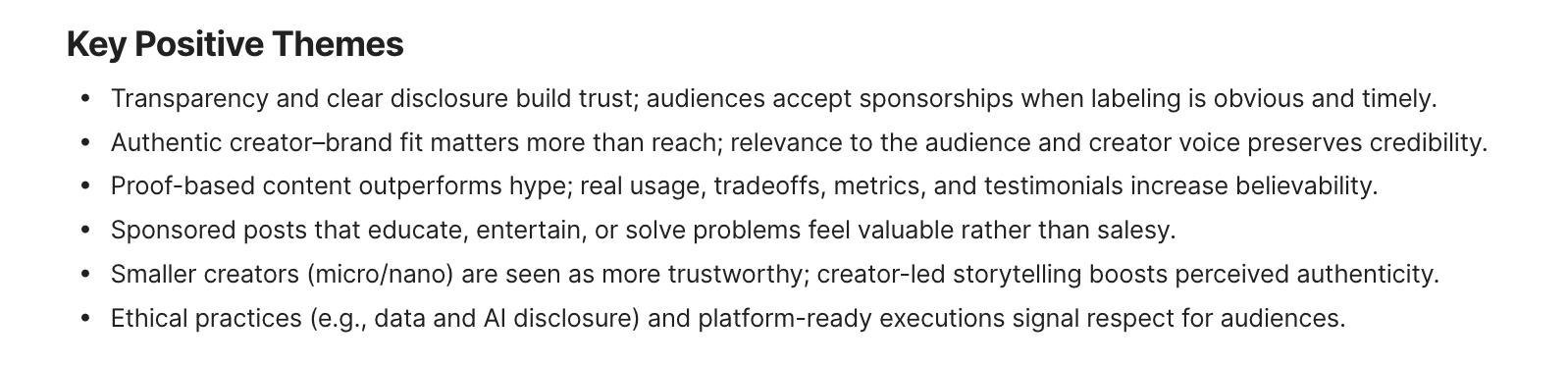
The first is transparency that’s provided early and in plain language. Audiences respond positively when disclosure comes upfront and actually sounds like it came from the creator. What lifts sentiment further is when creators are honest about the nature of the relationship, such as by discussing who approached whom, in what capacity, and whether the creator kept creative control.
Of course, labeled disclaimers still matter, but consumers have made it clear they're not enough on their own. They’re looking for more than just “#ad.” They want to understand why the partnership exists.
The second element is relevant value. Even well-disclosed sponsorships fall flat when they feel out of place. When sponsored content is genuinely useful — a discount, proof of how a product works, a tip that solves a problem — it’s more tolerated or even welcomed by users.
The creators and brands appearing most often in positive trust conversations share a few things that are worth paying attention to.
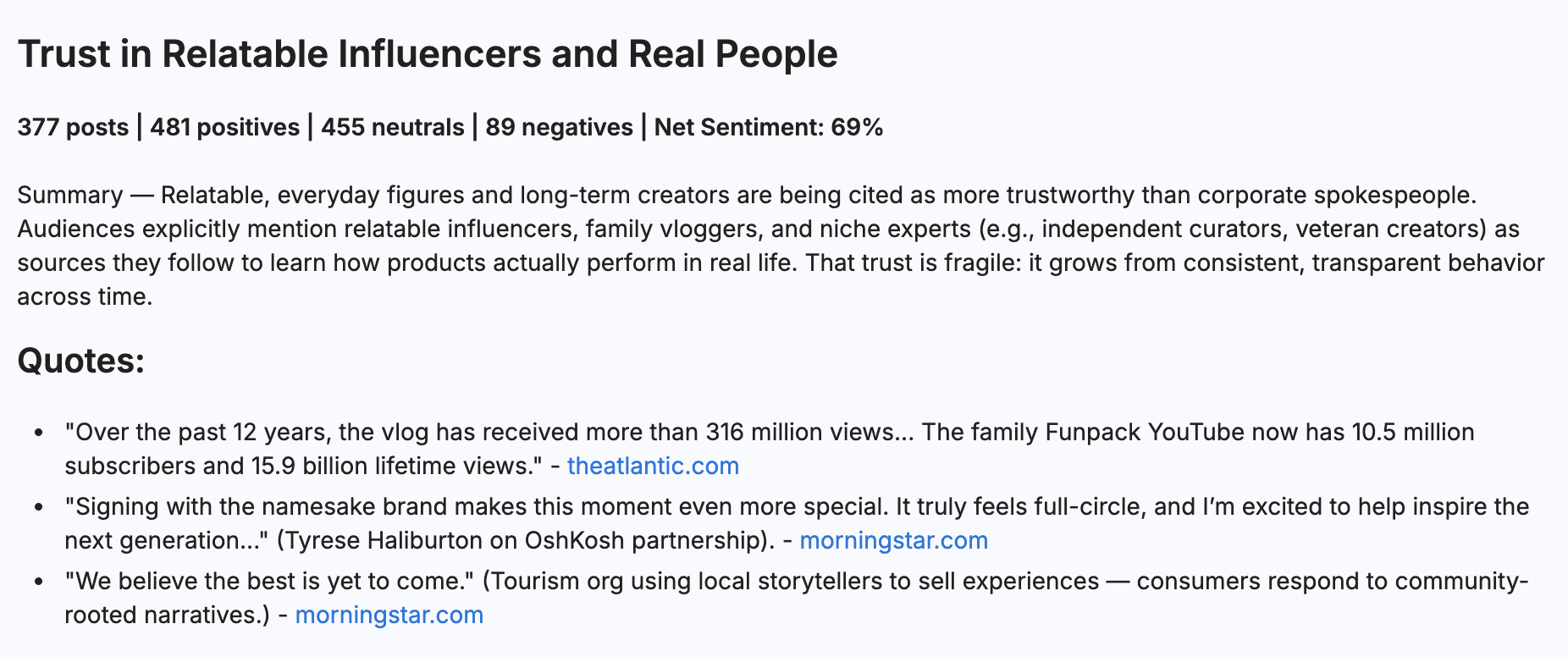
Audiences are gravitating more toward people with demonstrable expertise or a lived connection to what they're promoting. Think niche specialists, local figures, and long-term creators who've built a consistent track record over celebrity spokespeople or high-follower generalist creators.
When it comes to consumer trust, credibility carries more weight than reach, especially when the expertise is imbued into the actual content. Consumers can feel the difference between a creator who shaped the messaging and one who read a script. The former builds credibility. The latter chips away at it, even when the disclosure is technically present.
Similar logic applies at the campaign level. The partnerships generating the most positive sentiment tend to go beyond a content deliverable. Co-investments with local institutions, non-profits, or creator communities, especially when they produce measurable outcomes and center real people, are consistently framed as authentic. The ones getting called out are doing the opposite: making purpose-driven claims without the follow-through to back them up.
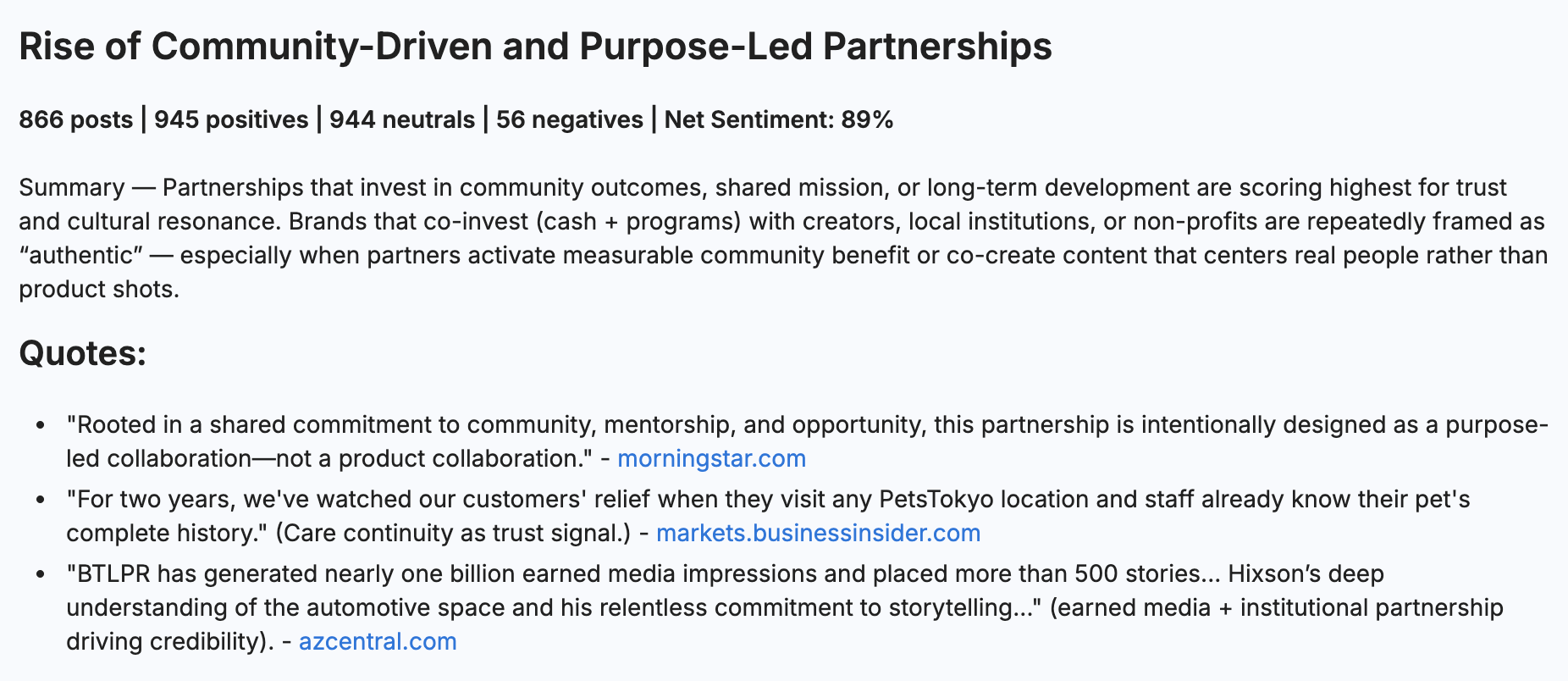
The common thread across all of it is sustained commitment. Consumer trust is built through consistent behavior from both the brand and creators, transparent relationships, and content that shows real usage and real outcomes.
The insights above were surfaced using Quid Terminal, the market intelligence platform that monitors billions of signals across social conversations, news, reviews, patents, search behavior, and market data, then delivers curated insight briefs to your team.
From the insights it presented above, we can glean a few strategic actions to strengthen consumer trust in sponsored content:
That said, getting from insight to action can be a challenge. The advantage of Quid Terminal is that it does it for you. Rather than leaving your team to draw its own conclusions from a data set, the platform surfaces recommended next steps alongside the findings, so you can move quickly. For instance, in this brief specifically, it recommended:
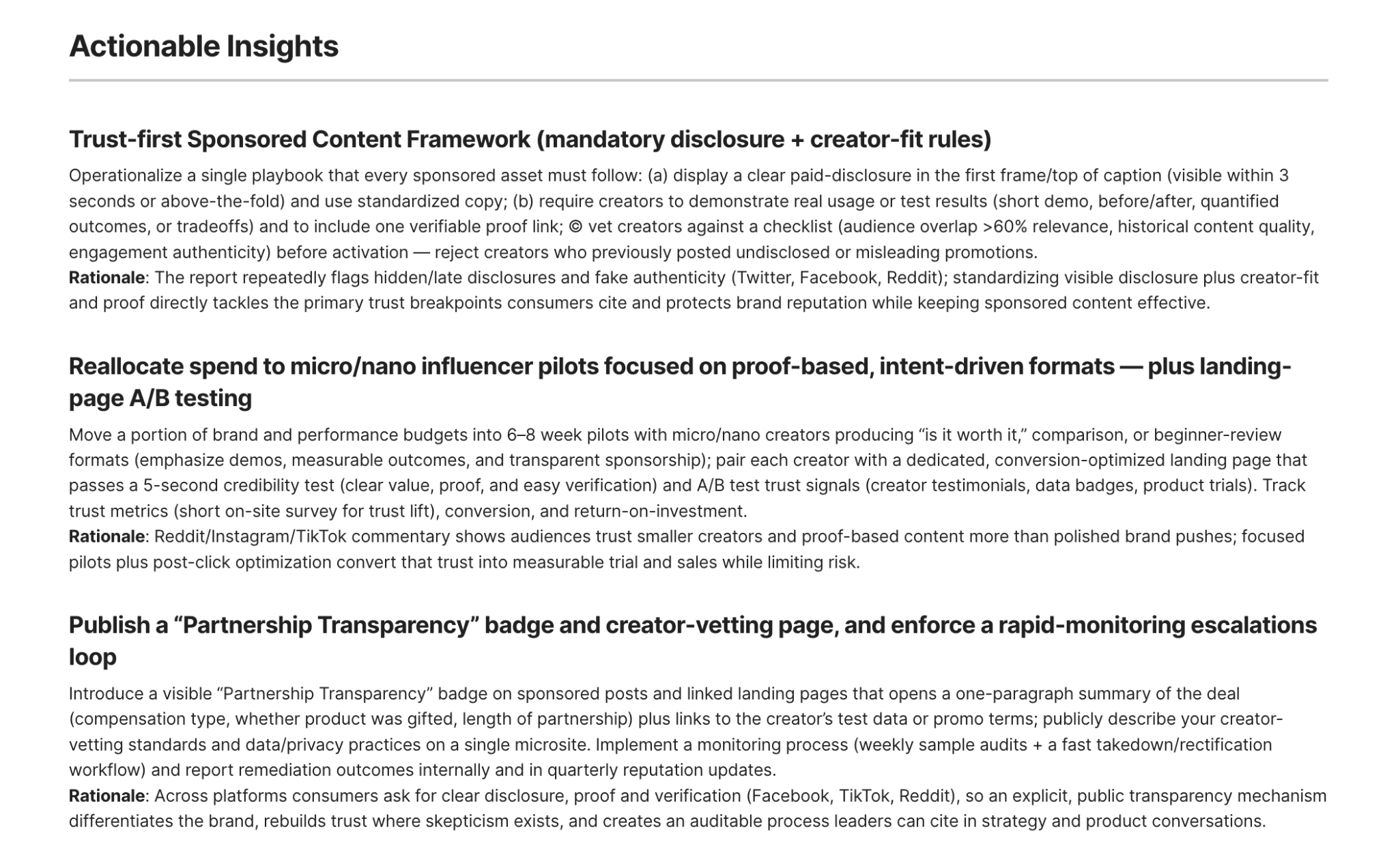
These recommendations didn't require weeks of research or a separate strategy engagement; they came directly from the same brief as the insights. That speed is the advantage. After all, the teams best positioned to respond to shifting expectations are the ones who can see it happening and act on it in the same motion.
Consumer trust in sponsored content is more conditional than it used to be. While audiences haven't stopped engaging with branded content, they have gotten better at identifying what’s worth their attention and what’s not.
The good news is that you don't have to guess at what's driving those decisions. Consumer conversations reveal a lot, from what triggers skepticism and what earns credibility to which kinds of partnerships are getting praised versus called out. The brands and teams winning the trust conversation will be the ones paying close attention to what the data is telling them and moving quickly when it does.
That's what Quid Terminal can help with. Whether you're trying to understand how your brand is showing up in consumer conversations, evaluate a potential creator partnership, or figure out why a recent campaign landed the way it did, Quid Terminal does the research for you, surfacing the answers alongside the recommended actions.
If you want to know what your trust conversation around your brand looks like right now and what to do about it, [request a free trial.]
Consumer trust in influencer marketing refers to how credible and genuine audiences perceive sponsored content to be. It matters because low trust directly impacts campaign performance, with skeptical audiences disengaging, leaving negative comments, or actively calling out brands.
Consumer trust can be measured through social sentiment analysis: tracking the language, tone, and volume of conversations around your brand, creator partnerships, and content.
Deinfluencing is a trend where creators actively discourage their audiences from purchasing products, often as a reaction to oversaturated or inauthentic content around a particular brand or product. For brands, it signals that audiences have grown fatigued with brand-driven content and are becoming more selective about where they place their trust.
The most consistent factors are early, plain-language disclosure, a genuine fit between the creator and the brand, and content that sounds like the creator shaped it rather than delivered it. Relevant value also matters. Content that adds real value to the audience performs better than content that feels interruptive or out of place.
When it comes to trust, relatability and credibility carry more weight than reach. Consumers are placing more trust in niche experts, local figures, and long-term creators with a consistent, transparent track record.