

.png?width=1252&height=362&name=QUID_Logo_WHITE%20(2).png)
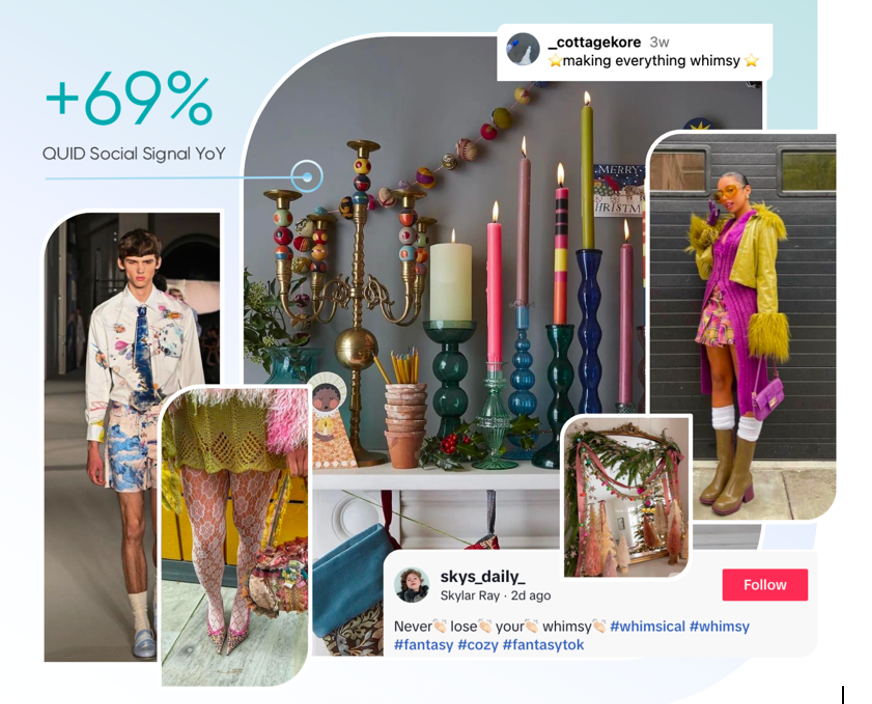
Every year, consumers say they want “better products.” The reality of their choices align with this desire, but not completely. They buy “better” products that offer a tiny surprise detail that makes them feel something for two seconds. And then they resume their quest for the next new thing that catches their attention while doomscrolling.
That is part of backstory powering everyday whimsy as a key pillar in Quid’s 2026 Top Retail Trends Forecast. And the underlying conversation data, which we’ll share below, shows it as a real, trackable signal. It is not a fluffy mood board category. It is a pattern.
Everyday whimsy is a playful expression that moves into daily life through joyful motifs, fun color pairings, charming details and a touch of nostalgia. It is already shaping fashion and beauty through accessories, silhouettes, and imaginative makeup, with expansion into home and personal style.
In our recent report, Quid uncovered measurable lift signals. The Everyday Whimsy pillar shows +69% social signal YoY.
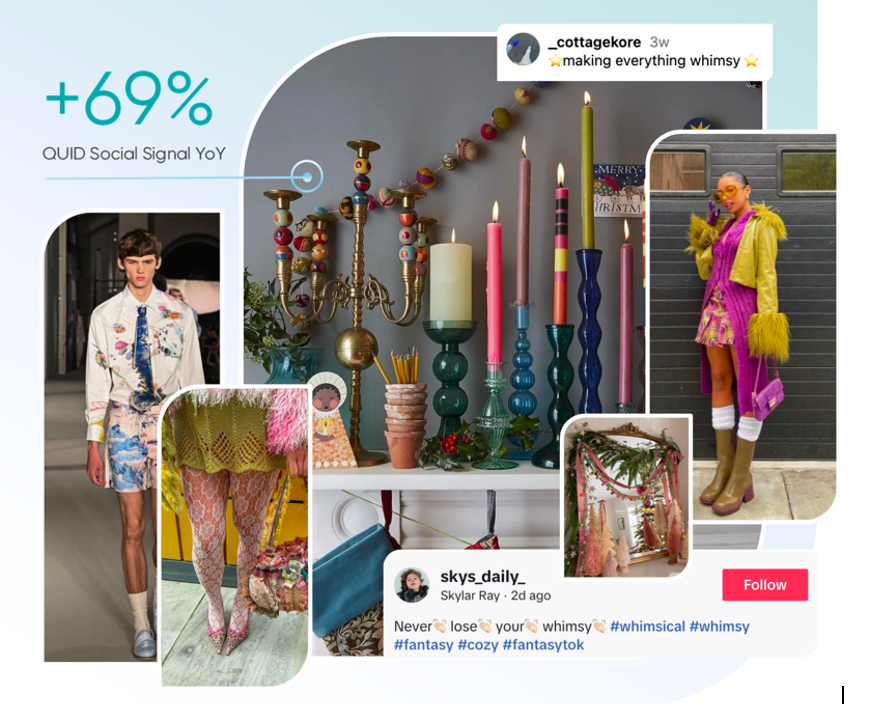
This matters for retail teams. Whimsy brings brands beyond novelty products or costume vibes. It is being seen as a preference among discerning consumers.
The data is pretty straightforward. Consumers seek small, expressive touches that make ordinary things feel less ordinary while also offering a sense of unique style.
The dataset behind the Everyday Whimsy view (Jan 2024 to Jan 2025) includes:
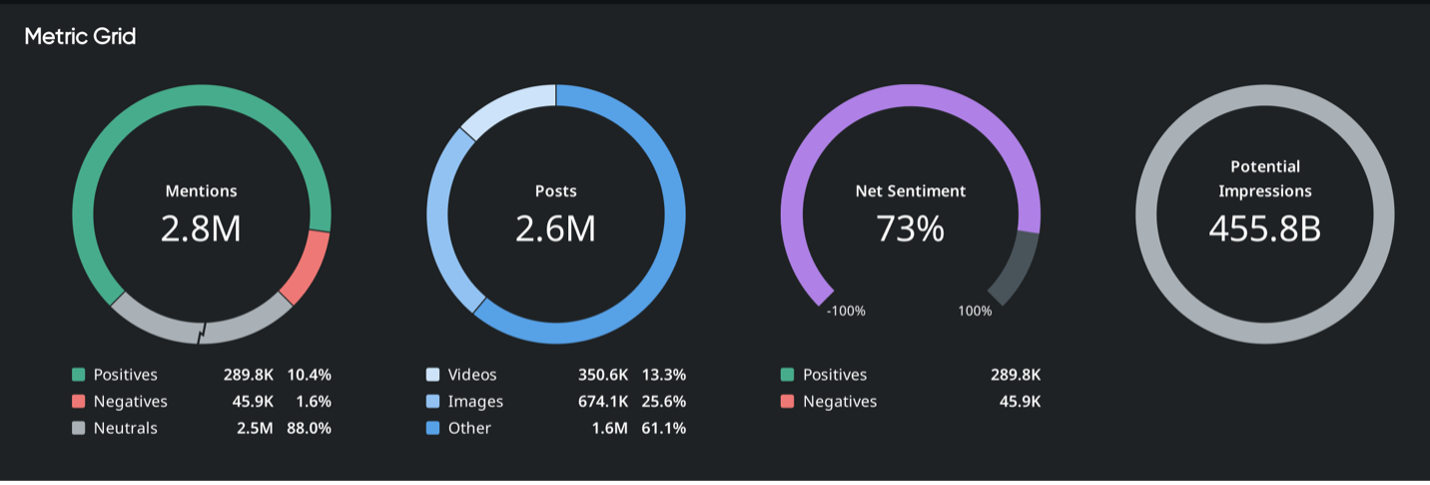
Neutral dominance is useful here. It implies the theme is not confined to a polarized niche. It is circulating as everyday language and everyday aesthetics.
The format of these conversations also supports the “showable detail” nature of the trend, with 25.6% of posts being images and 13.3% videos.
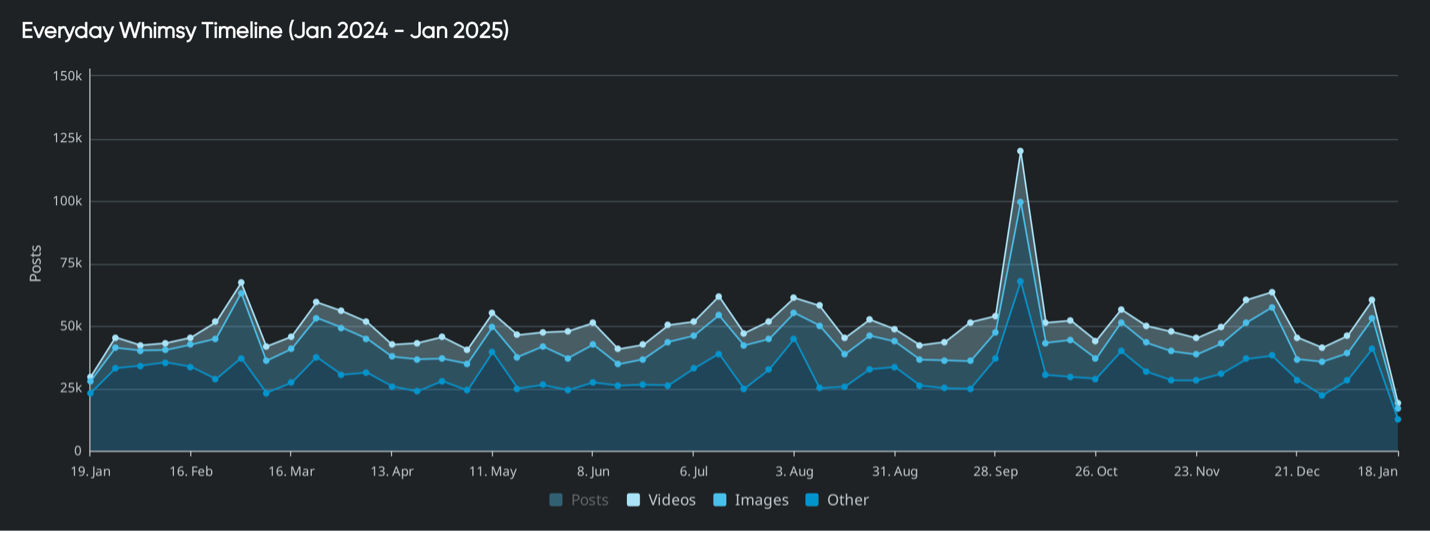
That is the behavioral shape of something people want to demonstrate, not just describe.
If you want this trend to be usable, you need it anchored to repeatable territory. The top conversations viewed below point to exactly that.
A social media network of 8,138 nodes organizes the conversation into clusters. The top connected clusters include:
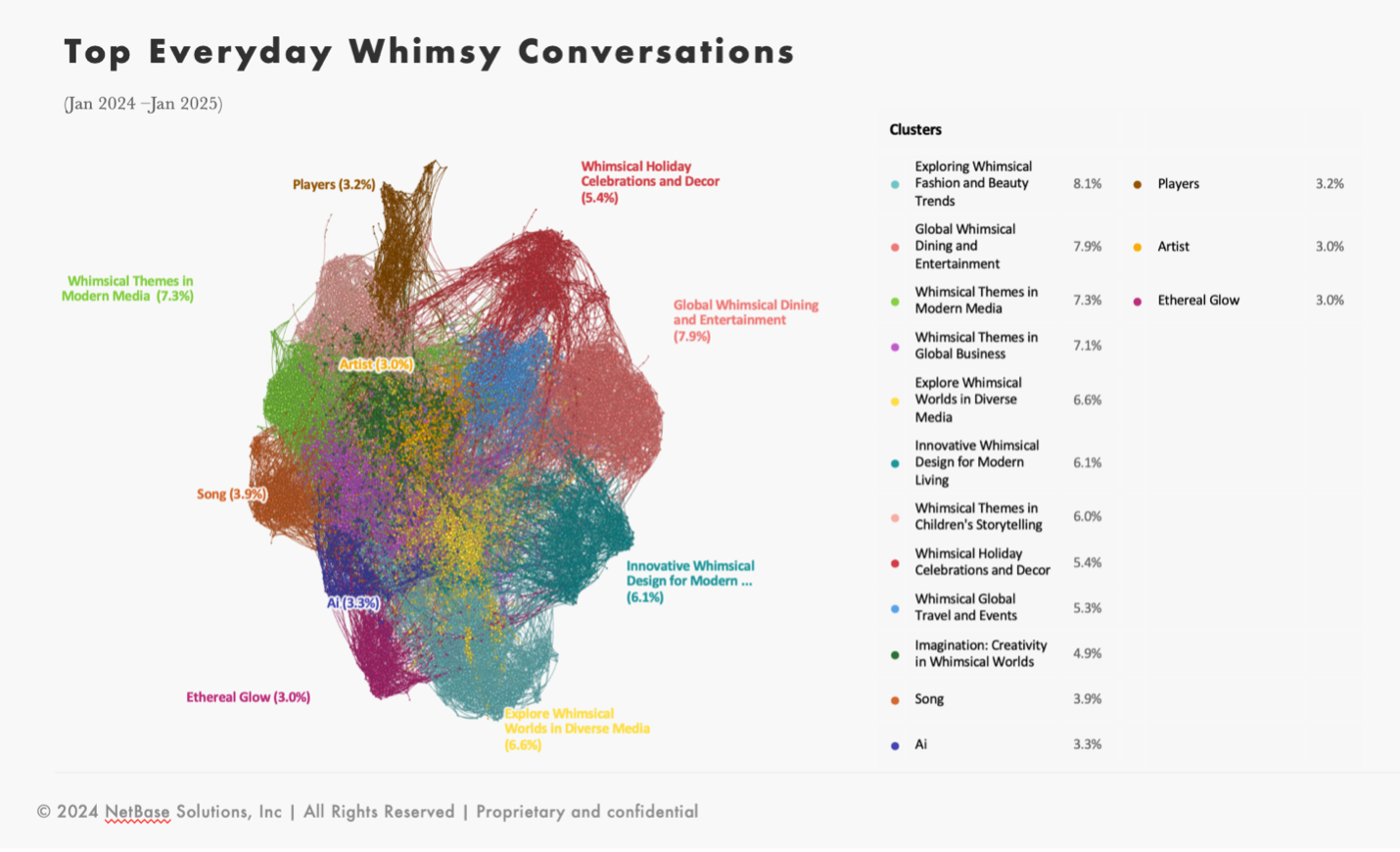
This shows whimsy operating across both objects and experiences.
These index views are not a “who buys” map. They are a “who publishes and amplifies” map. That changes the strategic interpretation.
When a theme is amplified by groups that shape what becomes visible and repeatable, the timeline compresses between early signal and retail expectation. It also increases the risk of lag for brands that wait for traditional validation.
Women account for 57% of posts with an index of 1.73, versus men at 43% with an index of 0.64.
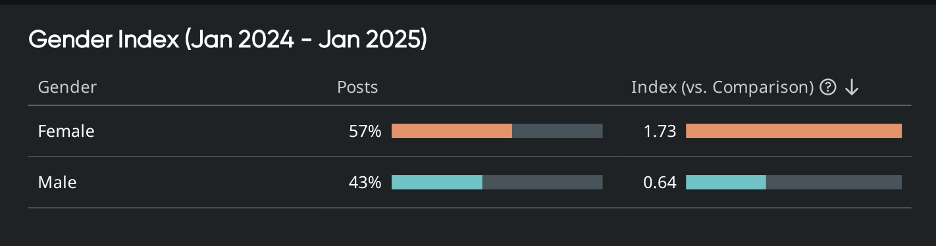
It’s a pattern that suggests everyday whimsy is being shaped and circulated in spaces where visual taste-setting already plays a major role. And this is great news, because a visually transmitted trend becomes commercially relevant first in the places where people publish proof, not just opinion.
Under 18 and 18–24 over-index at 1.35 and 1.21. 25–34 sits near parity at 1.03. Older groups under-index.
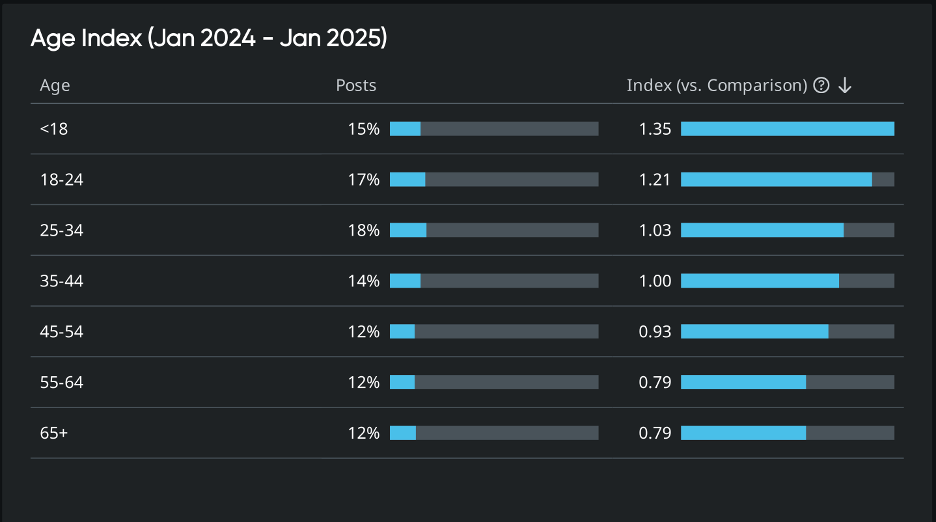
It’s an early-amplifier curve with younger audiences pushing the aesthetic into visibility first. But that does not mean the demand ends there. It means the visual language of whimsy will be defined there, then adopted more broadly once the cues become recognizable.
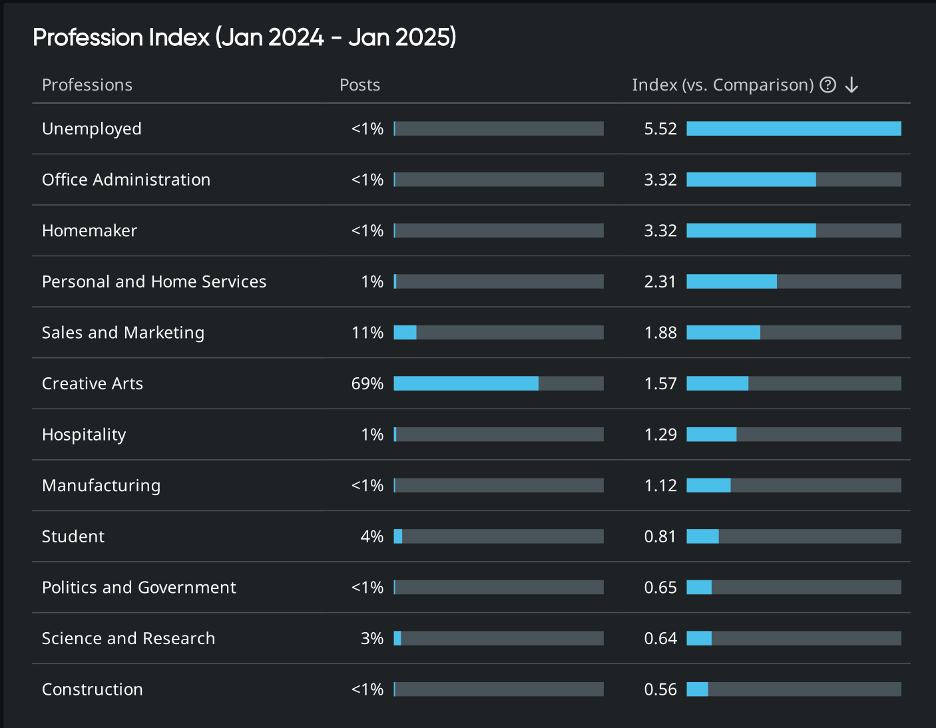
Next, we have professions. Here, we see Creative Arts representing 69% of posts and over-indexing at a rate of 1.57. Sales and Marketing represents 11% with an index of 1.88.
The ethnicity index distribution remains close to parity across multiple groups, with several segments near an index of 1.00.
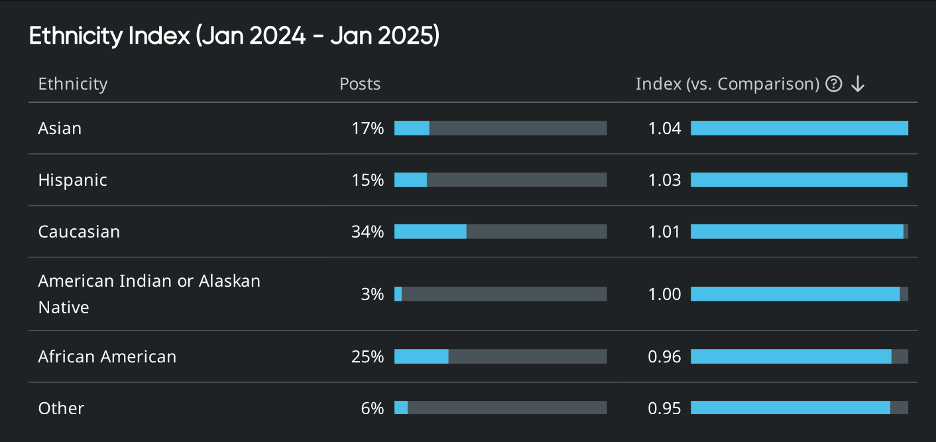
This insight shows us that everyday whimsy is not confined to a narrow demographic lane. It behaves more like a broadly usable design layer that different communities express differently, rather than a single “look” owned by one group.
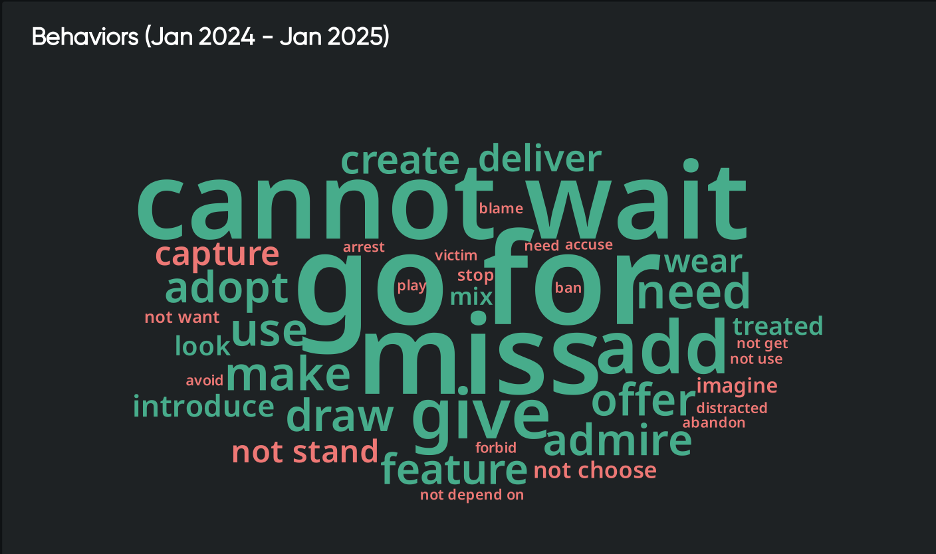
The behaviors view contains action and urgency language. The visible behaviors include “cannot wait,” “need,” “add,” “make,” “use,” “wear,” “create,” “deliver,” “capture,” “introduce,” and “play.”
That mix maps to three demand dynamics.
For executives, this is the commercial point. Everyday whimsy supports conversion not only because it is appealing, but because it triggers behaviors that reduce the cost of attention. Consumers become the distribution layer.
The engagement view translates the signal into a category-level opportunity.
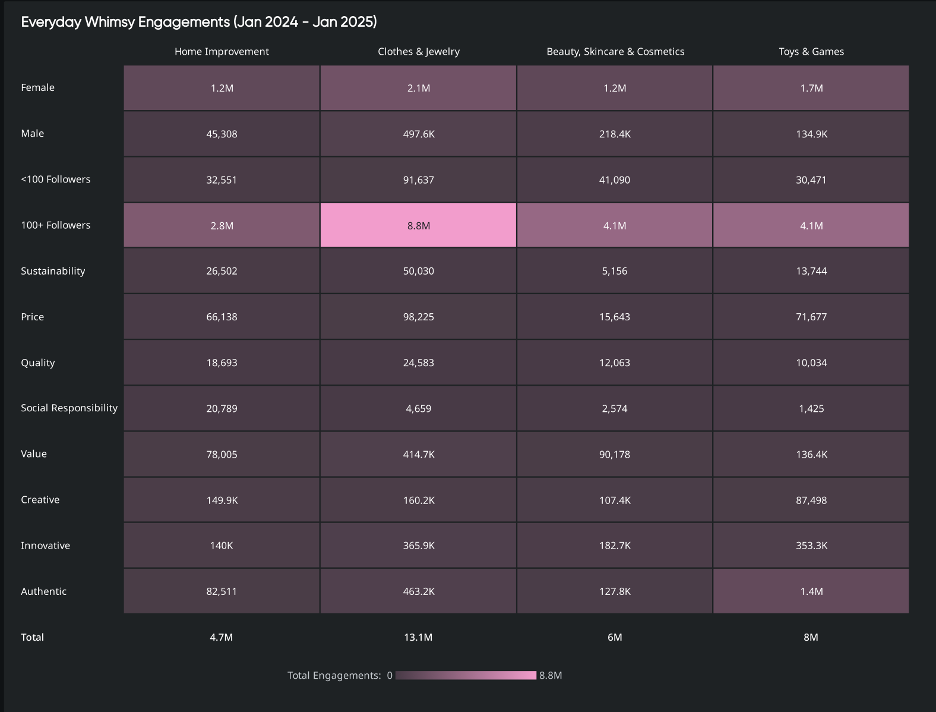
Total engagements are next:
A predictable pattern emerges here. Whimsy converts where products are inherently visual and identity-coded, with clothes and jewelry leading the charge/
Home Improvement as whimsy suggests playful details are moving into functional contexts where practicality usually dominates. That supports an expansion from “fun categories” into everyday life categories.
The engagement view also includes attribute labels such as Authentic, Innovative, Creative, Value, Social Responsibility, Quality, Price and Sustainability.
That framing positions whimsy as compatible with credibility cues.
Everyday whimsy is a design and merchandising layer that rewards brands able to execute consistently.
These same views we shared above for 2024-2025 provide a monitoring template for 2026.
Remember, everyday whimsy is measurable with the right analyses informing campaign actions!
Whimsy functions as a demand signal for 2026. It is a repeatable pattern in what people share, adopt and choose. Make 2026 the year your brand gets out ahead of these signals by reaching out today to learn how we can help you do just that!
What makes everyday whimsy a demand signal, not an aesthetic label?
The analysis shows scale, neutral-dominant sentiment, action-oriented behavior language, and concentrated engagement in commercial categories.
What indicates that everyday whimsy is mainstreaming?
Neutral sentiment accounts for 88.0% of the distribution, which supports normalized circulation rather than niche polarization.
Why do images and video matter for this trend?
Images are 25.6% of post types and videos are 13.3%. The signal spreads through visual proof.
Which categories show the strongest engagement signals
Clothes and Jewelry leads at 13.1M, followed by Toys and Games at 8M, Beauty at 6M, and Home Improvement at 4.7M.
What does the profession mix suggest about distribution?
Creative Arts represents 69% of posts and Sales and Marketing over-indexes, which supports treating creator ecosystems as a key distribution