

.png?width=1252&height=362&name=QUID_Logo_WHITE%20(2).png)
Grocery lists are one of the most underrated signals in consumer intelligence — a real-time record of what households prioritize, what they're cutting, and how economic pressure is reshaping spending before those shifts ever appear in retail data.
In 2026, they have become one of the clearest signals of how consumers are adapting to persistent inflation, changing shopping habits, and financial uncertainty. Every item added, removed, or substituted reflects a decision that extends well beyond the grocery store.
For brands, those decisions provide an unusually early view into changing consumer behavior.
Why are grocery prices still so high?
Food prices continue to reflect higher production, transportation, labor, and supply chain costs, even as overall inflation slows.
Why are more people buying store brands?
Private-label products often provide similar quality at a lower price, making them a popular way to stretch grocery budgets.
How are shoppers saving money on groceries?
Many consumers meal plan, compare prices across retailers, buy in bulk, use digital coupons, and substitute lower-cost alternatives.
Why are shoppers switching grocery stores?
Consumers increasingly choose retailers based on value, promotions, private-label selection, and overall grocery costs rather than long-term loyalty.
How does meal planning help reduce grocery costs?
Planning meals in advance helps households minimize food waste, avoid impulse purchases, and maximize ingredients across multiple meals.
What do grocery shopping habits reveal about consumers?
Consumer shopping behavior can reveal changing priorities, financial confidence, brand preferences, and how households respond to economic conditions.
This analysis highlights only a small portion of the insights available within Quid. The examples below demonstrate how combining news coverage, social conversations, and network analysis reveals consumer behaviors that traditional search and AI summaries often miss.
Retailers have long studied what people purchase. Increasingly, the more valuable question is what consumers planned to purchase before they ever entered a store.
Before examining those behaviors, however, it is worth considering the scale of the conversation itself.
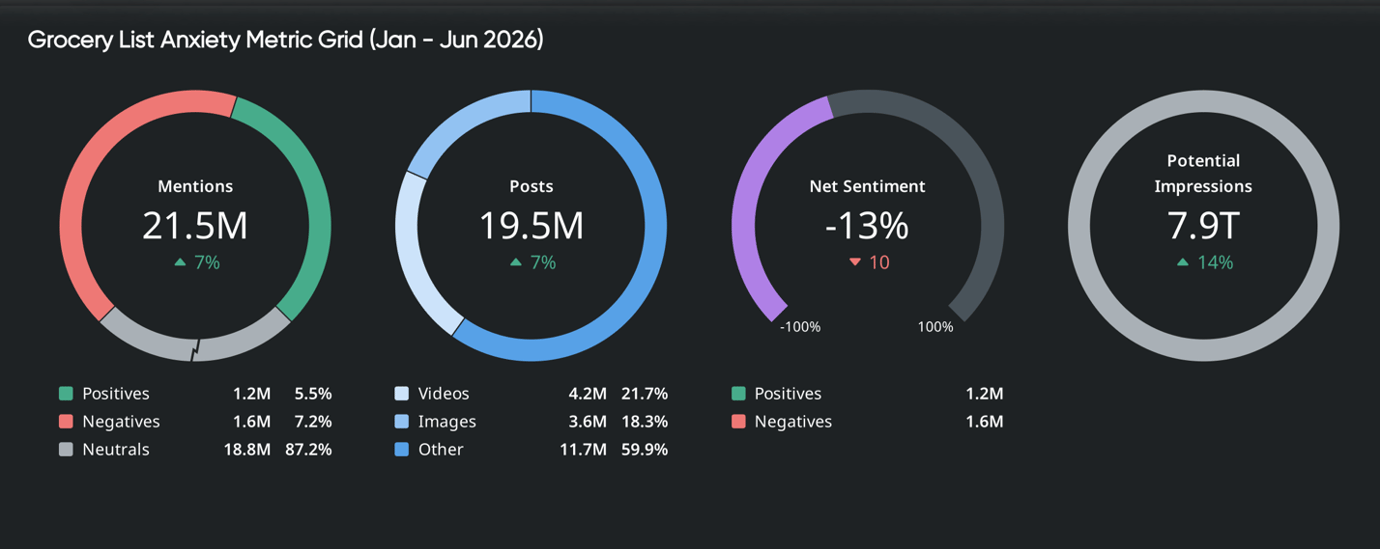
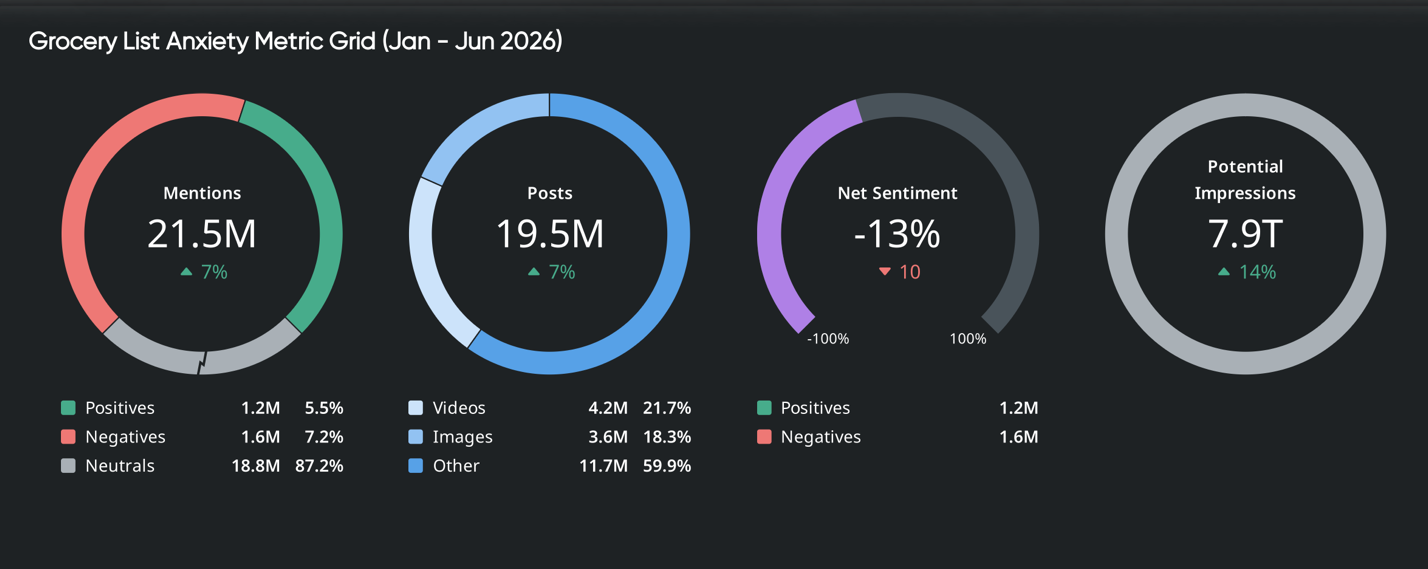
Grocery affordability is not generating isolated spikes of attention driven by a single news cycle. It has become a persistent topic across news and social media, producing more than 21.5 million mentions, 19.5 million posts, and 7.9 trillion potential impressions during the first half of 2026. Net sentiment remains negative, reflecting continued financial strain even as consumers adapt to higher prices.
Grocery lists capture intent before transactions occur. They reveal what households consider essential, which products are negotiable, where substitutions occur, and how consumers balance convenience against affordability. Unlike sales data, which only reflects completed purchases, grocery lists expose the decision-making process itself.
Across millions of conversations, Quid identified grocery planning as part of a much broader discussion that extends well beyond food.
Quid's network analysis shows that grocery conversations rarely exist in isolation. Discussions about grocery lists naturally connect to parenting, household budgets, government policy, technology adoption, retailer selection, and debt management, revealing how financial pressure spreads across everyday decisions.
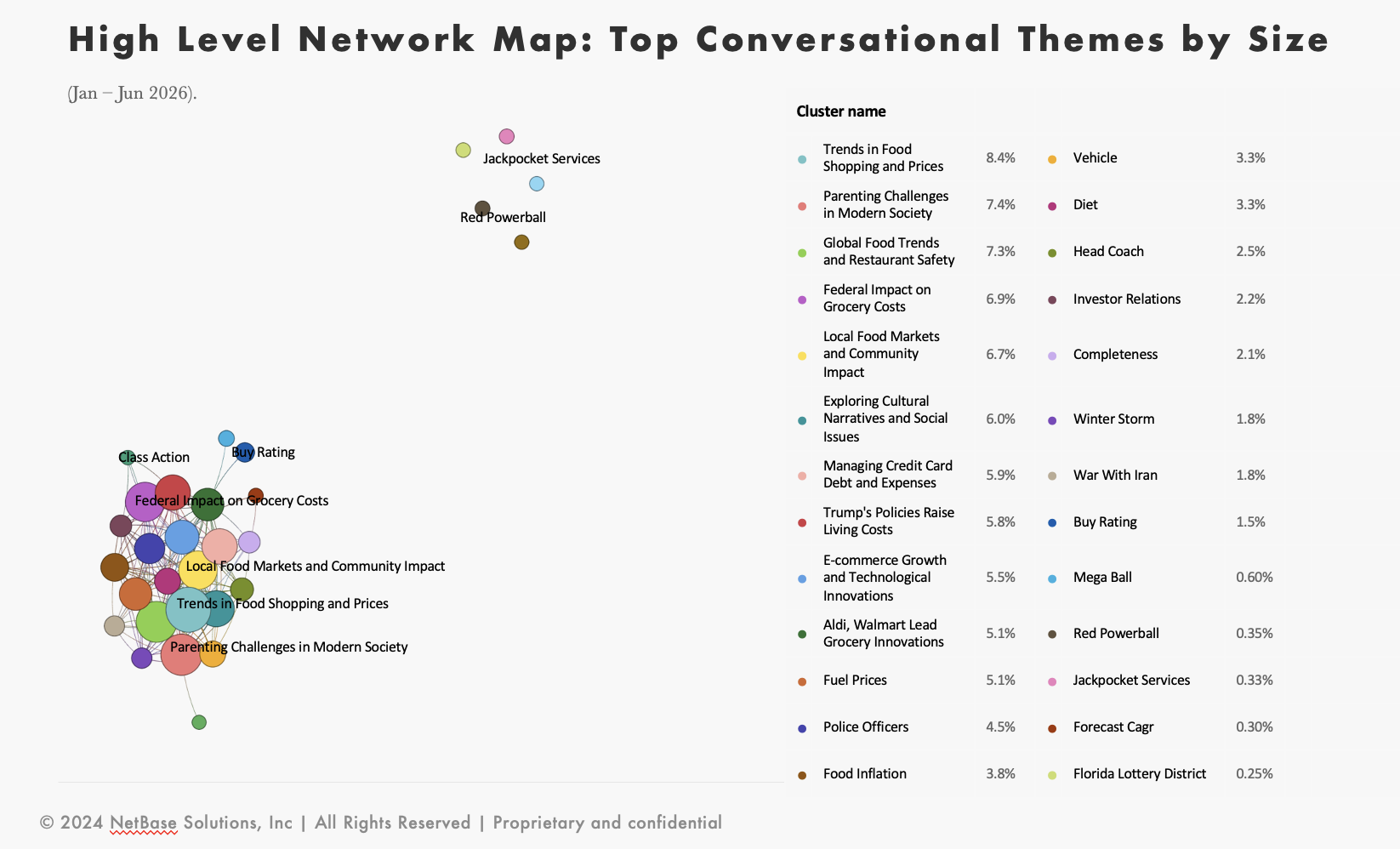
This connected view is difficult to uncover through traditional search results alone. Search identifies individual conversations. Generative AI summarizes those conversations. Quid reveals how those conversations influence one another, exposing behavioral patterns that individual stories cannot.
The most obvious trend is also the most visible one. Consumers continue adjusting their grocery habits in response to sustained food inflation.
News coverage consistently documents shoppers replacing national brands with private-label alternatives, choosing frozen produce over fresh, purchasing larger package sizes, and selecting proteins that stretch household budgets further. Grocery costs have remained elevated long enough that these decisions have become routine rather than temporary responses.
What makes these changes significant is their consistency across both news reporting and consumer conversations.
People are no longer asking whether grocery prices have increased. They are asking how to continue feeding their families despite those increases.
That subtle shift matters. When consumers stop treating higher prices as temporary, they begin restructuring long-term shopping habits. They simplify meal plans, prioritize versatility over variety, evaluate purchases according to cost per meal, and become increasingly willing to substitute products that deliver similar value.
The language emerging from Quid's analysis reflects exactly that transition. The most common conversation themes focus on affordability rather than specific products. Words such as "expensive," "price," "grocery bill," "affordable," and "high food inflation" demonstrate that cost now frames nearly every grocery decision consumers make.
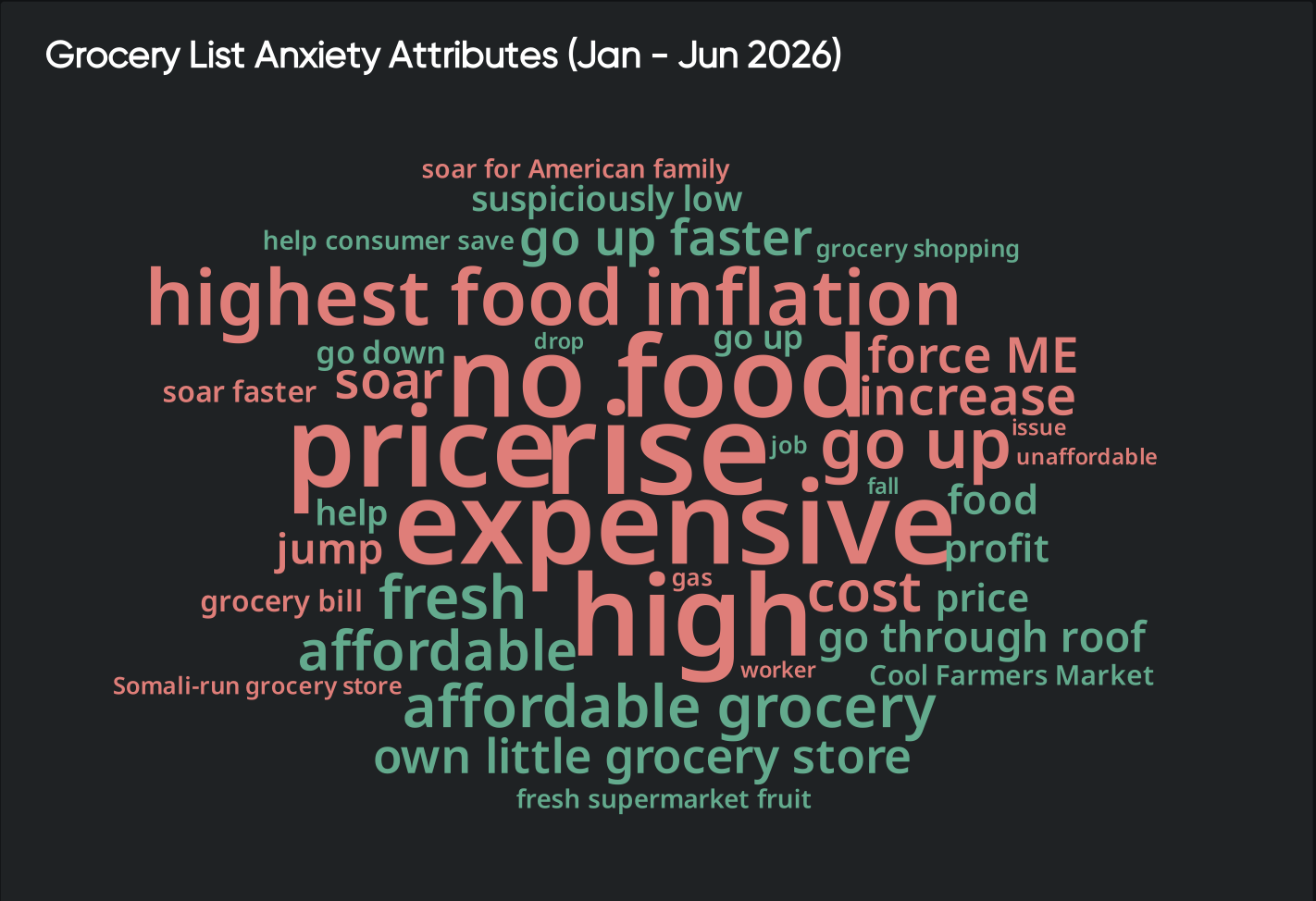
Rather than centering on individual brands, consumers overwhelmingly discuss affordability, rising prices, grocery bills, and finding ways to make food budgets stretch further.
The conversation has shifted from reacting to inflation toward adapting to it. Consumers are no longer simply spending less. They are optimizing every purchase.
One of the strongest behavioral shifts emerging from the analysis is the growing role of planning. Grocery lists are evolving into financial management tools.
News coverage highlights structured shopping methods such as weekly meal templates, shared family shopping lists, the increasingly popular 5-4-3-2-1 grocery framework, and AI-powered meal planning tools that reduce waste while limiting impulse purchases.
Social conversations reinforce exactly the same trend.
Creators regularly share monthly grocery calendars, paycheck-based shopping budgets, freezer inventories, pantry audits, and carefully planned purchasing schedules designed to maximize every dollar. Monthly bulk purchases paired with smaller weekly shopping trips have become a common budgeting strategy rather than an occasional cost-saving tactic.
The motivation extends beyond saving money, as planning reduces uncertainty. When consumers know exactly what they will cook, which stores they will visit, and how much they expect to spend, they regain a measure of control during periods of prolonged financial pressure.
The behavioral analysis makes that shift especially clear.
Grocery conversations increasingly focus on actions rather than emotions. Consumers talk about shopping, affording, providing, buying, avoiding, and planning, revealing how financial pressure is changing everyday behavior rather than simply influencing sentiment.
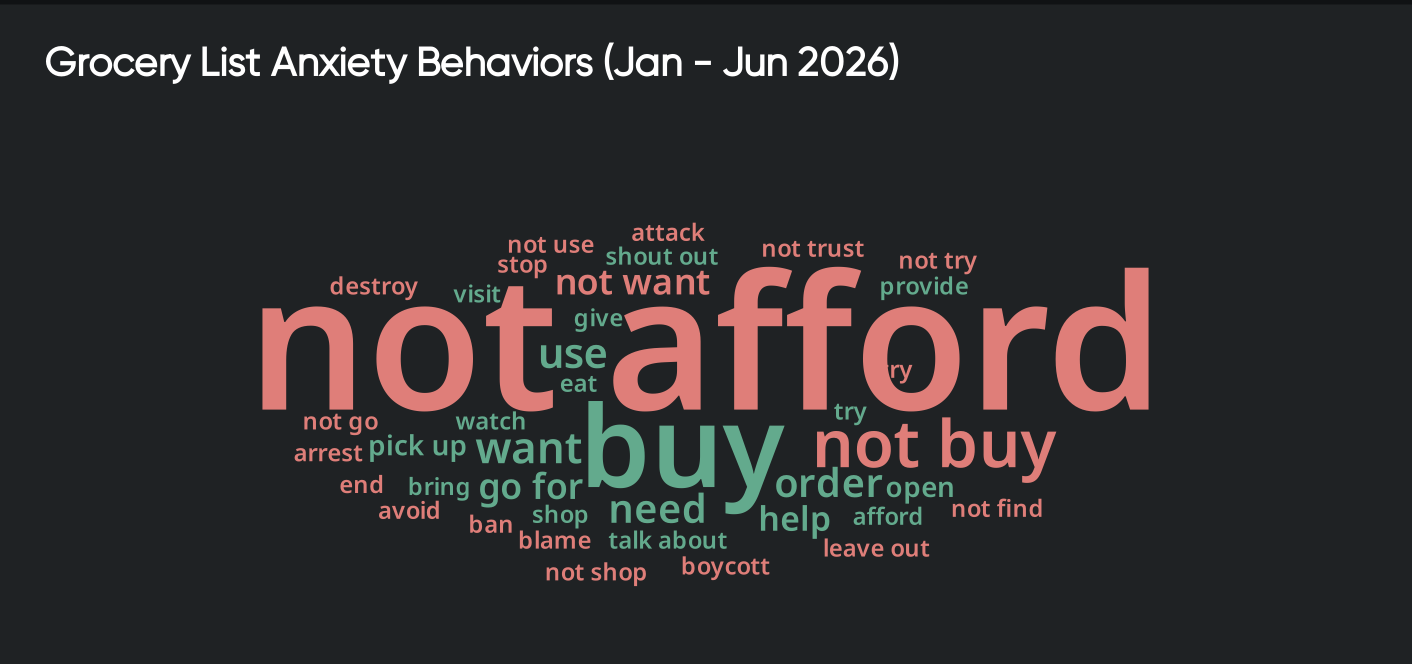
The data suggests consumers are not waiting for grocery prices to stabilize. They are actively changing how they shop through planning, substitution, and more intentional purchasing decisions.
For brands, this creates an important opportunity. Products that simplify planning, reduce waste, or support multiple meals become increasingly valuable because they reduce perceived financial risk alongside actual household costs.
Grocery planning intersects with broader conversations surrounding technology, parenting, public policy, and e-commerce. These connections demonstrate that grocery shopping has become part of a much larger behavioral ecosystem rather than a standalone purchasing activity.
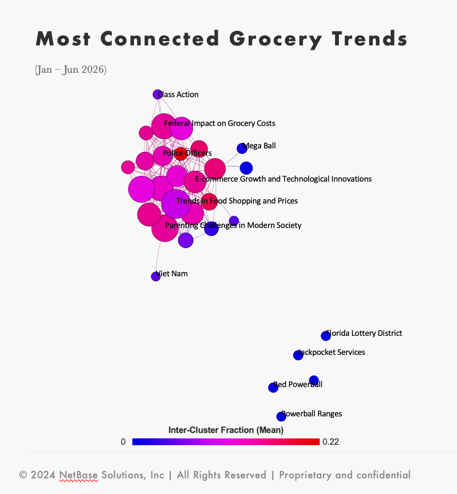
Economic pressure is changing where consumers shop just as much as what they buy.
The analysis shows sustained migration toward warehouse clubs, discount grocers, and retailers with strong private-label offerings. Aldi, Costco, Walmart, and similar retailers increasingly appear as primary grocery destinations instead of occasional supplemental stops.
Social conversations mirror this behavior.
Consumers openly compare unit prices, recommend shopping across multiple stores, and explain how they divide purchases between warehouse clubs, discount retailers, neighborhood markets, and specialty stores to maximize value.
This represents a fundamental shift in shopping strategy.
Rather than expecting one retailer to satisfy every need, consumers are assembling optimized shopping ecosystems. Bulk purchases happen in one location. Produce comes from another. Specialty products come from a third.
Retail loyalty has become conditional. Consumers increasingly reward whichever retailer delivers the strongest combination of value, convenience, and consistency rather than remaining committed to a single grocery chain.
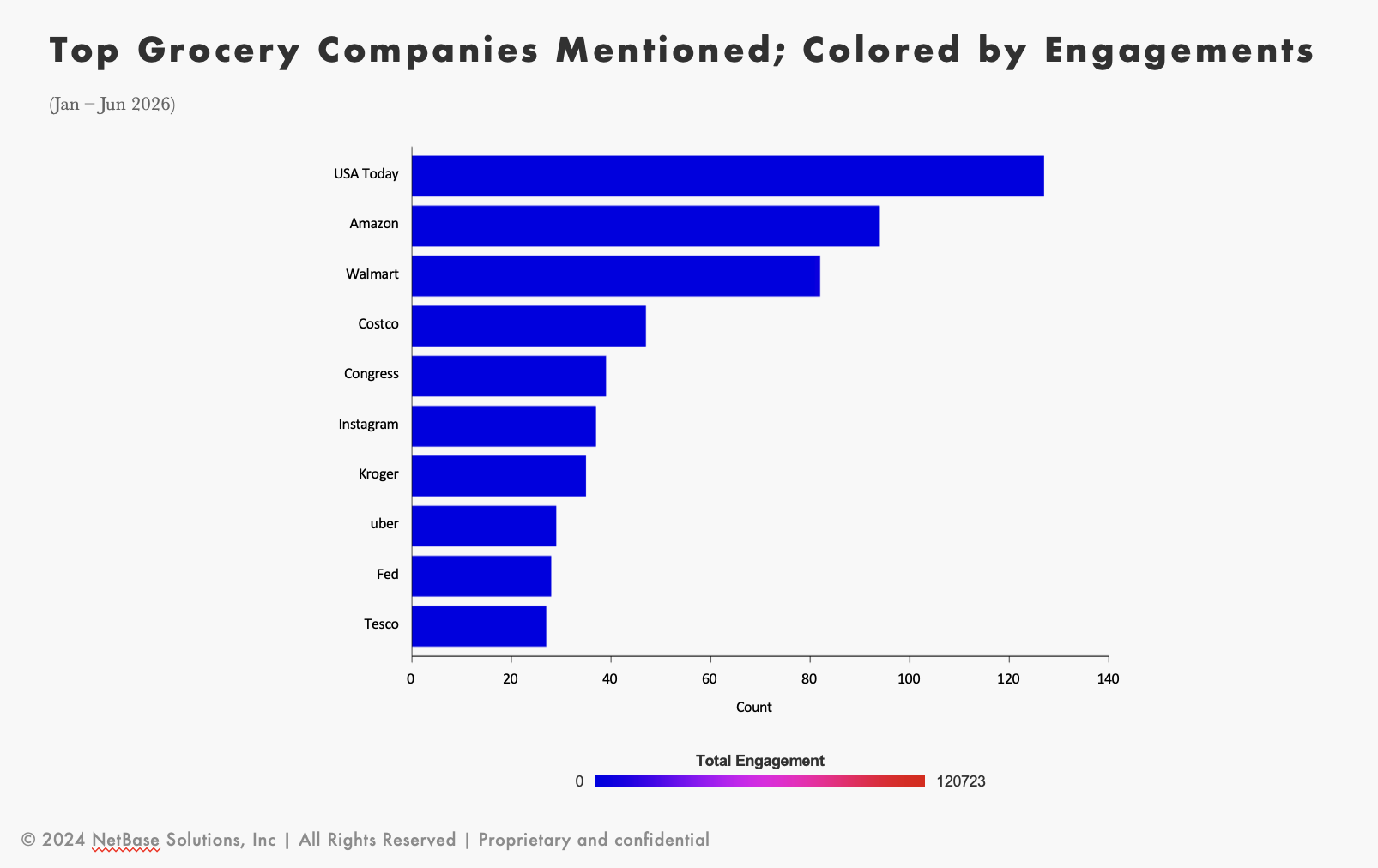
Retailers dominate the grocery anxiety conversation. Walmart, Costco, Amazon, Kroger, and other major chains appear more prominently than individual food brands, suggesting consumers increasingly decide where to shop before deciding what to buy.
For retailers and consumer packaged goods brands alike, this creates a more competitive environment where every shopping trip becomes an opportunity to either strengthen or lose customer trust.
A grocery list reflects more than what a family plans to eat. It often reveals who is responsible for making that happen.
Across both news coverage and social conversations, grocery planning increasingly appears as part of the broader discussion around household mental load.
Shopping is connected to meal planning, budgeting, remembering what is running low, coordinating schedules, managing children's preferences, and balancing nutritional goals against financial realities. These invisible decisions shape the grocery list long before anyone enters a store.
Social conversations also highlight how changes in household responsibilities influence spending. Videos documenting partners taking over grocery shopping, humorous "husband grocery trips," and discussions about work-from-home arrangements illustrate that who does the shopping can change both what ends up in the cart and how much is ultimately spent.
For brands, these insights reinforce an important reality. The person making purchasing decisions is not always the person consuming the product. Understanding who creates the grocery list provides another layer of context that traditional purchase data rarely captures.
Despite persistent financial pressure, consumers are not eliminating every discretionary purchase.
Instead, many grocery lists reveal a balance between disciplined budgeting and carefully chosen indulgences. Small treats, seasonal products, favorite snacks, and limited-time offerings continue appearing alongside carefully planned staples.
This reflects a common coping strategy. Consumers optimize everyday necessities while preserving affordable moments of enjoyment. A favorite dessert, specialty coffee, or seasonal candy may represent a relatively small expense, but one that still delivers emotional value during periods of financial uncertainty.
For retailers, this creates an important opportunity. Value messaging does not need to eliminate enjoyment. Brands that successfully position affordable indulgences alongside practical savings are often better aligned with how consumers are actually shopping.
Perhaps the most important insight is not what consumers are discussing, but how consistently they continue discussing it.
The volume of grocery-related conversations has remained elevated throughout the first half of 2026, suggesting that affordability concerns have become embedded in everyday decision-making rather than appearing only during periods of major economic news.
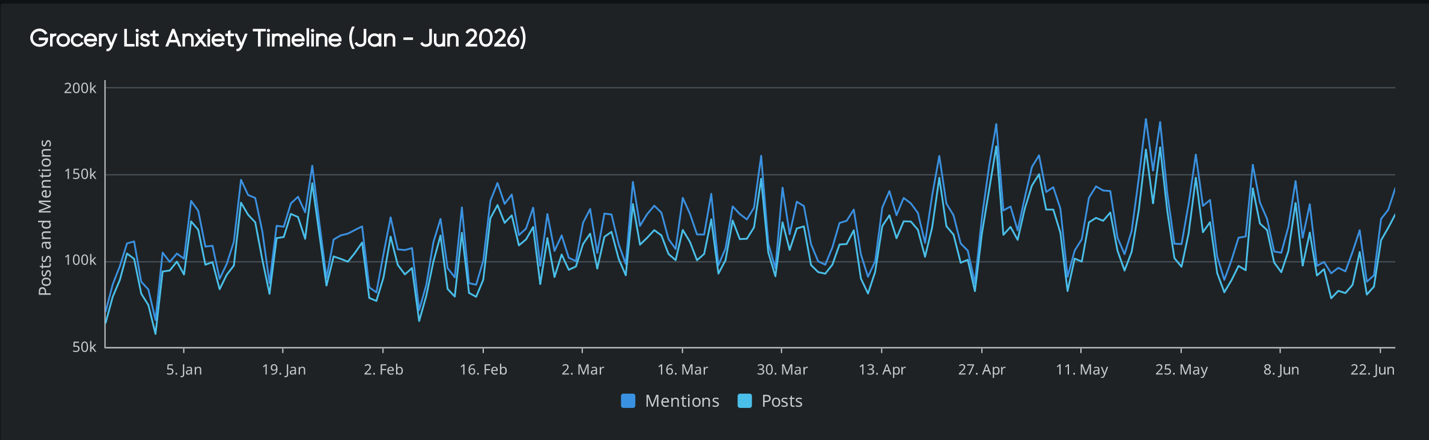
Grocery affordability has remained a consistent conversation throughout 2026 rather than appearing as isolated spikes. Sustained discussion suggests consumers now view higher grocery costs as an ongoing reality requiring continuous adaptation. Long-running conversations signal lasting consumer behavioral change.
Consumers have adjusted routines, adopted new planning habits, experimented with different retailers, and changed purchasing priorities. Those behaviors become increasingly difficult to reverse the longer they remain part of everyday life.
For brands, the implication is clear. Planning for a return to pre-inflation shopping behavior risks overlooking how permanently consumer expectations may have shifted.
Most organizations measure purchases. Far fewer understand the decisions consumers make before those purchases occur. That is where grocery lists become valuable.
They reveal which products consumers substitute first, which retailers gain trust during periods of uncertainty, how technology is changing shopping behavior, and where financial pressure is reshaping purchase decisions long before those shifts appear in sales reports.
This allows brands to move beyond measuring transactions toward understanding the behaviors driving them.
The difference is significant. Sales data explains what happened, but behavioral intelligence helps explain why.
At first glance, a grocery list appears ordinary. Look more closely, however, and it becomes one of the clearest indicators of how consumers are adapting to economic change.
Every substitution, every store change, every meal plan, and every carefully considered purchase reflects a broader story about confidence, priorities, and financial resilience.
Search can identify grocery trends. Generative AI can summarize those conversations. Quid connects news, social media, behavioral signals, audience insights, and relationship mapping to reveal how those individual conversations fit together into a much larger picture of consumer behavior.
That is the difference between observing change and understanding what is driving it.
The most valuable consumer signals are often hiding in ordinary conversations.
Quid helps organizations connect millions of discussions across news, social media, and consumer behavior to uncover the patterns shaping markets before they become obvious in traditional reporting or sales data.
If you want to understand not just what consumers are buying, but why their decisions are changing, contact Quid to learn how connected consumer intelligence can help your organization stay ahead of market shifts.
Why are grocery lists valuable for consumer research?
Grocery lists capture purchase intent before transactions occur, helping brands understand planning behavior, product substitutions, and changing priorities.
What consumer behaviors are changing because of higher grocery prices?
Consumers are increasingly purchasing private-label products, comparing retailers, meal planning, buying in bulk, and using digital tools to manage grocery spending.
How can brands use grocery shopping insights?
Behavioral insights can inform pricing strategies, product development, retail partnerships, messaging, and promotional planning by revealing how consumers adapt before changes appear in sales data.
Why is grocery planning becoming more important?
Planning helps households reduce uncertainty, minimize waste, control spending, and make food budgets stretch further during periods of economic pressure.
How does Quid provide deeper consumer insights than search or generative AI?
Search identifies individual topics. Generative AI summarizes available information. Quid connects conversations across news, social media, audience behavior, and network relationships to reveal the broader patterns driving consumer decisions.