

.png?width=1252&height=362&name=QUID_Logo_WHITE%20(2).png)
Every day, organizations are exposed to thousands of potential consumer trends. A creator goes viral, and a new product category explodes across social media. Retailers add new merchandise, investors pour money into emerging brands, and we see headlines declaring the next big thing.
Some of those trends will disappear within weeks, while others will fundamentally reshape consumer behavior for years. The challenge is determining which ones deserve attention before they become obvious to everyone else.
What makes a consumer trend become a lasting market shift?
The strongest trends address a genuine consumer need, spread across multiple communities, encourage repeat behavior, and generate sustained commercial activity rather than short-term attention.
Why do organizations struggle to identify durable trends?
Traditional planning cycles focus on historical performance and peak conversation volume, while consumer behavior now evolves through rapidly accelerating social, cultural, and commercial signals.
How can brands tell the difference between a fad and a lasting trend?
Look beyond popularity. Evaluate adoption velocity, cross-community spread, repeat behavior, commercial investment, and whether the trend continues after the initial attention peak.
Why is the sober curious movement a useful case study?
Monitor data from May through July 2026 shows sustained growth supported by product innovation, retailer and hospitality adoption, investment activity, and changing consumer preferences rather than a single seasonal event.
What should business leaders monitor?
Treat trend detection as early-warning intelligence by tracking acceleration, consumer adoption, commercial activity, and repeat behavior before trends become mainstream.
Traditional planning cycles weren't built for today's pace of culture. Annual roadmaps, quarterly planning sessions, and lengthy approval processes assume markets evolve gradually.
Consumer behavior does not, though. Discovery is nearly instantaneous, social proof scales quickly, and shoppers can move from seeing a product online to purchasing it within minutes. By the time many organizations recognize a trend through sales reports or quarterly reviews, the opportunity to lead may already be gone.
The organizations that consistently outperform competitors identify the signals that suggest a niche behavior is becoming a lasting market shift.
One trend provides an excellent example: the sober curious movement.
At first glance, the sober curious movement could easily be mistaken for another wellness trend or one that only happens at the start of each year.
Consumers exploring alcohol-free lifestyles, premium mocktails, and non-alcoholic beverages have generated increasing media attention over the past several years. Like many lifestyle movements, it's tempting to assume the conversation will eventually fade. The data Quid surfaced suggests something different.
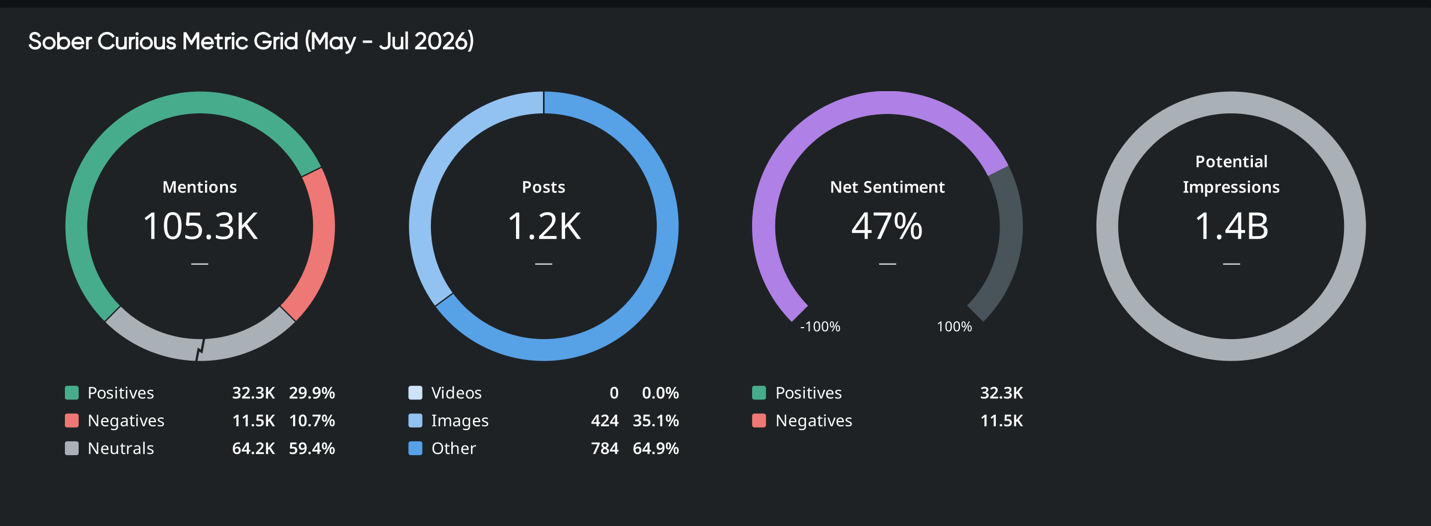
Between May and July 2026, the sober curious conversation generated more than 105,000 mentions, approximately 1,200 posts, 1.4 billion potential impressions, and a 47% net sentiment. And the conversation remained active throughout the period rather than appearing as a single short-lived spike.
Conversation volume alone, however, doesn't determine whether a trend is durable. To answer that question, organizations need to look deeper.
The strongest consumer trends typically emerge when several forces begin reinforcing one another.
First, they address a genuine consumer tension. Whether consumers seek convenience, better health, identity, belonging, affordability, or a solution to an unmet need, durable trends solve a real problem rather than simply offering novelty.
Second, the behavior is easy to adopt. Consumers don't need significant investment, education, or lifestyle changes to participate. Low friction encourages experimentation.
Third, networks amplify adoption. Creators, communities, retailers, brands, and media all contribute to expanding visibility, helping trends move beyond their original niche.
Most importantly, consumers repeat the behavior after the initial excitement fades. Attention creates awareness, but repeated behavior creates markets.
Many organizations validate trends by measuring conversation volume after it peaks. That approach answers an interesting question: How popular is this trend today? But it doesn't answer the more valuable question: Is this becoming durable consumer behavior?
Instead of monitoring absolute volume alone, organizations should evaluate:
These signals often reveal long-term opportunities long before sales data catches up.
The sober curious movement demonstrates why this approach matters. Quid data shows conversation accelerating alongside a broad range of commercial activity rather than a single news event.
Product launches, hospitality initiatives, investor activity, retailer expansion, and evolving consumer preferences reinforced one another throughout the period, helping sustain momentum rather than creating a one-time spike.
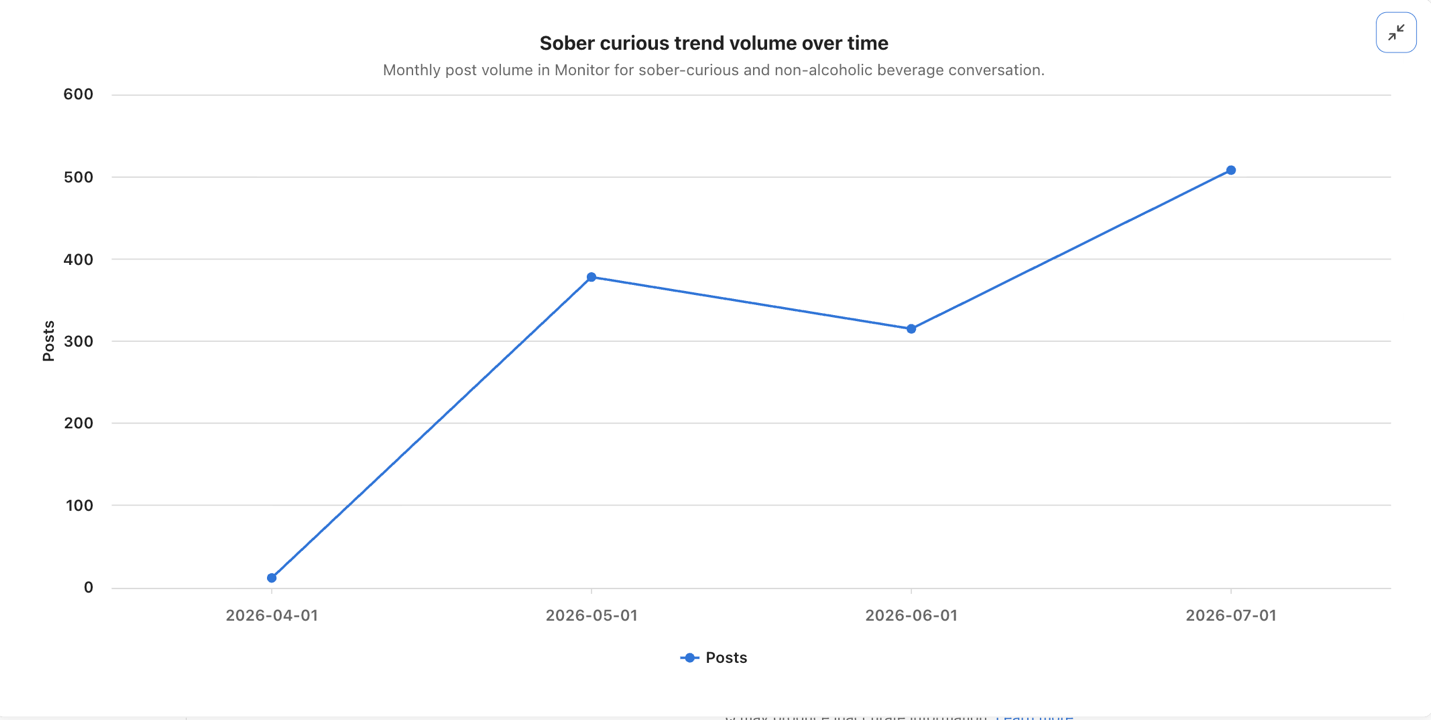
The supporting analysis explains why the timeline continues climbing. During this period, conversation was reinforced by multiple commercial and cultural developments rather than a single headline.
New product launches and funding activity, including AMASS, Crazy Mountain, and Birdy, coincided with expanded non-alcoholic programs at cruise lines, resorts, bars, and restaurants.
At the same time, mainstream media increasingly framed non-alcoholic beverages as a lasting category rather than a niche alternative, while survey coverage highlighted Gen Z's preference for more intentional and moderate alcohol consumption.
Together, these developments created multiple reinforcing signals that sustained conversation throughout the summer rather than allowing it to fade.
Rather than representing isolated announcements, these developments reinforced one another.
The result was a trend supported by multiple independent signals instead of a single viral moment.
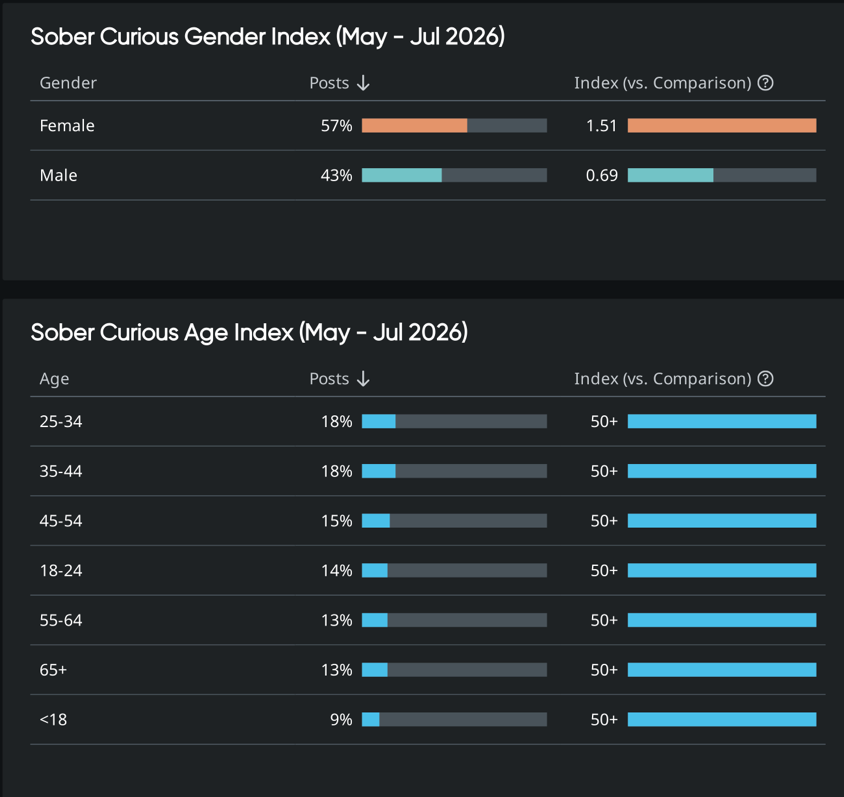
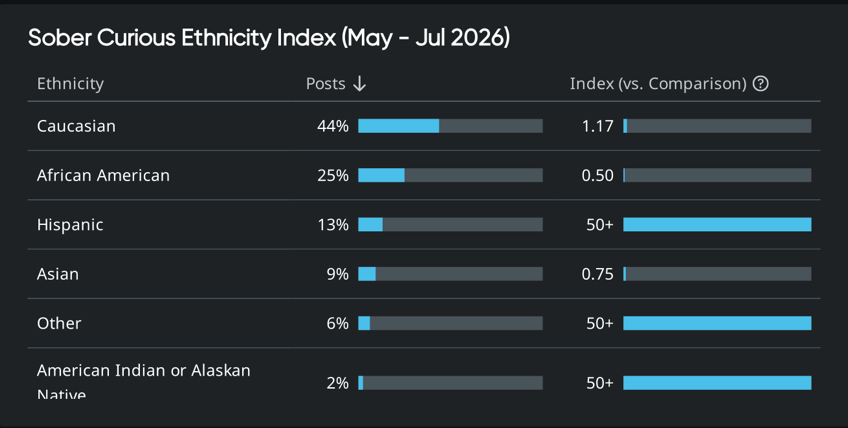
Quid’s analysis also suggests the underlying audience and motivations are evolving.
Coverage increasingly frames non-alcoholic beverages around intentional moderation, wellness, and lifestyle rather than abstinence. Gen Z consumers, in particular, appear more likely to moderate alcohol consumption intentionally instead of treating alcohol-free alternatives as temporary substitutes.
When consumers begin integrating new behaviors into everyday routines rather than occasional experiments, organizations should pay attention.
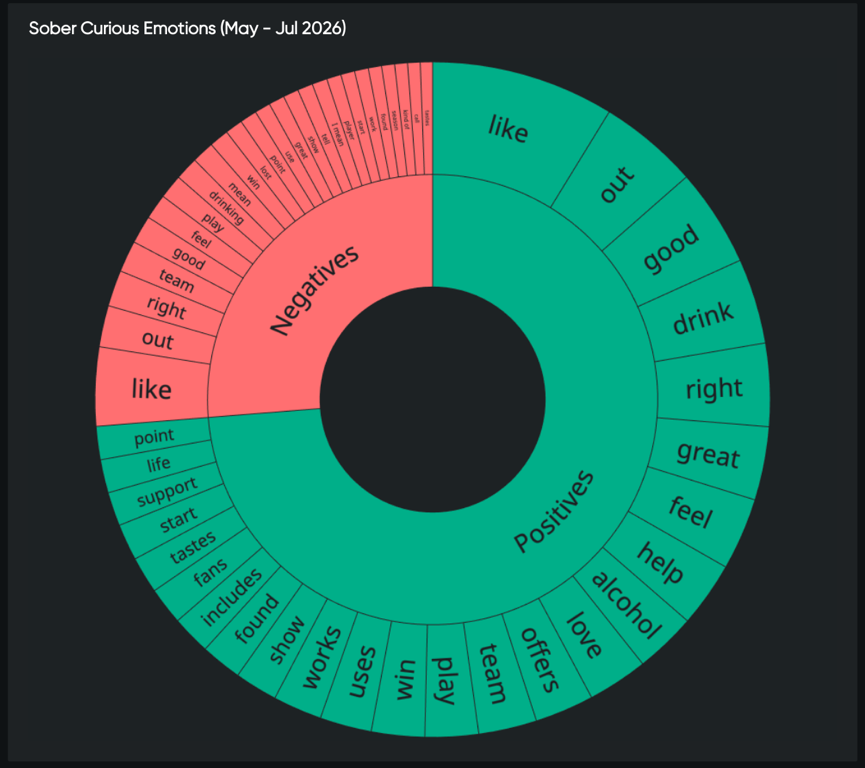
Media narratives reinforce this shift as well. One source described non-alcoholic beverages as "no longer a niche alternative" but instead a category reshaping how people socialize and unwind. Other reporting highlighted premium ingredients, craft production methods, hospitality programming, and new consumption occasions.
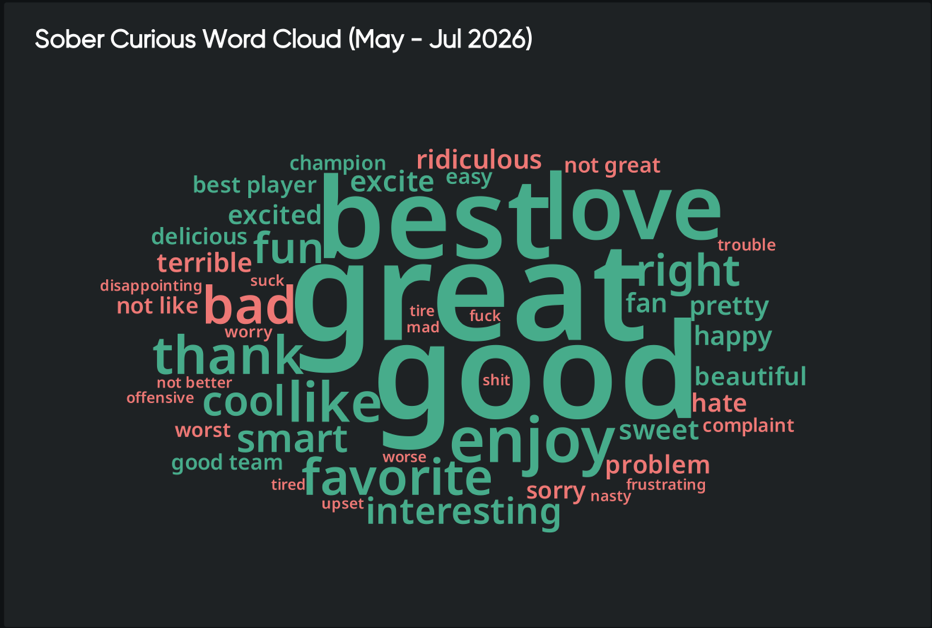
These narratives extend well beyond Dry January promotions or temporary wellness campaigns, suggesting broader changes in consumer expectations.
Organizations evaluating emerging trends should move beyond simple popularity metrics and ask five practical questions.
Look for sustained acceleration over multiple weeks or months rather than isolated spikes tied to news events.
Determine whether conversation is expanding across communities, demographics, industries, and channels instead of remaining confined to one niche audience.
Differentiate between temporary media attention and structural drivers such as product launches, retailer adoption, investment activity, or changing consumer behavior.
Persistent consumer engagement after initial exposure is one of the strongest indicators that a trend is becoming a lasting market shift.
Not every durable trend represents a strategic opportunity. Organizations should also evaluate commercial relevance, alignment with business priorities, and execution feasibility before investing.
The sober curious movement illustrates why organizations should think differently about trend intelligence.
Rather than monitoring conversations after they become mainstream, leaders should monitor the signals that indicate a trend is crossing from emerging behavior into sustained consumer demand. That means tracking more than mentions and watching:
Viewed together, these signals provide a more complete picture of where markets are heading than conversation volume alone.
The pace of consumer culture will continue accelerating. Algorithms amplify discovery, almost instantly capturing insight as consumers purchase new products with a few taps. Competitors quickly imitate successful ideas, forcing traditional planning cycles to struggle to keep pace.
Organizations that consistently identify meaningful opportunities will be the ones that ask better questions, not simply collect the most data.
The sober curious movement demonstrates that the strongest consumer trends rarely succeed because they generate attention. They succeed because they address genuine consumer needs, expand across multiple channels, attract commercial investment, and continue gaining adoption after the initial excitement fades.
The organizations that learn to monitor acceleration, spread, and repeat behavior, rather than popularity alone, will be better positioned to distinguish temporary cultural moments from the market shifts that shape the future.
Large language models have made it easier than ever to summarize information that's already available. Ask an AI assistant about a trend, and it can quickly synthesize articles, reports, and public discussions.
The challenge is that by the time a trend is easy to summarize, it's often already well established.
Identifying emerging market shifts requires something different. It requires continuously monitoring millions of conversations, detecting accelerating signals, validating whether those signals are spreading across communities, and connecting them to the commercial events and consumer behaviors driving change.
That's where Quid provides a distinct advantage. Rather than relying on static searches or one-time prompts, Quid helps organizations monitor trends as they develop, validate whether they represent durable market shifts or temporary spikes, and understand the narratives, audiences, and commercial activity fueling their growth.
The result is faster, evidence-based decisions grounded in continuously evolving market intelligence rather than retrospective analysis.
As consumer behavior continues to evolve faster than traditional planning cycles, organizations that monitor acceleration, spread, and repeat behavior, rather than popularity alone, will be better positioned to identify tomorrow's opportunities before competitors do.

Ready to move beyond trend summaries and start identifying the market shifts that matter? Learn how Quid helps organizations detect, validate, and act on emerging consumer trends before they become mainstream.
What industries benefit most from consumer trend intelligence?
Consumer trend intelligence helps organizations across retail, consumer packaged goods, food and beverage, hospitality, healthcare, financial services, and technology identify changing customer preferences before they become mainstream.
How often should organizations monitor emerging consumer trends?
Consumer behavior can shift rapidly as new products launch, creators influence audiences, and cultural conversations evolve. Continuous monitoring provides earlier visibility than quarterly or annual market reviews.
What data sources provide the strongest trend signals?
The most reliable insights combine social conversations, news coverage, market activity, product launches, consumer sentiment, investment activity, and business announcements. Looking across multiple signal types helps distinguish lasting market shifts from temporary spikes.
Why is context important when evaluating trends?
A surge in discussion doesn't always indicate lasting demand. Understanding who is driving the conversation, what events are influencing it, and how commercial activity aligns with consumer behavior provides a more complete picture of whether a trend is likely to endure.
How can organizations act on emerging trend intelligence?
The greatest advantage comes from identifying trends early enough to inform product development, marketing strategies, innovation planning, partnerships, and investment decisions before competitors respond.