


The 1980s and 1990s are finding new audiences this holiday season. Retro gaming consoles, vintage fashion, classic cartoons and physical music formats continue attracting attention from consumers of different ages. Yet the same product can carry very different meanings depending on who encounters it.
For consumers who grew up during these decades, familiar products and entertainment can bring back personal memories. Younger audiences encounter many of those same cultural references through social media, product revivals and contemporary interpretations.
Quid's analysis of nostalgia conversations reveals how these connections develop across generations and what brands can learn from the differences.
How do different generations experience 80s and 90s nostalgia? Consumers who experienced these decades firsthand often discuss childhood memories, familiar entertainment and physical keepsakes. Younger audiences also participate through retro gaming, revived toys, vintage fashion and contemporary social media trends.
Which nostalgic categories generate consumer conversation? Retro gaming, childhood keepsakes, music, classic entertainment and collectible toys appear among the leading themes in Quid's nostalgia network.
Why are 80s and 90s products becoming popular again? Consumers discuss replaying classic games, collecting original merchandise, revisiting familiar entertainment and discovering older products through modern formats.
What does nostalgia mean for brands? Brands can connect with different audiences through familiar cultural references, product revivals and shared experiences. The most relevant approach depends on how consumers engage with the original product or cultural reference.
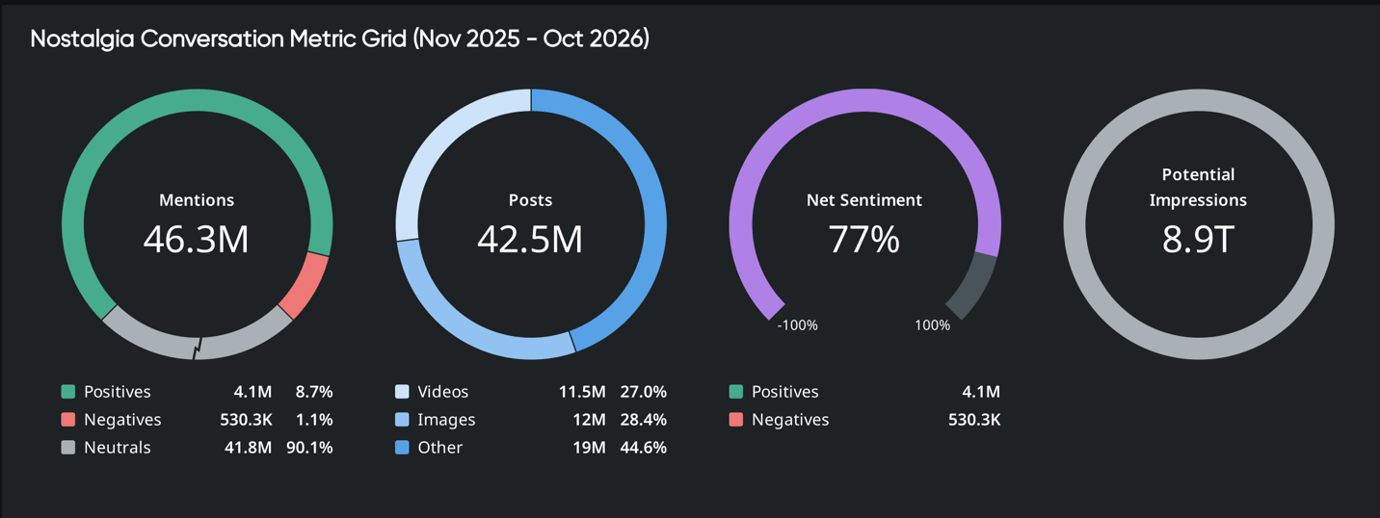
Nostalgia generates substantial conversation across social media, online communities and digital content. Between November 2025 and October 2026, Quid identified 46.3 million mentions and 42.5 million posts, with 8.9 trillion potential impressions.
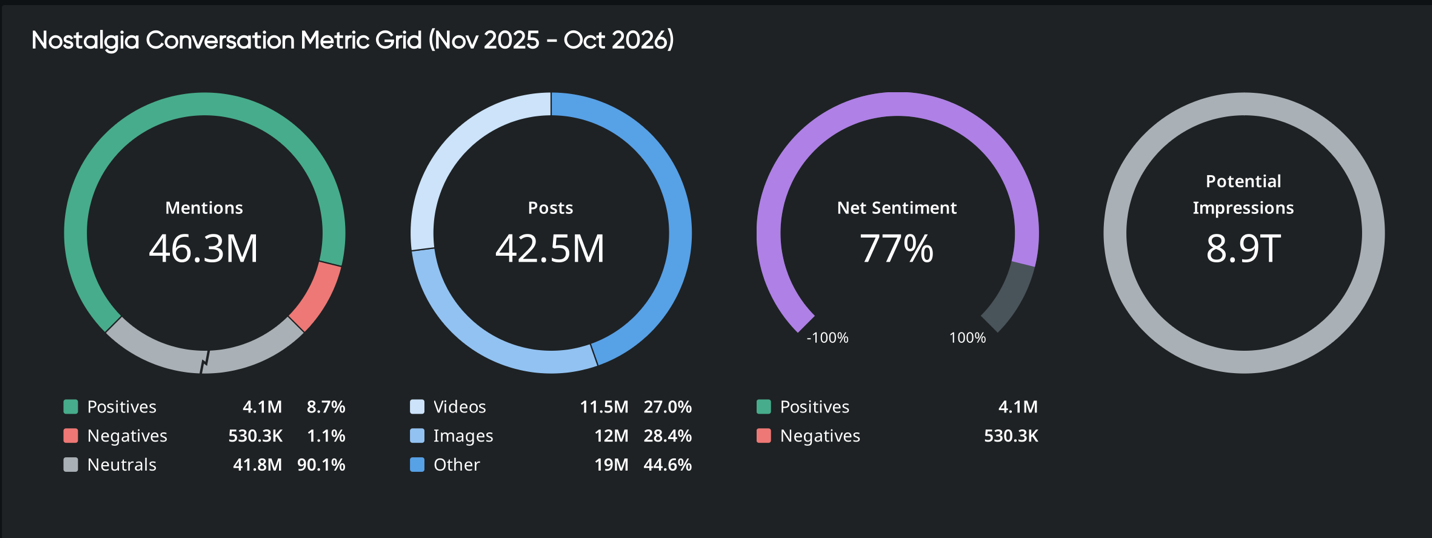
The broader analysis includes vintage and retro conversations beyond the 1980s and 1990s, providing context for the more focused generational research.
Sentiment was predominantly neutral, accounting for 90.1% of mentions, compared with 8.7% positive and 1.1% negative. The analysis also recorded 77% net sentiment. These measurements reflect different aspects of the conversation and should be interpreted separately.
Consumers discuss nostalgic products, memories and cultural references without necessarily expressing an explicitly positive or negative opinion. The conversation also extends across formats, with videos representing 27% of posts and images accounting for 28.4%.
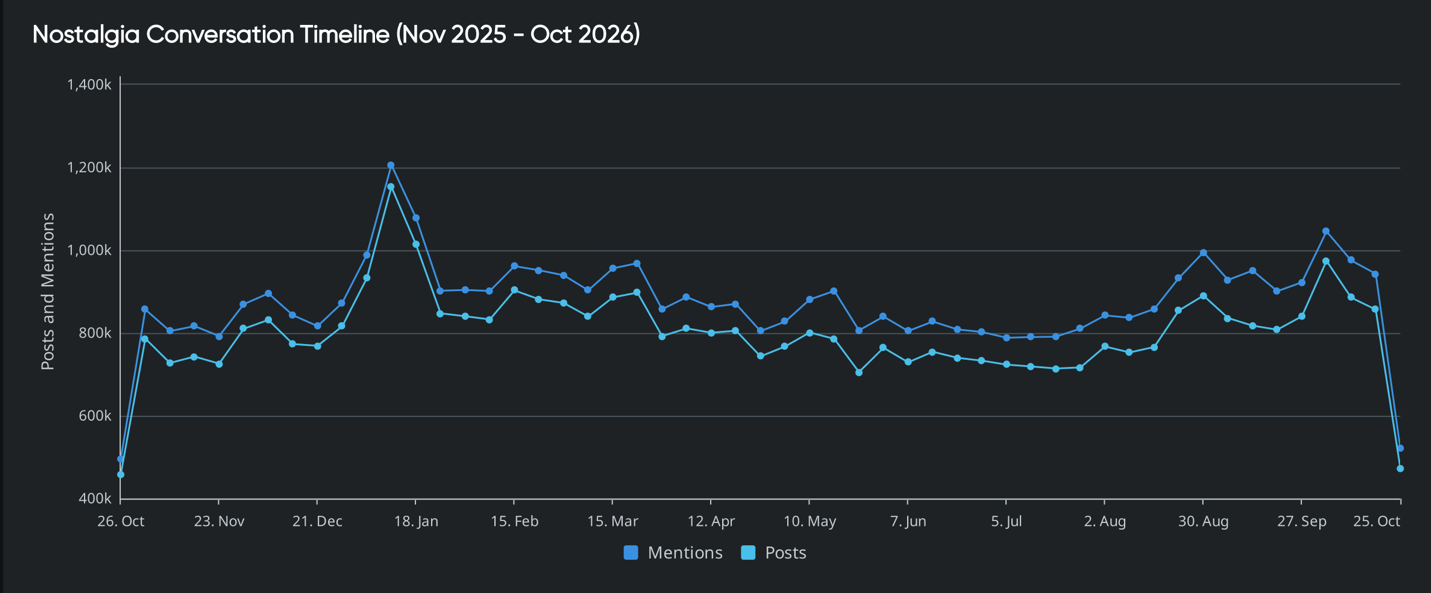
The conversation timeline shows continued activity throughout the analysis period, with fluctuations rather than a single sustained surge. This provides a useful starting point for examining which nostalgic experiences remain relevant and how consumers engage with them.
For consumers who experienced these decades firsthand, nostalgia frequently centers on personal memories, familiar routines and physical reminders of childhood. The conversations often connect cultural references to experiences that extend beyond the original product.
Quid identified a cluster representing 6.6% of analyzed network nodes focused on adults reconnecting with childhood keepsakes. Discussions include scrapbooks, vintage treasures, photographs and searches for childhood entertainment. One commenter described the emotional connection: "I'm feeling so nostalgic I could weep."
Another cluster, representing 2.7% of the network, examines memories of a simpler, less media-saturated childhood. Consumers recall everyday experiences from the 1990s, including music, neighborhood activities and routines that existed before smartphones became central to daily life.
One participant summarized the feeling: "It was a much simpler time back then."
These conversations suggest that the appeal of nostalgic products often extends to the circumstances surrounding their original use. Familiar objects can serve as reminders of particular people, places and periods of life.
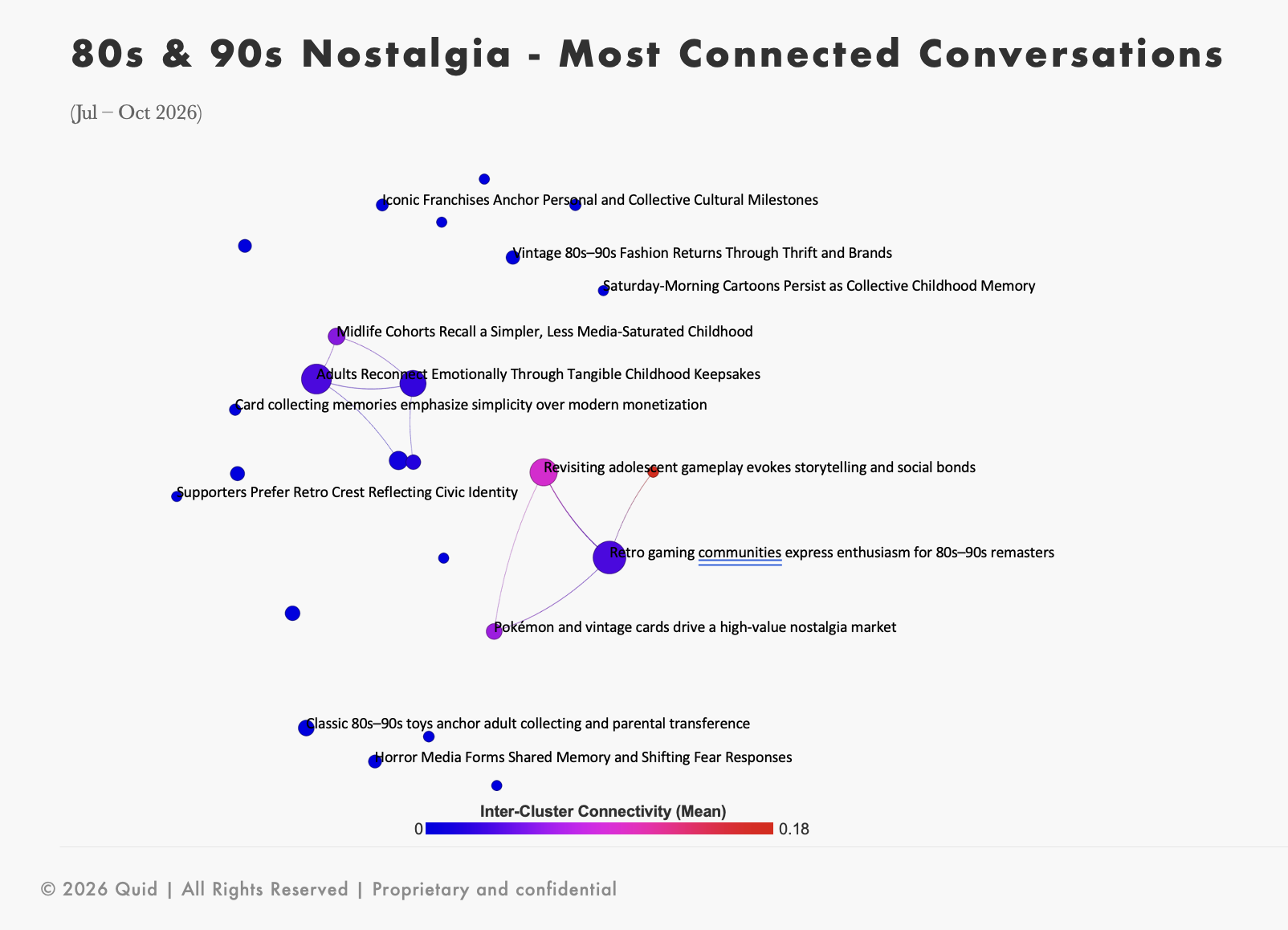
The network visualization shows connections among childhood keepsakes, gaming, entertainment and other nostalgic themes. These relationships help explain why nostalgia can extend across several product categories rather than remaining confined to a particular franchise or decade.
For brands, the findings highlight the value of recognizable details. Original packaging, familiar sounds and product designs can connect with consumers who remember earlier versions. However, some participants also acknowledge that nostalgic memories can overlook less appealing aspects of the past, making authenticity an important consideration.
Retro gaming brings together consumers revisiting familiar titles and others discovering classic games for the first time. Both experiences appear in Quid's analysis, making gaming a useful example of how older cultural products can remain relevant across generations.
The largest cluster in Quid's network, representing 7.4% of nodes, focuses on enthusiasm for 1980s and 1990s video games. Conversations include remastered titles, original consoles, emulation technology and retro gaming events.
Games such as Terranigma and Final Fantasy VI appear in discussions about revisiting familiar experiences. One participant shared: "I'm hyped for the #Terranigma remaster and am going to be playing through Soul Blazer for the first time."
A related cluster, representing 5.8% of the network, focuses on revisiting games from adolescence. Participants discuss returning to titles they played extensively as teenagers, sharing experiences with friends and family and appreciating the technical work involved in preserving older games.
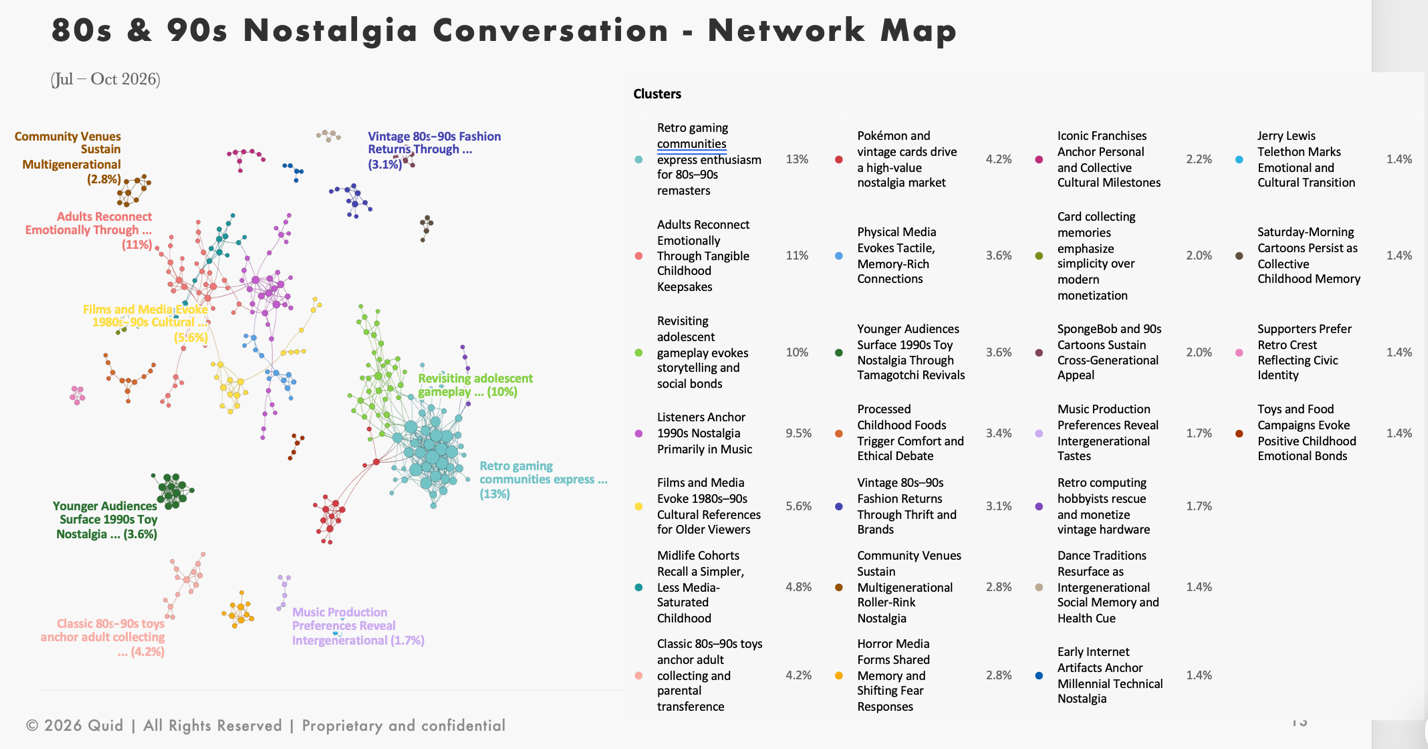
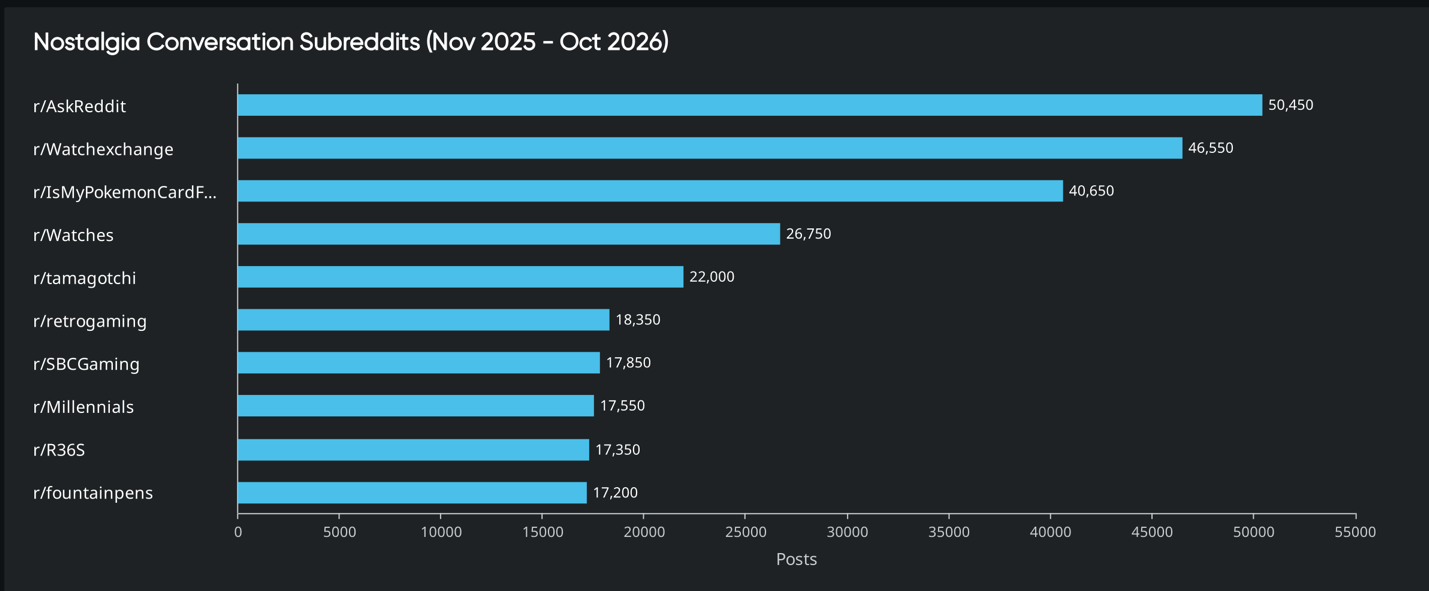
The network map identifies retro gaming, adolescent gameplay and childhood keepsakes among the prominent conversation clusters. These interests also appear in specialized online communities, as the subreddit analysis illustrates:
For gaming brands, remasters and retro collections can serve audiences with different levels of familiarity. Original players may appreciate recognizable gameplay and presentation, while newer audiences gain access to titles they missed. Physical collectibles, reproduction packaging and special editions provide additional opportunities to connect these experiences.
Music connects 1990s nostalgia to specific periods of consumers' lives, with familiar songs and albums serving as reminders of earlier experiences. Quid's research also identifies renewed interest in the physical formats associated with listening to music during that decade.
A cluster representing 5.5% of analyzed nodes focuses on music as a vehicle for 1990s nostalgia. Consumers describe albums associated with particular life stages, songs that recall specific experiences and the rediscovery of CDs and other physical recordings.
One listener explained: "Music means everything to me. And there are albums connected to entire periods of my life now and mean so much to me."
A separate cluster, representing 2.1% of the network, focuses on the sensory experiences associated with physical media. Discussions include cassette tapes, vinyl records, VHS tapes and the routines involved in using them. Consumers recall recording songs from the radio, rewinding tapes and browsing physical collections.
These examples suggest that consumers can appreciate music from the same period while responding differently to its presentation.
For brands, music offers opportunities to establish recognizable cultural context through songs, album artwork and physical-media imagery. The findings also suggest value in considering how consumers originally experienced the music and how newer audiences encounter it today.
Younger consumers can encounter 1980s and 1990s products through revivals, resale markets and contemporary styling. Their interest demonstrates how older products can attract attention beyond the generations that experienced their original popularity.
Quid identifies a 2.1% cluster focused on renewed interest in Tamagotchi and similar 1990s toys. Conversations include requests for retro products, limited editions and announcements about returning merchandise. These discussions show how familiar product formats can attract contemporary interest.
Fashion provides another example. A 1.8% cluster focuses on the return of 1980s and 1990s clothing through thrift shopping, resale platforms and modern styling. Consumers discuss graphic T-shirts, straight-leg jeans, acid-wash denim and vintage designer clothing.
Unlike a childhood memory, a fashion trend can be adopted without a personal connection to its original era. Consumers discovering 1990s clothing today may appreciate its appearance, styling possibilities or vintage character.
This distinction matters when brands develop retro collections. Recognizable designs may connect with consumers who remember the original products, while contemporary styling and functionality can introduce those products to newer audiences.
Classic entertainment franchises provide cultural references that consumers can encounter at different stages of life. Original viewers may associate familiar characters with childhood routines, while younger audiences discover them through newer content and digital platforms.
Quid's network identifies conversations about films such as Labyrinth, The Dark Crystal and The NeverEnding Story. One participant noted: "Never Ending Story, Labyrinth, and The Dark Crystal all have that 80s nostalgia vibe as well."
The research also identifies continued interest in 1990s cartoons, including Rugrats, Pokémon and SpongeBob SquarePants. A cluster representing 1.1% of the network focuses specifically on the cross-generational appeal of SpongeBob and other cartoons, including contemporary reinterpretations and social media content.
Another 0.8% cluster examines Saturday-morning cartoons as a shared childhood ritual. These discussions connect entertainment to familiar routines, including watching favorite programs at specific times.
For brands, the findings highlight opportunities to use recognizable characters and stories across audiences. However, campaigns should account for whether consumers know a franchise through its original programming, later adaptations or contemporary social media content.
Nostalgia appears in conversations about buying, preserving and collecting physical products. Quid identifies several clusters that connect childhood memories with present-day consumer activities, although the research does not establish how frequently these conversations lead to purchases.
Classic toys and adult collecting account for 2.4% of network nodes, while Pokémon and vintage cards represent another 2.4%. Physical media accounts for 2.1%, card collecting memories for 1.1% and retro computing and vintage hardware for 0.96%.
These conversations reveal different forms of engagement. Some consumers search for original toys and games, while others collect trading cards, restore older computers or purchase physical media. The Pokémon cluster includes discussions of vintage cards and their commercial value.
However, the research also identifies consumers who remember collecting as an inexpensive childhood activity and express less enthusiasm for the modern emphasis on grading and resale value.
One participant recalled: "Collecting cards was just a way for me to be happy in the midst of family chaos and instability."
This distinction matters because consumers can value the same nostalgic category for different reasons. Some prioritize original products and preservation, while others focus on collecting experiences or the memories associated with familiar items.
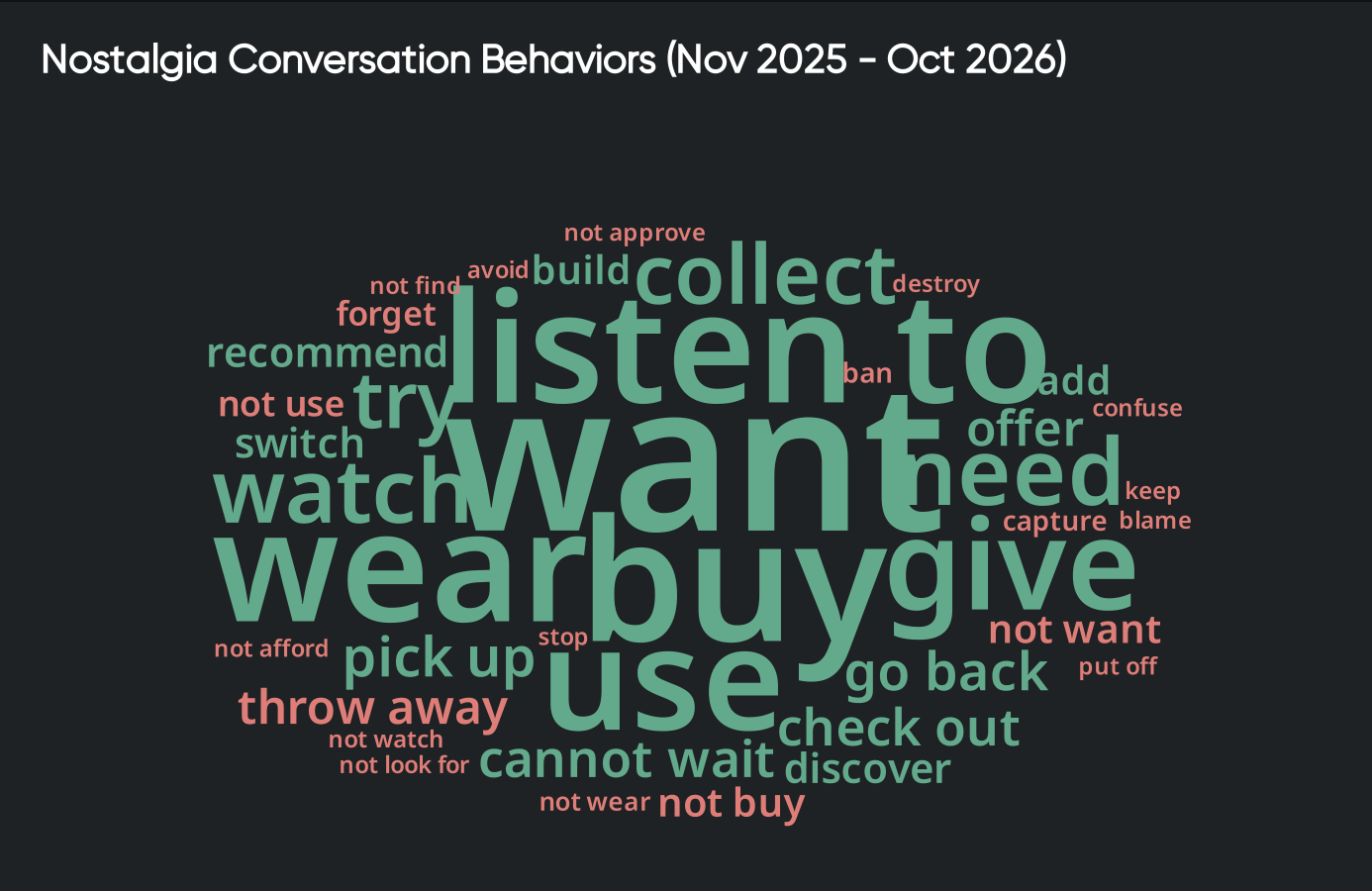
The behavior visualization includes terms such as collect, buy, keep, watch, discover and go back. These terms provide context for how consumers discuss nostalgic experiences, although they do not independently establish purchase rates or buying intent.
For brands, the opportunity lies in understanding which aspects of a product matter to different audiences. Original merchandise, accessible reissues, collectible editions and shared experiences can serve different consumer interests.
Brands should examine how consumers relate to nostalgic products before deciding how to use familiar cultural references. Quid's findings highlight differences between revisiting personal memories, collecting original merchandise and discovering older products through contemporary experiences.
Several opportunities emerge from the research:
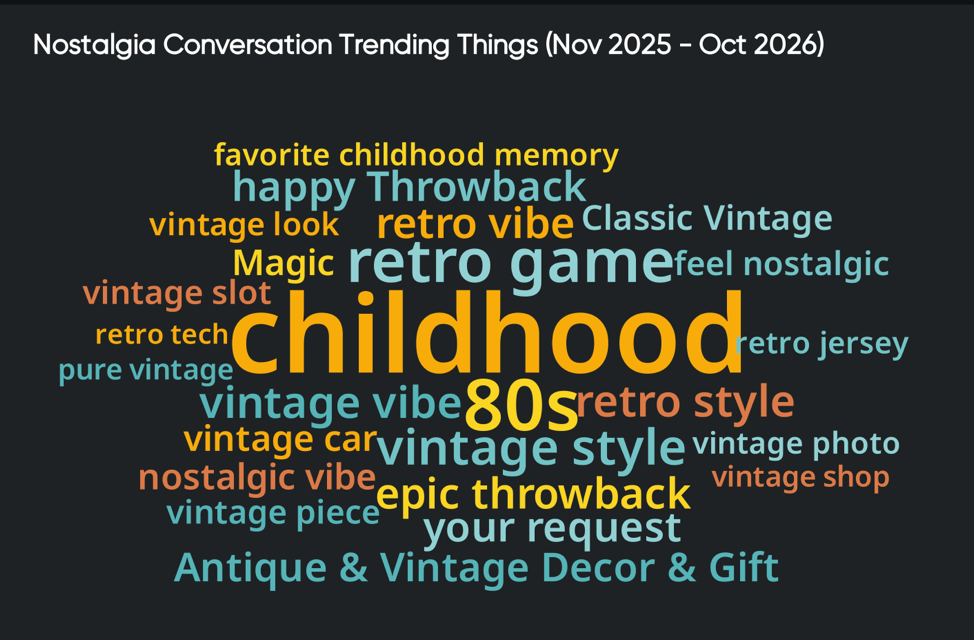
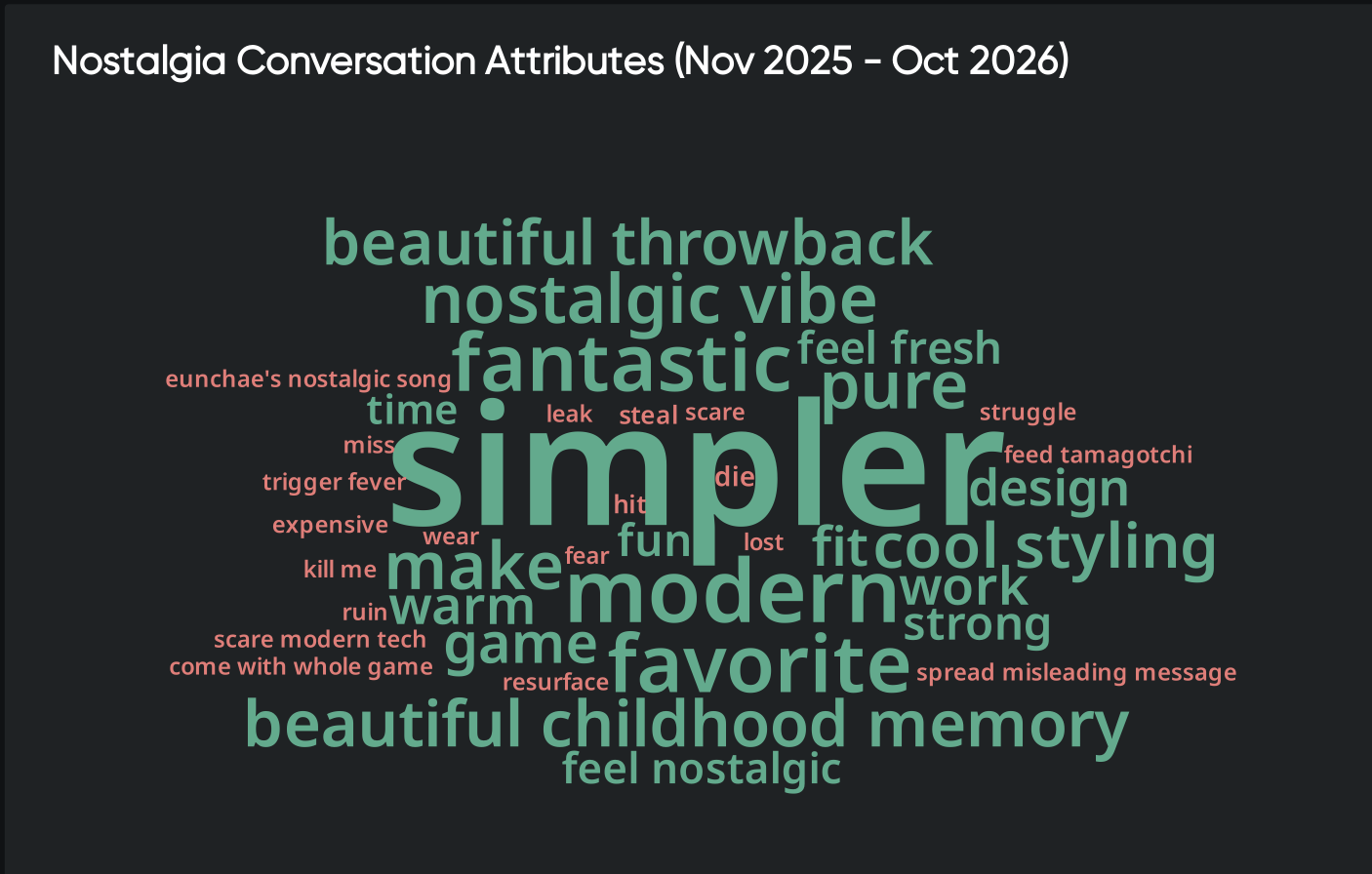
The visualization highlights references to childhood memories, retro games, vintage styles and nostalgic experiences. These themes reinforce the range of categories involved in the broader conversation.
The findings suggest that 1980s and 1990s nostalgia will continue to offer opportunities across entertainment, gaming, fashion and collectibles. Consumers are revisiting childhood experiences, preserving familiar products and introducing older cultural references to new audiences.
The most useful insight for brands comes from understanding the different relationships consumers have with those references. A familiar product can represent a childhood memory, a collectible, a fashion statement or a newly discovered experience.
Quid helps brands explore these conversations, identify connected themes and understand how cultural trends develop across consumer groups. By examining the experiences and behaviors tied to nostalgic products, brands can develop more relevant campaigns and identify product development opportunities.
Reach out to discover how Quid can help your brand identify emerging consumer trends and uncover the conversations shaping consumer behavior.

Can consumers feel nostalgic for decades they never experienced?
Consumers can develop an interest in earlier decades through entertainment, fashion, gaming and product revivals. Quid's analysis identifies younger audiences participating in conversations about 1990s toys and other retro products, although the data does not establish that all such interest reflects personal nostalgia.
Which 80s and 90s products are attracting renewed attention?
Quid identifies conversations involving retro video games, Tamagotchi, Pokémon cards, vintage clothing, physical music formats and classic entertainment franchises. These categories appear in discussions about collecting, rediscovery and contemporary product revivals.
How does retro gaming connect different generations?
Retro gaming allows consumers to revisit familiar titles while introducing those games to people who did not experience their original release. Quid's network identifies discussions about remasters, original hardware, emulation and shared gaming experiences.
Why do physical products matter in nostalgia marketing?
Physical products can carry recognizable design details and sensory experiences associated with earlier decades. Quid's research includes conversations about collecting toys, preserving keepsakes, playing physical music formats and restoring vintage technology.
How can brands avoid making nostalgia campaigns feel outdated?
Brands can examine how different audiences currently engage with nostalgic products. Recognizable elements may appeal to consumers familiar with the original, while contemporary features, styling and experiences can help introduce those products to new audiences