

.png?width=1252&height=362&name=QUID_Logo_WHITE%20(2).png)
.png?width=1380&name=template%20even%20text%20(21).png "<span id=\"hs_cos_wrapper_name\" class=\"hs_cos_wrapper hs_cos_wrapper_meta_field hs_cos_wrapper_type_text\" style=\"\" data-hs-cos-general-type=\"meta_field\" data-hs-cos-type=\"text\" >Is “Fall Reset” Becoming as Important as January for Brand Marketing?</span>")
January has traditionally been the season of fresh starts. Consumers make resolutions, establish fitness goals, organize their homes and invest in products that promise healthier, more productive lives. But now, October is getting similar treatment.
Across social media, creators are encouraging audiences to embrace the “fall reset,” a seasonal opportunity to reconsider routines, improve habits and prepare for the final months of the year.
For wellness, beauty and productivity brands, this creates another opportunity to reach consumers interested in self-improvement. But are brands responding to existing consumer behavior, or helping create another reason to shop?
Quid analyzed fall reset conversations from July 6 through October 6, 2026, to examine how the trend is developing, who is participating and where commercial opportunities are emerging.
What is the fall reset trend? The fall reset encourages consumers to establish healthier habits, refresh their routines and pursue personal goals as summer transitions into autumn.
How popular is the fall reset? Quid identified 22,900 mentions and 17,500 posts during the three-month analysis period, generating 2.5 billion potential impressions.
Who is driving the fall reset conversation? Creator content plays a visible role, with personal challenges, wellness routines, beauty tutorials and productivity advice encouraging participation.
Which industries benefit from the fall reset? Beauty, wellness, health and fitness, shopping and lifestyle brands have opportunities to connect their products with seasonal consumer needs.
The fall reset has established a measurable presence across social conversations, though the data does not show it has reached January's scale. Quid identified 22,900 mentions across 17,500 posts between July 6 and October 6, 2026. Those conversations generated 2.5 billion potential impressions, reflecting substantial potential visibility.
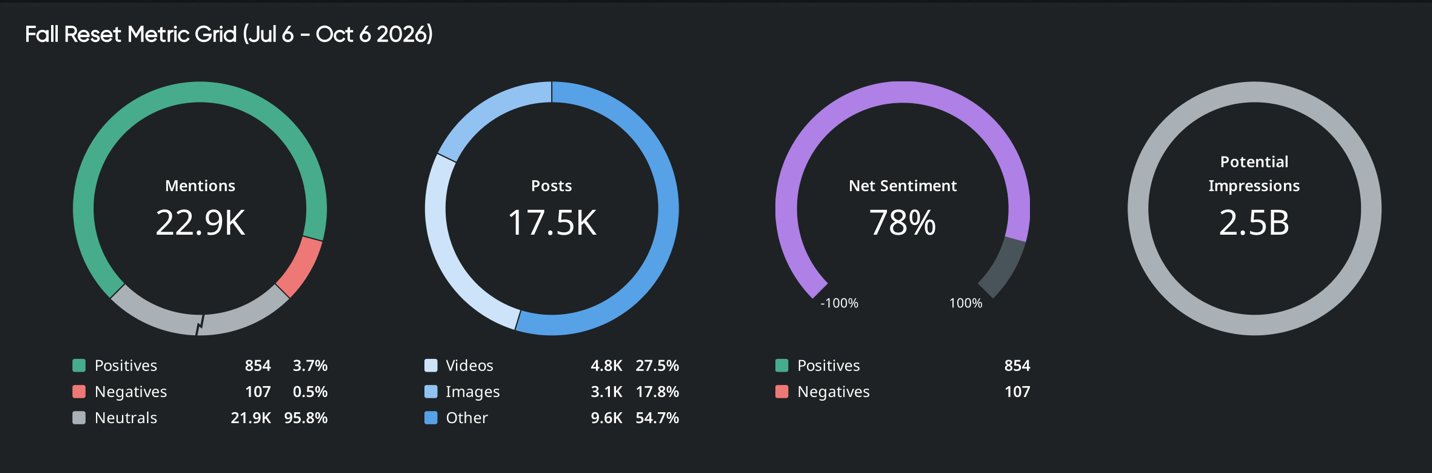
Most mentions were classified as neutral (95.8%), while 3.7% were positive and 0.5% were negative. Net sentiment reached 78%.
These findings suggest that much of the conversation consists of routine sharing, informational content and discussion rather than explicit expressions of approval or dissatisfaction. However, neutral sentiment alone cannot establish consumer acceptance.
The conversation timeline provides additional context. Fall reset discussions appeared throughout the analysis period, with fluctuations in activity rather than a single sustained surge beginning in October:
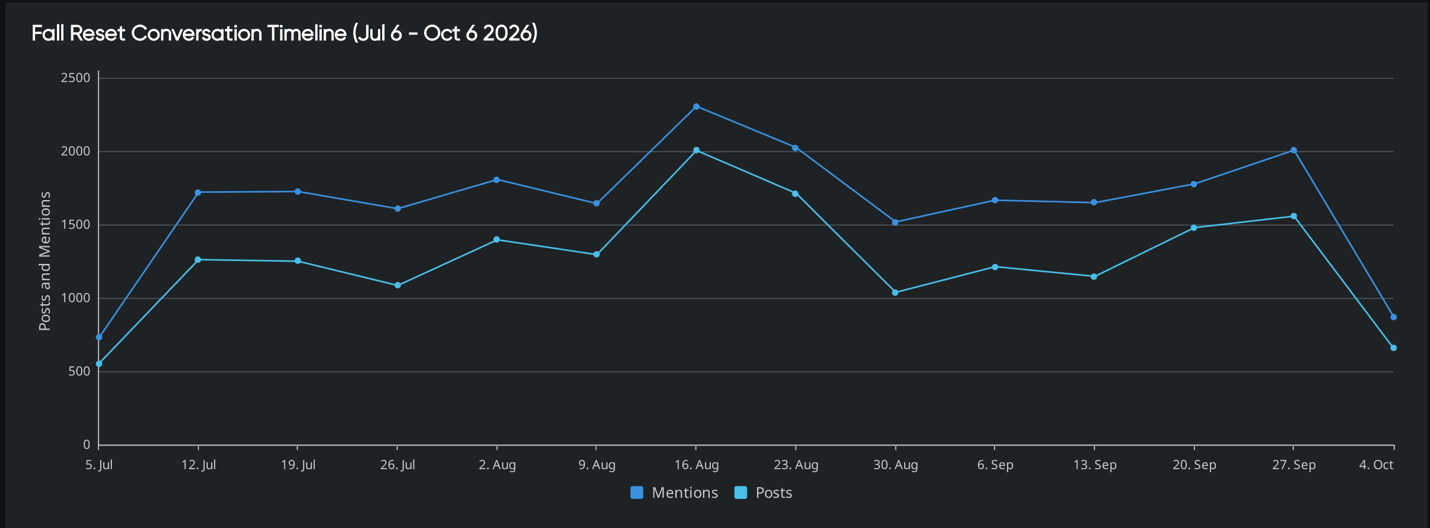
This means seasonal marketing opportunities may develop before the calendar moment they eventually become associated with. Brands monitoring these conversations can identify emerging themes before October campaigns reach their peak.
Creator activity provides evidence that consumers are actively participating in the fall reset conversation.
YouTube creators document personal goals, share monthly challenges, and invite audiences to join them. Their content frequently connects October with discipline, confidence, healthy routines and personal improvement.
One creator describes the experience as: “I’m documenting my journey of becoming more disciplined, confident, healthy and independent — one month at a time.”
Another invites participation with a simple prompt: “If you're doing the October Reset with me, comment ‘RESET’ below!”
These examples show how creators turn a broad seasonal concept into something audiences can join.
The people appearing in fall reset conversations reflect the trend's connection to health, wellness and personal improvement. Figures such as longevity researcher Valter Longo appear alongside creators and other public figures, illustrating how discussions about healthier habits and everyday routines intersect with broader conversations about well-being.
Quid's hashtag analysis reinforces the connection between fall reset discussions and everyday activities.
Hashtags including #sundayreset, #morningroutine, #healthyhabits, #selfcare, #cleanwithme and #productivity appear alongside beauty, wellness and lifestyle content.
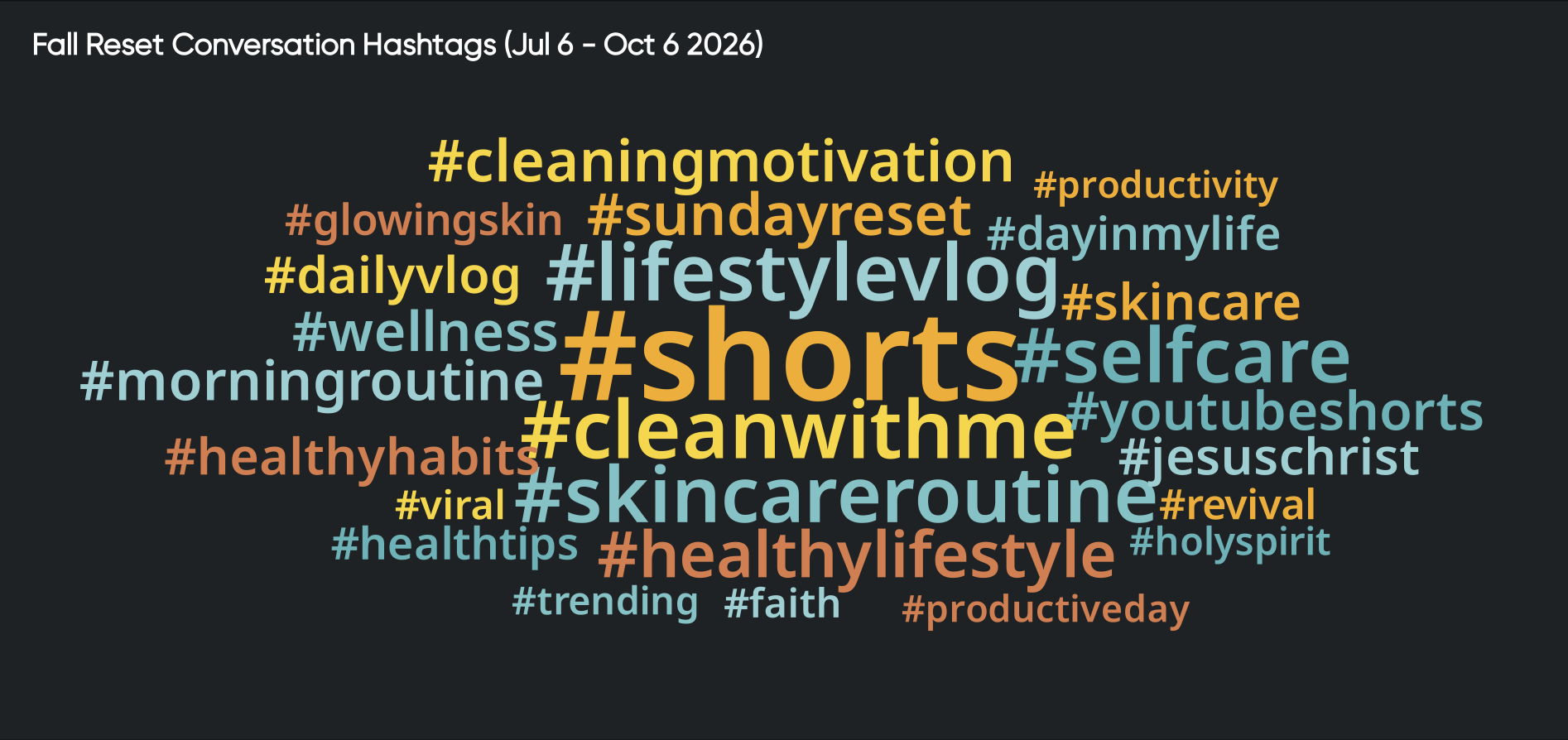
These themes give the fall reset relevance beyond a promotional campaign. Consumers can participate by changing their routines, organizing their surroundings or establishing new habits. For brands, the opportunity lies in understanding which activities consumers already associate with a fresh start.
The fall reset conversation extends across physical health, emotional well-being, beauty and daily productivity. Quid's analysis of conversation topics identifies references to Sunday reset routines, mental health resets, gut health, beauty resets and productivity. These topics reflect several ways consumers are applying the reset concept to their lives.
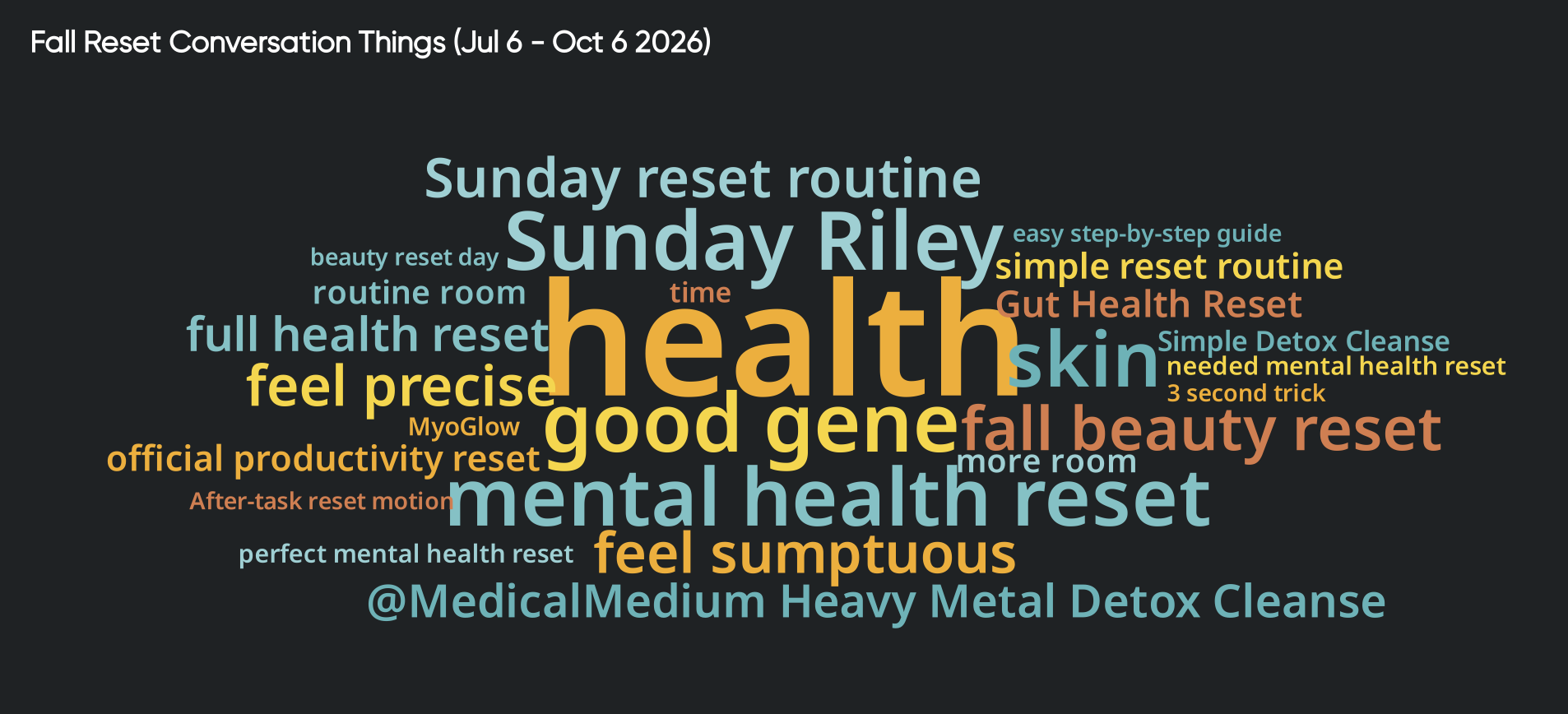
The language surrounding these discussions adds another dimension. Quid's behavioral analysis includes terms such as “focus on,” “try,” “build,” “buy” and “recommend.” These expressions appear alongside language related to coping, support and maintaining routines.
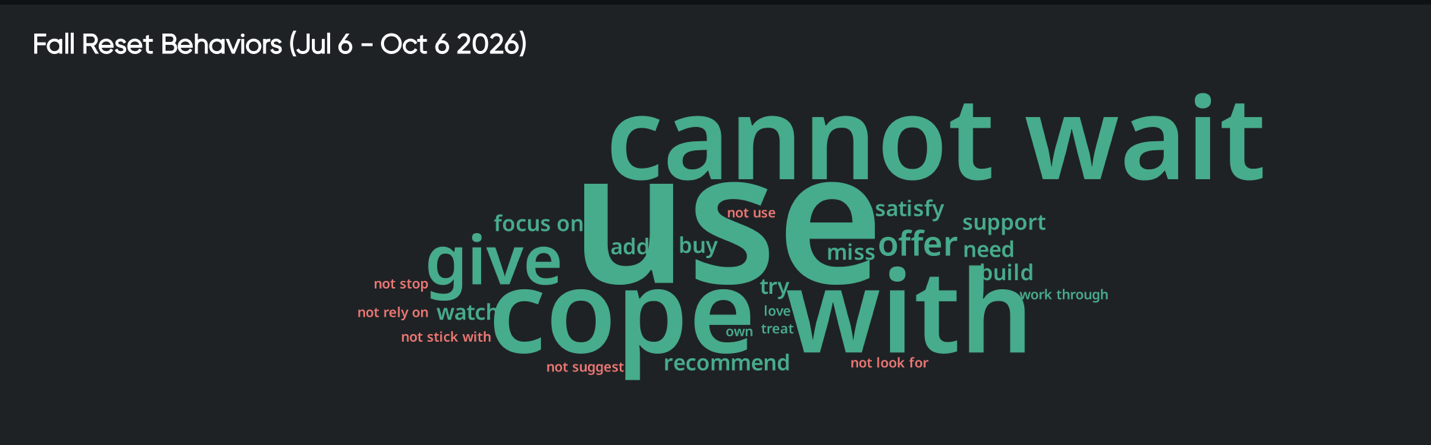
For brands, the distinction shows consumers discussing a healthier morning routine, whether they're exploring products, seeking advice, or documenting an existing habit. Each represents a different opportunity for engagement.
Brands that understand the activity behind the conversation can develop more relevant content and offers.
Beauty and wellness stand out in Quid's audience-interest analysis. Beauty accounts for 6% of posts among audiences with identified interests but indexes at more than 50 times the comparison population. Shopping represents 3% of posts and indexes at 29.22, while health and fitness accounts for 13% and indexes at 12.62.
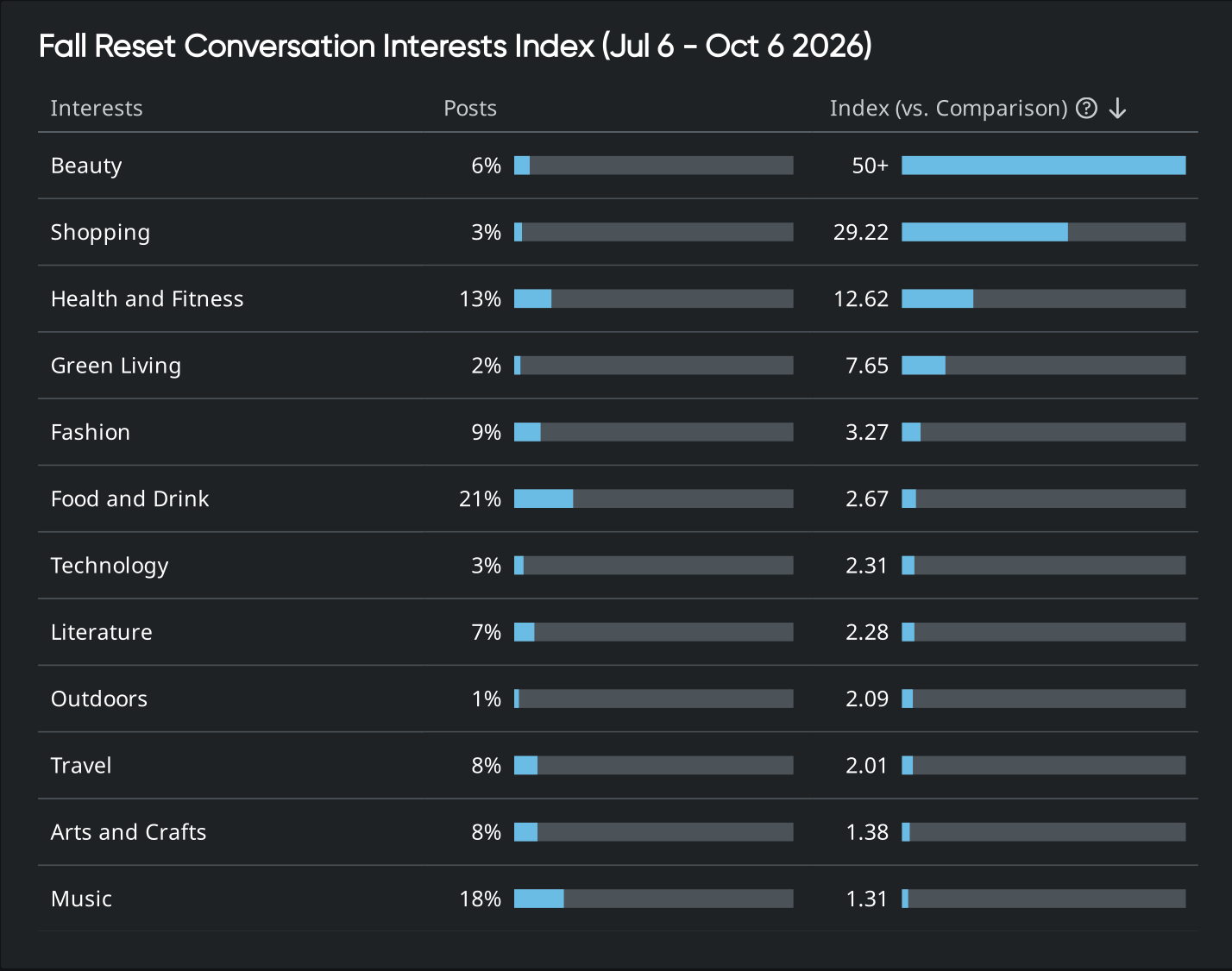
Although beauty and shopping represent relatively small shares of posts, their unusually high indexes indicate that these interests are disproportionately represented compared with the broader comparison audience.
Beauty brands have a particularly natural connection to seasonal transitions. Changes in weather, humidity and daily routines can create practical reasons to reconsider skincare and haircare products. One creator discussing October skincare in India connects the seasonal transition with changes in skin condition, recommending a three-step routine: cleanse, exfoliate and restore.
This example illustrates how seasonal conditions can give reset content practical relevance.
For brands, educational content that addresses specific seasonal concerns may connect more strongly with consumers than generic messaging about starting over.
Quid's brand analysis identifies several beauty and personal care names, including Tatcha, Sunday Riley, Peter Thomas Roth, Living Proof and MAC. Specific products also appear, including Sunday Riley Good Genes Lactic Acid Treatment, Peter Thomas Roth Peptide Skinjection and Living Proof Perfect Hair Day High Shine Gloss.
Their presence illustrates how existing beauty products can become part of conversations about refreshing routines and preparing for a new season.
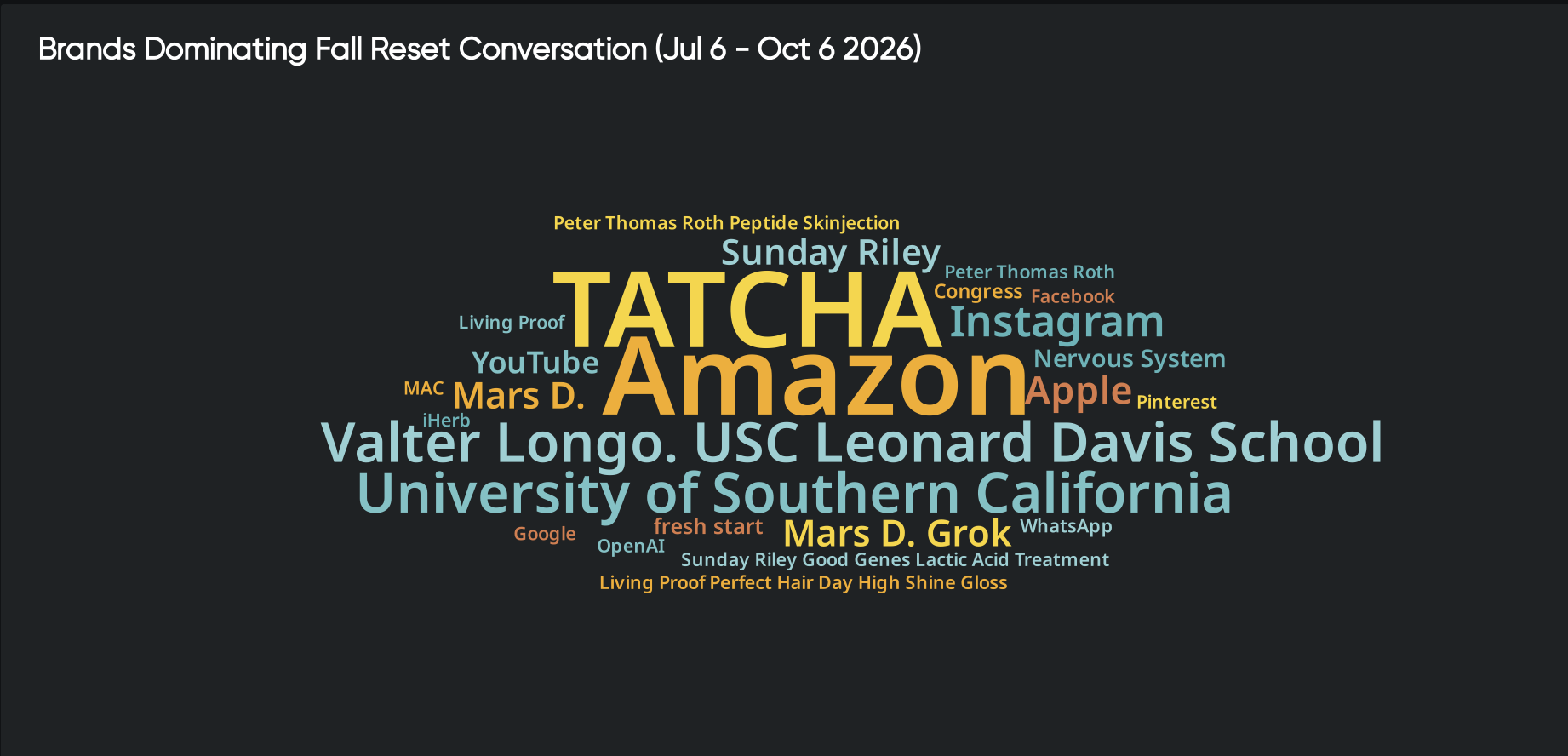
The analysis also identifies Amazon, iHerb and major social platforms within the broader conversation. However, brand mentions do not necessarily indicate sponsorship, promotional activity or increased sales. The data establishes visibility within the conversation, while additional analysis would be necessary to determine whether that visibility translates into purchases.
This distinction is particularly important when evaluating who profits from the fall reset. The commercial opportunity is visible, but the available data does not establish which brands are generating revenue directly from the trend.
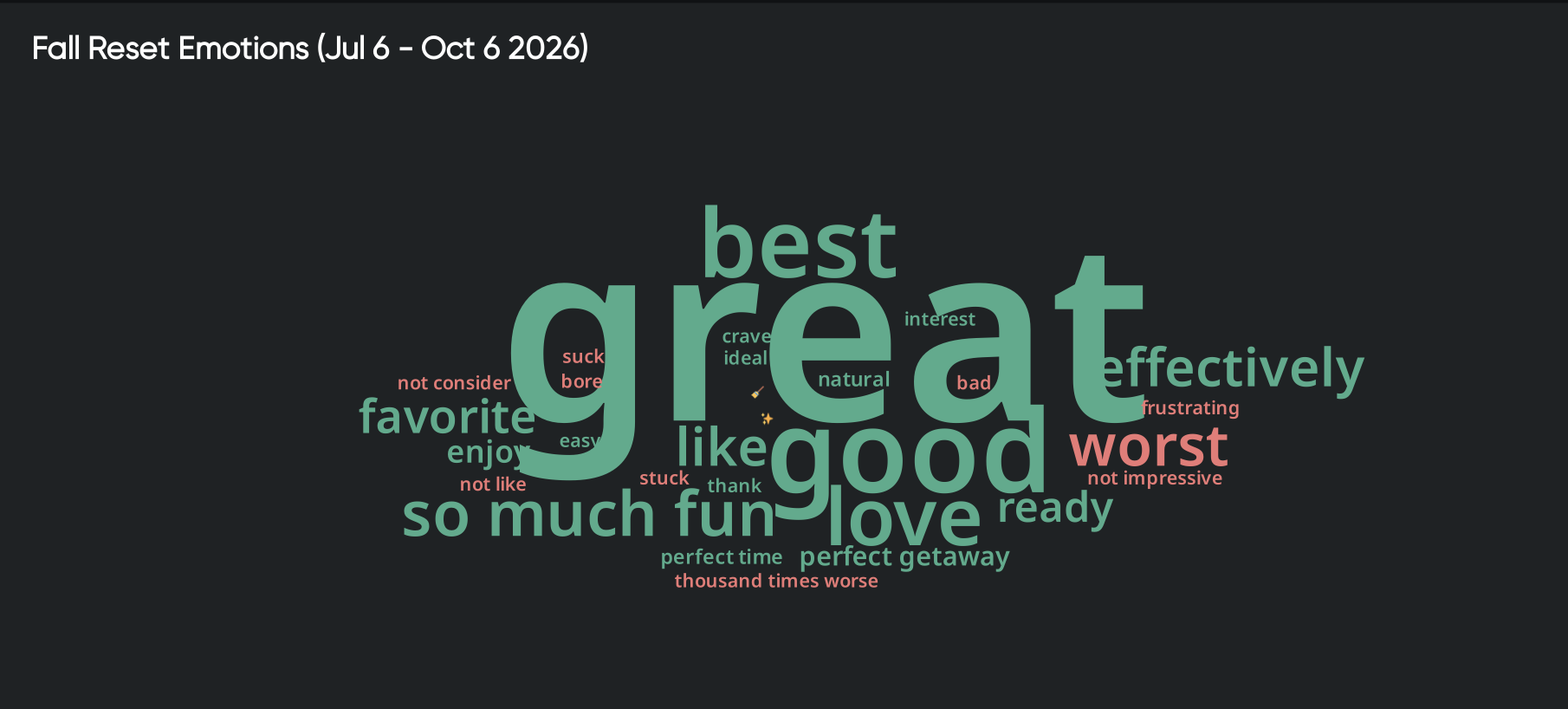
Quid's emotion analysis identifies language including “good,” “love,” “enjoy,” “ready” and “perfect time,” alongside less favorable expressions such as “frustrating,” “bad” and “not impressive.” These terms show that the conversation contains a range of emotional expressions:
The attribute analysis provides additional context. Expressions including “improve focus,” “reduce stress,” “effective skin detox” and “perfect mental health reset” appear alongside references to affordability, product effectiveness and concerns about value.
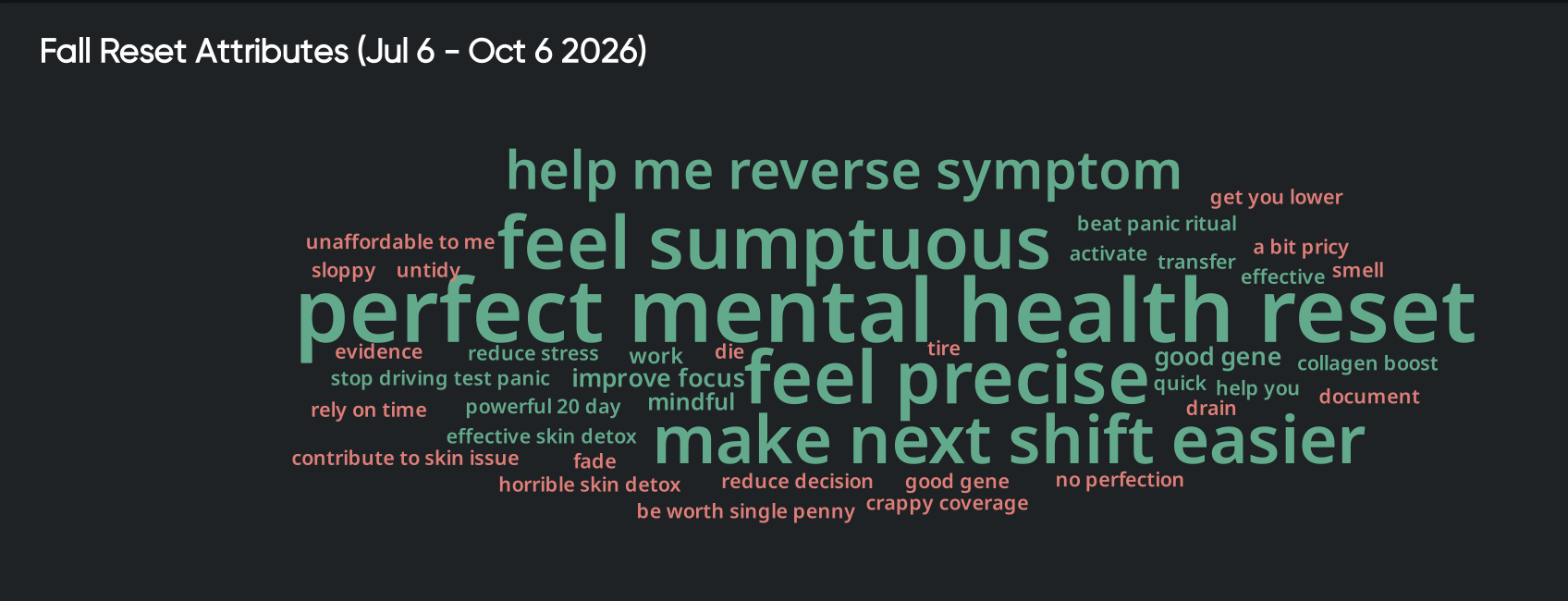
For brands, these findings point to the importance of addressing practical consumer concerns. A seasonal campaign may attract attention through the promise of a fresh start, but product relevance, affordability and usefulness remain important considerations.
The data also suggests that reset conversations extend beyond appearance and physical fitness to include mental well-being and everyday challenges. Brands should evaluate the specific needs represented within their categories before developing seasonal messaging.
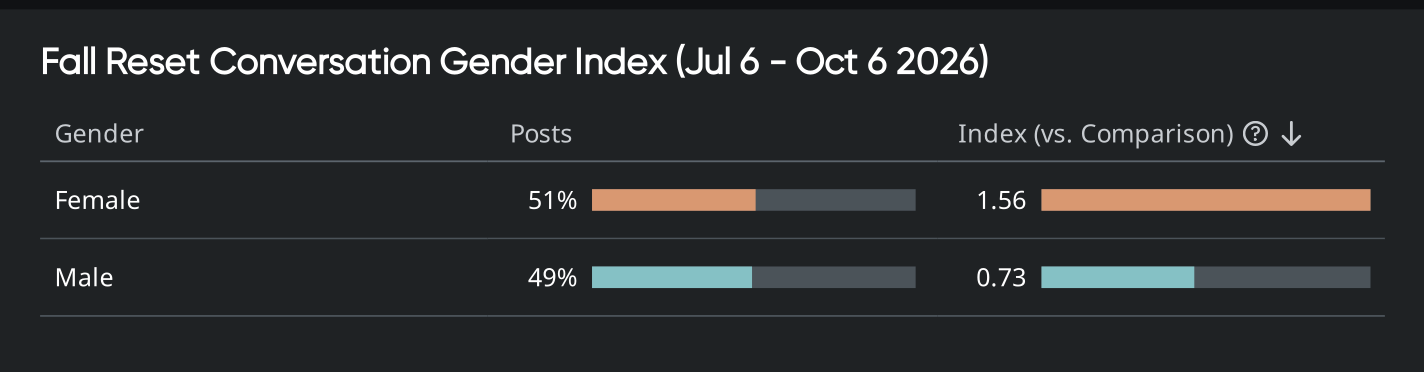
Quid's demographic analysis provides a clearer picture of the audiences associated with the trend. Women account for 51% of posts and men account for 49%. However, women index at 1.56 against the comparison population, while men index at 0.73. This suggests that women are disproportionately represented in the fall reset conversation relative to the comparison audience, even though the overall posting split is nearly equal.
Age analysis reveals another important distinction. Adults ages 25–34 account for the largest share of posts at 21%, followed by ages 18–24 and 35–44 at 17% each. The 25–34 audience also has the highest age index at 1.27, followed by 18–24 at 1.22 and 35–44 at 1.18.
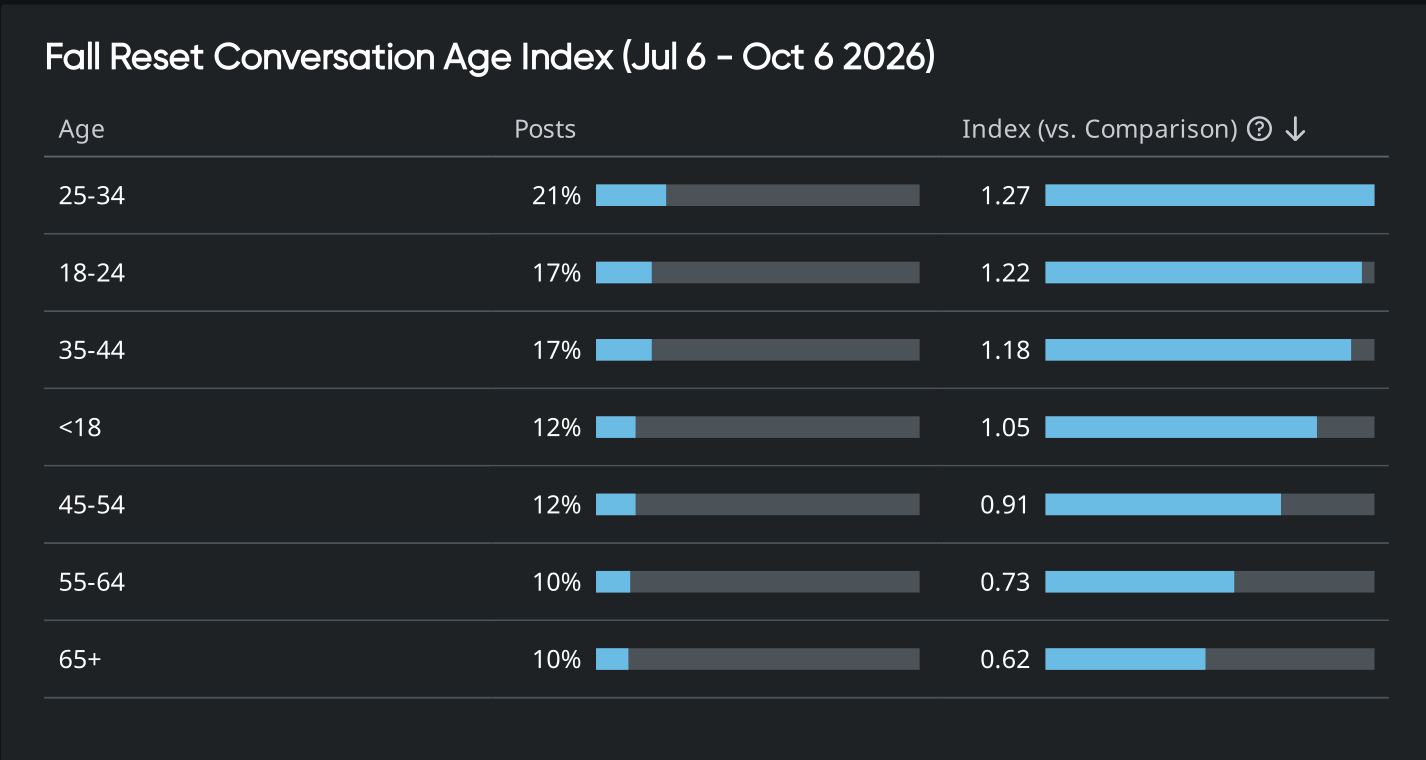
These findings suggest that the fall reset conversation has particular relevance among younger and middle-aged adults. For brands, this creates opportunities to develop messaging around different life stages and routines rather than assuming every consumer approaches the season with identical goals.
Productivity is another recurring theme, with creators connecting October to organization, planning, discipline and establishing routines. Quid's hashtag analysis includes #productivity, #productiveday and #morningroutine, while its conversation-topic analysis identifies references to productivity resets and everyday routines.
The professions analysis provides another perspective.
Students account for 10% of posts and index at 2.95 against the comparison population. Homemakers represent 3% of posts but index at more than 50 times the comparison population. Health and medicine professionals account for 12% of posts and index at 6.27, while sales and marketing professionals represent 10% and index at 1.90.
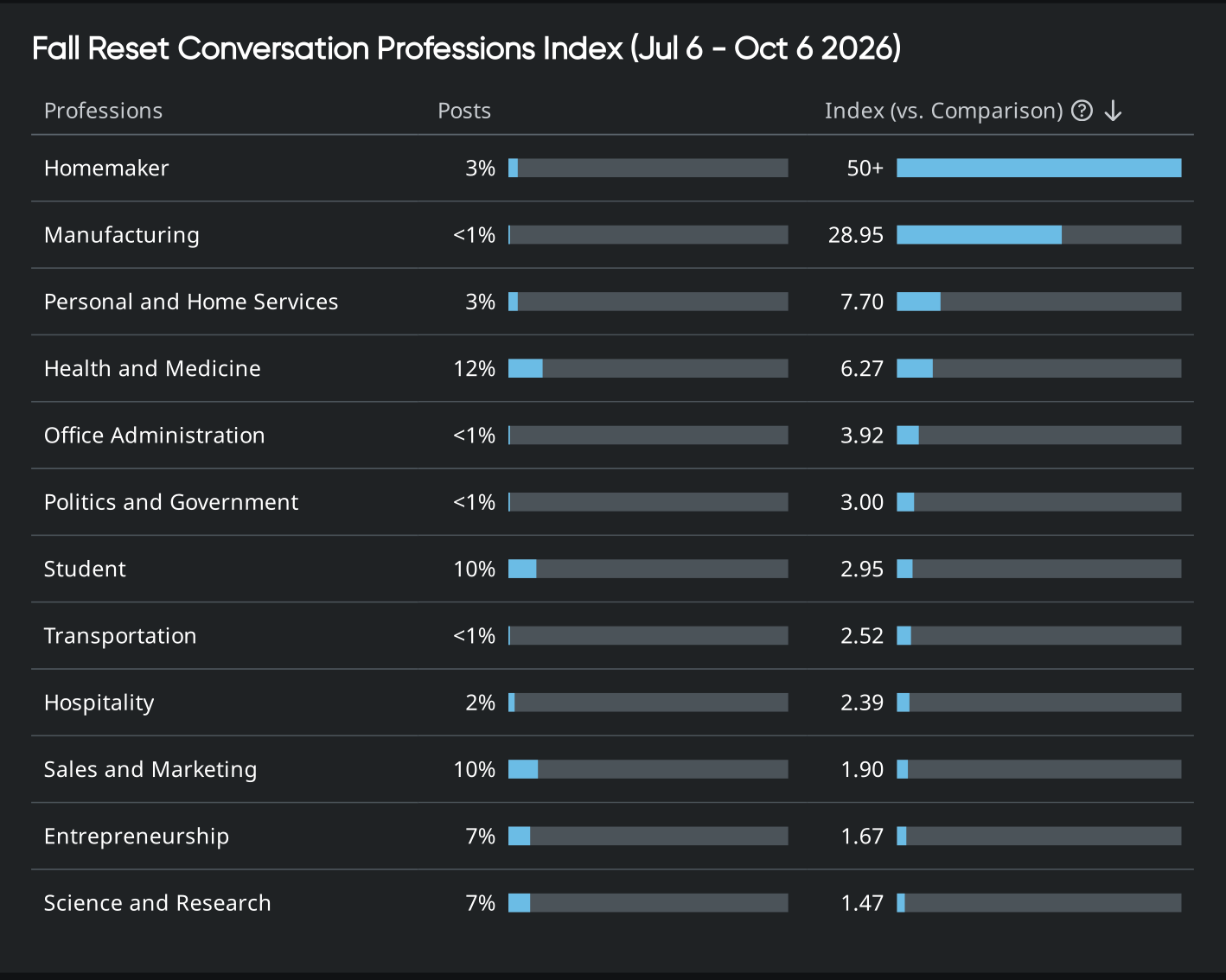
These findings indicate that the conversation reaches audiences associated with different professional and daily responsibilities.
However, the profession data does not establish why these groups participate or which productivity products they purchase. For brands offering organizational tools, planning products or productivity services, the opportunity is to examine how specific audiences discuss managing their routines and responsibilities.
The fall reset conversation borrows familiar elements from traditional New Year's resolutions: healthier habits, personal improvement, organization and renewed motivation. But the available data points to a more specific conclusion.
Creators are actively promoting the idea of October as a fresh start, while consumers are engaging with content tied to recognizable seasonal and lifestyle changes.
Some of these changes have practical foundations. Skincare needs may shift with seasonal conditions, while school schedules, work routines and household responsibilities can create natural opportunities to reconsider daily habits.
Brands can participate in these conversations by connecting products and services to relevant needs. However, the analysis does not establish that October has overtaken January as the dominant season for personal improvement. Nor does it demonstrate that brands originated the fall reset concept.
What the data supports is the emergence of a seasonal conversation in which creator content, consumer routines and commercial messaging intersect.
The fall reset creates an opportunity for brands to participate in conversations that connect personal improvement with everyday routines. Quid's analysis reveals several considerations for marketers.
Follow the behaviors already appearing in the conversation. Creators are sharing wellness routines, beauty advice, productivity challenges and personal goals. Brands can use these themes to identify where their products have practical relevance.
Recognize differences between audience size and audience concentration. Beauty and shopping show particularly high indexes despite representing smaller shares of posts. These patterns may help brands identify audiences with a stronger-than-average presence in the conversation.
Connect campaigns to specific seasonal needs. Skincare changes, organizational routines and wellness goals provide more concrete messaging opportunities than broad promises of transformation.
Measure commercial outcomes separately from conversation volume. Mentions, impressions and audience indexes reveal visibility and relevance. They do not establish sales performance or return on investment.
Consider the role of creators. The October reset examples show how creators invite participation through challenges, personal documentation and direct audience engagement. Brands can evaluate these formats when developing their own campaigns.
The larger opportunity extends beyond October. Consumers encounter multiple moments throughout the year when changing routines and circumstances create opportunities to reconsider habits, products and priorities. Brands that monitor these transitions can identify relevant conversations as they develop and determine when participation makes sense.
January may still dominate the traditional resolution calendar, but fall is establishing its own place in the self-improvement conversation. For brands, the opportunity is to recognize when consumers are reconsidering their routines and understand which products, messages and experiences are relevant to those changes. Quid helps marketers identify these emerging patterns and determine where seasonal consumer interest creates opportunities for meaningful engagement.
Contact Quid to discover how consumer intelligence can inform your next seasonal marketing strategy.
What is the fall reset trend?
The fall reset is a seasonal self-improvement trend that encourages consumers to refresh their habits, routines and personal goals as autumn begins. Conversations frequently include wellness, beauty, productivity and lifestyle activities.
Is the fall reset consumer-led or brand-created?
Quid's analysis identifies substantial creator participation and conversations connected to seasonal consumer needs. However, the available data does not establish whether consumers or brands originally created the trend.
Which industries have opportunities to benefit from the fall reset?
Beauty, wellness, health and fitness, shopping and productivity-related businesses have opportunities to connect their products and services with seasonal routines. Quid's interest analysis shows particularly high indexing for beauty, shopping and health and fitness.
Who is most engaged in fall reset conversations?
Adults ages 25–34 represent the largest age group in the analyzed conversation at 21% of posts. Women account for 51% of posts and index higher than men relative to the comparison population.
Does the fall reset generate sales for brands?
The analysis identifies brand mentions, product discussions and shopping-related language. However, it does not measure purchases, revenue or sales attributable to fall reset campaigns.
How can brands identify emerging seasonal trends?
Brands can analyze conversation volume, timing, topics, sentiment, audience characteristics and creator activity to identify developing trends and evaluate their relevance to specific products and audiences.