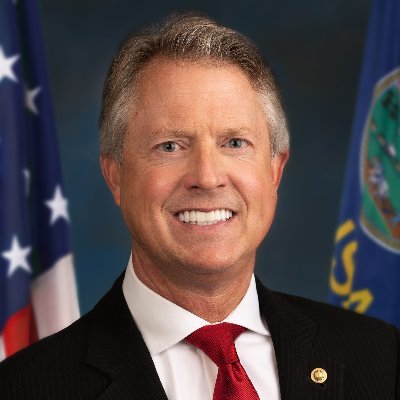
Roger Marshall reads −11.9 inside Kansas and +11.2 across the rest of the country. Adam Hamilton reads −1.1 at home and +34.5 nationally. Both men sit under water in their own state and above it everywhere else, and Hamilton's 35.6 point split is the wider of the two. The polling average has him 5.0 points ahead, and the closing Monday was the heaviest day of the seven.
Adam HamiltonDemocratic nomineeNo X account found in this week's corpus
NET SENTIMENT-1.1In Kansas+34.5Nationally
165K
TOTAL VOLUMEPosts, articles and comments across all geographies. Only 11% of the U.S. portion is original writing; the rest is reposts and replies.
+11.2
MARSHALL, NATIONALNet sentiment outside Kansas. +11.3 on posts naming them alone.
+34.5
HAMILTON, NATIONALNet sentiment outside Kansas. +43.4 on posts naming them alone.
37K
BIGGEST DAYThe closing Monday carried 37K posts, the heaviest day of the week, on a report about data centers that ran in all four columns at once and the last rally of the president's campaign.
What The Vote Did
The count, beside what this page measured. This site records what was said about each candidate in the seven days ending on Election Day; it was never built to forecast a result, and the panel says plainly which way its own measure pointed.
Adam Hamilton winsAP call, 97% of votes counted
Adam Hamilton556,41450.9%
Roger Marshall503,23046.1%
Hamilton took the better of the conversation here, by 22.2 points, and that is also how the vote went. Figures from the Associated Press, read at
Nov 4, 2026, 12:27 AM ET, with counting unfinished. They move.
What The Polls Say
Published polling, shown to set context. A poll asks a sample of voters which candidate they intend to support. Everything else on this page measures something different: the balance of positive and negative labeled posts about each candidate in the captured conversation. A candidate can lead the vote and still take the worse of the argument online, and where the two diverge this page explains the conversation, not the electorate.
AtlasIntel · field date Nov 2, 2026 · 2,038 LV · margin of error ±2% points
The polling average had Hamilton 5.0 points ahead on six polls. The conversation agreed: Hamilton reads −1.1 in Kansas and +34.5 nationally against Marshall's −11.9 and +11.2. Both measures pointed the same way and both were right. Hamilton won by 4.8 points.
The Week In One Line
Net sentiment runs on the left axis from −100 to +100. Gold bars carry total daily
volume for both candidates combined; hover any bar for the narratives driving that day. The two lines track each other for the first half of the week, fall together on the Wednesday, then part. Hamilton climbs to +52.6 on the Friday and stays high through the Saturday; Marshall peaks at +33.7 on the same Friday and then drops to −26.3 by the Sunday, his floor. Both reach their best readings on Election Day, Hamilton at +64.1 and Marshall at +37.7.
Marshall net sentimentHamilton net sentimentTotal posts, articles and comments
Inside Kansas
Both figures cover posts that resolve to Kansas. Net sentiment runs from −100 to +100 and counts only posts a classifier labeled, roughly a quarter of the total.
KANSAS
Marshall
Kansas
4,830posts
520 positive
660 negative
Hover a segment
1,339 unique authors · 260 original posts
(5% of volume; the rest are reposts and replies).
Sentiment from 1,180 labeled posts, 24.4% of this slice; stored sample behind the labels 104 documents.
Top 3 narratives driving sentiment
1
A Rally Still On, Counted As Warm
POSITIVE DRIVER
Marshall's in-state positive column is mostly local news of the president's visits rather than approval of Marshall. The item that travels furthest reports preparations in Salina for a rally that was canceled the next day. On 38 positive documents, a handful of posts like this is what the figure is made of.
Preparations are in full swing in Salina for President Donald Trump's rally in support of republican incumbent Sen. Roger Marshall this Saturday. MORE: https://t.co/4aO9uJhze9 https://t.co/Ft5deWzq1g
The sharpest in-state item against Marshall is a class action filed on the Thursday, which accuses him and his former Great Bend practice of charging patients illegal interest on unpaid medical debt. The allegations are the plaintiffs', untested in court, and they are specific enough to repeat exactly, which is why this one spread.
A class action usury lawsuit filed Thursday accuses U.S. Sen. Roger Marshall and his former Great Bend medical practice of routinely charging patients illegal interest rates on unpaid medical debt | #ksleg via Dale Hogg https://t.co/hvslBp4lKI
The sharpest in-state item against Marshall is a cross-party endorsement: sixteen former Kansas Republican congressional staffers, naming the senators they worked for, backing his opponent and saying plainly what they think of him. It is assertion by named people rather than a finding, and it is the most circulated negative item of the week.
RT @ModerateKS: 🇺🇸 Former staffers who served Republicans Bob Dole, Nancy Kassebaum, Sam Brownback, Jerry Moran, and Kevin Yoder are backing Adam Hamilton for U.S. Senate. Sixteen former Kansas Republican congressional staffers signed the endorsement. Their assessment of Roger Marshall is blunt: “Ro
1,073 unique authors · 200 original posts
(5% of volume; the rest are reposts and replies).
Sentiment from 910 labeled posts, 21.3% of this slice; stored sample behind the labels 82 documents.
Top 3 narratives driving sentiment
1
Republicans Crossing Over, Named
POSITIVE DRIVER
The warmest in-state material about Hamilton is the list of Republicans backing him. A former Republican senator endorsed him this week, joining two former Republican governors. On 35 positive documents the campaign's own announcement, passed along by supporters, is a real share of the column.
RT @Hamilton4Kansas: 🚨 Republican Former US Senator Sheila Frahm endorses Adam Hamilton. Sen. Frahm joins Republican former governors Bill Graves and Mike Hayden supporting Adam's campaign. https://t.co/Y9ILSRTSUp
The in-state case against Hamilton this week is that his advertising about his opponent's medical billing is unfair, carried by supporters quoting a former county attorney saying the practice is ordinary among providers. The claim and the characterization are theirs. The rest of his 47-document negative column is material about his church and his faith, which this page reports and does not reproduce.
RT @Bogey811: Former Kansas county attorney weighs in on Adam Hamilton’s smear ads about medical billing practices “Nearly every medical provider in the country collects debts in exactly the same manner as Marshall.” Adam Hamilton is deceitful Vote @RogerMarshallMD https://t.co/hqIvxxNUls
Much of what scores positive for Hamilton inside Kansas is an outsider's assessment passed around by Kansans rather than an argument made by them. A national reporter's account of four days in the state is the clearest example, and on 34 positive documents a few reposts like it move the figure.
RT @ddayen: I traveled all around Kansas for 4 days. Adam Hamilton has the more formidable ground game, more excitement, more money, and is just a better candidate. https://t.co/dnQSSo6HwW https://t.co/TMPflgDKQC
The same week reads differently depending on where you stand. Net sentiment is plotted
from Kansas on the left to the rest of the country on the right; the solid line counts every post
naming a candidate, the dashed line counts only posts that name that candidate and not the other.
All posts naming the candidate
Posts naming that candidate only
-23.1Roger MarshallKansas minus national · -29.2 on single-subject posts
Marshall reads 23.1 points worse in Kansas than nationally, one figure either side of zero. The single-subject test moves the two apart, to −17.9 at home and +11.3 nationally, and widens the gap to 29.2 points.
-35.6Adam HamiltonKansas minus national · -48.9 on single-subject posts
Hamilton reads 35.6 points worse in Kansas than nationally, one figure either side of zero. The single-subject test moves the two apart, to −5.5 at home and +43.4 nationally, and widens the gap to 48.9 points.
What each audience actually argues about
Geography, not party. Both columns cover the same week and the same two candidates; what separates them is which arguments actually travel.
IN KANSAS
Kansas Argues About A Doctor's Billing
In-state posts are about Marshall's former practice and how it collected unpaid medical debt: a class action, an advertisement he made answering it, and a former county attorney arguing the practice is ordinary. Sixteen former Republican congressional staffers endorsing his opponent closed the week.
Eighteen percent interestThe class action, now national news.
A one-minute answerHis own advertisement about collection agencies.
Sixteen Republican staffersCrossing over, and saying why.
REST OF THE U.S.
The Country Argues About A Red State Slipping
National posts treat Kansas as the surprise on the map: late polls putting the Democrat ahead, a canceled and restored presidential rally, and reporting from Dodge City on how immigration enforcement is landing in a majority-Hispanic town. Neither man's platform gets much national examination.
Four days out, and aheadThe late poll national accounts carried.
A rally, twice rescheduledWhat the week's heaviest day was actually about.
Dodge CityThe one national story about Kansas itself.
Both columns spent the week on the same two events: the late polling and the president's travel. Kansas added one of its own, a question about how a doctor's practice collected money from patients. Neither audience spent much of 124K posts on what either man would do in the Senate.
The Rest Of The Country
The same two candidates over the same seven days, measured across every state except Kansas.
NATIONAL
Marshall
Rest of United States
72,209posts
10,660 positive
8,508 negative
Hover a segment
38,352 unique authors · 7,709 original posts
(11% of volume; the rest are reposts and replies).
Sentiment from 19,168 labeled posts, 26.5% of this slice; stored sample behind the labels 4,816 documents.
Top 3 narratives driving sentiment
1
A Lawsuit, Filed In His Own County
NEGATIVE DRIVER
The national reporting that hurts Marshall most is about Great Bend, where he has lived for more than three decades. A class action filed on the Thursday in the county's own district court accuses him and his former medical practice of charging patients interest as high as 18% on unpaid medical debt. The allegations are the plaintiffs' and untested in court; what this page records is that the filing traveled, not that the charge is established.
RT @CBoTheEggman: A class action usury lawsuit filed Thursday accuses U.S. Sen. Roger Marshall and his former Great Bend medical practice of routinely charging patients illegal interest rates as high as 18% on unpaid medical debt
The second national thread is the cancellation itself, reported straight and read as a signal. Wire and aggregator coverage recorded that the Salina event was dropped and replaced with telephone events, and the scheduling explanation offered for it. The reporting is about the president's calendar; the sentiment lands on Marshall.
Trump Cancels Kansas Events and Replaces Rallies with Phone Calls Two Canceled Kansas and Iowa Rallies Replaced by Telephone Events Ahead of November 3 Midterms President Donald Trump’s planned October 31, 2026, rally at the Salina Regional Airport in Kansas was abruptly canceled, just two days afte
What holds Marshall's national figure above zero is syndicated reporting rather than advocacy, and the item repeated most on the closing Monday is a national piece on Kansans of both parties organizing against data centers in their counties. It argues for neither candidate and names both. On 2,896 positive documents, copy of that register is a large part of what the label is counting.
In Kansas, a data center backlash is uniting voters across the political aisle Like most Kansans, Carrie Schmidt enthusiastically supported President Donald Trump in past elections. “I voted for him,” she told Scripps News in an interview Wednesday. “I was very, like, loud.” But her views on the pre
26,757 unique authors · 6,460 original posts
(12% of volume; the rest are reposts and replies).
Sentiment from 12,489 labeled posts, 24.1% of this slice; stored sample behind the labels 2,711 documents.
Top 3 narratives driving sentiment
1
A Final Poll, Reported Everywhere
POSITIVE DRIVER
Hamilton's national positive column is built on poll coverage. An Emerson College survey released at the end of the week put him ahead of the incumbent, and that single result was rewritten across hundreds of outlets. The sentiment is about his standing, not about anything he said.
Poll shows Democrat ahead in Kansas U.S. Senate race (CN) — In its final look at Kansas voters this election year, an Emerson College poll found 49% of Sunflower State voters are backing Democrat Adam Hamilton, while 45% favor incumbent Republican U.S. Senator Roger Marshall. As undecided voters mak
The one piece of national reporting this week that examines Kansas itself is from Dodge City, on how immigration enforcement is landing in a majority-Hispanic town that supplies much of the country's beef. It names the race without arguing it, and the label follows the piece rather than the candidate.
Immigration raids in Dodge City frustrate voters DODGE CITY, Kan. — Dodge City is known as the cattle capital of the U.S. It’s not just farm country, but beef country, and locals are proud of their role in feeding the world. It is also a community of immigrants, with a majority Hispanic population.
A large share of Hamilton's national negative column is not about Hamilton. Reporting on the vice president's second Kansas trip of the autumn mentions both men, and the classifier credits the warmth to the incumbent and the rest to the challenger. It is the clearest illustration on this page of what the overlap figure costs.
Vice President JD Vance renews call for Kansas GOP voters to back US Sen. Roger Marshall | State & Regional News | hastingstribune.com TOPEKA — Vice President JD Vance returned to the state Monday for a second time since mid-September to rally voters on behalf of Republican Roger Marshall and try to
Eleven issues, and how this race's conversation treats each candidate
inside them. A bar is the negative and positive share of the mentions that carried a
sentiment label, and the figure beside it is net sentiment, the positive share minus the
negative one. Neutral posts are excluded, so a bar reads the balance of opinion rather
than the volume of it. An issue is matched on the words a post uses, and these rows carry
no geography filter, so they cover a slightly wider population than the panels above.
Economy & inflationthin1,629 labeled of 3,231 mentionsMarshall17%83%+66.2Hamilton31%69%+37.5
Energythin1,996 labeled of 2,639 mentionsMarshall98%+96.8Hamilton98%+96.8
Immigration2,133 labeled of 4,406 mentionsMarshall93%+85.0Hamilton19%81%+61.6
Tariffs & tradethin636 labeled of 1,050 mentionsMarshall42%58%+15.8Hamilton35%65%+29.9
Seven further issues did not reach the floor of 250 labeled mentions for both candidates and are not shown.
What Candidates Should Prioritize Once in Office
The issues each candidate is losing most ground on: ranked by how much
hostile volume each one carried, so a large and warmly received subject does not crowd out
a smaller one the candidate is taking the worse of. Only issues reading net negative for
that candidate are eligible. This is a read of the conversation in one week, not a forecast
of the result and not a judgment about which problems matter most.
Roger Marshall
1Healthcare1,907 mentions, net -15.0 toward
Marshall
Adam Hamilton
No issue in this week cleared the floor reading negative for this candidate, so this page names none.
How This Was Built
This page is the product of two different kinds of work. One half is data that no public API makes available; the other half is judgment about what the data does and does not support.
What Quid made possible
None of the following could be assembled from public endpoints inside a week.
133K posts split by geographyOne week, separated into a Kansas half and a rest-of-country half on the same days.
Sentiment aimed at the personEach candidate is defined once, centrally, with primary-term targeting, which is what keeps a bare “Hamilton” from collecting every other Hamilton in the country.
A single-subject re-run that changed the readingMarshall's Kansas figure falls from −11.9 to −17.9 once posts naming Hamilton are removed, while his national figure holds at +11.2. Without that test the joint numbers would look like one reading rather than two.
7,713 stored documents behind the labelsEnough in all four cells to characterize the argument rather than guess at it.
What Claude was responsible for
The data does not interpret itself, and it arrives with traps in it.
Measuring the noise instead of ignoring itAbout 9% of the stored national documents for Marshall are college football coverage rather than politics, pulled in because the name and the state both appear. Counted, reported, and left in rather than quietly filtered, because filtering it would change the figure.
Refusing to read the joint number as the storyHis national figure is +11.2 together and +11.3 alone, against −11.9 inside Kansas. The page leads with the gap between the two audiences rather than either number on its own.
Checking the poll against the sourceThe published average has this race inside a point. The panel uses the 270toWin page rather than any figure circulating in the posts themselves.
Leaving the classifier visiblePosts reporting the debt investigation are labeled positive toward Marshall. The caveats say so rather than dropping them.
Neither half can establish cause. This page measures what was said, how much of it there was, and who said it. It is not a poll, it does not model turnout, and it does not predict the November result.
How to read this
Source. Quid. Each person is defined once, centrally, by a stored definition that uses
primary: sentiment targeting, so the sentiment is scored toward that named figure rather
than toward the post as a whole. Every figure on this page reads that same definition.
Window. Oct 28 - Nov 3, 2026, seven complete day buckets. Quid closes its day at 23:00 UTC and
ignores the timezone parameter, so each bucket covers roughly 23 hours of the labeled calendar day.
Net sentiment is (positive − negative) / (positive + negative) × 100, computed on
labeled posts only. Neutral posts are excluded from the meter but counted in the volume figures.
Sentiment coverage. Sentiment labels cover 24 to 27% of Marshall's posts and 21 to 24% of Hamilton's.
No cell on this page is suppressed, but both in-state slices are thin. Hamilton's Kansas column rests on 82 stored documents and Marshall's on 104, against 4,816 and 2,711 nationally. Read the two home figures as directional.
Classifier attribution is imperfect. In a two-candidate race most posts name both people, and
the classifier sometimes assigns a post's sentiment to the wrong subject, and several posts attacking one
candidate are labeled positive for them. Every soundbite shown here was read and placed against the narrative
it actually supports, but the donut and meter totals are the classifier's unedited output.
Twitter/X counts are projected ×10 from a 10% sample, so volume figures exceed the number of
individually stored documents. Counts and samples are never mixed inside one ratio.
Sensitivity test. 25% of Marshall's posts and 34% of Hamilton's name both candidates, where the classifier can credit sentiment to the wrong one. Re-running every figure on posts that name one
candidate only widens both splits. Marshall's Kansas reading falls from −11.9 to −17.9 while his national reading barely moves, from +11.2 to +11.3. Hamilton's moves the same way at home, from −1.1 to −5.5, and rises nationally from +34.5 to +43.4. For both men, what is said about them alone is colder at home than what is said about the contest.
Volume is amplification, not voices. Only 11% of posts are original; the rest are reposts and replies. Unique-author counts
are shown on every panel and are the better measure of how many people are actually talking.
Link integrity. Every source link on this page was checked for liveness at publication.
Exploratory. Figures may not match Quid's own dashboards exactly. Sentiment is a
measure of how people are talking, not a poll, and nothing here projects a November result.